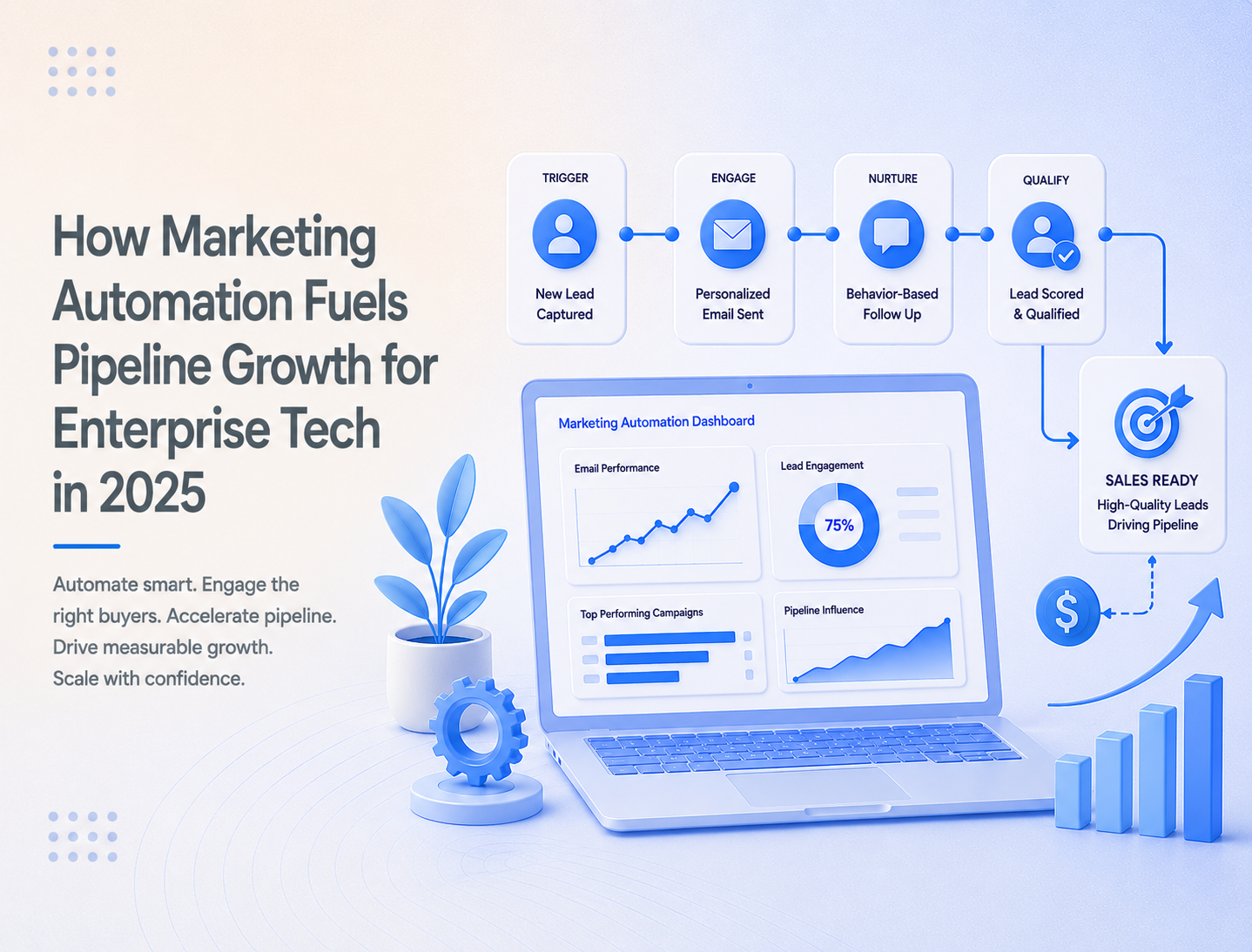
How Marketing Automation Fuels Pipeline Growth for Enterprise Tech in 2025
Lead Qualification


Stop measuring MDF by form-fills. Here’s how to turn partner-funded programs into director-level meetings your sales team actually shows up for.
-
Channel Marketing

Introduction
If you run partner marketing at a B2B tech company, you’ve probably seen the same cycle repeat:
That last question is where channel programs often stall. Not because MDF doesn’t work—but because most “channel partner lead generation” programs optimize for volume (names) instead of outcomes (sales-ready meetings).
In 2026, the channel teams that win will treat MDF like an operating system: a repeatable path from target accounts → reached decision-makers → booked meetings → measurable pipeline. This post lays out a practical framework to do exactly that, without adding headcount or creating channel conflict.
What “Channel Partner Lead Generation” Means in 2026 (and why it’s changing)
Traditionally, channel partner lead generation has meant helping partners “create demand”—often via emails, webinars, syndication, or paid media—then handing a list back to the vendor.
In 2026, partner teams are under more pressure to prove pipeline impact. That’s pushing a shift from:
Lead delivery → Meeting delivery
Because a lead list creates work. A booked meeting creates momentum.
For demand gen leaders, partner marketers, and revenue marketers, the definition that matters is:
Channel partner lead generation = programs funded by MDF that produce conversations with qualified buyers in target accounts.
That’s why “booked meetings” is becoming the success metric that aligns everyone:
Common challenges marketers face with partner lead gen
1) MDF gets spent on activity, not outcomes
MDF is often tied to tactics (webinar, email, event) instead of measurable buying actions (meeting, demo, discovery). So results look “fine” until you ask what pipeline it created.
2) Lead quality isn’t the real issue—follow-up is
Even strong partner-generated signals die in the handoff. Sales receives a list without:
3) Channel conflict makes teams avoid direct outreach
Some orgs avoid anything that feels like “stepping on the partner,” so they rely on passive lead flow. That keeps relationships safe—but kills velocity.
4) Partners can’t staff consistent outbound
Even great partners struggle to run high-quality outbound consistently. It’s not their core function—and it’s expensive to build.
5) Reporting is delayed or too high-level
By the time you know what didn’t work, the MDF quarter is over. You need real-time visibility into what’s being contacted, what’s converting, and why.



.png)

%201.png)


.png)


Solutions that work
To keep this blog tight to the topic: this section focuses on the Site Ascend program that most directly applies here—Channel Marketing (white-labeled appointment setting funded by MDF), plus the meeting-level operating model behind it.
1) Reframe MDF deliverables around meetings, not leads
A “lead delivered” doesn’t tell you if there’s intent, authority, or willingness to engage.
A better MDF contract (internally and with partners) defines outcomes like:
Site Ascend’s model aligns directly with this because you only pay for meetings that occur—so the incentive isn’t to generate names; it’s to create real conversations.
2) Run white-labeled outreach that protects the partner relationship
Channel leaders often want the speed of outbound without channel conflict.
The difference is how it’s positioned.
With Site Ascend Channel Marketing, outreach can run white-labeled on behalf of your partner (funded via MDF). That means:
3) Target director-level and above (by design, not hope)
Many channel lead gen programs “cast wide” and then wonder why sales ignores them.
The fix is simple: lock targeting to director+ in named accounts and treat any other level as non-primary.
Site Ascend’s approach builds this into the program: prospect targeting is director-level and above only, which increases sales acceptance because the meetings match how enterprise and mid-market deals actually get done.
4) Use phone-led outbound to break through the inbox ceiling
Inboxes are crowded and partner emails are often forwarded internally or ignored.
For MDF programs that need meetings (not just registrations), phone-led outbound is still one of the most direct ways to reach decision-makers and confirm intent.
That’s why Site Ascend’s channel execution is built around outbound dialing, supported by structured workflows to keep momentum moving toward a scheduled conversation.
5) Give marketers real-time visibility into what’s working
Channel programs fail in silence. You need to see:
Site Ascend provides a real-time reporting dashboard so marketing can optimize during the MDF window—not after it.
Actionable steps for marketers
Here’s a simple checklist you can use to tighten your channel partner lead gen into a meeting-driven program.
A “meetings-first” MDF checklist
If you want the fastest pilot path: start with 1–2 partners, one offer, one segment, and measure meetings held + acceptance rate.
Comparison of market solutions
Most teams choose one of these approaches:
Option 1: Partners run lead gen campaigns and “deliver leads”
Works when: you only need top-of-funnel volume
Breaks when: sales needs qualified conversations and fast handoff
Common outcome: lots of names, low acceptance, unclear pipeline impact
Option 2: You build an in-house channel SDR function
Works when: you have budget, time, and leadership buy-in
Breaks when: you need speed, flexibility, or MDF-funded scalability
Common outcome: strong control, slower ramp, higher fixed cost
Option 3: Outsource partner outreach with a meetings-first model
Works when: you want measurable outcomes tied to pipeline velocity
Breaks when: the provider optimizes for activity instead of held meetings
Best-fit motion: pay-for-performance meetings, director+ targeting, onshore execution, and transparent reporting
This is where Site Ascend fits: a channel marketing motion designed around meetings that occur, delivered through white-labeled outreach, with U.S.-based execution, director-level targeting, and real-time reporting.
Conclusion
Channel partner lead generation doesn’t fail because partners don’t care or because MDF doesn’t work. It fails because most programs are built to generate leads delivered—not meetings held.
If you want MDF to produce pipeline in 2026, shift the operating model:
If you’re ready to pilot a meetings-first MDF motion, Site Ascend can help you prove value quickly—without adding headcount and without paying for “leads delivered.” Contact Site Ascend.
What’s the difference between channel partner lead generation and channel partner demand generation?

How do I prevent channel conflict when running outbound for MDF?
What metrics should I use to prove MDF is creating pipeline?


Start your pilot campaign today and explore the full range of Site Ascend's demand generation capabilities. Experience firsthand how we can enhance your efficiency, streamline your processes, and drive growth.
RELATED