Why Warm Leads Are Your Biggest Untapped Pipeline Opportunity
Lead Qualification


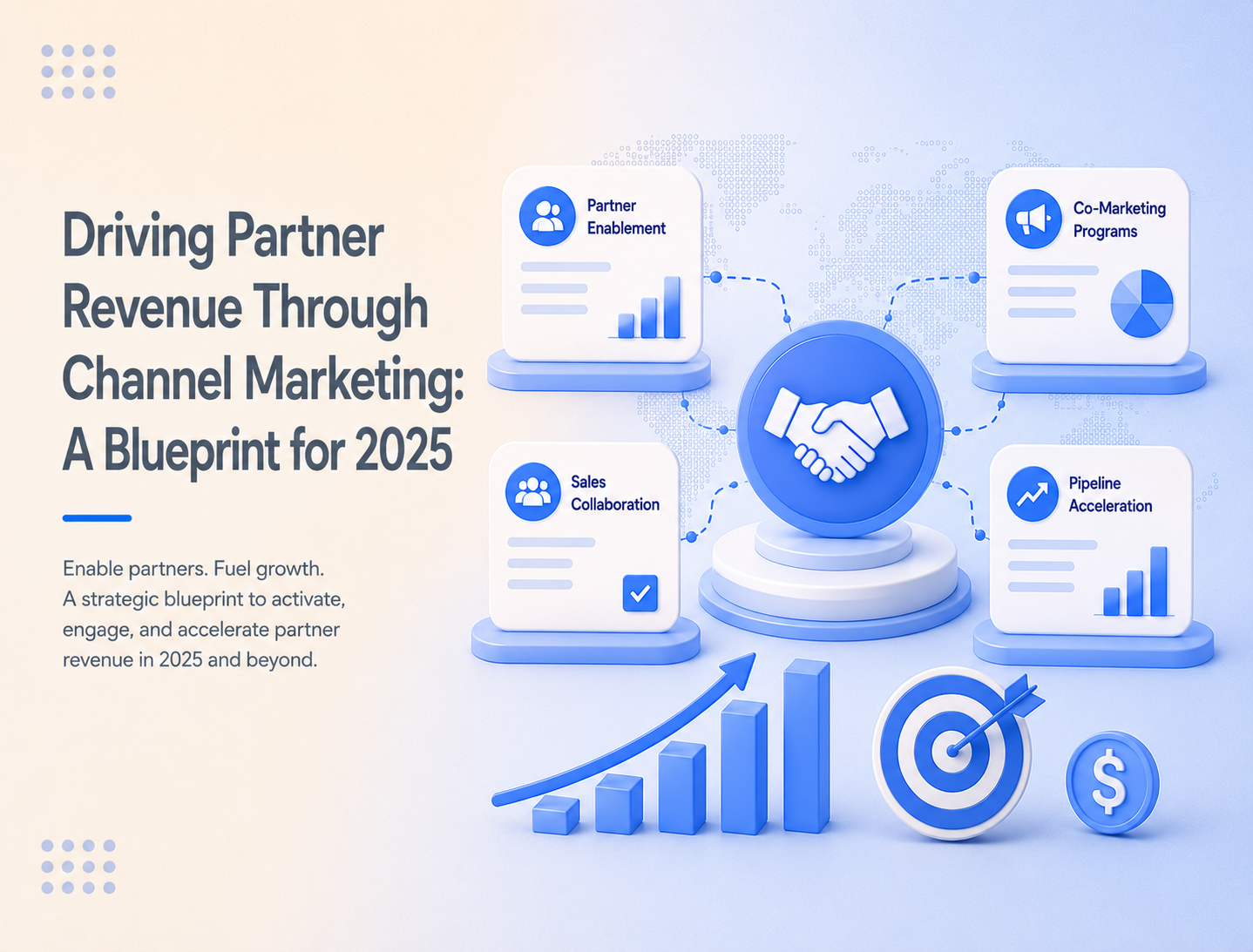
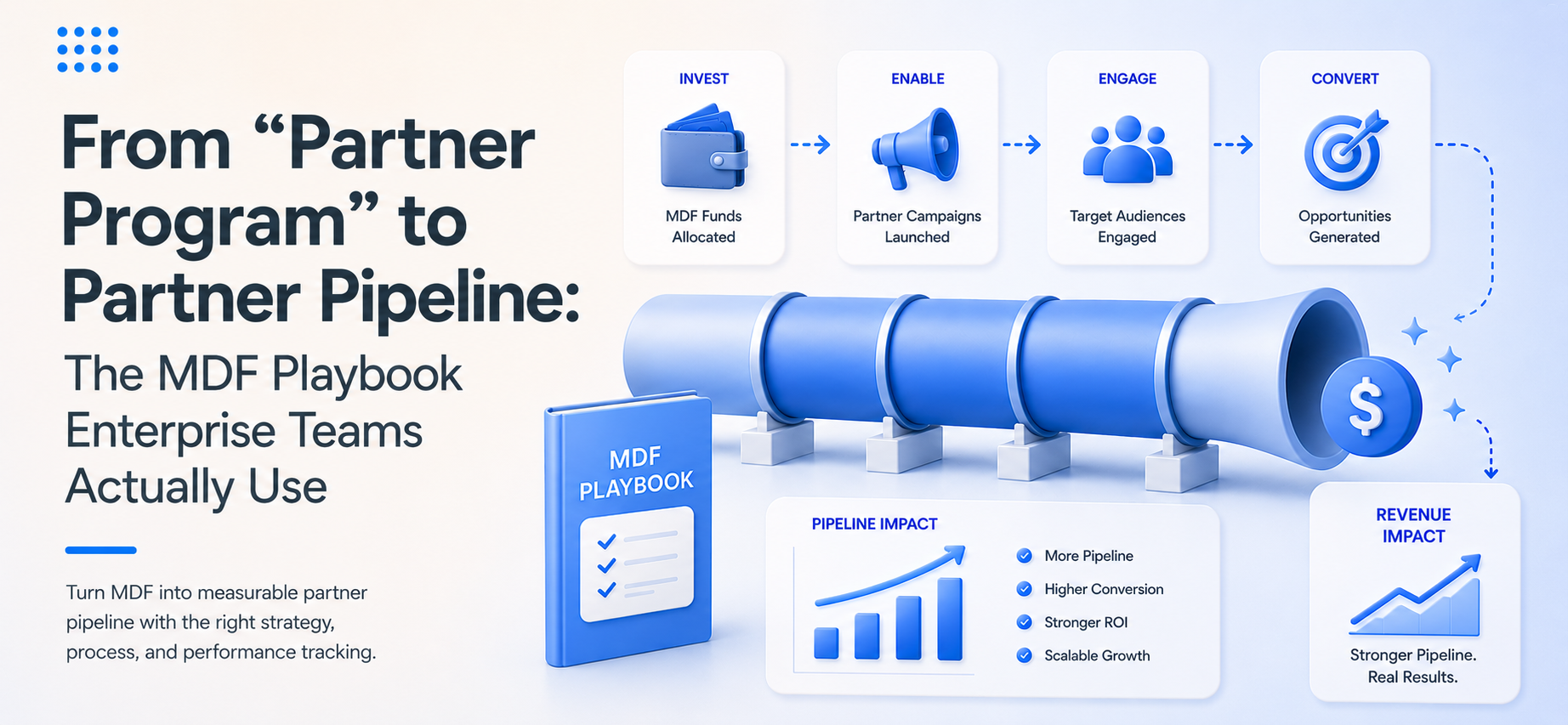
MDF only works when it’s built for pipeline—not activity. This playbook shows enterprise demand gen and partner teams how to turn partner funds into Director+ meetings that occur, protect partner branding with white-labeled outreach, and measure MDF like revenue with clear ownership, seniority standards, and real-time reporting.
-
Channel & Partner Marketing
Introduction
Market Development Funds (MDF) are supposed to be the most straightforward budget in B2B marketing: invest alongside partners, create demand, and share the wins.
In practice, MDF often turns into a different kind of program—one measured by activity instead of outcomes. Campaigns get approved, “execution” happens, reports get filed… and sales still asks the same question:
“Where are the conversations?”
That gap isn’t because MDF is broken. It’s because most MDF motions aren’t designed to produce the hardest thing in enterprise: Director+ meetings that occur and move to a next step.
This blog is a practical MDF playbook for enterprise demand gen, channel, partner, and field leaders. It covers what MDF should mean in 2026, where MDF ROI quietly breaks, and how Site Ascend helps teams convert partner funds into measurable pipeline through white-labeled Channel Marketing and Director+ Executive Meetings (with optional event registrant procurement when it fits the program).
What MDF Means for Demand Generation Marketers and other titles that meet Site Ascend’s ICP
In an enterprise context, MDF isn’t “partner marketing budget.” It’s a shared pipeline bet.
A modern definition:
MDF is a budget designed to co-create revenue outcomes with partners—by generating sales conversations in target accounts.
That sounds obvious. But it changes how you plan.
If MDF is pipeline-first, your primary questions become:
When you can answer those questions confidently, MDF stops being a quarterly scramble and becomes a repeatable engine.
Common Challenges Marketers Face
Most MDF programs don’t fail because the team “didn’t run enough campaigns.” They fail because the path from spend to meeting is fragile.
The MDF plan optimizes for approval, not outcomes
The easiest programs to approve are often the hardest to connect to pipeline. They look good in a partner deck but struggle in the real world: low intent, mismatched audiences, unclear follow-up.
Leads enter the funnel without a meeting path
Even when MDF generates responses or registrants, the program falls apart at the moment that matters—turning interest into a scheduled conversation with a decision-relevant stakeholder.
“Partner-sourced” becomes “partner-untouched”
When multiple parties “own” follow-up, no one truly owns it. The lead sits, the moment passes, and the program gets labeled as low-quality.
Seniority gets diluted
MDF can produce volume quickly, which tempts teams to accept any engagement as success. But enterprise sales doesn’t close on “engaged contacts.” It progresses when Directors+ are involved early enough to sponsor the next step.
Reporting shows activity, not sales reality
Many teams can report clicks, attendees, and leads—yet can’t answer:



.png)

%201.png)


.png)


Solutions That Work
Enterprise MDF becomes reliable when it’s built around a conversion standard—then executed with discipline.
Make “meeting that occurs” the core MDF unit of value
MDF is easiest to defend when it’s anchored to a metric sales believes.
Site Ascend’s model aligns to that by charging for meetings that occur. This does two important things:
Use white-labeled outreach so the partner relationship stays intact
In channel motions, perception matters. Partners want pipeline, but they also want brand control and consistency.
Site Ascend’s Channel Marketing program provides white-labeled appointment setting on behalf of partners, funded through MDF. That means you can run the outreach motion without creating channel conflict or confusing the buyer with too many voices.
Enforce Director+ targeting (because enterprise progression depends on it)
MDF programs die when they generate the wrong kind of “success.”
Site Ascend targets Director-level and above only for meetings. That keeps MDF from becoming a lead factory and turns it into a senior-conversation engine—especially important in enterprise accounts where committees, approvals, and budget ownership are distributed.
Add event registrant procurement when the play is event-led
Some MDF programs are anchored to sponsored events. In those cases, the job isn’t “day-of engagement.” The job is filling the room with the right people.
Site Ascend supports event-led MDF by focusing on attendee procurement via outbound dialing, plus an SMS workflow to support registrants through the event date. The goal is simple: drive registrants who actually show up—so your partner event isn’t just a calendar line item.
Actionable Steps for Marketers
If you want MDF to behave like a pipeline channel, here’s a playbook you can implement immediately.
The MDF-to-pipeline checklist (enterprise edition)
Start with a conversion standard
Decide who owns the follow-up motion
Lock targeting before creative
Choose one of three MDF plays
Instrument the program like revenue
Comparison of Market Solutions
Most MDF execution falls into a few buckets. Each can “run programs,” but they don’t all produce pipeline you can defend.
In-house channel/partner marketing execution
In-house teams can build strong partner relationships and create consistent messaging. The challenge is operational bandwidth: it’s hard to scale direct outreach, follow-up discipline, and meeting conversion across many partners without turning MDF into a queue of half-finished initiatives.
Partner-run campaigns with shared follow-up
This is common: marketing funds the plan, partners execute, and both sides “share” follow-up.
It can work when the partner has a mature outbound motion and tight alignment with sales. But often, the weak point is ownership. When follow-up is shared, it’s easy for leads to sit, context to get lost, and results to feel murky.
Outsourced support optimized for activity
Some outsourced options ramp quickly, but they tend to over-index on volume: lots of touches, lots of “leads,” lots of booked meetings—without enough pressure on held rates, seniority, and progression.
That’s where MDF ROI quietly evaporates: you pay for effort, then pay again in internal time to sort out what’s real.
A performance-aligned MDF motion
A more enterprise-ready approach treats MDF as a pipeline system:
This is the lane Site Ascend is built for—especially for teams who are tired of MDF being “busy” without being measurable.
Conclusion
MDF doesn’t underperform because partners don’t matter or because demand is impossible to create. It underperforms when the program is built to generate activity—then hopes pipeline shows up.
Enterprise teams get MDF right when they:
If you want MDF that produces real conversations—not just reports—pilot an MDF-funded channel motion with Site Ascend using white-labeled Channel Marketing and Director+ Executive Meetings, with optional event attendee procurement when an event-led play makes sense.
What’s the biggest reason MDF programs fail to drive pipeline?

How do we keep MDF from becoming “lead spam” to sales?
Can MDF work for enterprise accounts if buying cycles are long?


Start your pilot campaign today and explore the full range of Site Ascend's demand generation capabilities. Experience firsthand how we can enhance your efficiency, streamline your processes, and drive growth.
RELATED