Why Gartner’s Magic Quadrant Should Influence Your Demand Gen Strategy in 2025
Strategic Positioning for Demand Generation


Enterprise lead nurturing isn’t about more touches—it’s about moving buying committees. Learn how to reach Director+ stakeholders without burning SDR time using a two-lane nurture system, clear sponsor paths, trigger validation, and human-led qualification—plus how Site Ascend turns “not ready” engagement into meetings that occur and progress.
-
Lead Nurturing
Introduction
Enterprise demand gen has a familiar trap: you generate engagement, it looks promising, and then… nothing happens.
The account is the right fit. The content performed. People attended the webinar or downloaded the asset. But weeks later, sales still hasn’t gotten traction—and your SDR team is already underwater.
That’s not a program failure. It’s a buying committee reality.
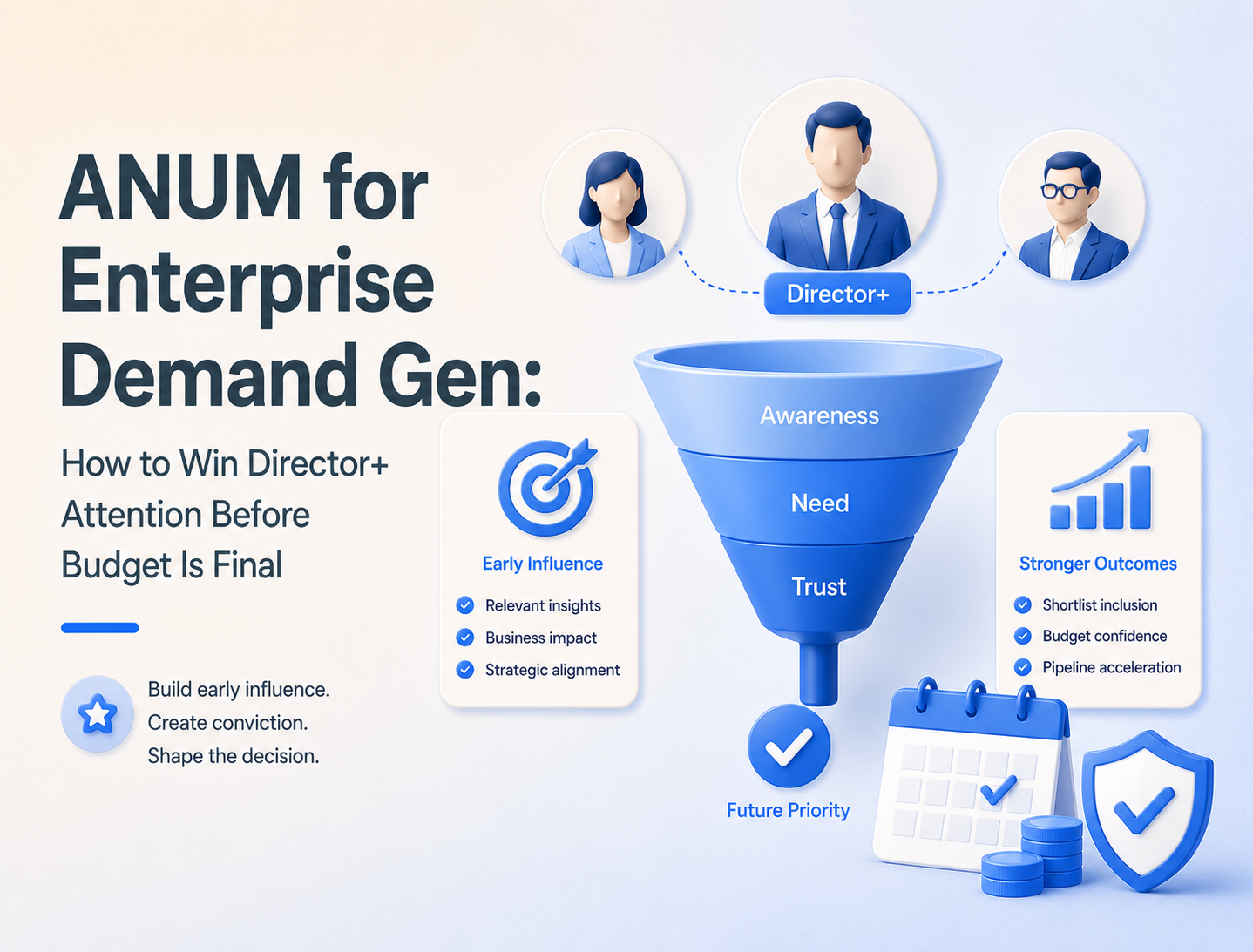
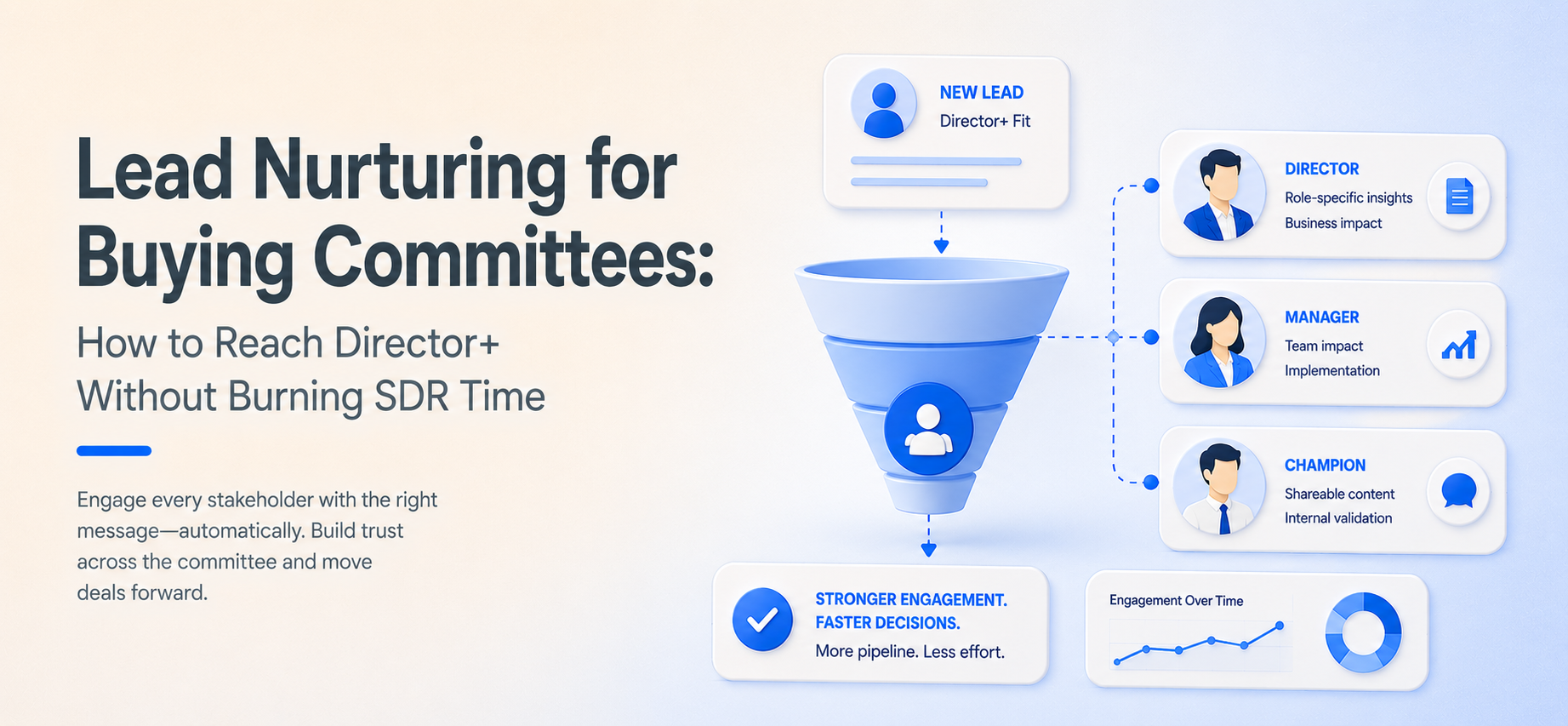
In enterprise tech, the person who raises their hand is often not the person who can greenlight change. Your nurture motion has to do more than “stay in touch.” It has to move the conversation up the org chart without turning your SDR team into a full-time follow-up engine.
This blog shows how to design lead nurturing for buying committees, what typically breaks when teams rely on automation alone, and how Site Ascend helps convert “not ready” engagement into Director+ meetings that occur through Lead Qualification and Executive Meetings.
What Lead Nurturing Means for Demand Generation Marketers and other titles that meet Site Ascend’s ICP
Lead nurturing is usually framed as “keeping leads warm.”
In enterprise demand gen, a better definition is:
Lead nurturing is the process of building enough clarity, confidence, and internal alignment for a next step to become possible.
For buying committees, that means nurturing is doing at least one of these jobs:
If your nurture motion can’t accomplish any of those, it becomes a holding pattern—not a pipeline driver.
Common Challenges Marketers Face
Engagement comes from the wrong seat
The people who download assets are often evaluators, not sponsors. They can learn, but they can’t always act.
The “not now” bucket grows forever
Leads get labeled “nurture” with no defined reason or next check-in trigger, so they simply age out.
Automation nurtures attention, not decisions
Email drips can maintain awareness, but they rarely create the cross-functional movement needed for a Director+ meeting.
SDR follow-up becomes reactive and expensive
When SDRs try to manually chase every engaged lead, they burn cycles on accounts that lack urgency, authority, or a path to next steps.
Events and partner leads go cold after the spike
Registrations and MDF leads often create short-lived engagement without enough context to sustain a real opportunity.



.png)

%201.png)


.png)


Solutions That Work
If you want to reach Director+ without burning SDR time, you need a nurture strategy that’s designed for committees—not individuals.
The most effective approach is a two-lane system:
Build “promotion paths,” not drip tracks
A promotion path is a defined way a lead moves from interest to action. In enterprise buying, the promotion path usually requires one of the following:
Sponsor mapping
Trigger validation
Problem anchoring
Next-step design
These are not email metrics. They’re progression metrics.
Use human-led Lead Qualification to keep SDRs focused
The “burn SDR time” problem is fundamentally a sorting problem. You need a reliable way to separate:
Site Ascend’s Lead Qualification program is built for that middle layer. It converts opt-in engagement into meeting-ready conversations by validating:
Instead of asking SDRs to discover everything from scratch, you hand sales (or SDRs) leads with verified context and a clearer path to action.
Start Director+ conversations with Executive Meetings
Sometimes the nurture job isn’t to “warm up the lead.” It’s to reach the decision-maker directly.
Site Ascend’s Executive Meetings focus on:
This is especially useful when the buying committee is diffuse and your inbound signals aren’t coming from the sponsor.
When events are part of nurture, optimize for attendance and seniority
Event registrants often look like pipeline—until the event happens and your attendance rate or stakeholder level doesn’t match expectations.
Site Ascend supports event attendee procurement via outbound dialing, plus SMS workflow support up to the event date (not day-of services). That helps nurture the one thing that matters most for events: the right people showing up.
Actionable Steps for Marketers
Here’s a practical playbook to reach Director+ stakeholders without overloading SDR capacity.
A simple two-lane nurture system
Lane 1: Scalable nurture (keep it lean)
Lane 2: Human validation (use it selectively)
Use qualification outreach when the lead shows one of these signals:
The Director+ promotion checklist
Before you push for a meeting, validate:
Sponsor path
Problem + impact
Trigger
Meeting purpose
What to track instead of “nurture engagement”
Engagement metrics aren’t useless—but they don’t prove progression.
Track:
Those are nurture outcomes that correlate with pipeline.
Comparison of Market Solutions
Most “nurture fixes” fail because they assume the problem is attention. In enterprise, the problem is usually decision movement—getting the right stakeholders aligned at the right time.
Automation-first nurture (drips, scoring, and waiting)
This approach keeps programs scalable and can be great for education. It’s also comfortable because it’s measurable.
But automation rarely answers the questions sales cares about:
Who owns this? Why now? What changes if they do nothing? What’s the next step?
Without those answers, leads stay warm but stagnant.
SDR-led nurture (manual follow-up for everyone)
This can work when volume is low and SDR capacity is high. It’s also the fastest way to learn what’s happening in accounts—when it’s sustainable.
In most enterprise teams, it isn’t. SDRs get overloaded, follow-up becomes inconsistent, and the team spends too much time on leads that were never going to progress.
Human qualification + Director+ meeting motions (nurture designed for progression)
This approach treats nurture as a sorting and progression system:
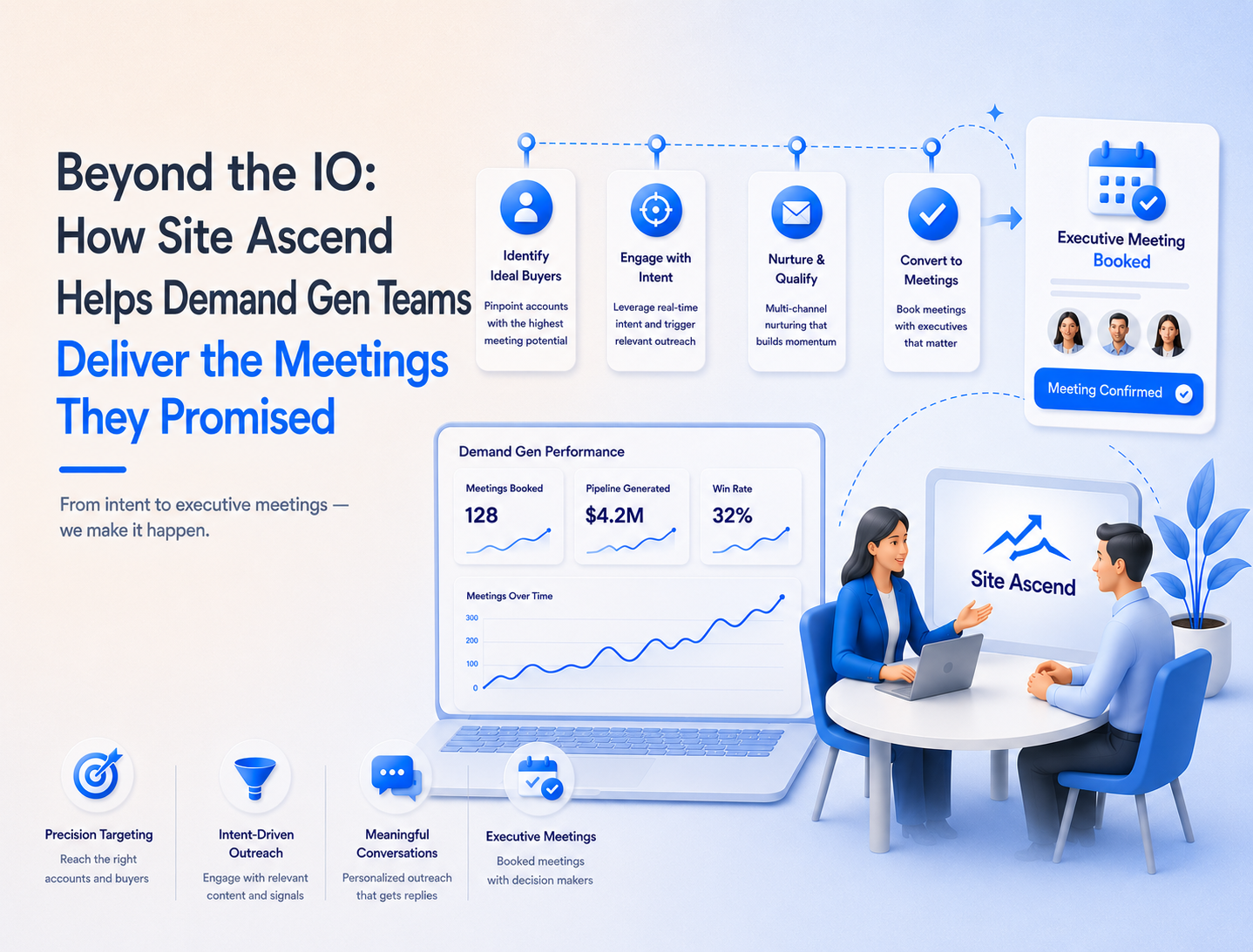
This is where Site Ascend fits—using Lead Qualification to validate committee realities and Executive Meetings to reach Director+ stakeholders directly, while staying accountable to meetings that occur.
Conclusion
If your nurture program is producing engagement but not pipeline, the issue may not be content or cadence. It may be committee dynamics.
To reach Director+ stakeholders without burning SDR time, nurture has to do more than warm leads. It has to build:
If you want to pilot a nurture-to-meeting motion that converts “not ready” leads into Director+ meetings that occur and progress, contact Site Ascend about a pilot using Lead Qualification and Executive Meetings.
Is lead nurturing just email?

How do we reach Director+ if our leads are mostly managers and practitioners?
How do we avoid wasting SDR time on nurture leads?


Start your pilot campaign today and explore the full range of Site Ascend's demand generation capabilities. Experience firsthand how we can enhance your efficiency, streamline your processes, and drive growth.
RELATED