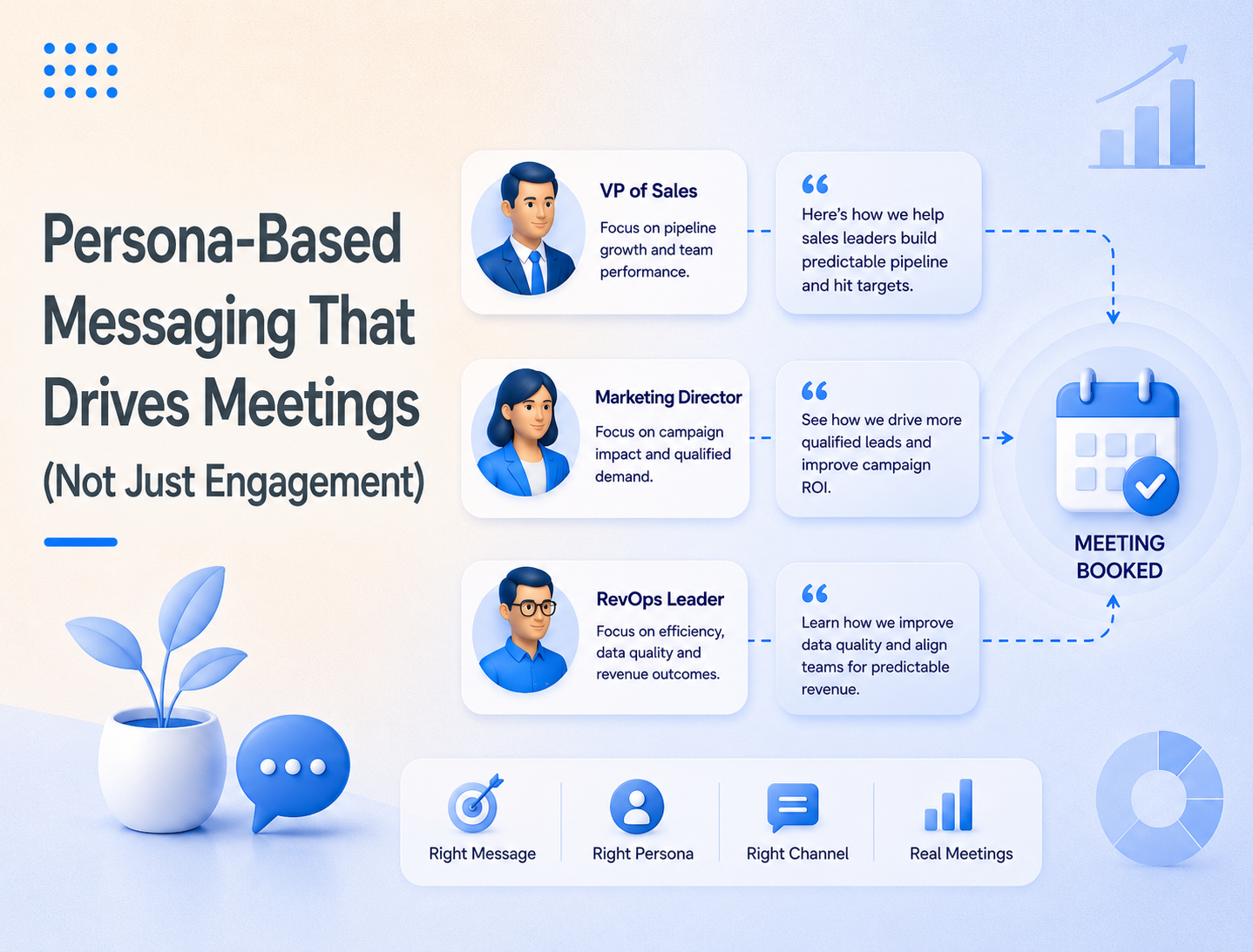
Persona-Based Messaging That Drives Meetings (Not Just Engagement)
Demand Generation


Demand Generation & Pipeline Acceleration
-
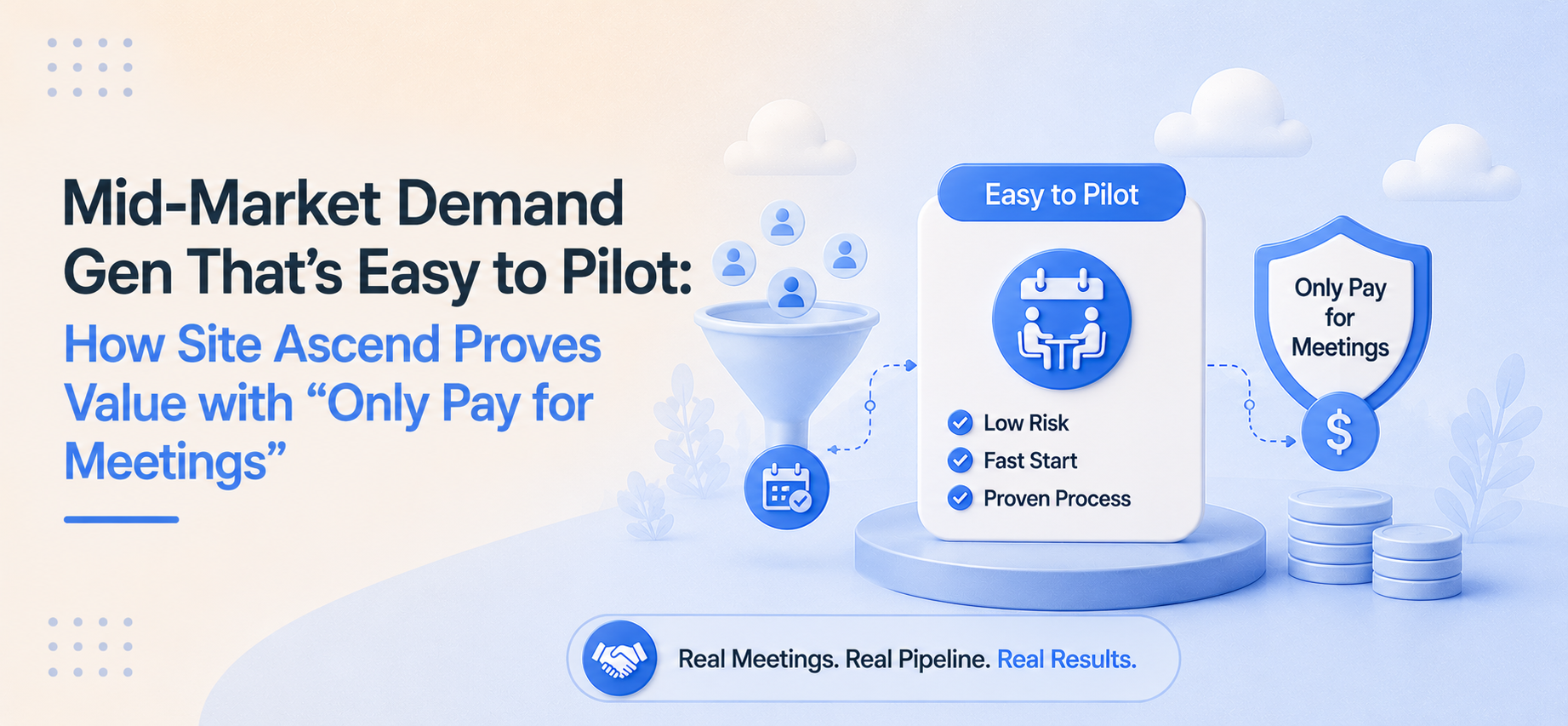
Pilot a mid-market program that de-risks pipeline creation. Site Ascend’s pay-for-outcome model delivers director-level meetings that actually occur—so you can prove impact fast without scaling SDR headcount.
Introduction
Mid-market demand gen has a reputation for being “easier” than enterprise—shorter cycles, less procurement friction, more reachable stakeholders. In practice, most demand gen leaders feel the opposite: mid-market is where volume expectations collide with limited SDR capacity, messy handoffs, and “lead” programs that create activity without creating meetings.
If you’re accountable for pipeline, you don’t need more names in a spreadsheet. You need a repeatable conversion layer that turns targeting into booked conversations—without burning SDR time or gambling budget on outcomes you can’t control.
That’s where the Site Ascend model is built to perform: you only pay for meetings that occur, with director-level and above prospects, delivered by an all U.S.-based contact center, supported by a real-time reporting dashboard, and structured so it’s easy to pilot and scale.
What “Mid-Market” Should Mean for Demand Gen Teams (and Why It’s Harder Than It Looks)
“Mid-market” is not just a company-size segment. Operationally, it’s a throughput problem.
Demand gen teams typically run mid-market programs for one (or more) of these reasons:
In theory, mid-market should make demand gen simpler. In reality, most programs break down in the same place: between interest and conversation.
Mid-market buyers will engage—but they also ignore. They will click—but they won’t always reply. They will download—but they won’t necessarily show up.
If your system stops at “lead captured,” you’re not running a pipeline program. You’re running a data collection program.
Common Challenges Marketers Face in Mid-Market Demand Gen
1) Mid-market lead volume doesn’t equal mid-market conversion
A typical mid-market program produces a lot of “signals” (clicks, form fills, webinar registrations). The issue is that most teams don’t have an operational plan for converting those signals into sales-accepted meetings.
When conversion is unclear, the funnel fills—but pipeline doesn’t.
2) SDR time becomes the bottleneck
Mid-market motion is usually “high volume with high context.” SDRs aren’t just booking meetings—they’re triaging, researching, routing, chasing, and following up.
That means you’re paying your highest-leverage internal resource to do the most repetitive work.
3) Handoffs create friction (and finger-pointing)
Marketing hits a lead target. Sales claims the leads are low quality. SDRs say the timing is wrong. The field says they never saw the right accounts.
The problem is rarely effort. It’s usually definition and verification—what qualifies as “ready,” and who owns follow-up.
4) Event programs leak after registration
Mid-market events often look healthy on paper: solid registration counts, decent email engagement. Then attendance drops, no-shows increase, and the post-event conversion is inconsistent.
The missing layer is proactive confirmation and persistence.
5) Channel motions stall at execution
Many mid-market partner programs have MDF, targets, and good intent. What they don’t have is reliable execution: consistent outreach, partner-friendly branding, and meeting delivery that doesn’t create conflict over ownership.



.png)

%201.png)


.png)


Solutions That Work
Site Ascend is designed to solve mid-market demand gen’s most expensive problem: conversion risk.
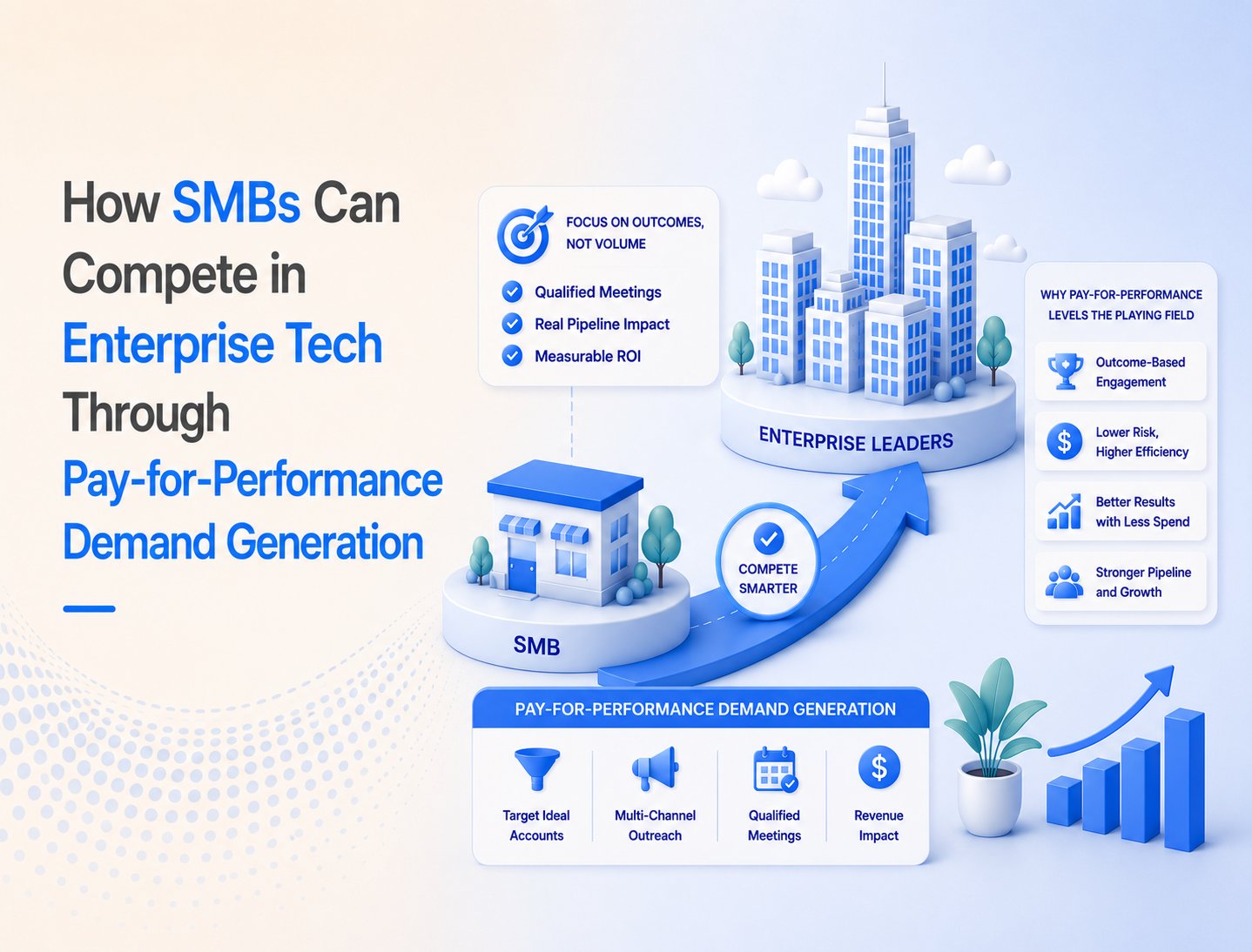
Instead of paying for activity (leads delivered, dials made, sequences launched), you pay only for outcomes: meetings that occur.
Here’s how that translates into a mid-market pilot that actually proves value.
Executive Meetings: Director+ conversations that happen
Site Ascend books 30-minute virtual meetings with director-level and above prospects in your target accounts.
What matters isn’t the calendar invite—it’s the meeting occurring. That’s why the commercial model is aligned to the outcome you care about, not the activity behind it.
Lead Qualification: Convert opt-ins into sales-ready meetings
Mid-market programs generate opt-ins—whitepaper downloads, webinar registrations, inbound requests, trial interest. The gap is what happens next.
Site Ascend turns opt-in leads into qualified meetings by handling the “conversion layer” that most teams cannot staff consistently:
Event Marketing: Attendance procurement via outbound dialing + SMS support
Site Ascend is not a day-of-event services provider. The focus is driving registrants and supporting attendance in a way that produces real conversations.
Site Ascend procures registrants using outbound dialing, then runs an SMS workflow to support attendance through the event date. That’s the operational layer most event programs skip—and it’s where a significant portion of pipeline leakage occurs.
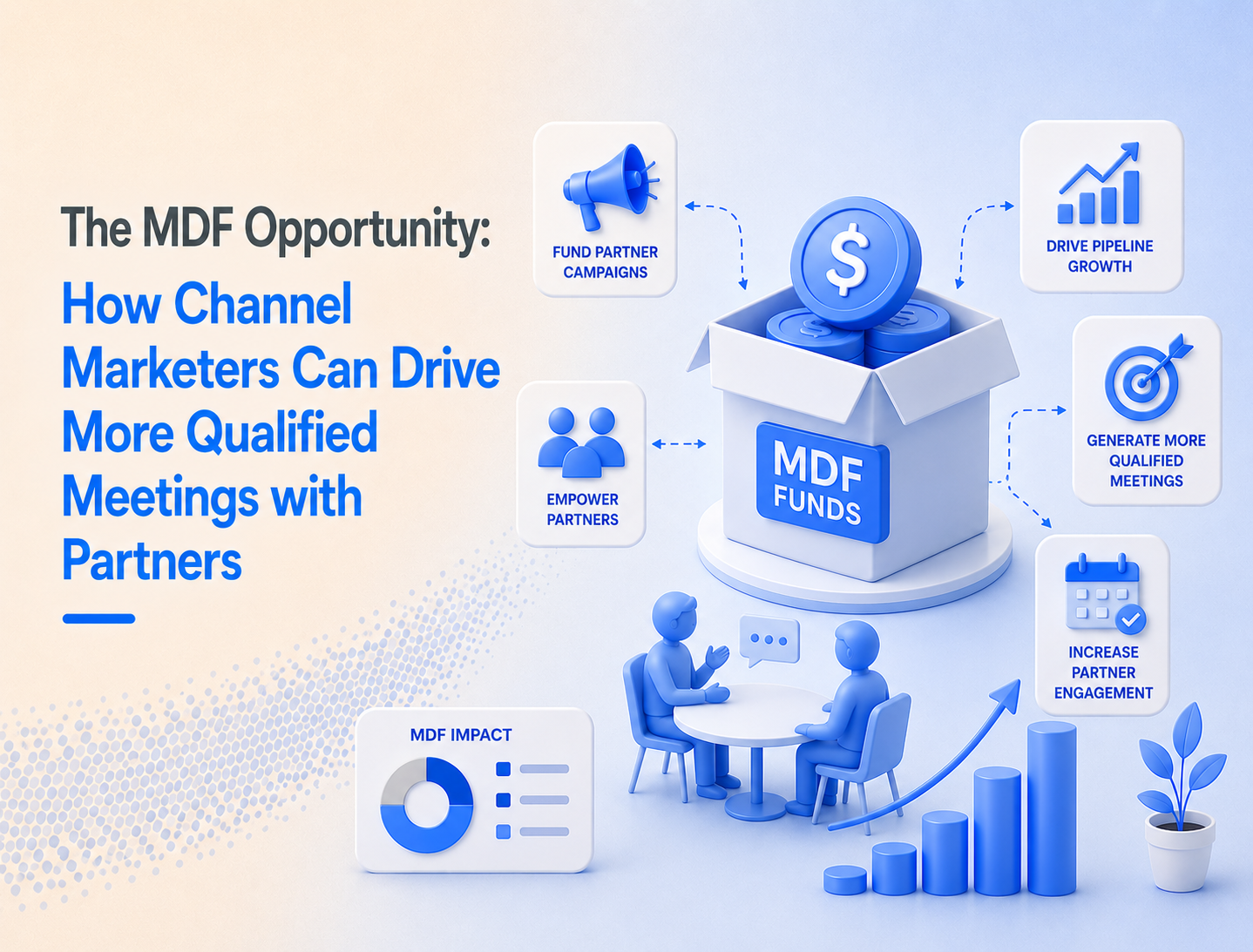
Channel Marketing: White-labeled appointment setting funded by MDF
If you run partner marketing, you already know the constraint: partners want pipeline, but execution is inconsistent.
Site Ascend offers white-labeled outreach on behalf of your partners, commonly paid for with market development funds, while preserving a clean partner experience and clear attribution.
Real-time reporting dashboard: prove performance during the pilot
A pilot only works if you can diagnose it quickly.
Site Ascend’s real-time reporting dashboard provides visibility into outcomes and throughput so marketing can manage performance, tune targeting, and report results without waiting for end-of-month summaries.
Actionable Steps: A Mid-Market Pilot Checklist That Proves Impact Fast
If you want a mid-market program that is easy to pilot and defend internally, use this checklist to structure it:
1) Define “meeting quality” upfront
Document the non-negotiables:
Site Ascend performs best when meeting acceptance criteria are explicit.
2) Choose one conversion motion for the pilot
Pick one primary motion to reduce variables:
You can add motions later. Start with the one most tied to near-term pipeline.
3) Build a routing and feedback loop with sales
To avoid sales friction:
Site Ascend is the conversion layer—sales still needs a clear handoff.
4) Operationalize persistence (this is where pipeline dies)
Most mid-market programs fail because follow-up is sporadic.
Site Ascend’s outbound calling motion is built specifically to handle:
5) Measure outcomes, not activity
For the pilot, focus reporting on:
This is the difference between “we did outreach” and “we created pipeline.”
Comparison of Market Solutions
Mid-market teams generally choose between three approaches:
Example 1: The Procurement View
Outcome 1: De-risk spend against measurable delivery
Outcome 2: Ensure control, compliance, and brand safety
Outcome 3: Prevent downstream waste (sales time, follow-up drag, funnel leakage)
Conclusion
Mid-market demand gen is where teams win or lose operationally. You can run great targeting, clean data, and strong messaging—and still miss pipeline if your conversion layer is weak.
Site Ascend exists to solve that conversion gap.
If you want a mid-market program that’s easy to pilot, easy to defend, and built around outcomes your revenue team can validate, start with a model that aligns to the only metric that matters in the near term: meetings that occur.
If you want to pilot Site Ascend for mid-market pipeline—executive meetings, channel appointment setting, event attendee procurement, or lead qualification—contact Site Ascend to define acceptance criteria and launch a performance-based program.
What makes a Site Ascend pilot “easy” compared to other options?

Will Site Ascend work with our channel partners without confusing ownership?
How does Site Ascend handle event marketing differently?


Start your pilot campaign today and explore the full range of Site Ascend's demand generation capabilities. Experience firsthand how we can enhance your efficiency, streamline your processes, and drive growth.
RELATED