Sales Handoff Best Practices: A Simple Framework to Improve Sales Acceptance Rates
Demand Generation Operations


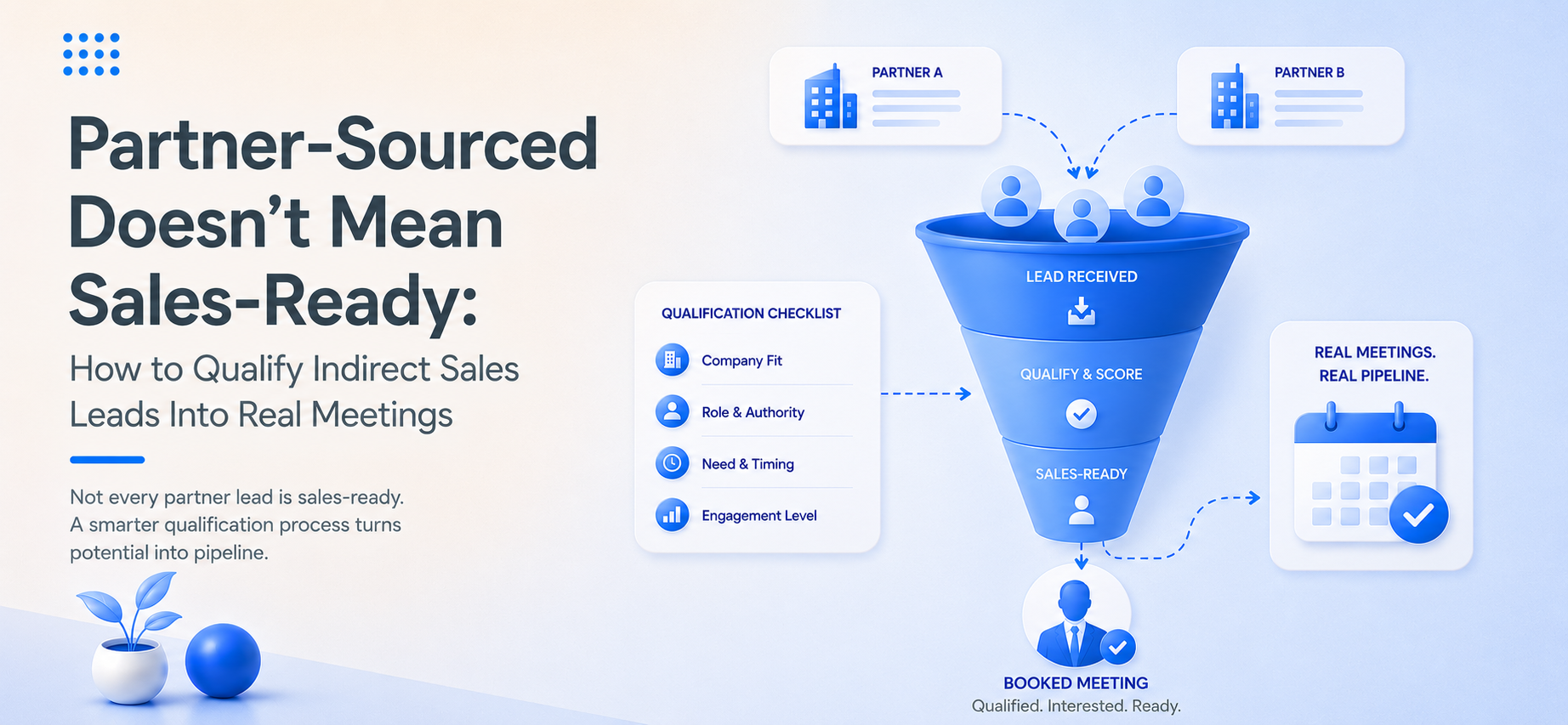
Partner leads only turn into pipeline when the handoff includes the right context, the right seniority, and a real next step. This post breaks down why “partner-sourced” so often stalls—and the practical qualification standard enterprise teams can use to convert indirect leads into director+ meetings that happen.
-
Channel Marketing
Introduction
Partner leads are supposed to be the “fast lane” to pipeline. The logic is clean: your partners already have trust, already have access, and already have context—so the handoff should be easy.
In practice, partner-sourced leads often land in a weird middle zone: too warm to ignore, too vague to act on. Sales gets a name and a company, maybe a short note like “interested in learning more,” and then… nothing happens. No meeting. No second touch. No momentum.
The fix isn’t “more partner leads.” It’s a better standard for what qualifies as sales-ready in an indirect motion—and a process to turn partner intent into director+ conversations that actually occur.
What “Indirect Sales Lead Qualification” Really Means
In indirect sales, the lead isn’t the product. The meeting is.
A sales-ready partner lead isn’t “someone the partner met.” It’s someone who:
That’s why indirect lead qualification should be less about “checking a box” and more about answering one question:
Is there enough signal here to justify sales’ time—and can we confidently secure a next step?
Why Partner Leads Break Down Before They Become Meetings
Most indirect motions don’t fail because partners are “bad at leads.” They fail because the handoff is missing structure.
Here are the most common breakpoints:
The lead is a relationship—not a buying signal
Partners often share contacts they know will take a call. That’s helpful. But sales needs more than willingness—they need relevance.
The persona is too junior to move anything forward
A “yes” from a manager can still mean a “no” to pipeline. If your deal requires director+ alignment, your partner-sourced standard has to reflect that.
The context is too thin to earn a calendar slot
“Interested” doesn’t tell a rep what to do next. Without pain, initiative, timing, or stakeholders, the lead gets deprioritized.
Ownership is fuzzy
Is the partner following up? Is your SDR team? Is sales expected to jump in immediately? When ownership isn’t explicit, the lead goes stale.
The follow-up window is missed
Indirect leads often decay quietly. If the first meaningful outreach happens days later, momentum disappears and the “warm lead” becomes a cold one.



.png)

%201.png)


.png)


Solutions That Work
This is where qualification needs to look like an operational system—not a spreadsheet column.
At Site Ascend, the goal isn’t to “process partner leads.” It’s to convert partner intent into meetings that occur, with director+ titles, and with enough signal to make a second call realistic.
Here’s what that looks like in practice:
1) Start with a director+ meeting standard, not a lead definition
Instead of arguing about whether a lead is “good,” define what a qualified meeting must include:
When sales agrees on the meeting standard, partner leads stop being subjective.
2) Use outreach that feels like the partner—but runs like a process
Indirect sales gets messy when outreach doesn’t match the relationship. That’s why white-labeled outreach matters: it preserves partner trust while creating consistent qualification and follow-up.
3) Qualify through real conversations, not form fills
Partner programs often lean too hard on “lead submissions.” But real qualification happens in conversation—because that’s where you uncover the missing pieces that determine whether sales will engage.
Site Ascend’s model is built around outbound dialing to secure and confirm meetings, supported by a text-message workflow through the meeting date to reduce no-shows and keep momentum intact.
4) Make acceptance measurable and visible
If indirect leads are going to be taken seriously, you need visibility into what happened after the handoff:
This is where a real-time reporting dashboard changes the dynamic. It turns indirect sales from “trust us, it’s working” into a pipeline motion you can manage.
5) Align incentives to outcomes
Indirect sales often pays for activity: leads, clicks, webinar registrants, “introductions.”
But pipeline comes from outcomes: meetings that occur and progress.
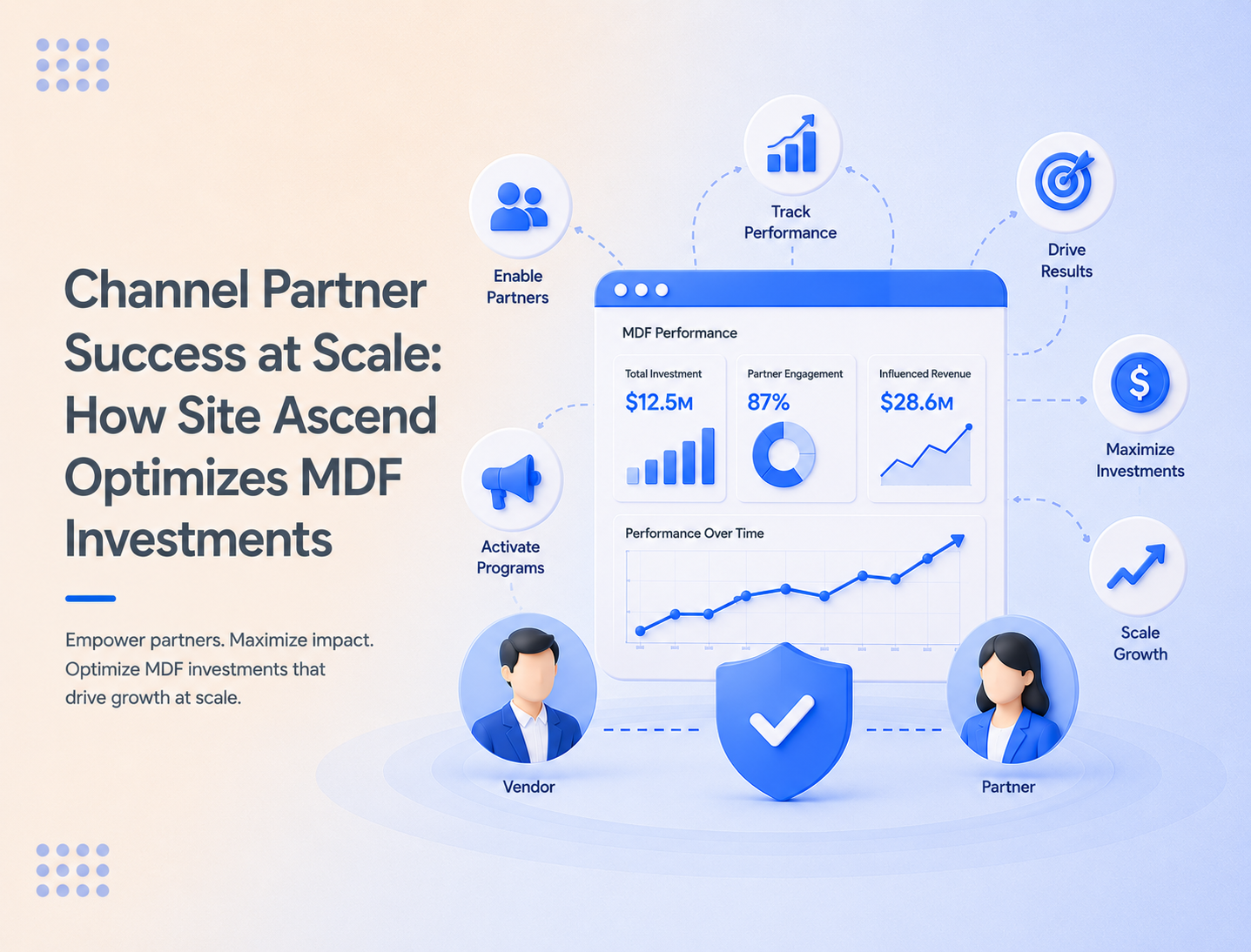
When your partner motion is built around measurable meetings (not vague lead counts), your MDF and co-op investments stop drifting.
Actionable Steps
If you want partner-sourced leads to convert, give your teams a qualification checklist they can actually use.
The Minimum Signal Test
A partner lead should not be routed to sales unless you can answer:
If you can’t answer these, the lead isn’t “bad.” It’s just not finished yet.
The Finishing Step
For leads that don’t pass the test, don’t dump them back into nurture limbo. Assign an owner to finish qualification and convert the lead into a meeting-ready conversation.
Comparison of Market Solutions
Most teams try to fix partner lead conversion by picking one of three common approaches.
Some build it in-house. They assign an SDR to partner leads and hope responsiveness improves. This can work—until partner volume spikes, territories shift, or SDR priorities change. In-house teams often struggle with consistency because partner leads compete with every other demand motion.
Others lean on “lead submission” systems. Partners upload leads, marketing routes them, and everyone waits for sales to follow up. The process looks clean on paper, but it usually breaks in the same place: the lead arrives without enough context, and the buyer doesn’t feel any urgency to meet.
A third group outsources for volume. They get more activity—more emails, more touches, more “attempts.” But indirect sales doesn’t reward generic outreach. If the outreach doesn’t preserve the partner relationship and doesn’t target director+ correctly, conversion stays low and sales trust gets worse.
A better path is an outcome-driven model built specifically for indirect sales: white-labeled outreach that protects partner trust, live qualification that builds real meeting readiness, and a pay-for-performance structure tied to meetings that occur. That’s how indirect sales becomes a measurable pipeline motion instead of a “partner lead” debate.
Conclusion
Partner-sourced doesn’t mean sales-ready. Not because partners aren’t valuable—but because indirect sales needs a shared standard, clear ownership, and a process that turns interest into a real meeting with a real next step.
If you want partner leads to convert, stop optimizing for lead volume and start optimizing for director+ meetings that occur—and progress.
If you want to see what this looks like in action, contact us.
What’s the difference between a partner lead and a sales-ready partner lead?

Should sales work every partner lead immediately?
How do you prevent partner leads from going stale after the handoff?


Start your pilot campaign today and explore the full range of Site Ascend's demand generation capabilities. Experience firsthand how we can enhance your efficiency, streamline your processes, and drive growth.
RELATED