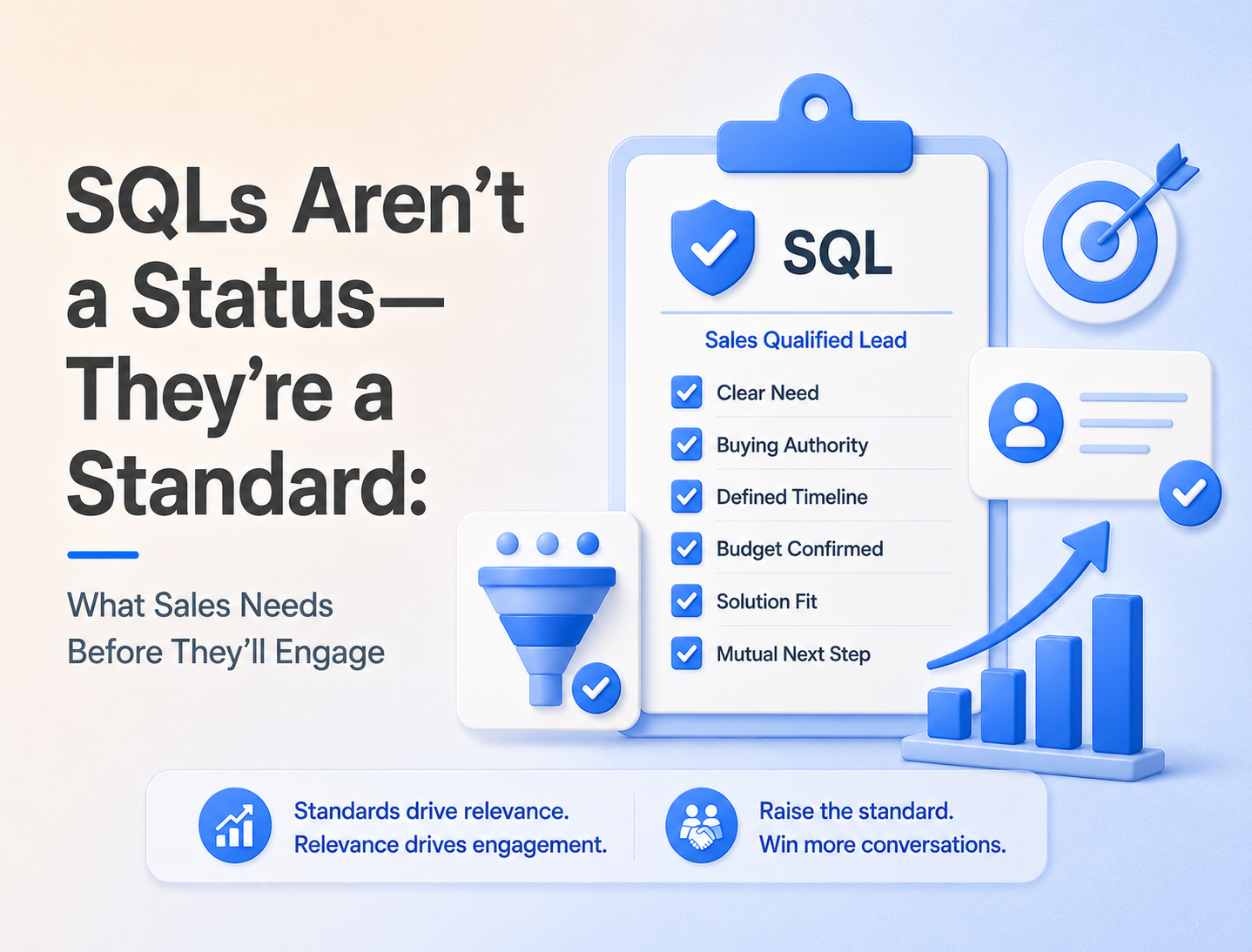
SQLs Aren’t a Status—They’re a Standard: What Sales Needs Before They’ll Engage
Demand Generation


Retention starts long before renewal. In 2025, the strongest tech teams are building durable pipeline by engaging director-level stakeholders early, qualifying intent through real conversations, and creating pre-sale alignment that prevents churn before it begins.
-
Retention Marketing
Introduction
Retention marketing used to be the quiet cousin of demand generation. Important, sure — but often treated as something that kicked in after the contract was signed. In B2B tech, retention was mostly about onboarding, adoption, and customer communications once the deal was already done.
That line has disappeared in 2025.
Today, the biggest churn risks don’t show up after implementation. They show up much earlier — in the expectations set during the buying journey, the stakeholders engaged (or ignored) during evaluation, and the clarity of the value story before a prospect ever becomes a customer.
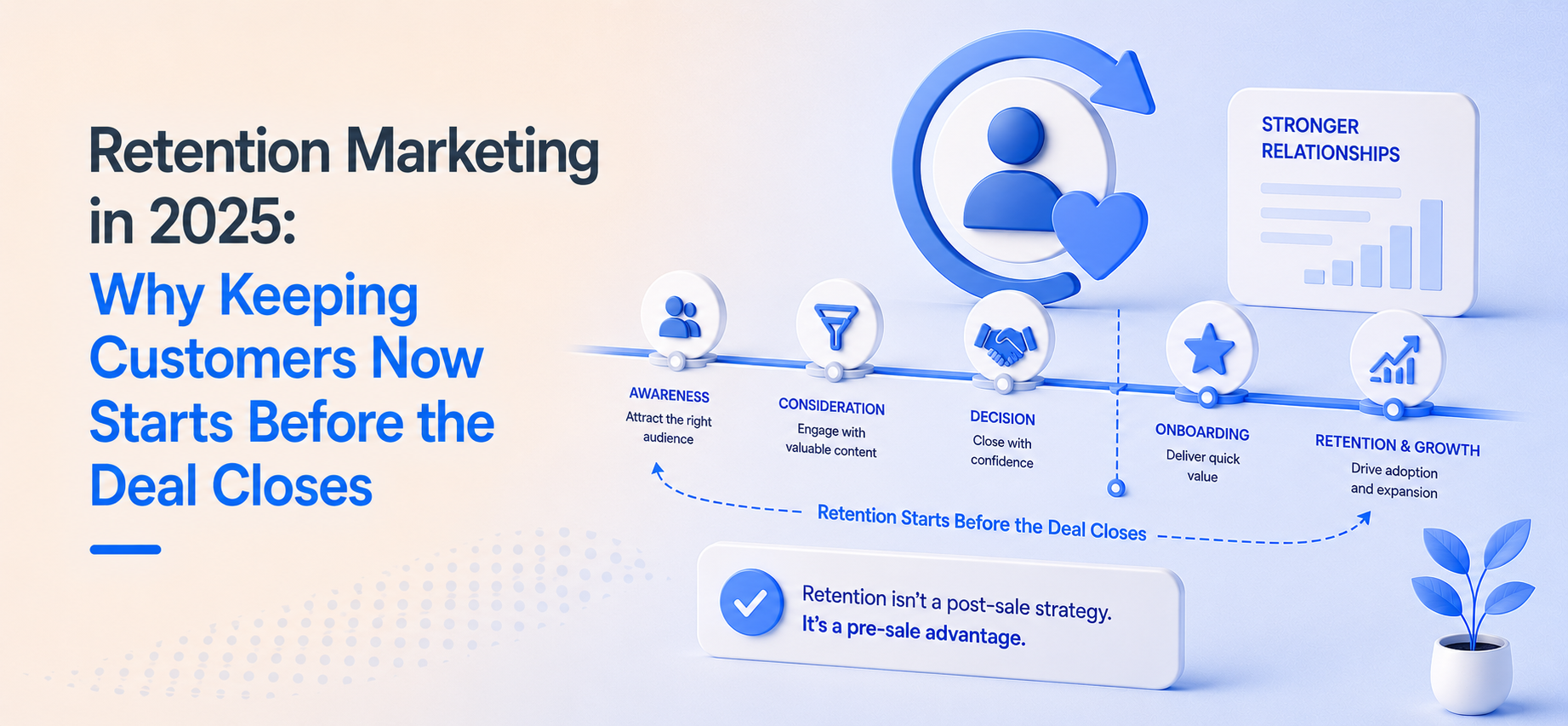
Demand gen leaders are seeing it firsthand: the way you build pipeline determines the way you keep pipeline. Retention isn’t a post-sale “save” motion anymore. It’s a pre-sale strategy that starts when you first engage the account.
What Retention Marketing Means for Demand Generation Marketers and other titles that meet Site Ascend’s ICP
Retention marketing in 2025 is no longer confined to customer teams or expansion programs. For demand generation leaders, it’s become a full-funnel discipline focused on ensuring the accounts you close are the accounts that stay — and grow.
At its core, retention marketing means two things:
First, it’s about creating durable relationships across the buying committee, not just winning a single champion. The more director-level stakeholders you engage early, the more resilient the customer becomes when priorities shift, teams reorganize, or budgets tighten.
Second, it’s about reinforcing value before, during, and immediately after the deal closes, so customer expectations match reality. When the pre-sale experience is aligned with the post-sale outcome, retention becomes the natural next step instead of an uphill battle.
Seen this way, retention marketing isn’t separate from demand gen. It’s the long game of demand gen — ensuring the pipeline you generate is durable revenue, not short-term wins that unravel six months later.
Common Challenges Marketers Face
Many retention problems are really demand generation problems in disguise.
A common one is single-threaded pipeline. Demand gen programs drive engagement with one persona — often a user-level champion — while director-level leadership remains unengaged or unaligned. When that champion changes roles or loses urgency, retention risk rises immediately. The deal closes, but the internal consensus never fully formed.
Another challenge comes from mid-funnel misalignment. Marketing and sales may push an account forward based on excitement and activity, but without confirming true readiness, use case clarity, or internal stakeholder buy-in. That creates a fragile close — one that looks like pipeline progress now, but becomes churn later.
Events and partner motions also introduce retention risk when they generate volume without precision. A successful sponsored event might deliver registrants, but if engagement isn’t with the right personas or doesn’t convert into multi-stakeholder conversations, you end up closing accounts with shallow alignment. That’s not a retention foundation — it’s a retention liability.
Finally, there’s the execution gap. Even when marketers know they need broader engagement, internal teams rarely have the bandwidth to consistently build buying-committee alignment before deals close. Follow-up is late, qualification is light, and the opportunity becomes sales-owned long before the relationship is fully established.
Retention marketing struggles when the funnel is built for speed alone, not durability.



.png)

%201.png)


.png)


Solutions That Work
The retention-first demand gen teams are doing something subtle but powerful: they’re building pipeline in a way that makes accounts harder to lose.
They’re prioritizing director-level engagement early — not as a vanity play, but as a retention strategy. The more senior stakeholders you bring into conversation before close, the less likely the customer is to drift later.
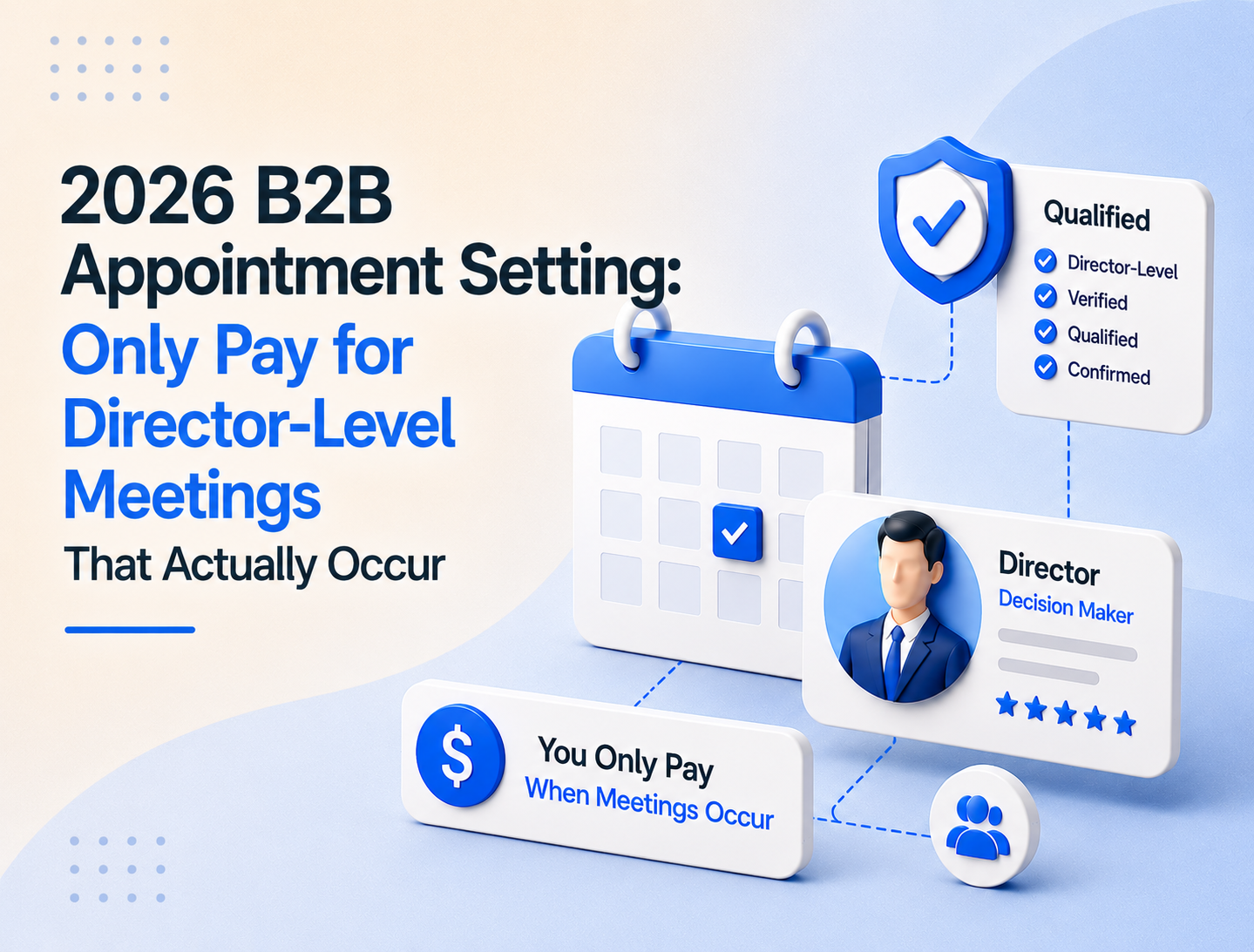
This is where Site Ascend integrates naturally into retention-driven pipeline strategy. Instead of generating interest and hoping it consolidates into multi-threaded buying alignment, demand gen leaders use Site Ascend to secure meetings with director-level decision makers inside target accounts during the active funnel stage.
Those meetings don’t just accelerate deals. They deepen deals. They create shared understanding across stakeholders and help confirm that urgency and value are real before the deal is signed.
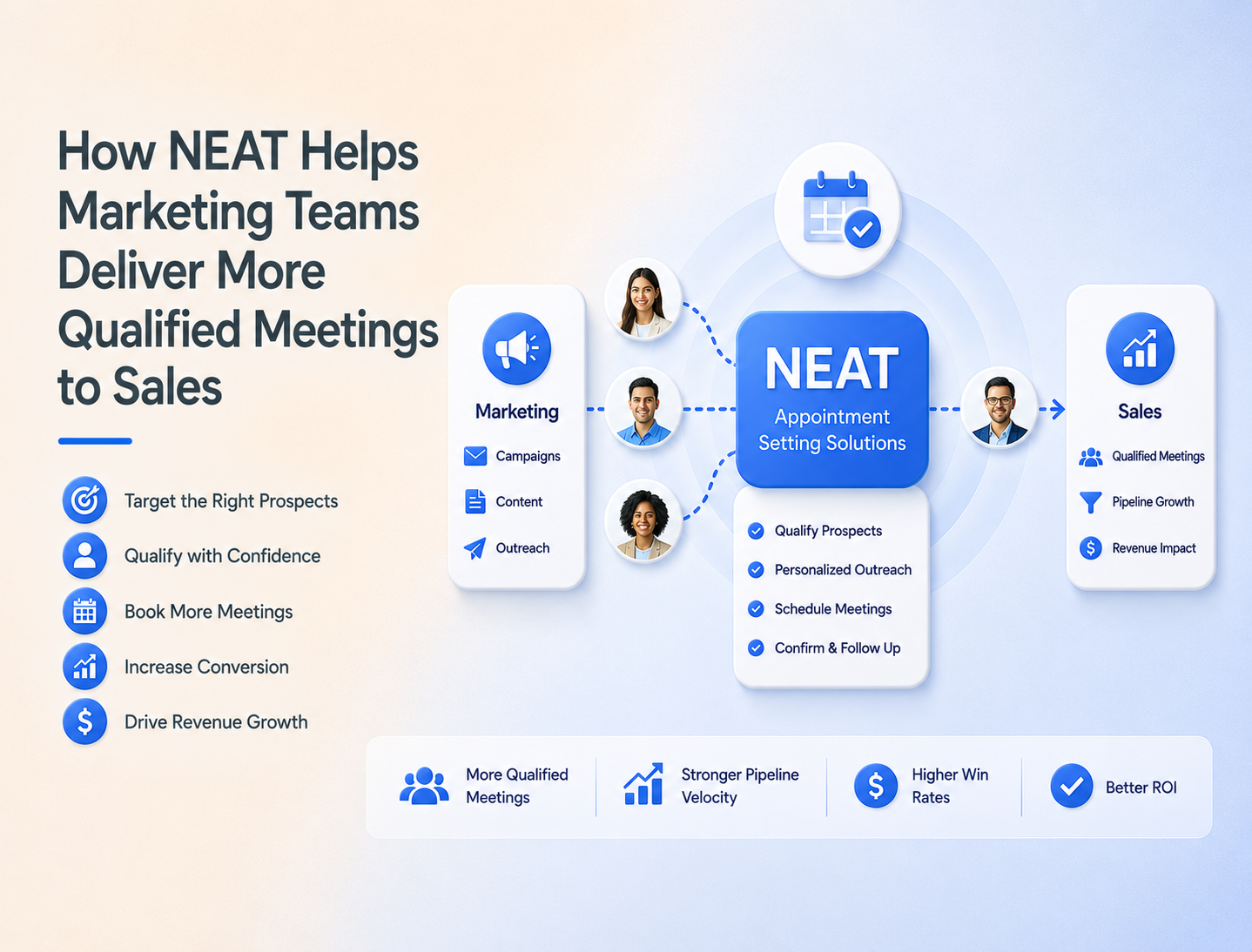
Site Ascend’s lead qualification support strengthens retention outcomes too. By adding a human qualification layer to inbound and opt-in engagement, marketers ensure the opportunities they hand off to sales are not only high-intent, but high-fit. That reduces the number of “false positive” deals that close fast but churn early.
In event-led and partner motions, Site Ascend’s outbound-driven attendee procurement and white-labeled outreach help demand gen teams reach the right senior personas and follow through consistently. That creates pipeline built on real engagement, not surface-level activity.
Retention marketing works best when pipeline is built with the long term in mind. Human engagement is what makes that possible.
Actionable Steps for Marketers
Retention-driven demand gen begins with rethinking what a “qualified opportunity” really means.
It’s not just intent. It’s not just activity. It’s not just a lead score. It’s the presence of real buying alignment among the right stakeholders.
The best teams are mapping retention backward. They look at churn patterns and ask what was missing before close — additional personas, clearer value expectations, stronger stakeholder engagement — then rebuild demand gen to include those elements earlier.
They also stop treating follow-up as a convenience. When a key persona engages, they activate a human conversation quickly. When an account moves into late stage, they expand stakeholder reach instead of narrowing focus. They make sure momentum is paired with depth.
And when internal resources can’t support that consistently, they add performance-based outbound support to secure meetings, validate alignment, and keep buying committees engaged before close.
Retention doesn’t start at renewal. It starts at first conversation.
Comparison of Market Solutions
Many companies try to solve retention risk after the deal closes, leaning on customer success and adoption programs to “fix” weak pre-sale alignment. That approach can help, but it’s reactive — and often too late.
Others rely on internal SDR teams to extend engagement across buying committees in late stage. The challenge is bandwidth. SDR priorities shift quickly, and stakeholder expansion often gets sacrificed for speed.
Traditional outsourced outreach services may add activity, but they don’t reliably deliver senior-level engagement or outcome accountability — which are required if retention is the goal.
Performance-based engagement models are increasingly preferred because they align pre-sale outreach to real business outcomes. With director-level targeting, U.S.-based teams, white-labeled execution, and pay-for-meetings accountability, this approach strengthens pipeline quality before close — which is the root lever for retention.
Conclusion
Retention marketing in 2025 isn’t a post-sale rescue plan. It’s a pre-sale foundation.
The accounts that stay are the accounts that were built on durable engagement — multi-threaded relationships, director-level alignment, qualified intent, and clear value expectations long before signature.
If your team wants higher retention, the answer isn’t just better post-sale programs. It’s stronger pre-sale engagement that builds pipeline meant to last.
Contact Site Ascend to add a performance-led human engagement layer to your demand gen engine and start creating pipeline that closes strong — and stays strong.
Why is retention marketing becoming a demand gen responsibility?

How does director-level engagement reduce churn risk?
What role does outbound play in retention marketing?


Start your pilot campaign today and explore the full range of Site Ascend's demand generation capabilities. Experience firsthand how we can enhance your efficiency, streamline your processes, and drive growth.
RELATED