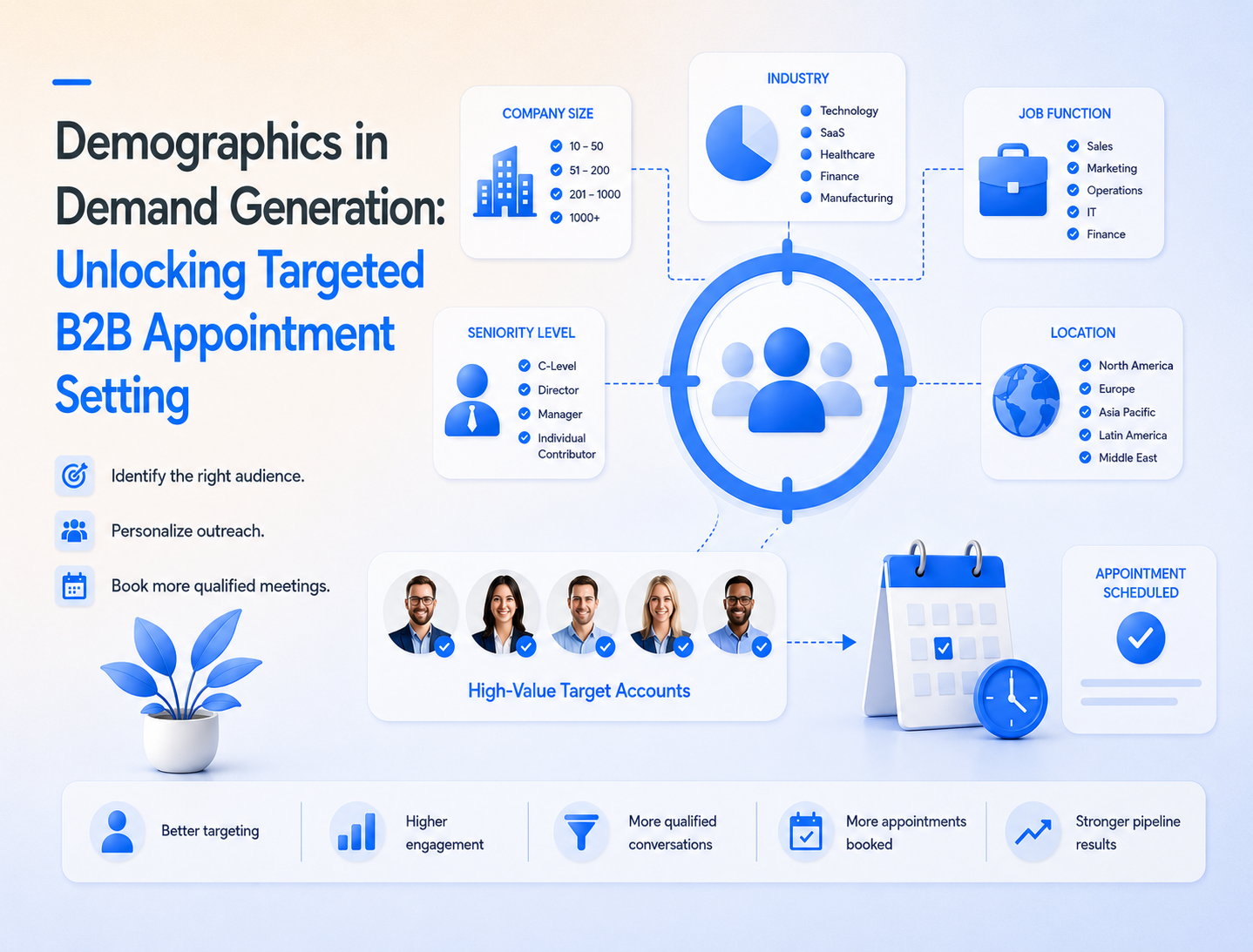
Demographics in Demand Generation: Unlocking Targeted B2B Appointment Setting
B2B Demand Generation / Appointment Setting


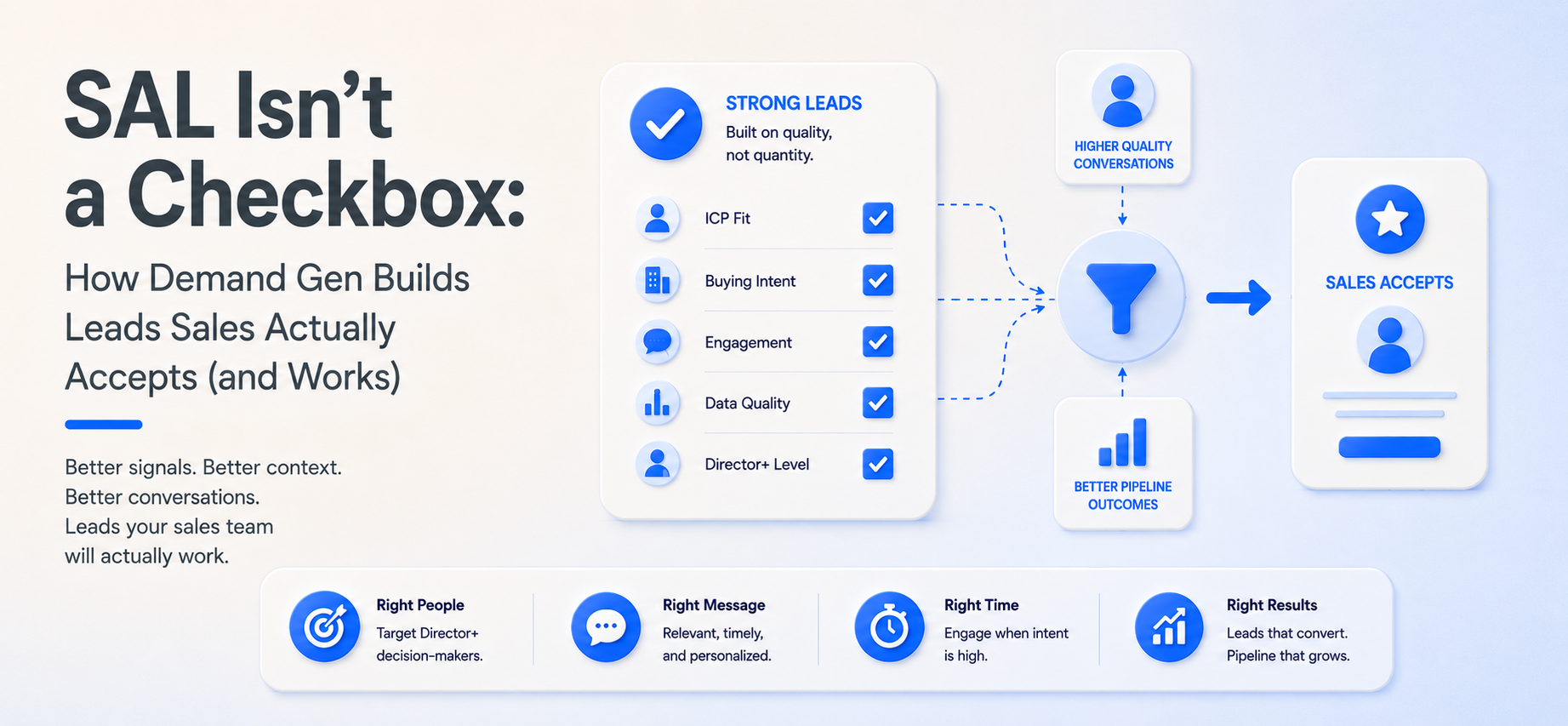
SAL shouldn’t be a CRM checkbox—it should predict sales follow-through. Learn the signals that make leads worth working (Director+ relevance, real problem, urgency, and next-step design), the breakpoints that cause “accepted but ignored,” and how Site Ascend improves SAL outcomes through lead qualification and meetings that occur.
-
Sales Alignment
Introduction
Most enterprise demand gen teams can get a lead accepted.
The harder part is getting it worked.
That gap—between “accepted in the CRM” and “actively pursued by sales”—is where pipeline quietly dies. And it’s why SAL has become one of the most misunderstood stages in B2B marketing. Too often, SAL turns into a checkbox designed to satisfy reporting, not a standard that protects sales time and accelerates progression.
A high-performing SAL stage does something simple and powerful:
It makes sales feel like following up is the obvious next move.
This blog breaks down what SAL should mean in enterprise demand gen, why sales “accepts” leads but still disengages, and how Site Ascend helps teams build SALs that translate into Director+ meetings that occur and advance through Lead Qualification and Executive Meetings.
What SAL (Sales Accepted Lead) Means for Demand Generation Marketers and other titles that meet Site Ascend’s ICP
A Sales Accepted Lead should mean:
Sales agrees the lead is worth time because there’s enough context to justify follow-through.
In many orgs, SAL means something weaker:
That’s not acceptance. That’s compliance.
A meaningful SAL implies a real commitment:
If SAL doesn’t imply action, the stage is measuring the wrong thing.
Common Challenges Marketers Face
Sales accepts leads to be polite, then prioritizes something else
When reps have limited time, they’ll chase what feels most likely to convert. If the lead arrives without clarity (or at the wrong level), it gets deprioritized—even if it’s technically “accepted.”
“Accepted” doesn’t mean “qualified”
Marketing and sales often treat SAL as a quality milestone. But if the lead is missing Authority, urgency, or a defined problem, it’s not sales-ready—it’s sales-exposed.
The lead is in the right account but the wrong seat
Enterprise pipeline moves when Director+ stakeholders engage (or when there’s a clear path to them). When leads are too junior, the rep can’t justify the next step.
The handoff has metadata, not meaning
A score, a campaign name, and a page view history don’t tell sales what to do. Reps need a short narrative:
Meetings are booked, but they don’t hold
Even when a lead becomes a meeting, show rates can break the chain. “Meeting scheduled” is not the same as “meeting occurred,” and sales knows the difference.



.png)

%201.png)


.png)


Solutions That Work
If you want SALs that get worked, stop trying to force acceptance—and start improving the conditions that make follow-up rational.
The most reliable SALs share a few traits:
This is where Site Ascend is designed to help: turning engagement into verified readiness and converting it into meetings that occur.
Lead Qualification: turning interest into SAL-worthy context
When sales disengages, it’s rarely because the lead is “bad.” It’s because the lead is uncertain.
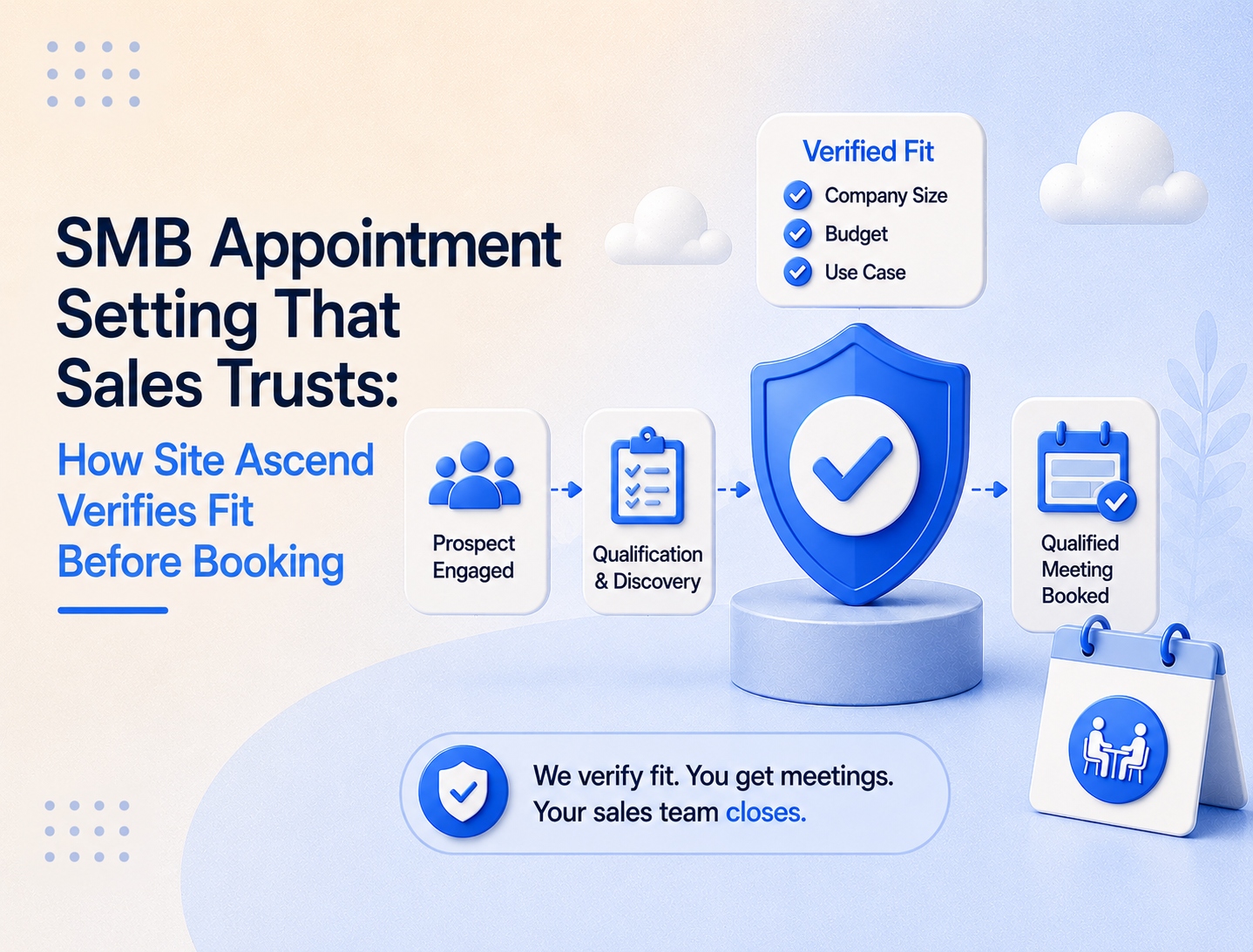
Site Ascend’s Lead Qualification program reduces that uncertainty by validating:
Instead of sending sales “maybe,” you send sales a lead with a storyline and a recommended move.
Executive Meetings: making Director+ engagement the starting point
If your SAL rate looks fine but pipeline is still thin, the issue is often seniority. You can accept a lead all day; if it’s not decision-relevant, it won’t progress.
Site Ascend’s Executive Meetings focus on:
When the meeting holds and the stakeholder level is right, the SAL stage stops being fragile.
Channel and event motions (only when they affect your SAL pipeline)
SAL breakdowns often happen when leads come from sources that are inherently context-light:
Site Ascend supports channel appointment setting (white-labeled, MDF-funded) and event attendee procurement via outbound dialing with SMS workflow support leading up to the event date (no day-of services). The aim is the same: reduce uncertainty, increase show rate, and create a real path to next steps.
Actionable Steps for Marketers
If you want to raise SAL quality without starting a war over definitions, focus on what sales actually needs to act.
The SAL “Works-It” checklist
Before a lead is treated as SAL-worthy, make sure you can answer:
Who
Why
Why now
What next
Three metrics that reveal whether SAL is real
Stop judging SAL by “accepted or not accepted.” Watch what happens next:
These metrics tell you whether SAL is producing behavior, not just stage movement.
Comparison of Market Solutions
Most teams try to fix SAL performance by adjusting the funnel—but the real lever is how much uncertainty sales has to absorb.
In-house systems (scoring + SLAs + SDR follow-up)
This approach can work well when you have stable SDR capacity and a clear, consistent ICP. You refine scoring, set response-time targets, and train reps to work leads more effectively.
Where it often breaks in enterprise is scale and consistency. When volume spikes or teams churn, the model defaults to speed over validation. SAL becomes “accepted quickly” instead of “ready to progress.”
Outsourced volume (more touches and more booked meetings)
Some teams outsource to generate more activity fast—more outreach, more booked calls, more at-bats. Early dashboards can look strong.
The tradeoff is that SAL quality can drift if the motion is optimized for getting a meeting rather than getting the right meeting. That’s when you see one-and-done calls, wrong-level attendees, and weak next steps.
Nurture-heavy approaches (keep leads in marketing until they self-identify)
Other orgs avoid SAL friction by keeping leads in nurture until they request a demo or hit a score threshold. Sales stays happier in the short term because fewer leads are pushed over.
The downside is missed timing. Enterprise buyers rarely announce readiness cleanly, and the right accounts can go quiet until they pick another vendor or the internal sponsor changes.
Where Site Ascend fits
Site Ascend sits in the gap: turning engagement into verified readiness and converting it into meetings that occur at the right level.
Instead of asking sales to “figure it out” after acceptance, Site Ascend helps validate:
…and supports conversion through Lead Qualification and Executive Meetings built around held outcomes and Director+ targeting.
Conclusion
SAL isn’t a checkbox. It’s a promise: “sales should work this because there’s a credible path to progress.”
If your SAL stage is producing acceptance without action, focus on what creates follow-through:
If you want to pilot an approach that improves SAL follow-through by converting engagement into Director+ meetings that occur and advance, contact Site Ascend to discuss a pilot using Lead Qualification and Executive Meetings.
Is SAL owned by marketing or sales?

What’s the fastest way to improve SAL follow-through?
Should we use SAL as a KPI?


Start your pilot campaign today and explore the full range of Site Ascend's demand generation capabilities. Experience firsthand how we can enhance your efficiency, streamline your processes, and drive growth.
RELATED