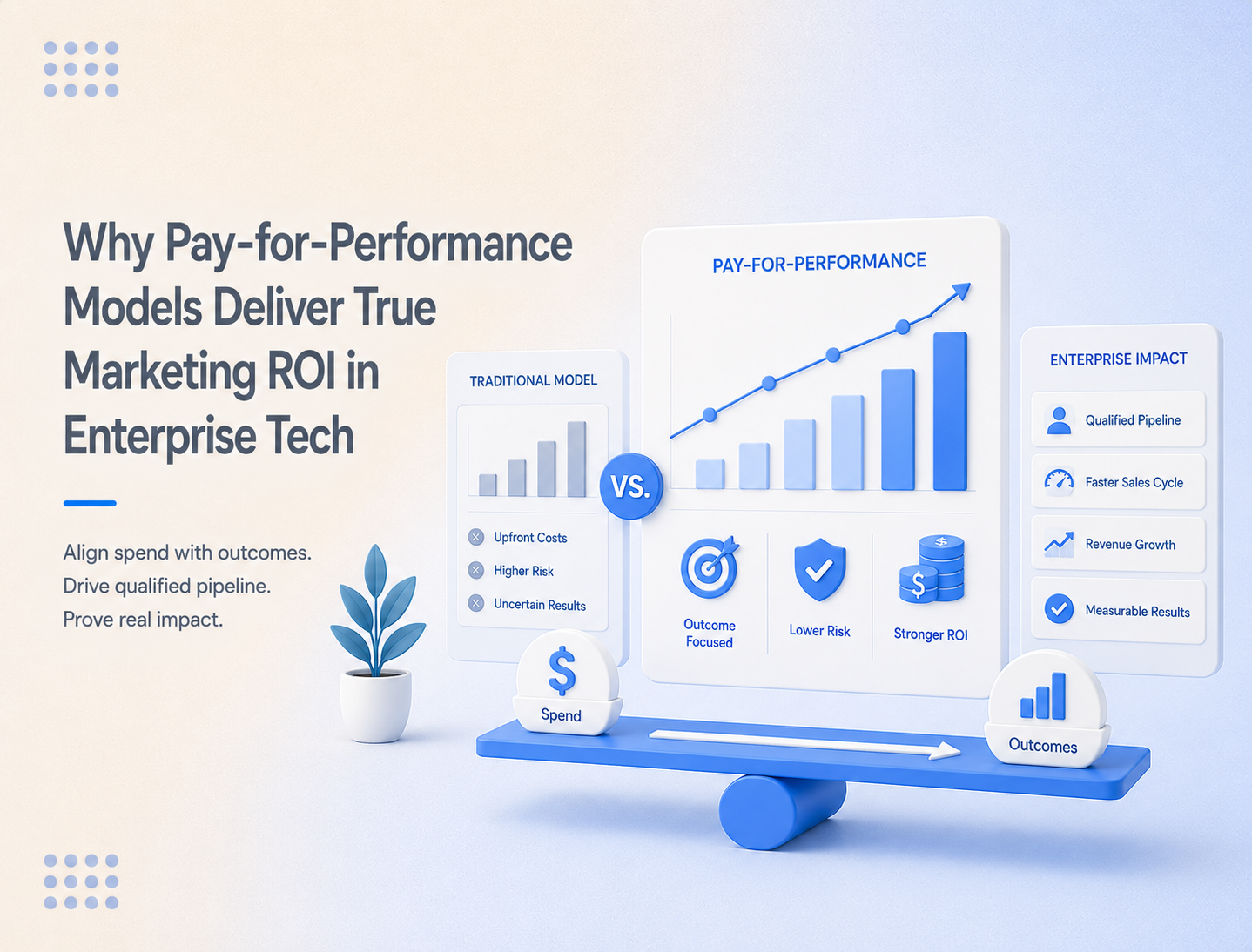
Why Pay-for-Performance Models Deliver True Marketing ROI in Enterprise Tech
Channel Marketing


TechTarget can show you who’s researching — but research doesn’t convert itself. This blog breaks down why intent spikes stall out, and how a focused outbound performance layer turns TechTarget signals into director-level meetings.
-
Pipeline Acceleration
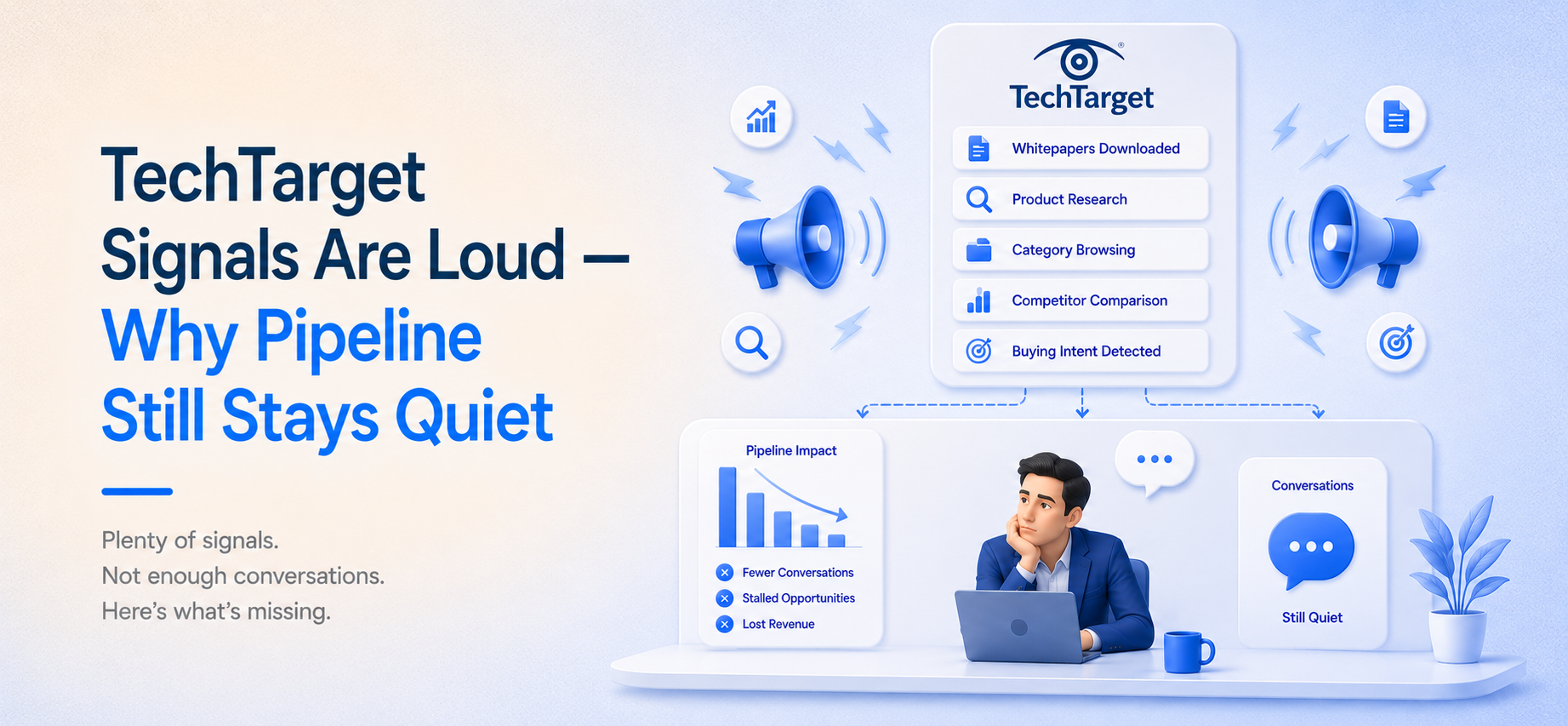
TechTarget Signals Are Loud — Why Pipeline Still Stays Quiet
Intent data is having a moment again. And TechTarget-style research signals are some of the loudest in B2B tech: active consumption, solution comparisons, category deep dives. On paper, it’s the dream scenario for demand gen teams.
But if you’re being honest, you’ve seen the pattern:
TechTarget sends a wave of “hot” accounts. Dashboards light up. MQL volume spikes. SDRs reach out. And then… pipeline barely moves.
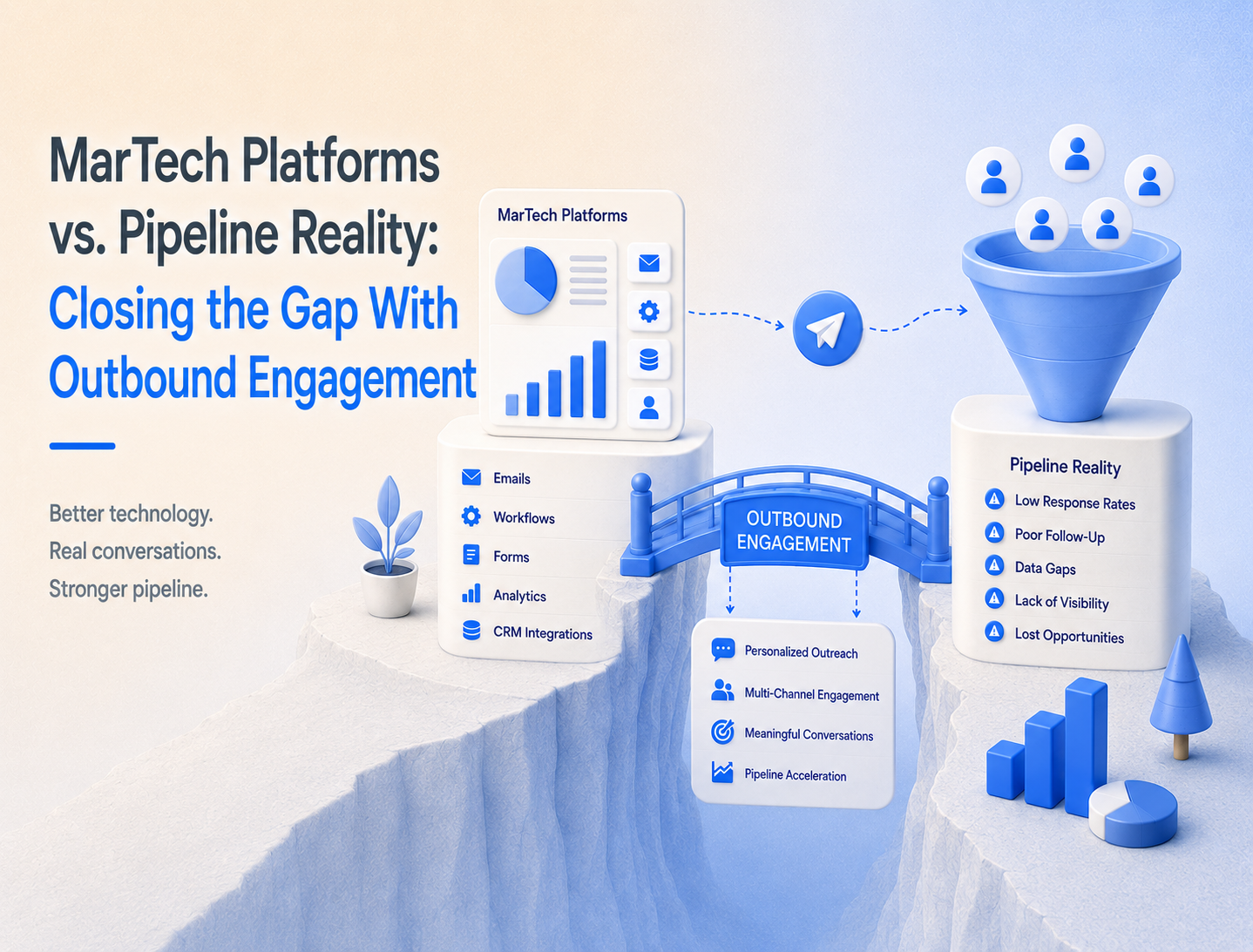
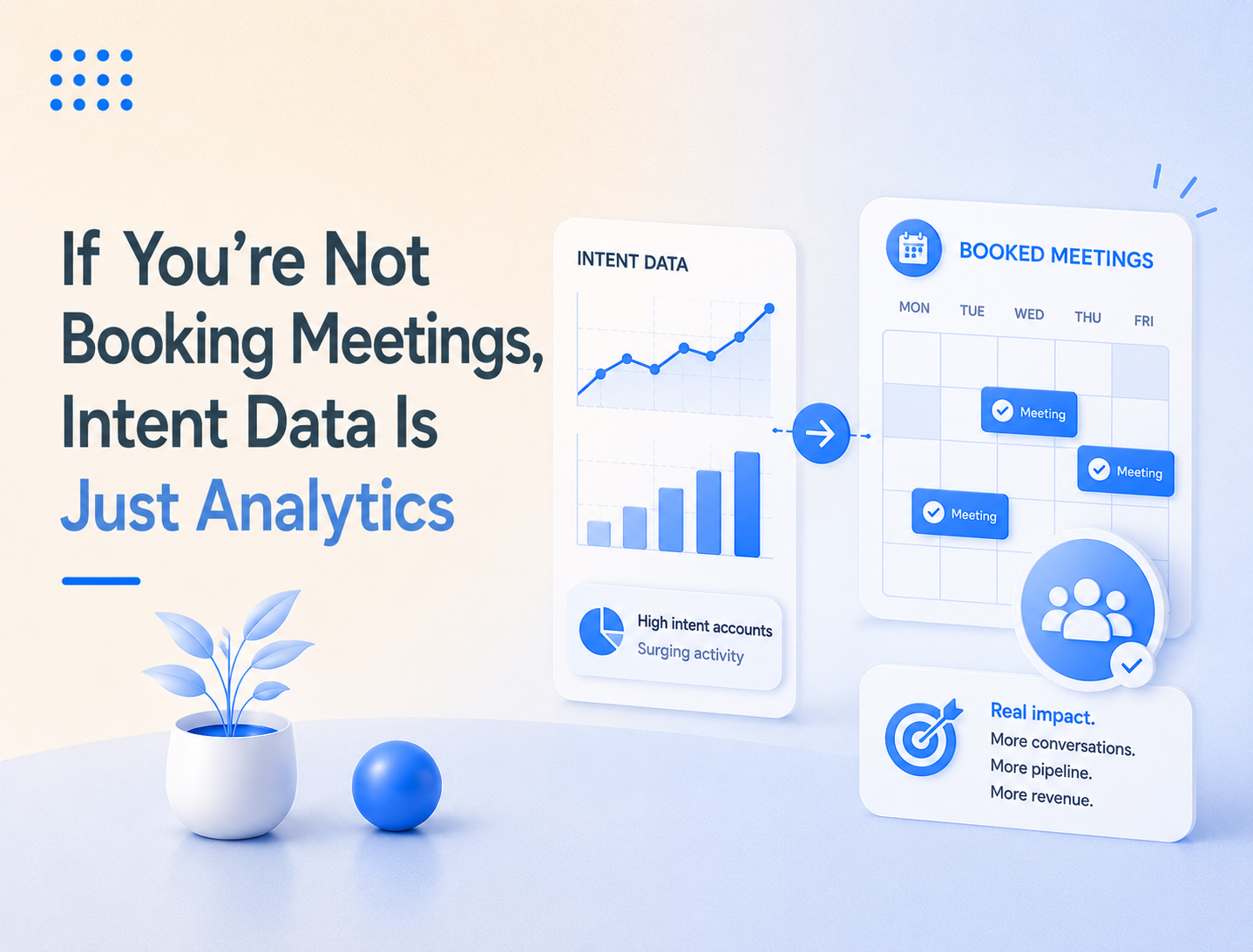
This isn’t a TechTarget problem. It’s an activation problem — the gap between a signal being detected and a real human conversation being booked.
In 2025, that gap is where funnels quietly break.
What TechTarget Signals Mean for Demand Gen Teams
TechTarget signals are research intent, not buying intent.
They’re valuable because they reveal:
For demand gen, this should be a shortcut to focus: fewer wasted touches, cleaner prioritization, tighter alignment with sales.
But signals only matter if they change what you do next.
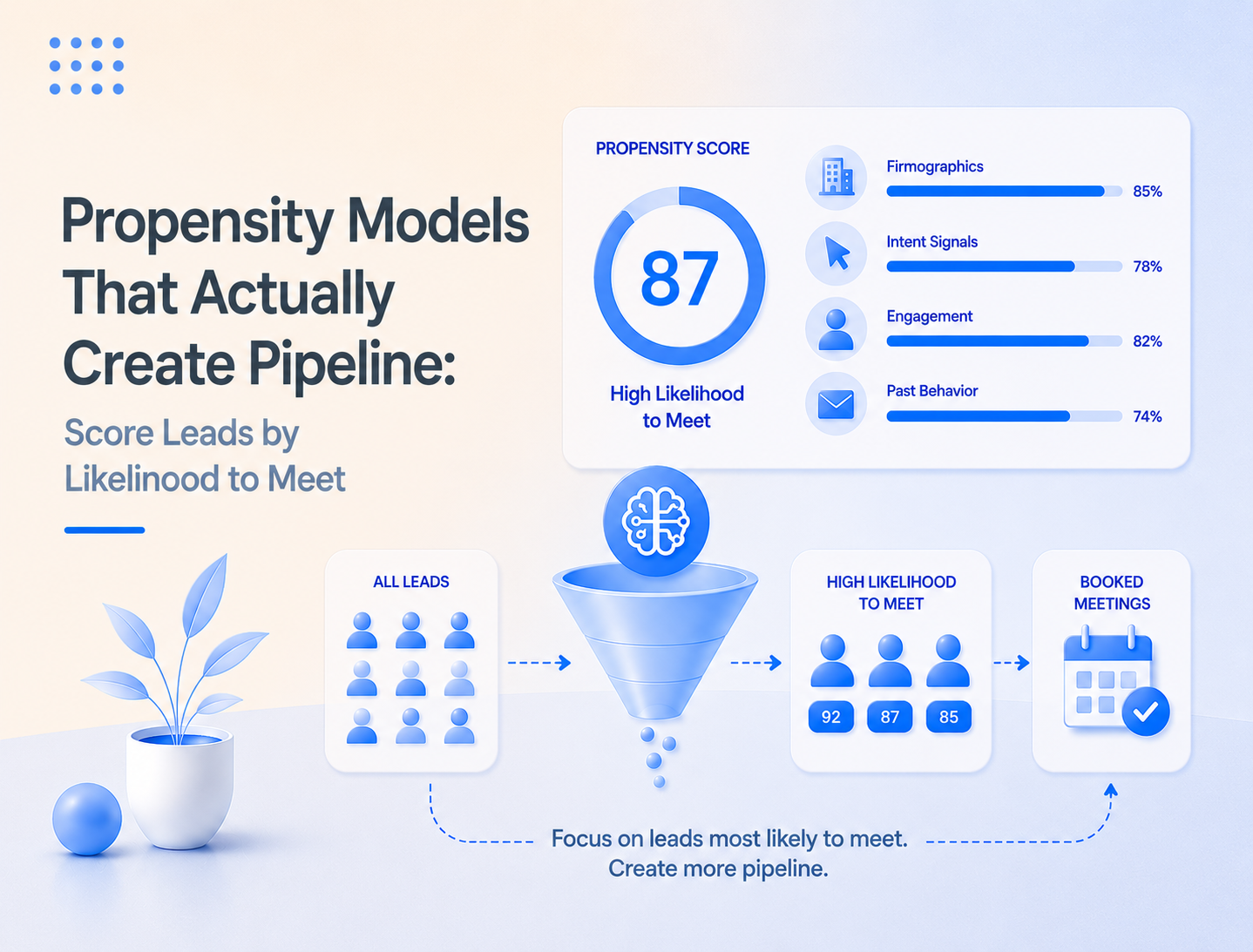
Most teams still treat TechTarget intent like a scoring input — a way to label accounts “hotter” in the CRM — rather than a trigger for fast, targeted engagement. And that’s where the breakdown starts.
Common Challenges Marketers Face After the Signal
Intent arrives faster than your team can act
Signals are time-sensitive. Research peaks, then fades.
If outreach isn’t fast and consistent, the moment is gone.
Most demand gen teams don’t struggle to find intent.
They struggle to operationalize it at speed.
The wrong people get touched
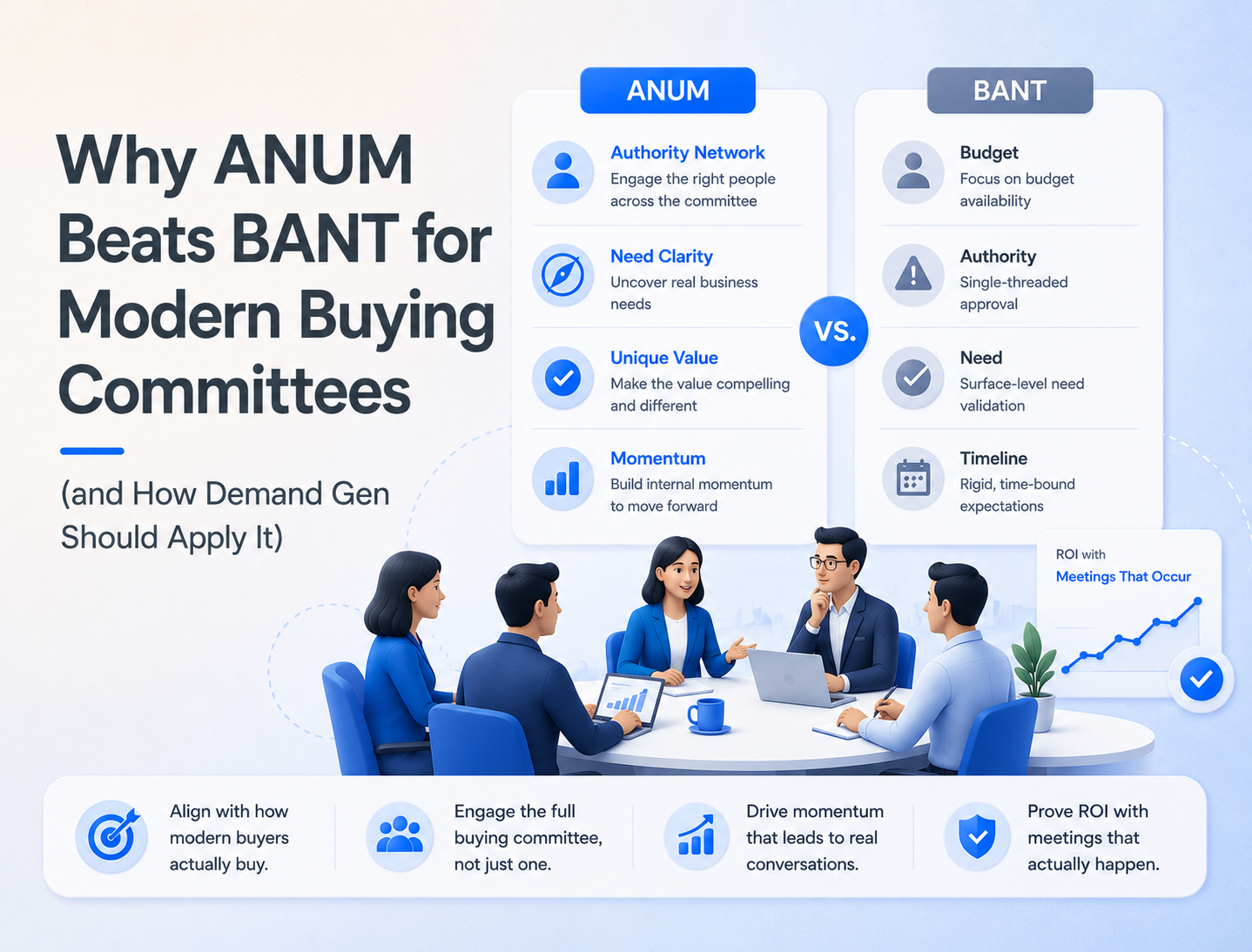
TechTarget intent is account-level. Pipeline is people-level.
If your follow-up hits:
…you get activity, not advancement.
Automated follow-up doesn’t feel relevant
Even good messaging can fail when it’s automated.
Director-level buyers in 2025 can spot the difference between:
Research doesn’t equal permission. When automation leads the response, buyers disengage.
Sales and marketing disagree on “ready”
Marketing sees intent + fit.
Sales sees no conversation yet, so it’s not real.
That disconnect creates leakage: accounts drift back into nurture while they’re still in-market.



.png)

%201.png)


.png)


Solutions That Work
If TechTarget is the radar, your follow-through needs to be the intercept.
This is exactly where Site Ascend fits — not as a “do-everything” vendor, but as a human performance layer that converts third-party intent into director-level meetings.
Here’s what actually closes the TechTarget gap:
Activate intent with human outreach — immediately
TechTarget tells you who is in-market.
What matters next is how fast someone reaches out.
Site Ascend specializes in prompt outbound calling that connects with buyers while research interest is still high — before the signal cools or a competitor gets there first.
Speed isn’t a nice-to-have here. It’s the difference between pipeline and drift.
Go straight to the decision layer
A signal doesn’t mean anything if the wrong person receives the touch.
Site Ascend targets director-level and above only for meetings. That’s the level where:
Instead of spreading follow-up across a stack of mid-level contacts, you’re focusing your effort where pipeline can actually move.
Qualify intent into “real readiness”
TechTarget accounts are often early-but-serious.
Treating them like BOFU buyers causes friction. Treating them like TOFU leads causes delay.
Site Ascend’s lead qualification approach bridges that middle stage by confirming, through a live conversation:
So sales doesn’t get “hot accounts.” They get meetings that are validated and relevant.
Only pay for outcomes that happen
A lot of outsourced outreach vendors optimize for activity: dials, touches, sequences.
Site Ascend optimizes for meetings that actually occur. That alignment changes behavior:
If a meeting doesn’t happen, you don’t pay. Simple as that.
Actionable Steps for Marketers
Here’s a practical checklist for turning TechTarget intent into pipeline that moves:
Comparison of Market Solutions
Most demand gen teams choose between three approaches:
In-house follow-up
Pros: full context, direct control
Cons: limited bandwidth, slow response during spikes, hard to scale
Traditional outsourced appointment setting
Pros: more coverage
Cons: often paid on effort, inconsistent senior targeting, quality varies
Performance-based, director-level outbound conversion
Pros: fast activation, senior-only targeting, paid on meetings that happen
Cons: requires clear ICP + messaging alignment (but pays off quickly)
Site Ascend sits firmly in that third lane.
Conclusion
TechTarget intent is powerful.
But intent doesn’t move pipeline by itself.
Pipeline moves when:
That’s the missing performance layer in most funnels — and why loud signals so often produce quiet results.
If you want TechTarget intent to translate into real director-level sales conversations, Site Ascend can help you activate it quickly and convert it into meetings that happen.
How fast should we act on TechTarget intent?

Do TechTarget signals mean an account is sales-ready?
Why doesn’t automated nurture convert TechTarget intent well?


Start your pilot campaign today and explore the full range of Site Ascend's demand generation capabilities. Experience firsthand how we can enhance your efficiency, streamline your processes, and drive growth.
RELATED