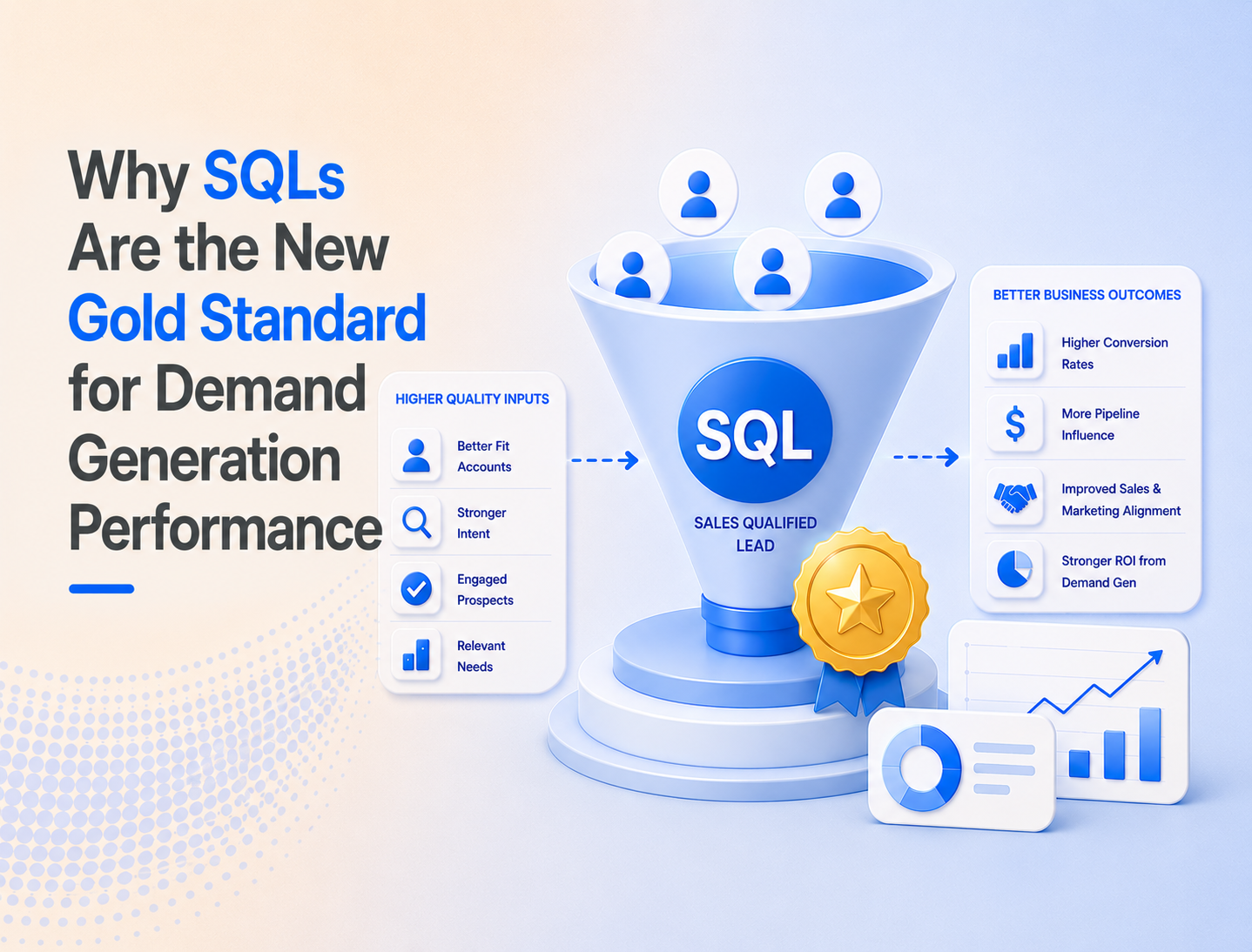
Why SQLs Are the New Gold Standard for Demand Generation Performance
Demand Generation Strategy


Drip campaigns build engagement—but enterprise pipeline is built on sales-accepted next steps. Learn how demand gen teams upgrade nurture with qualification, targeted outreach, and meetings that actually occur.
-
Demand Generation Operations
Introduction
Most drip campaigns do what they were designed to do: keep your brand in the inbox, nudge engagement, and surface “hand-raisers.”
Then reality hits.
The hand-raiser downloads a guide… and goes quiet. The pricing-page visitor never replies. The webinar attendee shows up, asks a smart question, and disappears into a buying committee you can’t see.
It’s not that drip campaigns don’t work. It’s that drip campaigns rarely finish the job—especially in enterprise motions where “interest” and “sales-ready” are separated by stakeholders, timing, and internal politics.
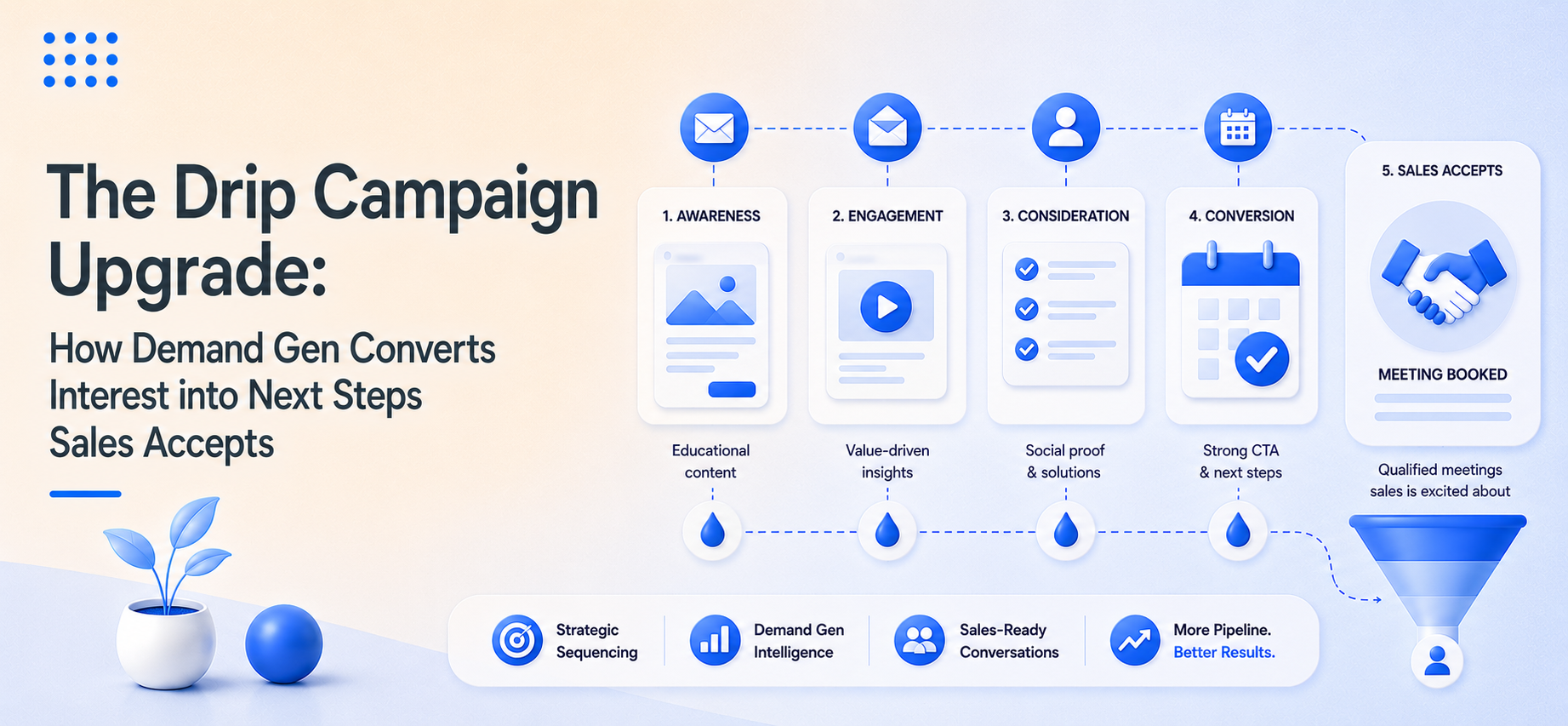
The upgrade isn’t more emails. It’s a conversion bridge: a simple, repeatable way to turn signals into real conversations and clear next steps that sales will actually accept.
What a “Drip Campaign” Should Mean for Demand Gen Leaders
A drip campaign is often treated like a lead-nurture sequence: a timed set of messages meant to educate and convert.
But in enterprise demand gen, a drip campaign has a more important role:
It’s a signal engine.
Your job is to capture intent (even light intent), interpret it correctly, and convert it into the next best action.
For modern buying committees, that “next best action” usually isn’t “book a demo now.” It’s one of these:
That’s the gap most teams face: drip campaigns generate engagement, but sales needs a standard before they’ll commit time to a second touch.
Common Challenges Marketers Face (Even With Great Drips)
The “engaged but uncommitted” problem
Email engagement is not the same as buying intent. Opens and clicks don’t tell you:
The timing mismatch
Most enterprise pipeline is “not now.” Drip campaigns keep leads warm, but they don’t reliably answer:
Sales doesn’t trust the handoff
If sales is accepting “leads,” but not taking action, it’s usually because they’ve learned the hard way that:
SDR time gets burned on the wrong follow-up
When the only follow-up option is “have SDRs chase everything,” teams end up with:



.png)

%201.png)


.png)


Solutions That Work
A strong drip doesn’t just send content. It creates a handoff-ready moment—and pairs that moment with human follow-up that confirms what sales actually needs.
Here’s how Site Ascend fits into that upgrade.
1) Turn drip engagement into real qualification (without overloading SDRs)
When a lead shows intent—content downloads, event registrations, webinar engagement—Site Ascend can step in as the conversion layer through Lead Qualification.
Instead of guessing, you confirm:
The result: marketing doesn’t pass “hope.” Marketing passes a qualified conversation.
2) Convert qualified interest into meetings that actually occur
Enterprise pipeline is built on attended conversations—not just scheduled ones.
Site Ascend’s Executive Meetings program is designed to deliver:
And importantly: you only pay for meetings that occur.
That pay-for-performance structure changes the pressure inside your org. You’re no longer defending a “lead quantity” story—you’re investing in outcomes.
3) Extend the upgrade to partner and event motions
The drip upgrade isn’t just for inbound nurture.
Drip campaigns are one motion in the system. The upgrade is building a system where every motion produces a next step sales will stand behind.
4) Build trust with visibility (so the handoff improves over time)
Demand gen leaders lose credibility when they can’t explain what’s happening after the click.
With real-time reporting dashboards, you get clarity on:
When marketing and sales can see the same reality, your handoffs stop being debates.
Actionable Steps
Use this as a quick audit. If you can’t answer “yes” to most of these, your drip is likely generating activity—without producing sales-accepted next steps.
Your content + routing
Your qualification standard
Your follow-up motion
Your measurement
If you want to operationalize this quickly, the simplest path is pairing your drips with a conversion layer like Site Ascend: qualification + executive meeting setting + reporting that ties activity to outcomes.
Comparison of Market Solutions
Most teams try to solve drip-to-pipeline conversion with one of a few common approaches. Each can work—but they break in predictable ways in enterprise motions.
“Just automate more”
Marketing automation is excellent for education and consistency. But when you rely on automation alone, you often end up with engaged leads that never turn into conversations—because automation can’t ask the follow-up questions that uncover timing, stakeholders, and next steps.
Best for: scaling education
Weak spot: converting complex buying committee interest into real meetings
“Let SDRs handle it”
SDRs can be effective—when they have time, focus, and a consistent qualification standard. The breakdown happens when SDRs become the catch-all for every campaign, every lead source, and every “maybe.”
Response times slip, follow-up becomes uneven, and sales loses trust in what marketing hands over.
Best for: focused outbound plays with clear prioritization
Weak spot: inconsistent quality and scalability across many campaigns
“Outsource appointment setting”
Outsourcing can help create coverage, but results vary widely depending on:
If the model is activity-based, you may get volume without reliability.
Best for: adding capacity quickly
Weak spot: misalignment on quality, targeting, and accountability
“Build the conversion bridge and pay for outcomes”
This is where Site Ascend is positioned: convert engaged interest into sales-accepted next steps through lead qualification and executive meeting setting, backed by:
Instead of asking sales to “trust the lead score,” you give them what they actually need: a meeting that happens and a next step that’s real.
Conclusion
A drip campaign can create interest. But interest doesn’t become pipeline until someone does the work of confirming what’s true, who’s involved, and what happens next.
The upgrade is simple: keep the drip—and add a conversion layer that turns signals into conversations sales will accept.
If you want to see what this looks like with your current campaigns, Site Ascend can help you pilot a program that converts interest into meetings that occur—so your team can measure outcomes, not activity.
How do I know when a drip lead is ready for sales?

Won’t adding outbound follow-up feel intrusive?
What’s the fastest way to improve drip-to-meeting conversion?


Start your pilot campaign today and explore the full range of Site Ascend's demand generation capabilities. Experience firsthand how we can enhance your efficiency, streamline your processes, and drive growth.
RELATED