Increasing Efficiency with Pay-Per-Appointment
B2B sales strategies


Co-Op Funds can drive far more than campaign activity when they're aligned with revenue goals. Learn how technology marketers can measure partner marketing investments by qualified meetings, pipeline contribution, and business impact instead of budget utilization alone.
-
Channel Marketing
Introduction
For many B2B technology companies, Co-Op Funds represent one of the largest untapped opportunities for accelerating demand generation. Every year, vendors allocate millions of dollars to help partners market their products and services, yet a significant portion of those funds expires unused or is invested in campaigns that generate activity without producing measurable business outcomes.
The problem isn't the availability of funding—it's how organizations measure success. Too often, Co-Op-funded campaigns are judged by impressions, clicks, or event registrations rather than qualified conversations, sales engagement, and pipeline contribution. As executive leadership demands greater accountability from marketing, channel teams must rethink how they evaluate the effectiveness of every dollar invested.
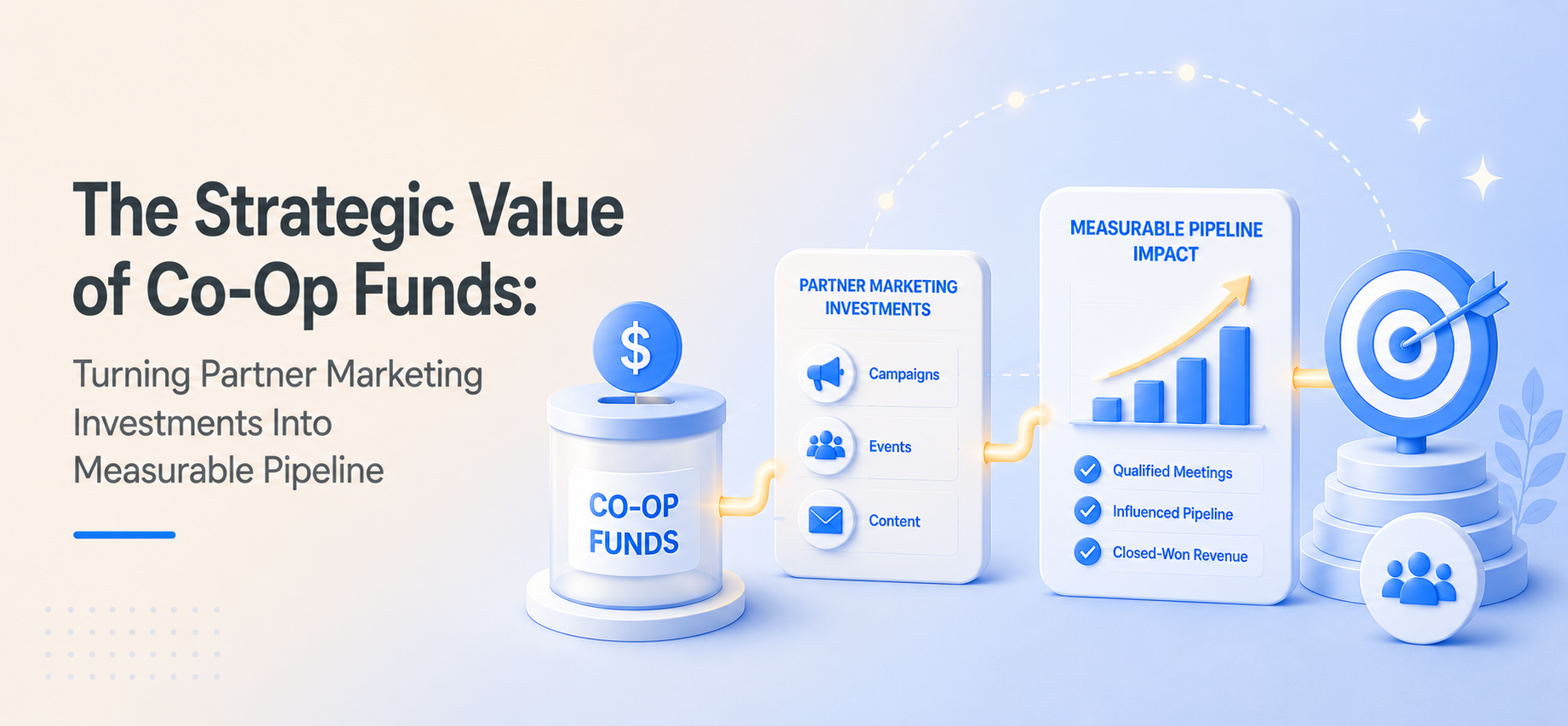
This article explores why Co-Op Funds should be treated as strategic revenue investments instead of marketing budgets, the operational challenges that prevent organizations from realizing their full value, and the frameworks marketing leaders can use to transform partner marketing investments into measurable pipeline.
What Co-Op Funds Mean for Demand Generation Marketers
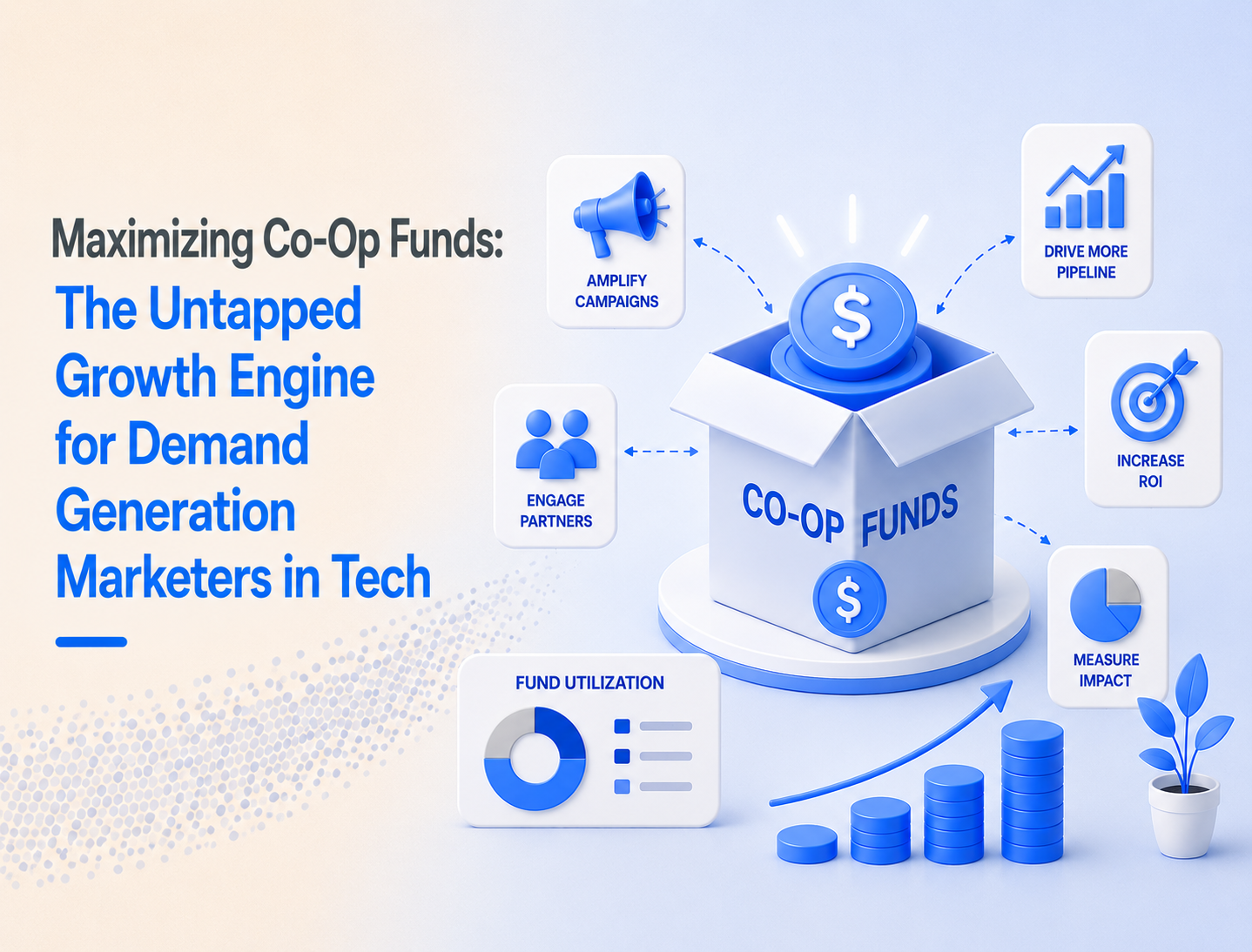
Co-Op Funds are financial resources provided by vendors to help channel partners promote products, services, and joint go-to-market initiatives. Traditionally, these funds have supported activities such as partner events, outbound campaigns, webinars, and appointment-setting programs.
For today's demand generation leaders, however, Co-Op Funds represent something much larger.
They create an opportunity to:
The organizations generating the greatest return from Co-Op Funds no longer ask, "Did we spend the budget?" Instead, they ask, "Did this investment move qualified buyers closer to a sales conversation?"
That shift fundamentally changes how partner marketing programs are designed, executed, and measured.
Common Challenges Marketers Face
While Co-Op Funds offer significant potential, several operational challenges often prevent organizations from realizing their full value.
Budget Utilization Becomes the Goal
Many organizations prioritize using available funds before expiration rather than investing in initiatives most likely to generate revenue. As a result, campaign planning is often driven by funding deadlines instead of buyer behavior or pipeline needs.
Marketing and Sales Measure Different Outcomes
Marketing may consider a campaign successful because it generated registrations or responses, while sales evaluates success based on qualified meetings and opportunities. Without shared definitions of success, it becomes difficult to demonstrate business impact.
Limited Visibility Across Partner Programs
When multiple partners execute campaigns independently, organizations often struggle to compare performance consistently. Different reporting standards, qualification criteria, and attribution models make optimization difficult.
Executive Engagement Is Difficult
Many Co-Op initiatives generate broad awareness but fail to connect with senior decision-makers capable of influencing purchasing decisions. Pipeline suffers when campaigns prioritize volume over executive access.
Activity Doesn't Equal Revenue
Campaign reports frequently highlight impressions, email opens, or registrations, but executives increasingly want answers to different questions:
Without those answers, future funding decisions become increasingly difficult.



.png)

%201.png)


.png)


Solutions That Work
Organizations that consistently generate pipeline from Co-Op Funds tend to approach partner marketing differently. Rather than viewing funding as a campaign budget, they treat it as an investment portfolio that requires strategic planning, operational discipline, and continuous optimization.
1. Align Every Campaign to a Revenue Objective
Successful organizations begin with the business outcome rather than the marketing tactic.
Instead of asking:
"What campaign should we run?"
They ask:
"What pipeline objective are we trying to achieve?"
Whether the goal is expanding into new accounts, accelerating existing opportunities, or supporting product launches, every funded initiative should map directly to a measurable revenue objective.
2. Prioritize Qualified Conversations Over Marketing Activity
High-performing partner programs optimize for buyer engagement—not campaign volume.
That means emphasizing:
These metrics provide a much clearer picture of business impact than registrations or click-through rates alone.
3. Standardize Measurement Across Partners
One of the biggest barriers to improving Co-Op performance is inconsistent reporting.
Leading organizations establish common measurement standards for every funded initiative, including:
Standardization makes it significantly easier to compare programs, identify best practices, and allocate future funding more effectively.
4. Build Continuous Feedback Between Marketing and Sales
The strongest Co-Op programs don't end when leads are delivered.
Instead, marketing and sales work together to review:
This ongoing feedback loop enables continuous improvement instead of repeating underperforming campaigns.
Actionable Steps for Marketers
Conduct a Co-Op Investment Effectiveness Review
Before planning your next partner-funded campaign, evaluate your current program using the following assessment.
Strategy
Buyer Engagement
Measurement
Optimization
Organizations that perform this review quarterly often uncover opportunities to reallocate funding toward programs that produce significantly greater revenue impact.
Comparison of Market Solutions
Organizations have several approaches for executing Co-Op-funded marketing programs, each with different strengths depending on their goals and available resources.
Internal marketing teams offer deep brand knowledge and close alignment with company objectives but may have limited bandwidth to scale partner-funded initiatives across multiple regions or partners.
Technology platforms provide valuable campaign automation, reporting, and partner management capabilities, but they still require organizations to develop campaign strategy, create engagement programs, and generate qualified buyer conversations.
Traditional outsourced marketing providers can help execute campaigns more efficiently, though performance often varies depending on their industry expertise, qualification standards, and ability to engage executive decision-makers.
Performance-based execution partners focus on measurable business outcomes rather than campaign activity alone. For organizations seeking qualified meetings, stronger sales alignment, and greater accountability for partner-funded investments, this model can provide a clearer connection between marketing execution and pipeline creation.
The right approach depends on an organization's internal capabilities, partner ecosystem, reporting requirements, and revenue objectives. Many enterprise technology companies combine internal strategy with specialized execution partners to maximize both scalability and measurable results.
Conclusion
Co-Op Funds represent far more than an annual marketing budget—they are a strategic opportunity to create qualified pipeline, strengthen partner relationships, and demonstrate marketing's contribution to revenue.
Organizations that consistently outperform their peers don't simply spend available funds. They align every investment with business objectives, measure success through qualified buyer engagement and pipeline creation, standardize performance across partners, and continuously optimize future campaigns based on measurable outcomes.
For technology companies looking to maximize the value of their partner marketing investments, this shift from activity-based measurement to revenue-focused execution can transform Co-Op Funds into a predictable engine for pipeline growth.
If you're looking to improve the impact of your partner-funded programs, contact Site Ascend.
How are Co-Op Funds different from MDF?

What is the best way to measure Co-Op campaign success?
How can organizations improve ROI from Co-Op Funds?


Start your pilot campaign today and explore the full range of Site Ascend's demand generation capabilities. Experience firsthand how we can enhance your efficiency, streamline your processes, and drive growth.
RELATED