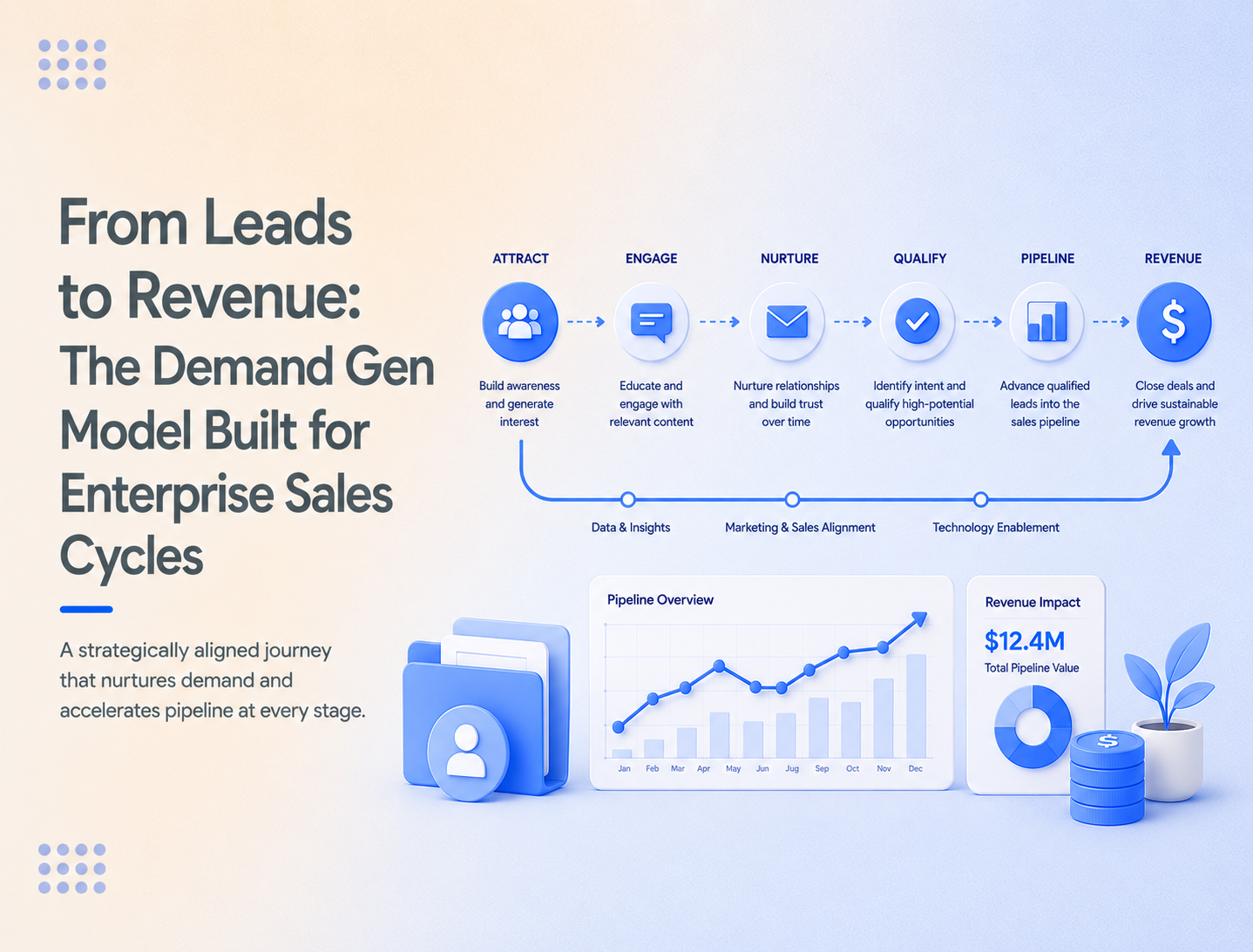
From Leads to Revenue: The Demand Gen Model Built for Enterprise Sales Cycles
Demand Generation Strategy


In 2025, B2B marketing success hinges on leadflow—not volume. Learn how enterprise and mid-market tech marketers are driving consistent pipeline growth through pay-for-performance demand generation.
-
Demand Generation Strategy
Introduction
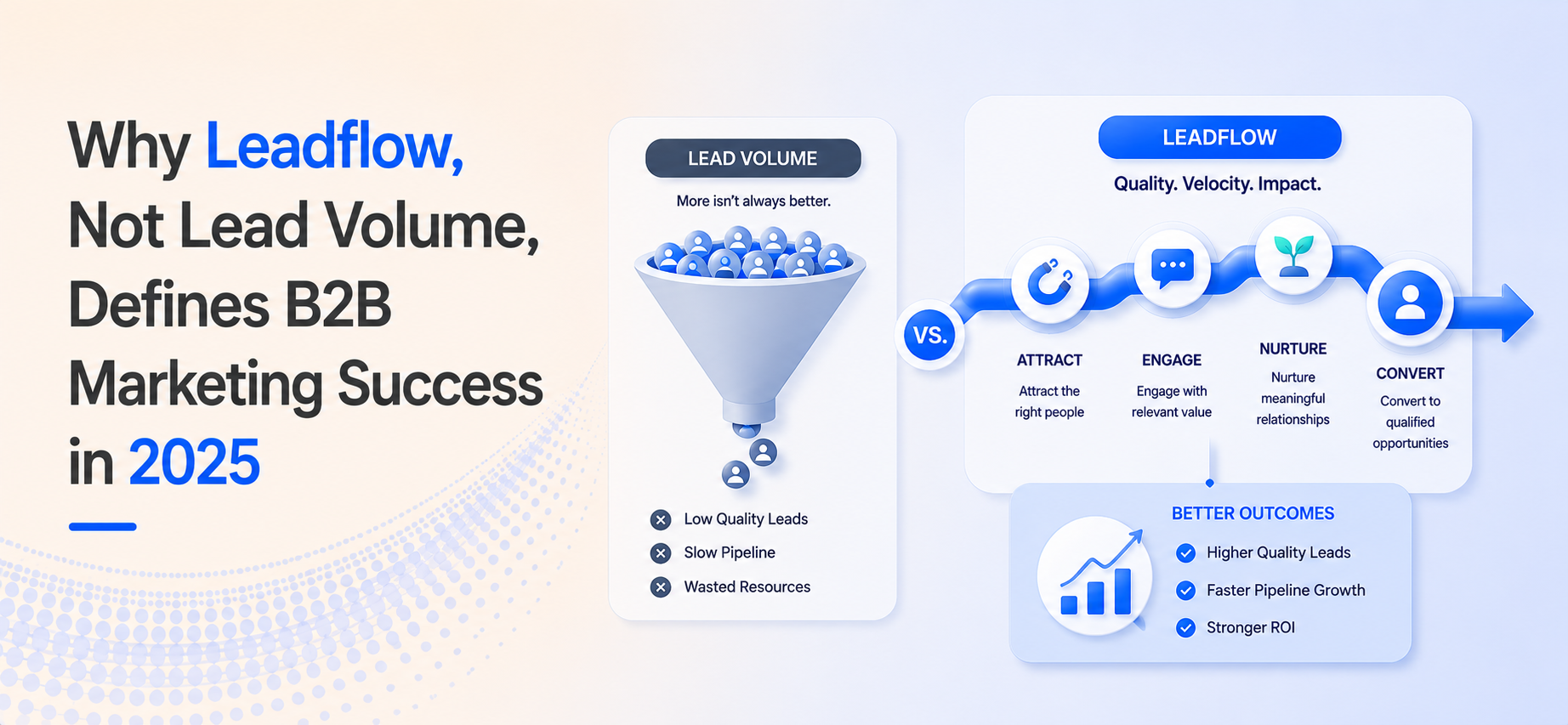
For years, marketing success was measured by one thing: the number of leads generated. But as B2B buying cycles grow more complex and decision-making committees expand, the industry has realized that volume doesn’t equal velocity. In 2025, the most successful marketing teams aren’t focused on collecting leads—they’re engineering leadflow that consistently converts interest into meaningful sales conversations.
For enterprise and mid-market tech companies, this shift has become the defining marker of growth. Leadflow—the quality, pace, and conversion efficiency of leads moving through your funnel—is now the key performance metric driving marketing alignment and revenue impact.
What Leadflow Means for Demand Generation Marketers
Leadflow is the operational heartbeat of a demand generation engine. It measures how efficiently qualified leads progress from awareness to opportunity, not just how many names fill your database.
For demand generation teams, improving leadflow means more than optimizing campaigns—it’s about ensuring the right prospects reach the right touchpoints at the right time. Every interaction should push the buyer journey forward, not just pad a dashboard.
In today’s performance-driven environment, focusing on leadflow ensures marketing is judged by outcomes that matter: pipeline creation, conversion speed, and sales-readiness—not vanity metrics.
Common Challenges Marketers Face
Even with the right tech stack and targeting, many B2B marketers struggle to create consistent, high-quality leadflow. Common challenges include:
These issues are costly—not just in missed opportunities, but in wasted spend and diluted brand trust.



.png)

%201.png)


.png)


Solutions That Work
Improving leadflow requires more than better content or smarter automation—it demands a system built on precision, speed, and accountability.
That’s where pay-for-performance demand generation comes in. Site Ascend’s model eliminates the guesswork of traditional lead generation by tying outcomes directly to meetings that occur with qualified, director-level decision-makers. By focusing on verified engagement and intent, marketing teams get a clear view into real lead progression, not hypothetical pipeline potential.
This shift enables enterprise marketers to maintain a healthier funnel—one that moves faster, converts higher, and consistently feeds sales teams with opportunities that matter.
Actionable Steps for Marketers
If your goal is to improve leadflow in 2025, start by tightening your funnel and aligning your strategy around conversion velocity:
Comparison of Market Solutions
Most marketing teams face a choice: build an internal outbound function or partner with a lead generation provider. Internal teams can be resource-intensive and slow to scale, while traditional outsourced programs often deliver volume without qualification.
Modern pay-for-performance models, however, shift the equation entirely. By focusing on verified meetings instead of lead lists, marketers gain predictable leadflow and measurable ROI. Site Ascend’s approach—U.S.-based outreach, director-level targeting, and real-time reporting—ensures every dollar spent translates directly to tangible pipeline movement.
Conclusion
In 2025, marketing success isn’t defined by how many leads you generate—it’s defined by how efficiently those leads convert. Leadflow represents a new performance standard for demand generation teams that want to scale smarter, not harder.
By adopting a pay-for-performance model and aligning metrics around meaningful meetings, tech marketers can build predictable, measurable leadflow that accelerates revenue and deepens sales alignment.
Ready to see how pay-for-performance demand generation can transform your leadflow? Start a pilot with Site Ascend today.
What’s the difference between leadflow and lead volume?

How can marketers measure leadflow effectively?
Why is pay-for-performance ideal for improving leadflow?


Start your pilot campaign today and explore the full range of Site Ascend's demand generation capabilities. Experience firsthand how we can enhance your efficiency, streamline your processes, and drive growth.
RELATED