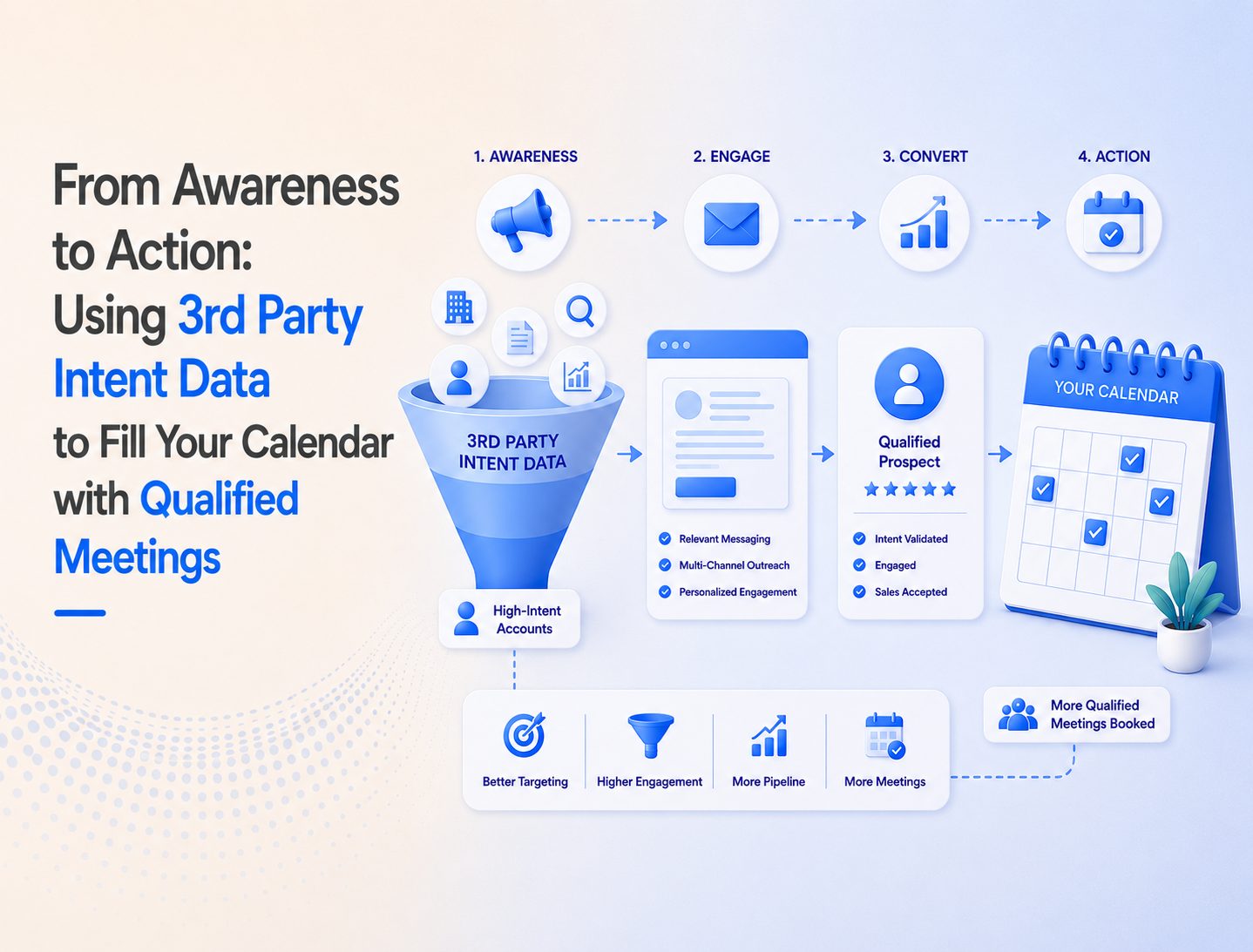
From Awareness to Action: Using 3rd Party Intent Data to Fill Your Calendar with Qualified Meetings
Intent Data & Demand Generation


6sense can tell you who’s in-market — but it can’t make them talk to you. Here’s how demand gen teams are using fast, director-level human outreach to convert intent signals into real meetings and real pipeline.
-
Pipeline Acceleration
Introductions
Intent data has never been louder. If you’re running 6sense, you can see which accounts are researching, surging, and inching closer to a buying decision. Your dashboards are full. Your weekly updates are confident. And yet… pipeline still feels slower than it should.
That disconnect is becoming one of the most common frustrations for demand generation leaders in B2B tech in 2025. Because intent doesn’t equal action. And a signal isn’t a meeting.
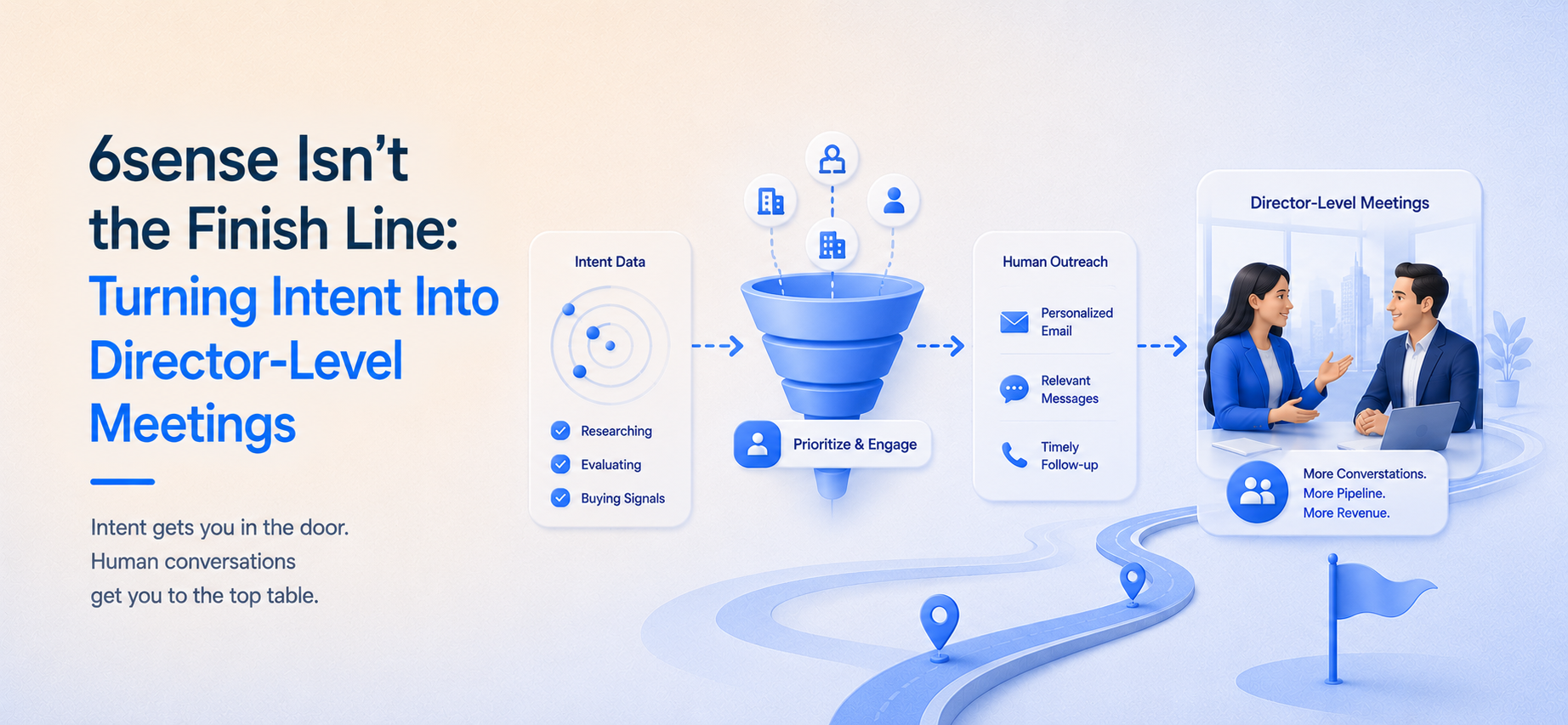
6sense is a powerful starting point — but it’s not the finish line. The teams winning right now are the ones that treat intent as a trigger for fast human engagement, not a reason to launch another nurture stream and hope for the best.
Let’s break down what’s actually happening — and what to do next.
What 6sense Intent Means for Demand Gen Marketers
6sense intent data is designed to answer a critical question:
“Which accounts are most likely to buy soon?”
It does that through behavioral signals — content consumption, keyword surges, engagement patterns, and anonymous research that bubbles up to account-level scoring.
For demand gen teams, this matters because it helps you:
In theory, this should accelerate pipeline.
In reality, it often creates a new bottleneck: once you know who is interested, you still have to get them into a conversation — quickly — before the window closes.
Intent solves targeting. It doesn’t solve conversion.
Common Challenges Marketers Face
The gap between “signal” and “meeting” exists because modern B2B buying behavior is messy. Here’s what demand gen teams keep running into:
1. Intent windows are short — and nurtures are slow
A surge doesn’t mean a buyer is waiting for a drip campaign. It often means they’re gathering info across multiple vendors right now. If your follow-up takes days (or weeks), you’re already behind.
2. Most intent accounts are anonymous or unresponsive
Even when 6sense flags an account, you still need the right person inside it — and you need them to engage. Email alone rarely gets you there, especially at director+ levels.
3. Sales doesn’t always trust or act on intent
If sales has been burned by low-quality “intent leads” before, your routed accounts sit untouched. Pipeline dies in the handoff.
4. Your funnel becomes a waiting game
Without fast activation, intent turns into “maybe later.” The account stays warm, but nothing moves. You don’t lose the account — you lose momentum.



.png)

%201.png)


.png)


Solutions That Work
Here’s the hard truth:
intent only creates pipeline when it triggers human conversations.
The teams converting 6sense signals into revenue are building an activation layer that does three things well:
1. Convert surges into immediate outreach
Instead of routing intent into another automation path, they treat it like a live buying moment.
That means rapid outbound calling aimed at the right titles inside the right accounts, not broad blasts.
Site Ascend supports this directly through executive meeting programs: outbound dialing to director-level and above, focused on securing a 30-minute virtual meeting while the account is still in-market.
2. Qualify before sales ever sees the lead
Intent accounts often look hot on paper but vary wildly in real readiness. The best teams pre-qualify with humans before handing anything to sales.
Site Ascend’s lead qualification program turns opt-ins and surging accounts into confirmed, qualified meetings, so sales receives conversations — not guesses.
3. Only count what actually happens
Intent activation becomes expensive fast when you pay for “activity” instead of outcomes.
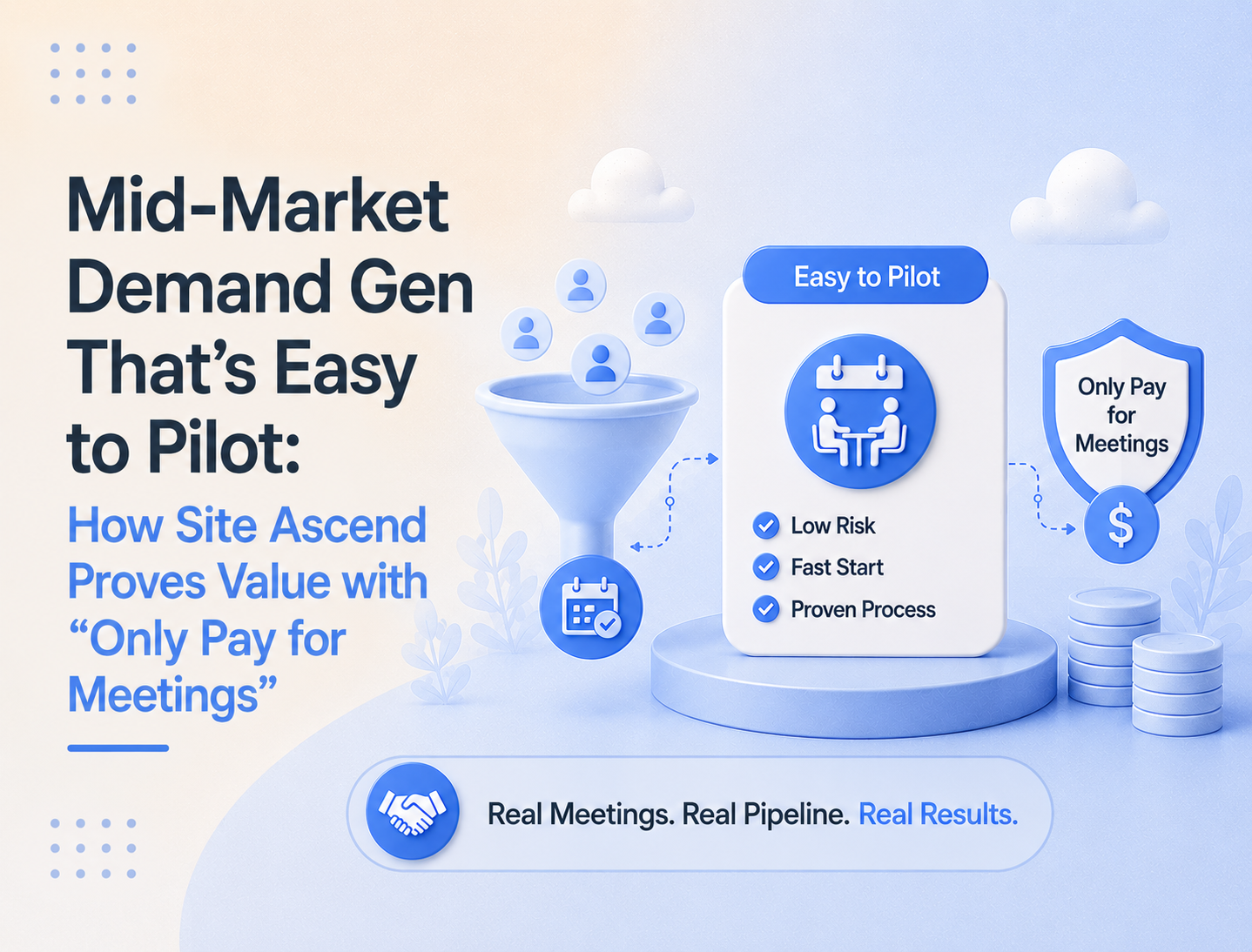
Site Ascend’s pay-per-meeting model forces clarity:
If a meeting doesn’t occur, you don’t pay. That keeps intent activation accountable to pipeline reality.
Actionable Steps for Marketers
If you want real meetings from 6sense, don’t start by changing your dashboard. Start by changing your follow-through.
Here’s a practical checklist you can implement this quarter:
6sense Activation Checklist
If you don’t have the internal bandwidth to run this consistently, that’s the exact gap an outbound activation partner should fill.
Comparison of Market Solutions
Most demand gen teams activate intent in one of three ways:
Option A: In-house SDR/BDR activation
Option B: Outsourced “activity-based” appointment setting
Option C: Performance-based executive meeting activation
Site Ascend fits cleanly into Option C. The model is built for teams that already have signals — and now need meetings that actually happen.
Conclusion
6sense gives you visibility. But visibility doesn’t move pipeline unless something happens next.
In 2025, the winning play isn’t more intent dashboards, more nurture steps, or more attribution tweaks. It’s faster human engagement with the right buyers, while the window is open.
If your 6sense accounts are surging but your pipeline feels stuck, you don’t have an intent problem.
You have an activation gap.
Ready to turn intent into director-level meetings?
Contact Site Ascend to start a pilot program.
How fast should we act on a 6sense surge?

What if 6sense shows intent but we don’t know who the buyer is?
Comparison of Market Solutions (Without Naming Names) Most demand gen teams activate intent in one of three ways: Option A: In-house SDR/BDR activation Pros: tight control, direct sales alignment Cons: activations get deprioritized; SDRs chase volume; response speed varies Option B: Outsourced “activity-based” appointment setting Pros: expands capacity Cons: inconsistent targeting, offshore teams, pay for effort not outcomes Option C: Performance-based executive meeting activation Pros: director+ focus, onshore quality, speed + qualification, pay only for meetings Cons: requires clear ICP and intent triggers Site Ascend fits cleanly into Option C. The model is built for teams that already have signals — and now need meetings that actually happen.


Start your pilot campaign today and explore the full range of Site Ascend's demand generation capabilities. Experience firsthand how we can enhance your efficiency, streamline your processes, and drive growth.
RELATED