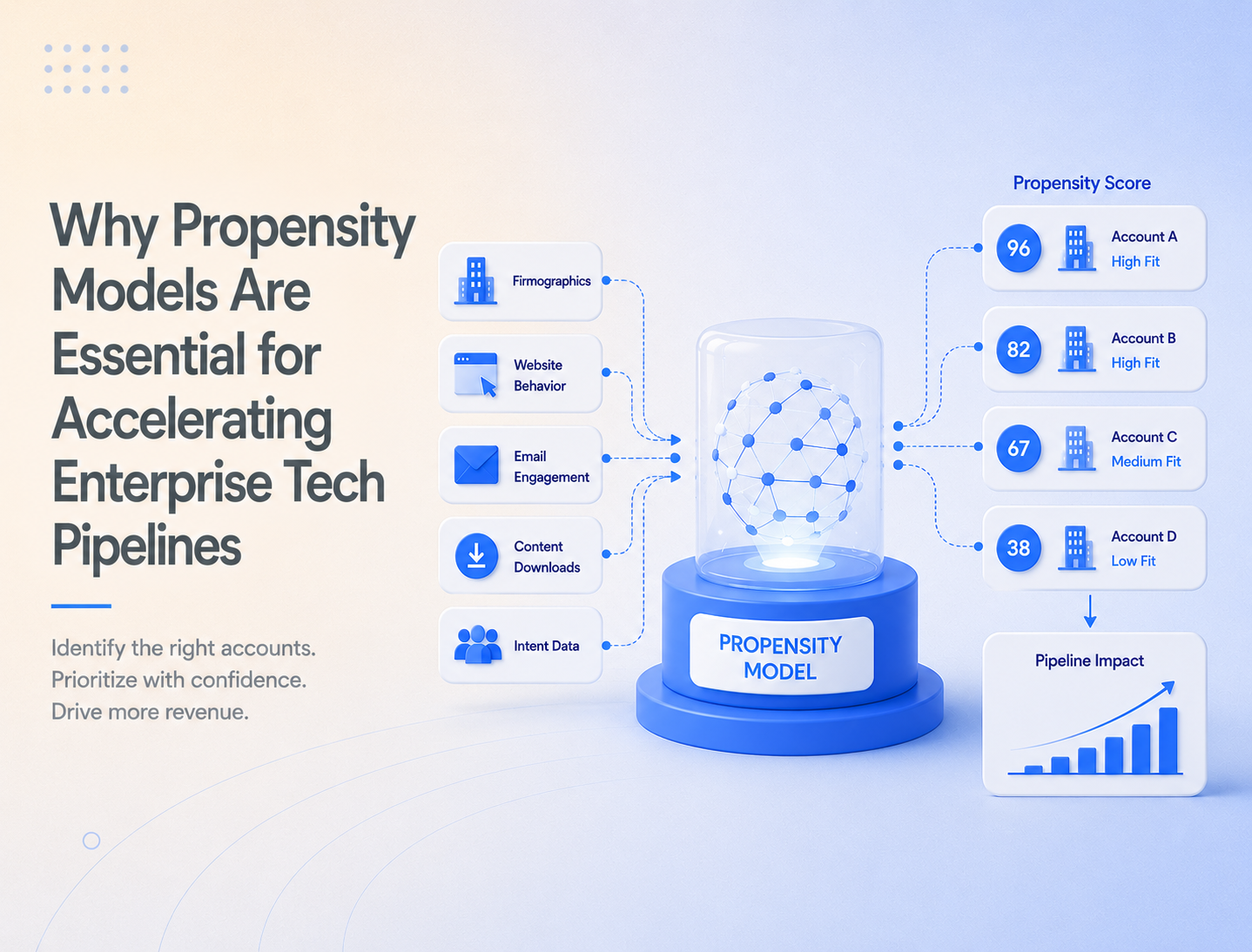
Why Propensity Models Are Essential for Accelerating Enterprise Tech Pipelines
Demand Generation Strategy


In today’s competitive B2B landscape, even the best demand generation programs fall short without efficient lead routing. Learn how smarter routing strategies can reduce friction between marketing and sales, shorten sales cycles, and turn every qualified lead into a measurable revenue opportunity.
-
Lead Management & Conversion Strategy
Introduction
For most B2B tech marketers, the challenge isn’t generating leads — it’s ensuring those leads end up in the right hands at the right time. Even the most sophisticated demand generation programs lose momentum when leads are misrouted, delayed, or handed off without context. The result? Missed opportunities, slower sales cycles, and wasted marketing spend.
That’s where smart lead routing changes the game. When marketing teams pair precision routing with performance-driven outreach, every lead has a better chance of converting into a meaningful sales conversation — and every campaign shows stronger ROI.
What Lead Routing Means for Demand Generation Marketers
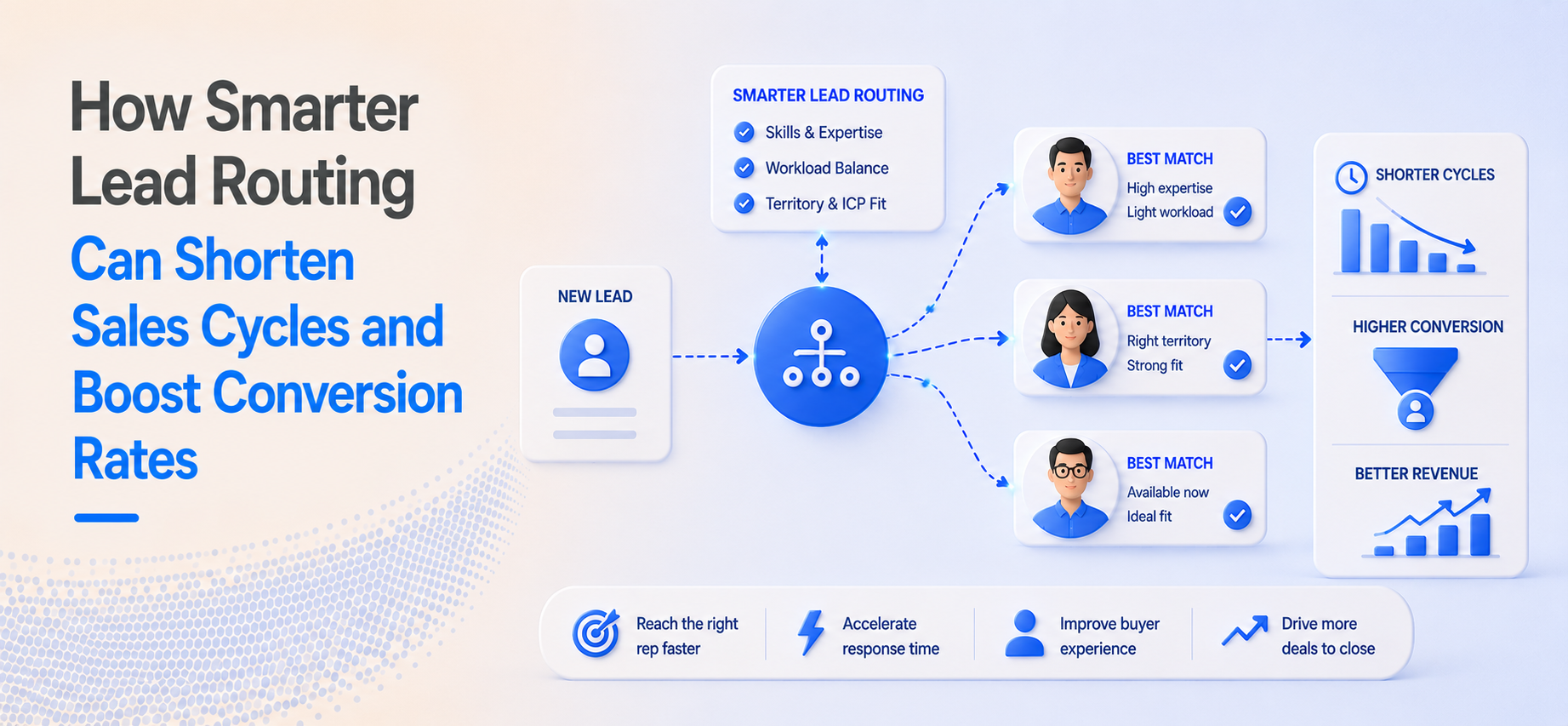
In the context of modern demand generation, lead routing refers to the process of assigning leads to the appropriate sales rep or channel partner based on specific criteria such as company size, industry, territory, or buying intent.
When done right, lead routing ensures that qualified prospects — especially those at the director level and above — reach the salespeople best equipped to engage them. It eliminates bottlenecks, accelerates follow-up, and helps marketers prove their impact on real pipeline.
For B2B technology organizations, this process is especially critical. Complex sales motions, partner ecosystems, and distributed teams make it easy for promising leads to stall or go cold. Smarter routing turns that complexity into a competitive advantage.
Common Challenges Marketers Face
Even high-performing marketing teams struggle with broken lead routing systems. The most common pain points include:
These gaps make it nearly impossible for demand generation teams to demonstrate ROI or maintain confidence in their contribution to pipeline growth.



.png)

%201.png)


.png)


Solutions That Work
The good news: smarter lead routing isn’t just about technology — it’s about precision, accountability, and partnership. That’s where Site Ascend delivers a measurable advantage.
Site Ascend helps B2B marketing teams turn routed leads into revenue-ready conversations through:
Each of these services ensures that routed leads are followed up with quickly, by the right person, and with messaging that resonates — eliminating the lag between marketing momentum and sales action.
Actionable Steps for Marketers
If you’re looking to improve your routing efficiency, start with these steps:
When executed strategically, smart routing can cut your average sales cycle length dramatically — while increasing conversion rates and proving marketing’s pipeline impact.
Comparison of Market Solutions
Many organizations rely on automated routing tools or internal SDR teams to manage lead flow. While these systems can move leads efficiently, they often lack accountability, personalization, and guaranteed outcomes.
By contrast, Site Ascend combines real human engagement with a pay-for-performance model — meaning you only pay for meetings that occur. With all outreach handled by a U.S.-based contact center and targeting focused exclusively on director-level and above, Site Ascend ensures routed leads aren’t just delivered — they’re activated.
Conclusion
Lead routing isn’t just an operational function — it’s a performance lever. Smarter routing creates a direct line from marketing investment to sales conversation, helping B2B tech marketers shorten sales cycles, increase conversion rates, and prove pipeline impact.
If you’re ready to ensure every lead you route becomes a qualified opportunity, it’s time to see how Site Ascend can help.
Start a pilot program with Site Ascend and transform your routing into revenue.
What’s the difference between lead routing and lead handoff?

How can marketers measure the ROI of smarter routing?
What if our team already uses automation for lead routing?


Start your pilot campaign today and explore the full range of Site Ascend's demand generation capabilities. Experience firsthand how we can enhance your efficiency, streamline your processes, and drive growth.
RELATED