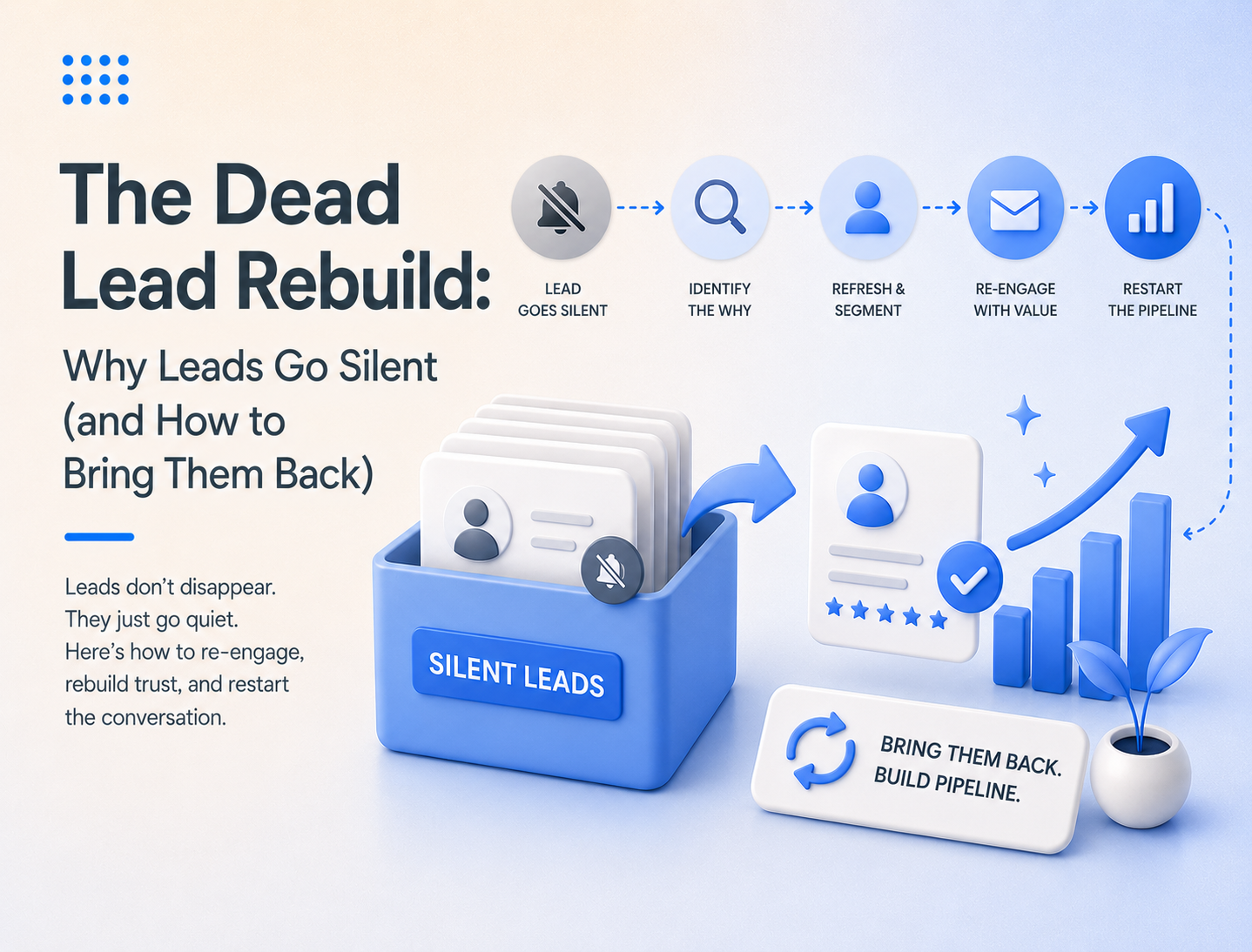
The Dead Lead Rebuild: Why Leads Go Silent (and How to Bring Them Back)
Pipeline Recovery


CDPs are finally delivering clean, unified buyer signals — but signals don’t become pipeline on their own. In 2025, the real advantage isn’t just knowing who’s in-market; it’s activating that intent fast with director-level human engagement. If your funnel looks busy but stays quiet, the gap isn’t data. It’s follow-through that turns interest into real meetings.
-
Demand Generation
Introduction
CDPs were supposed to be the moment B2B demand gen finally got out of the data weeds. One platform to unify customer and prospect behavior, clean up profiles, and tell you who’s in-market — sounds like the perfect fix for leaky funnels and sluggish enterprise cycles.
And yet… a lot of teams are staring at dashboards full of “high intent” accounts while pipeline stays eerily quiet.
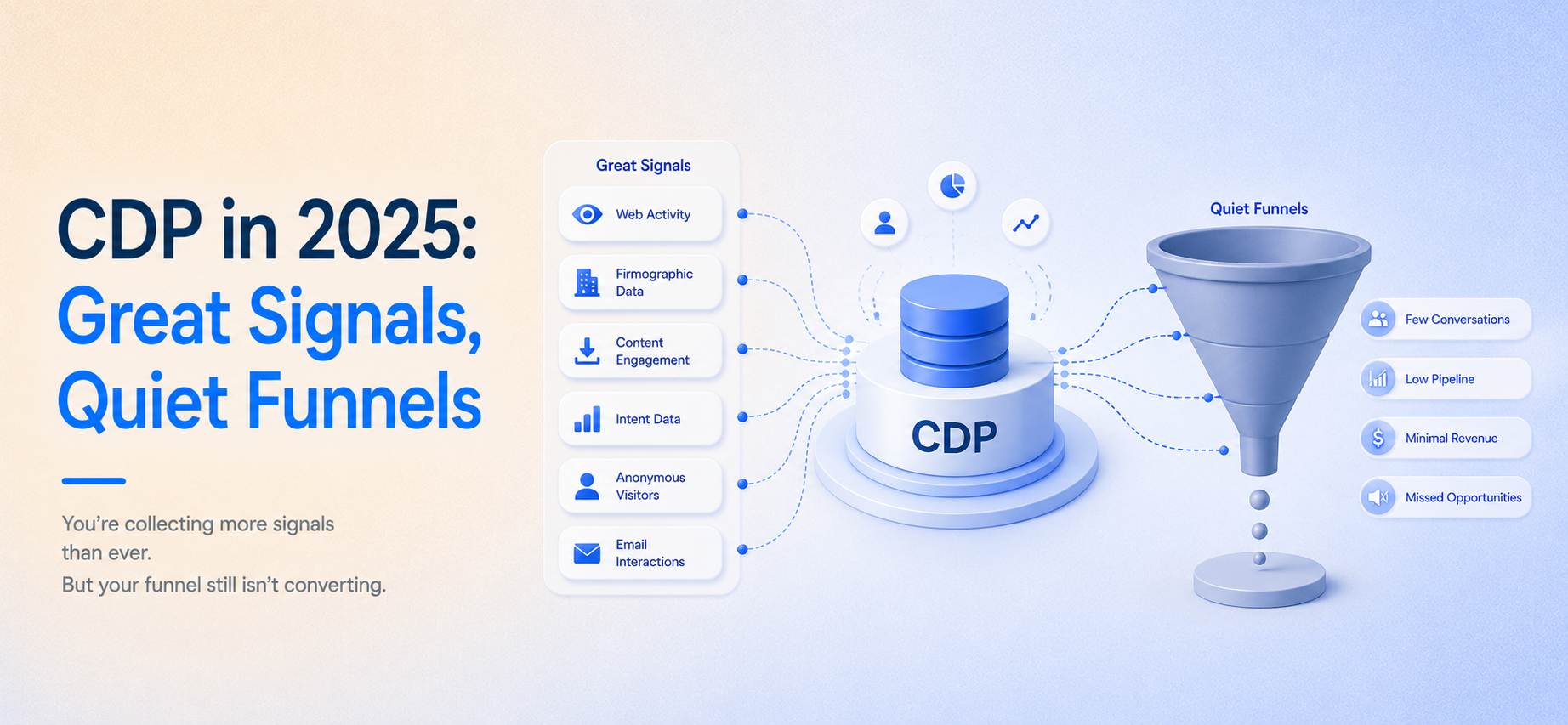
That’s the CDP reality in 2025: great signals, quiet funnels. Not because CDPs don’t work — but because most teams stop at knowing instead of moving. Data only becomes pipeline when someone acts on it fast, with precision, and with enough human lift to convert interest into real conversations.
That’s where demand gen is shifting right now. The winners aren’t the teams with the most sophisticated CDP. They’re the teams with the most reliable activation layer.
What CDP (Customer Data Platform) Means for Demand Generation Marketers and other titles that meet Site Ascend’s ICP
A Customer Data Platform is designed to unify disparate data sources — website engagement, event behavior, product usage, CRM records, marketing automation activity — into a single, usable profile of an account or buyer.
For demand gen leaders, the promise is simple:
If you’re running ABM, partner campaigns, field programs, or high-value events, CDPs are now core infrastructure. They help you stop guessing and start prioritizing. They clean up routing. They make scoring smarter. They give you clarity on where to focus.
But clarity isn’t conversion.
In B2B tech, especially enterprise and public sector motions, the buyer journey is not self-driving. Directors and VPs don’t buy because a nurture stream hit the right cadence. They buy when timing meets relevance, and relevance meets a human who knows how to turn curiosity into a meeting.
CDPs tell you who and when. Demand gen still has to solve how.
Common Challenges Marketers Face
Most CDP programs hit the same ceiling — and it has nothing to do with data quality.
1. Signals don’t translate into conversations
Your CDP flags engagement spikes. Great. But if there isn’t a clear, rapid outreach motion tied to those spikes, you’re just collecting evidence of interest after it cools off.
2. Activation relies on overloaded internal teams
Even when you know exactly which accounts to call, most demand gen teams don’t have enough bandwidth to move quickly. SDR teams get buried in sequences, sales prioritizes their own targets, and marketing ops isn’t built for real-time pursuit.
3. Director-level buyers stay unreachable
CDPs often surface accounts, not access. You can know an org is hot without having a reliable way to get a director into a conversation. That’s where most funnels go quiet.
4. Events and partner programs underperform after the invite
CDPs are great at showing who engaged with an event landing page or co-marketing asset. But the drop-off still happens between “interested” and “registered,” or “registered” and “showed.” Without human follow-through, the funnel leaks silently.
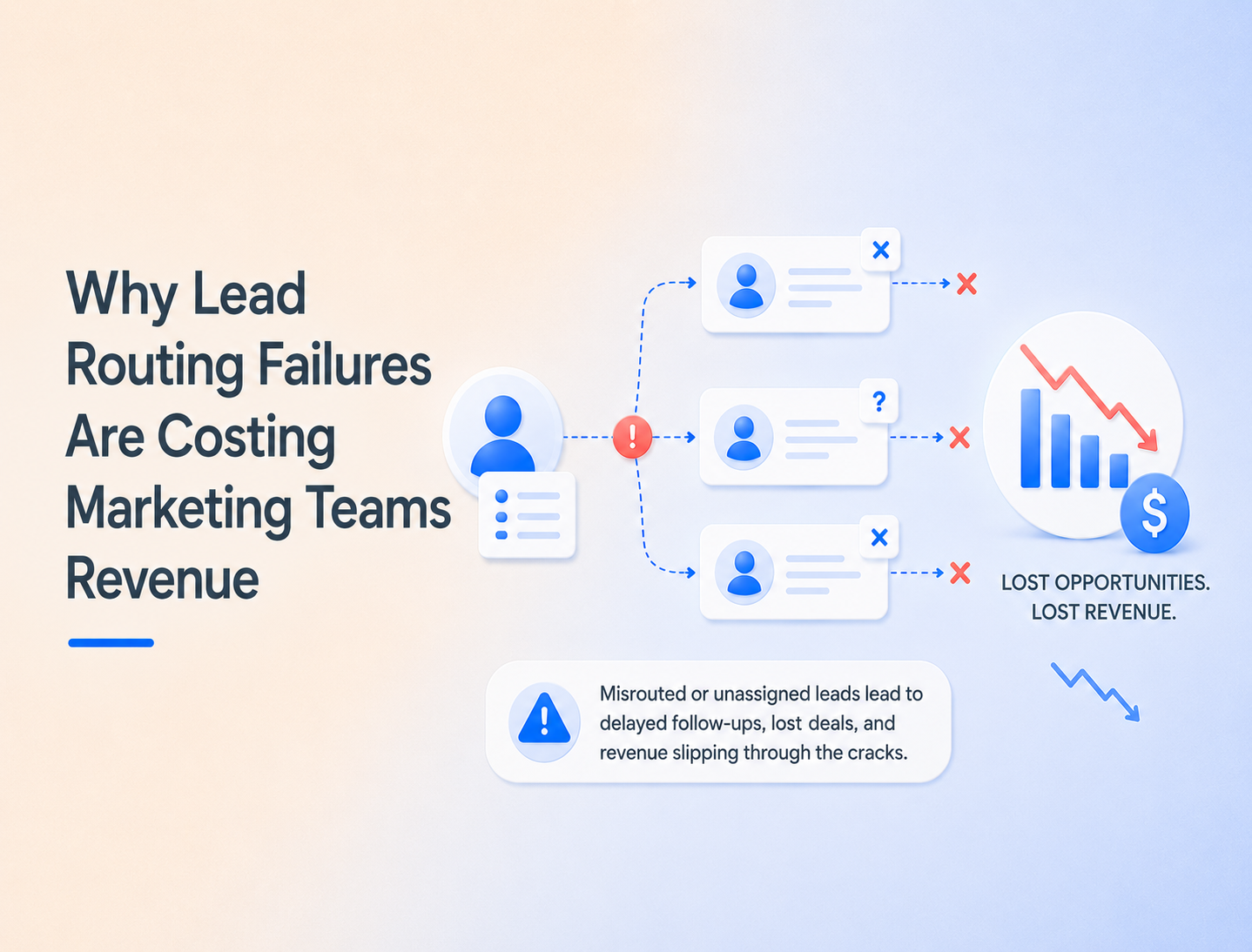
5. Reporting looks strong while pipeline stays soft
Engagement dashboards can create a false sense of momentum. Your accounts look active. Your scores rise. Your teams celebrate “coverage.” But pipeline doesn’t move unless buyers move.
CDPs don’t fail because they lack insight. They fail because most orgs lack execution capacity.



.png)

%201.png)


.png)


Solutions That Work
The fix isn’t abandoning your CDP. The fix is giving it a human performance layer that turns insight into meetings.
Here’s what that looks like in practice — and how Site Ascend plugs directly into the CDP gap.
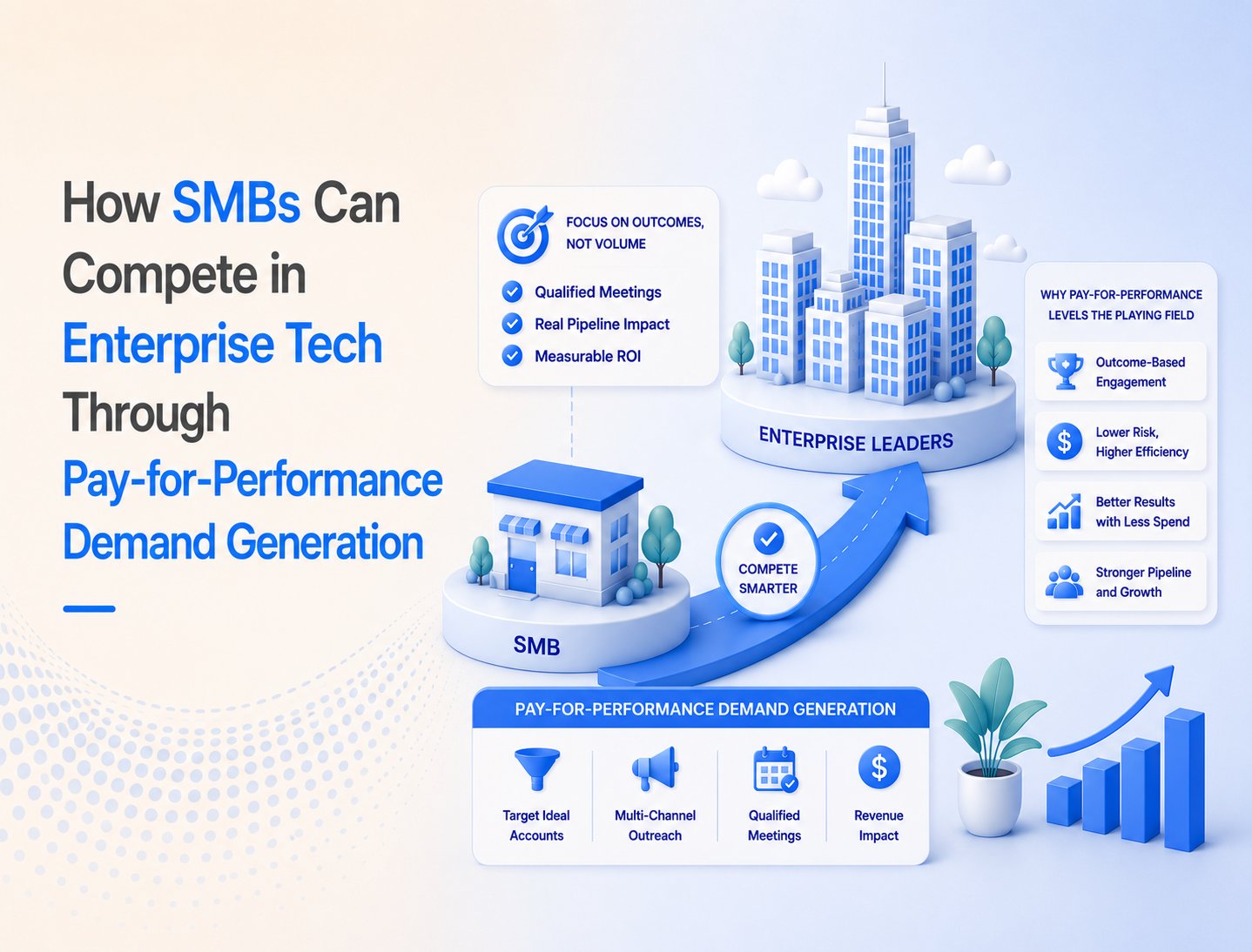
Executive Meetings that activate priority accounts
When a CDP signals interest from a target account, the fastest path to pipeline is simple: secure a real conversation with a director-level buyer while intent is alive.
Site Ascend runs outbound outreach to your highest-value segments and books 30-minute virtual executive meetings with director+ titles — so your CDP doesn’t just detect demand. It converts it.
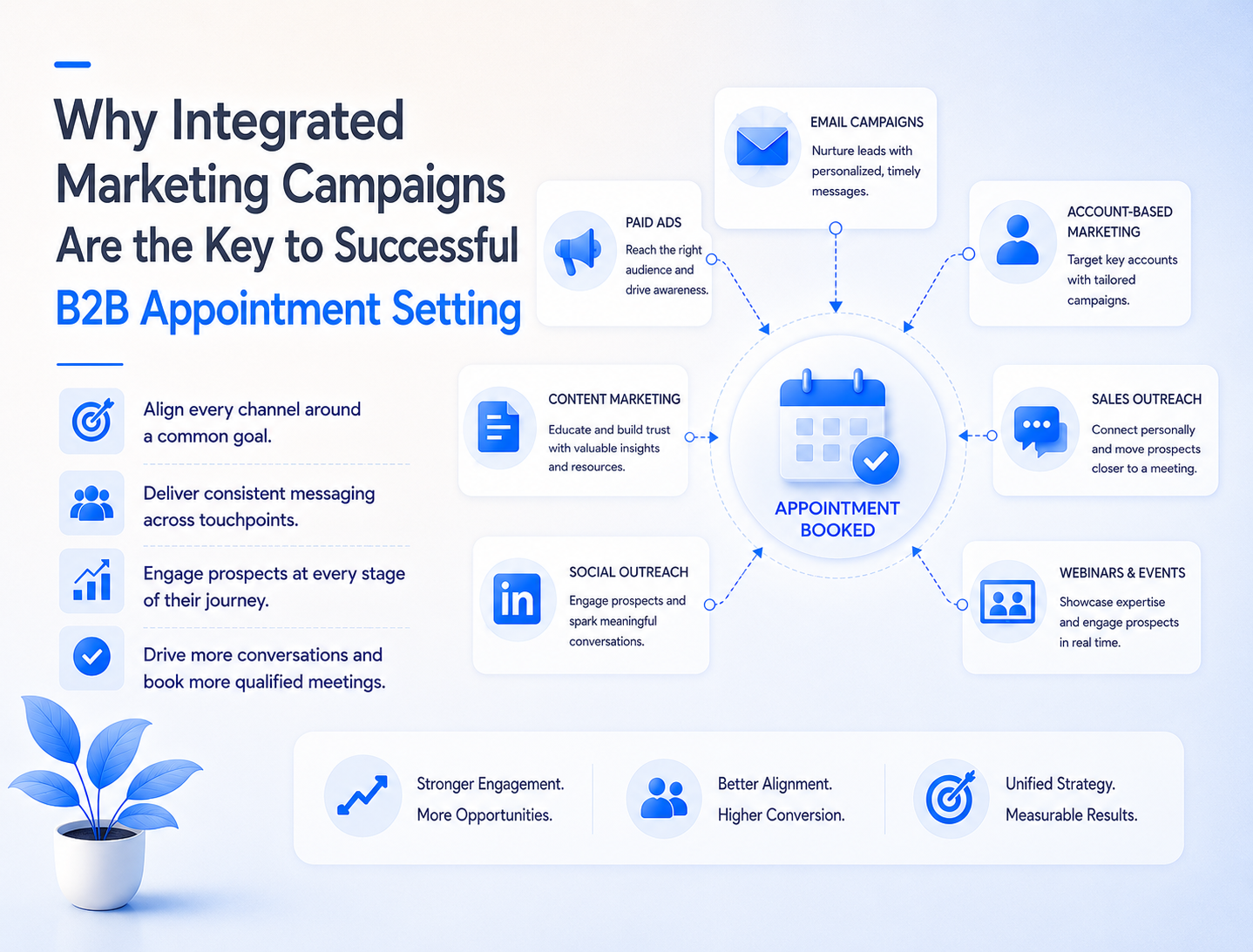
Channel Marketing that makes partner signals usable
CDPs often reveal engagement from partner campaigns: co-branded content, joint events, MDF-funded offers. But partner teams frequently struggle to follow through at the speed required.
Site Ascend works white-labeled on behalf of your partners, funded through MDF, turning partner-sourced intent into booked meetings your sales org can actually act on. It’s activation without friction.
Event Marketing that closes the “interest → attendance” gap
CDPs can identify who clicked, who visited the agenda, who downloaded the invite — but they can’t make someone commit.
Site Ascend’s outbound dialing brings those high-intent targets over the line, driving registrants into your in-person or digital events and supporting attendance through SMS workflows. You get the right people in the room, not just engagement data about them.
Lead Qualification that converts opt-ins into pipeline
Even with unified profiles, many opt-in leads are still half-formed. They need a real conversation to clarify fit, urgency, and buying role.
Site Ascend qualifies those leads through live outreach and converts them into sales-ready meetings — protecting your funnel from the “CDP says yes, sales says no” disconnect.
The performance model that removes risk
Because Site Ascend only charges for meetings that occur, you don’t have to “hope activation works.” You get a clear pipeline outcome tied to actual conversations, not activity projections.
Actionable Steps for Marketers
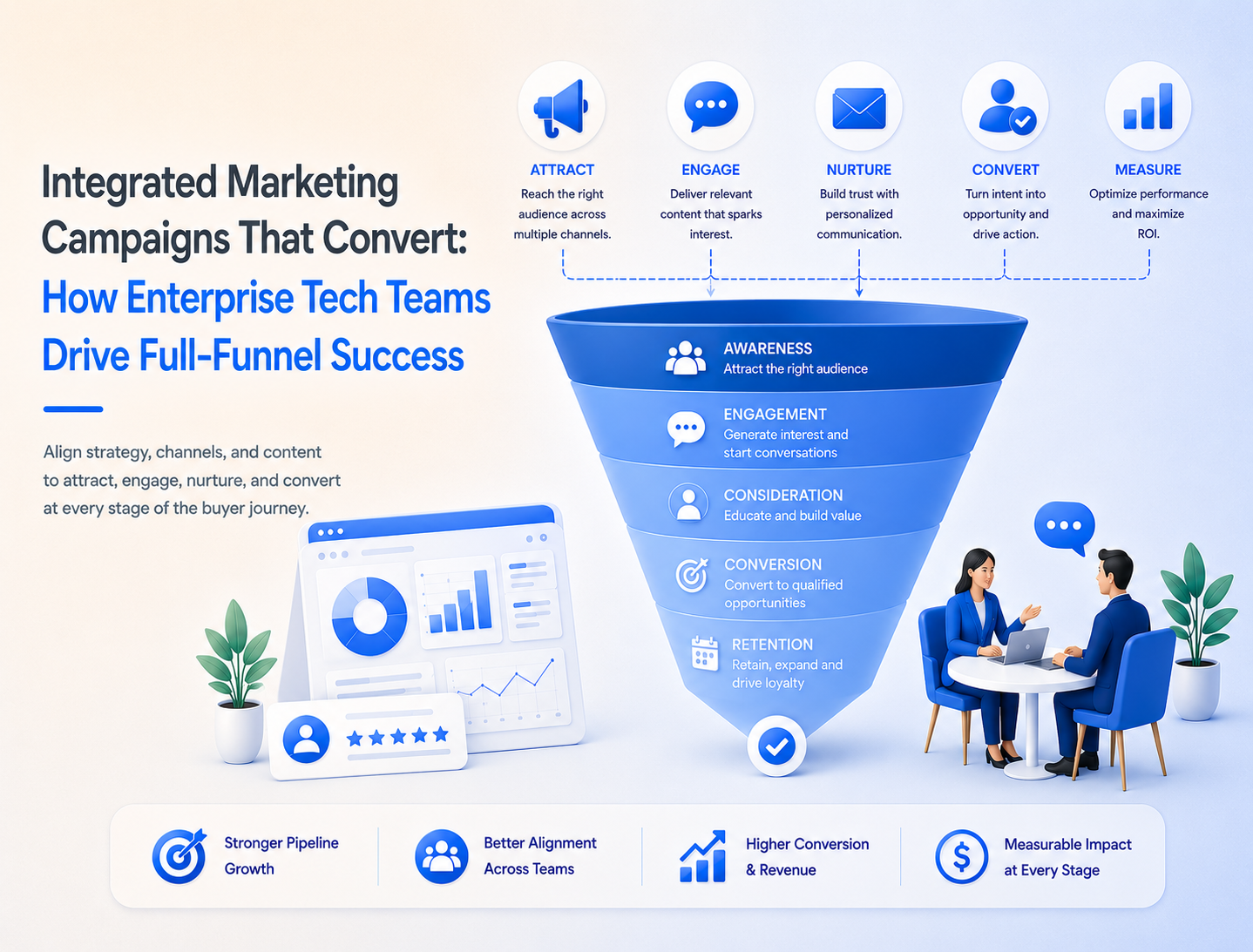
If your CDP is strong but your funnel is quiet, here’s the playbook to tighten the connection between intent and pipeline:
1. Decide what counts as a “must-act” signal.
Not every engagement spike deserves outreach. Define the top behaviors that indicate real buying motion (event page revisits, pricing engagement, solution-specific content surges, partner campaign clicks).
2. Attach real-time outreach to those signals.
The value of intent decays fast. Activation needs to happen in days, not weeks.
3. Prioritize access, not just accounts.
Make sure your activation motion targets director+ buyers directly, not broad lists.
4. Build conversion paths for events and partner programs.
If your CDP flags interest in a co-marketing initiative or field event, outbound follow-through should be built into the plan from day one.
5. Measure success in meetings, not engagement.
Engagement is input. Meetings are momentum. Pipeline is outcome.
If internal teams can’t support that speed and coverage consistently, it’s time to add a dedicated performance layer.
Comparison of Market Solutions
Most demand gen orgs choose one of three activation paths:
In-house activation only.
This can work if you have deep SDR coverage and enough headcount to pursue every high-intent account quickly. But most teams don’t — and intent decays while you triage.
Automation-heavy activation.
Sequencing tools and workflows are great for scale, but they struggle to create urgency with senior buyers. They also can’t rescue event attendance or partner conversion when interest stalls.
Outsourced activation.
The market is full of providers, but many rely on offshore teams, broad ICP targeting, or pay-per-lead models that look good on paper and fail in pipeline reality.
Site Ascend is structured differently:
The result is an activation layer that matches the CDP’s promise: speed, precision, and outcomes.
Conclusion
CDPs are doing their job in 2025. They’re organizing data, unifying identity, and surfacing intent with more accuracy than ever.
But great signals don’t move pipeline on their own.
If your dashboards are loud and your funnel is quiet, you don’t need a new CDP. You need a reliable human performance layer that turns engagement into meetings — fast, consistently, and at the director level.
That’s what Site Ascend is built to do. If you want to pilot an activation motion tied directly to your CDP insights, let’s talk.
Contact Site Ascend
Why doesn’t CDP intent automatically turn into pipeline?

How fast should we act on CDP signals?
How does Site Ascend work with our CDP?


Start your pilot campaign today and explore the full range of Site Ascend's demand generation capabilities. Experience firsthand how we can enhance your efficiency, streamline your processes, and drive growth.
RELATED