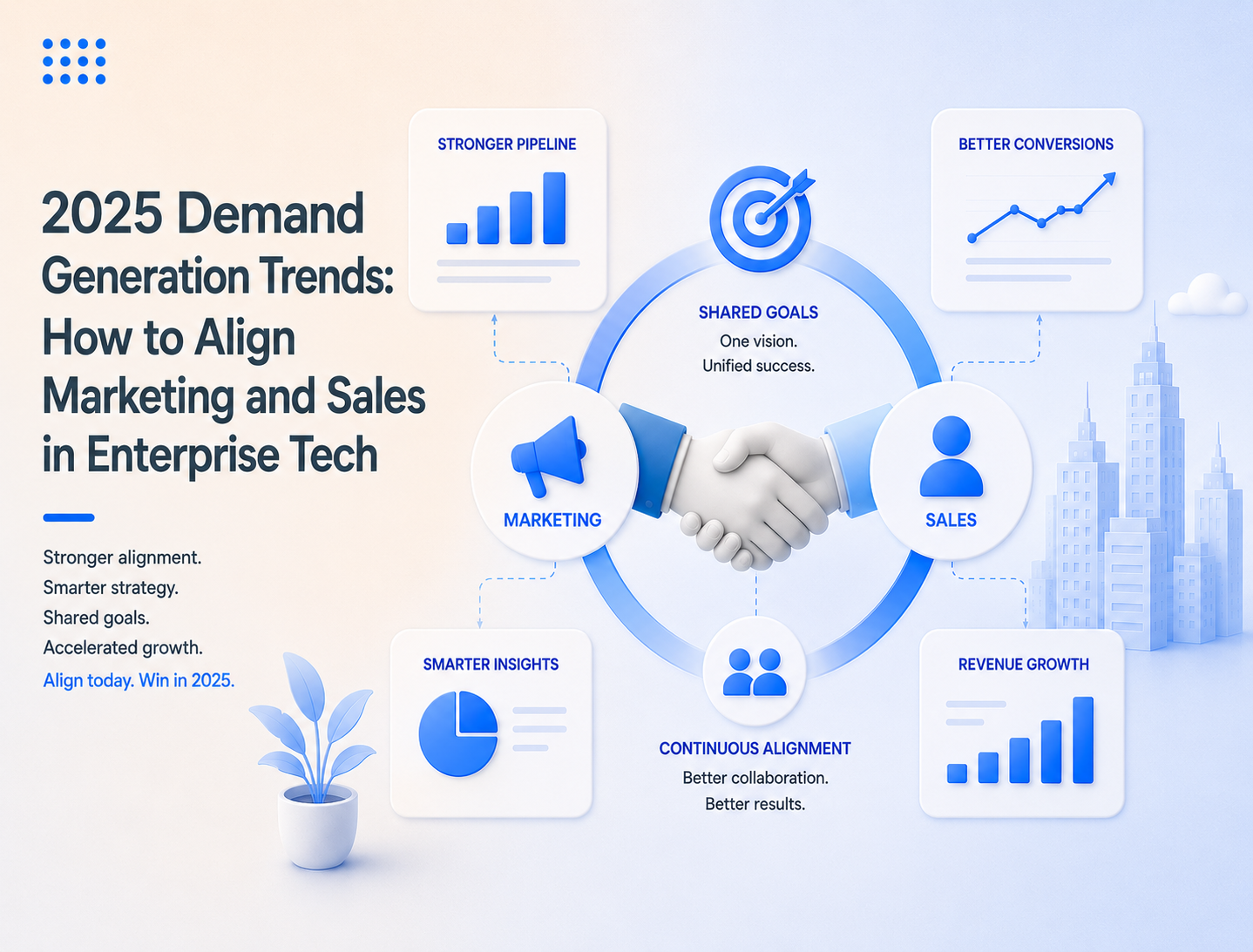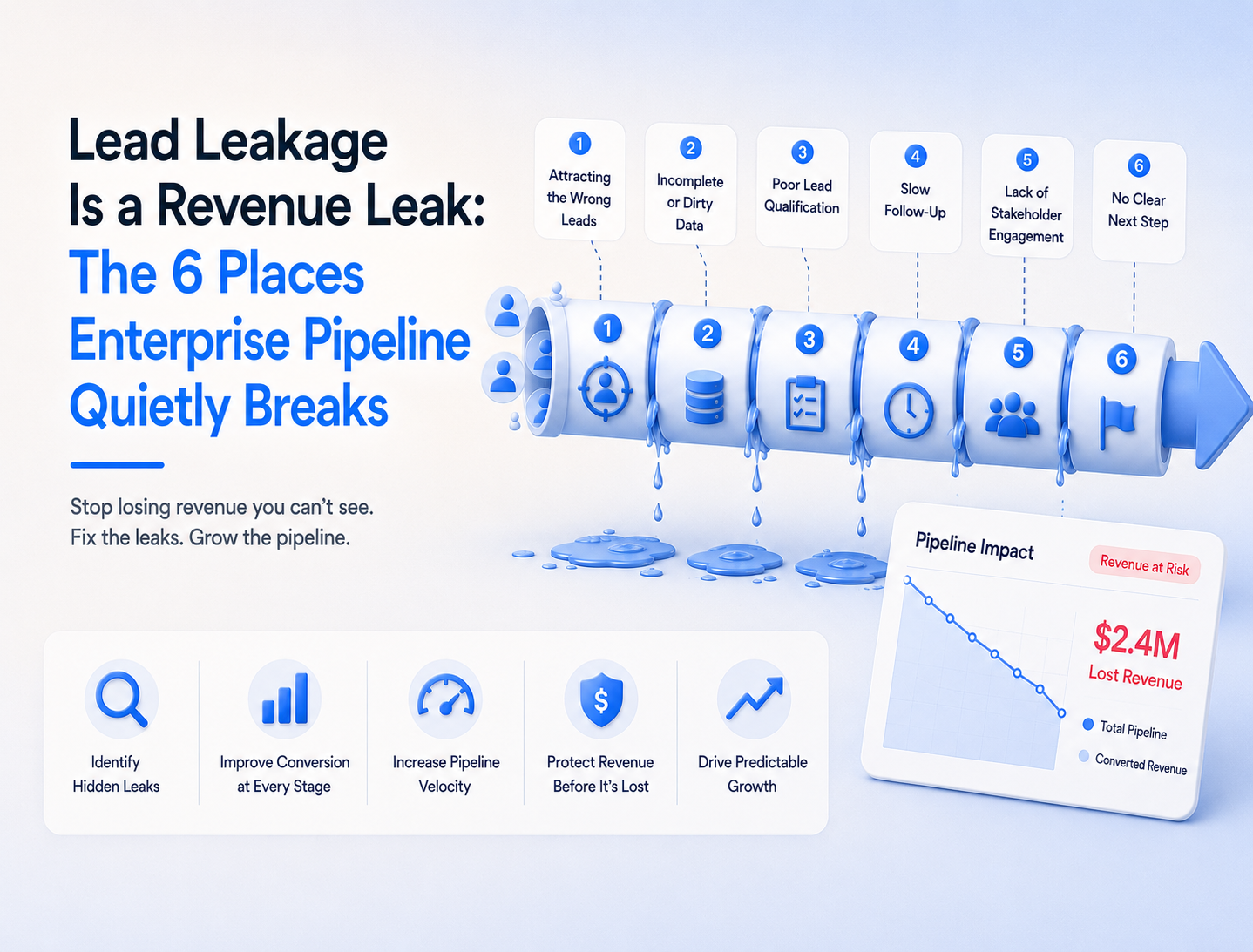
Leadsync Breaks When No One Calls — How Site Ascend Converts Activity Into Executive Meetings
Demand Generation


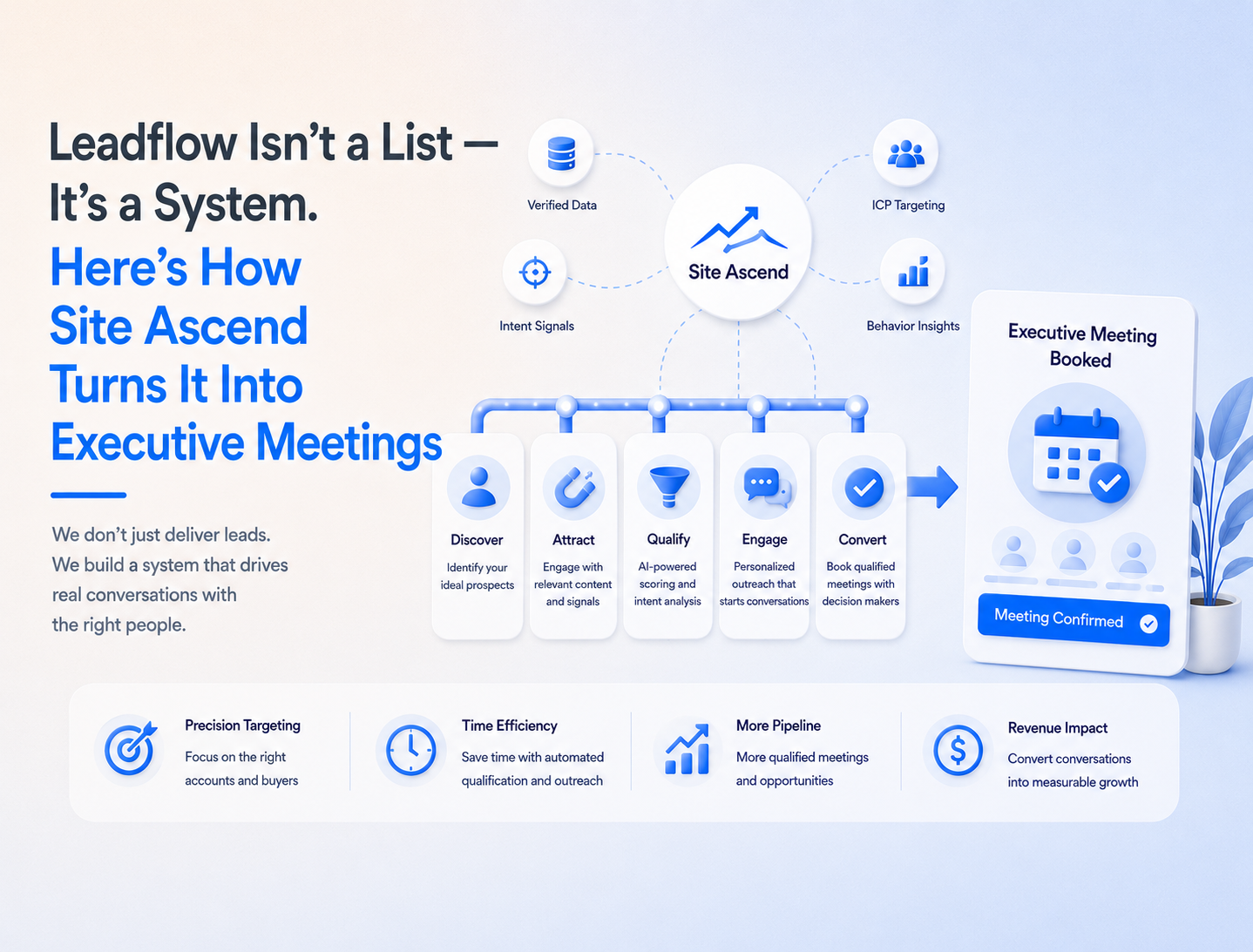
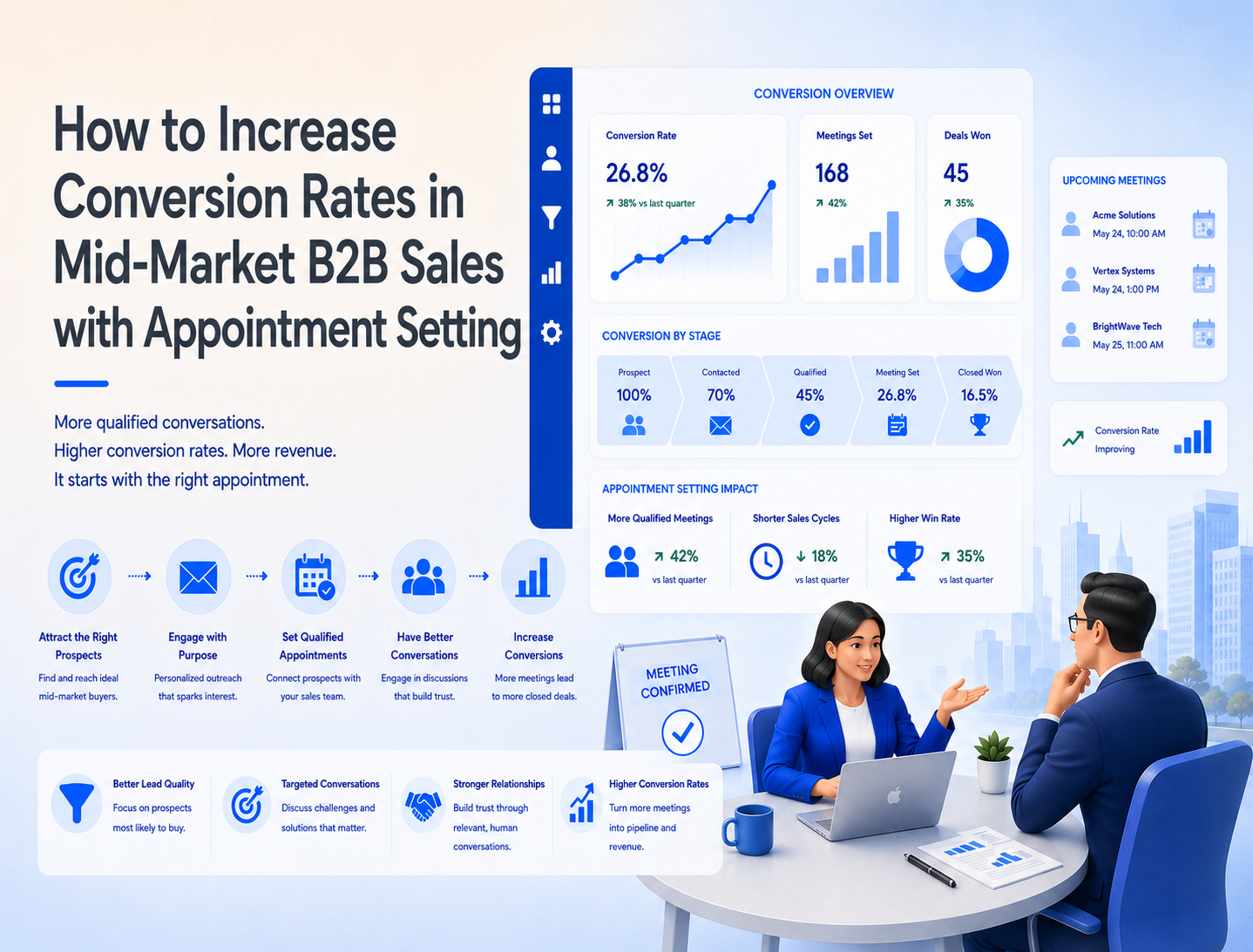
Meeting volume is easy to report—meeting quality is harder to prove. This blog shows how Site Ascend uses the FAB framework (Features, Advantages, Benefits) to improve show rates, secure Director+ stakeholders, and increase next-step conversion across demand generation programs.
-
Demand Generation
Introduction
If you’ve run demand gen at a tech company long enough, you’ve seen this movie:
Meeting volume is easy to buy. Meeting quality is hard to operationalize.
That’s why the smartest enterprise demand gen teams use a deceptively simple framework to evaluate (and defend) meeting programs:
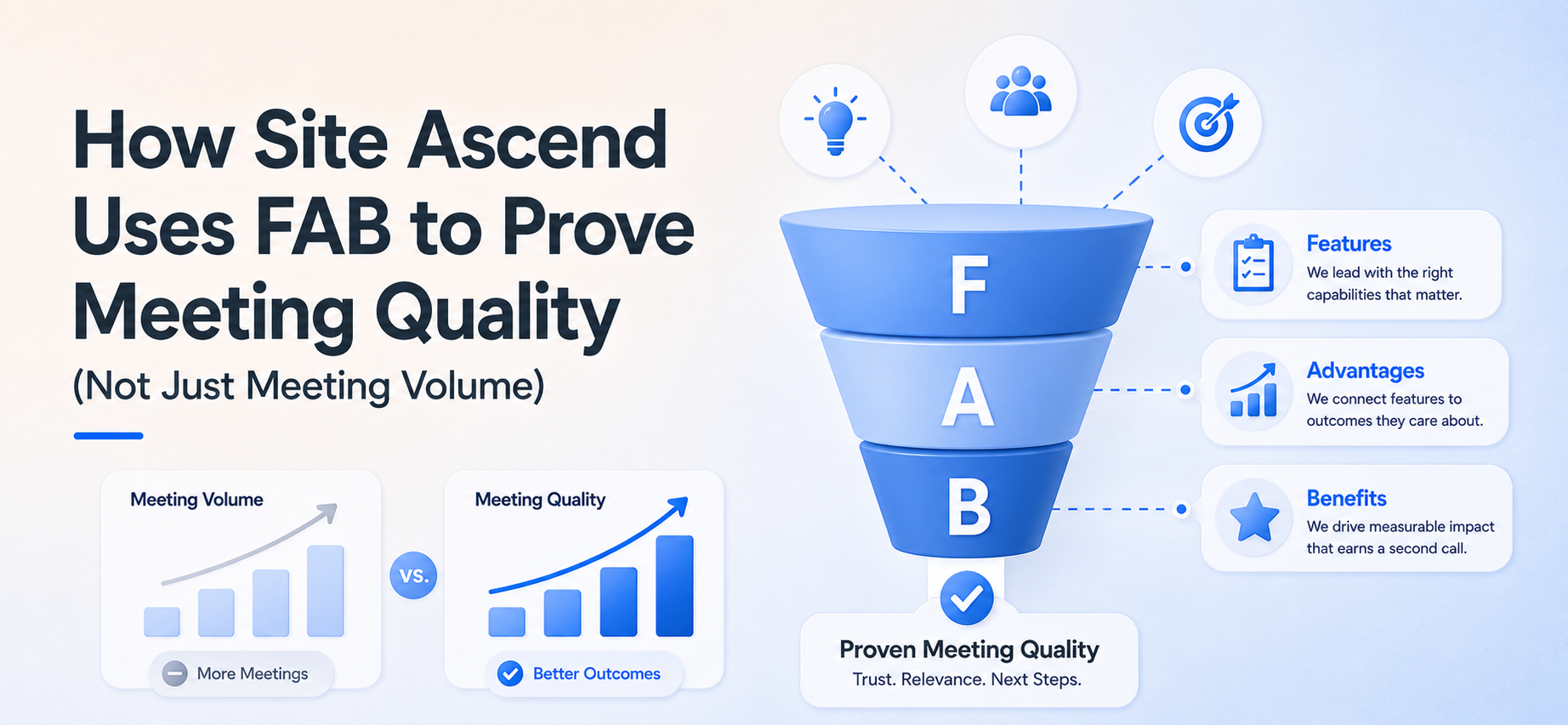
FAB: Features, Advantages, Benefits.
FAB forces you to stop judging programs by outputs (how many meetings were booked) and start judging them by mechanics and outcomes (what creates meetings that happen, with the right people, that move to next steps).
Site Ascend uses FAB as an operating philosophy across its programs—especially where quality is usually fragile: Executive Meetings (Director+), Lead Qualification (opt-ins → meetings), Channel Marketing (white-labeled/MDF), and Event Marketing (registrant procurement).
What FAB means for demand generation marketers and Site Ascend’s ICP
FAB is commonly used in sales messaging, but for demand gen leaders, it’s even more useful as a vendor and program scorecard.
Features
What is actually being delivered—mechanically?
Advantages
Why do those features matter compared to “standard” approaches?
Benefits
What business outcomes should you expect if the advantages are real?
If you’re a CMO, VP/Director of Demand Gen, ABM lead, Field/Partner/Event marketer, or Revenue Marketer, FAB is a way to answer the question that actually matters:
“Are these meetings worth our sales time—and will they convert?”
Common challenges marketers face
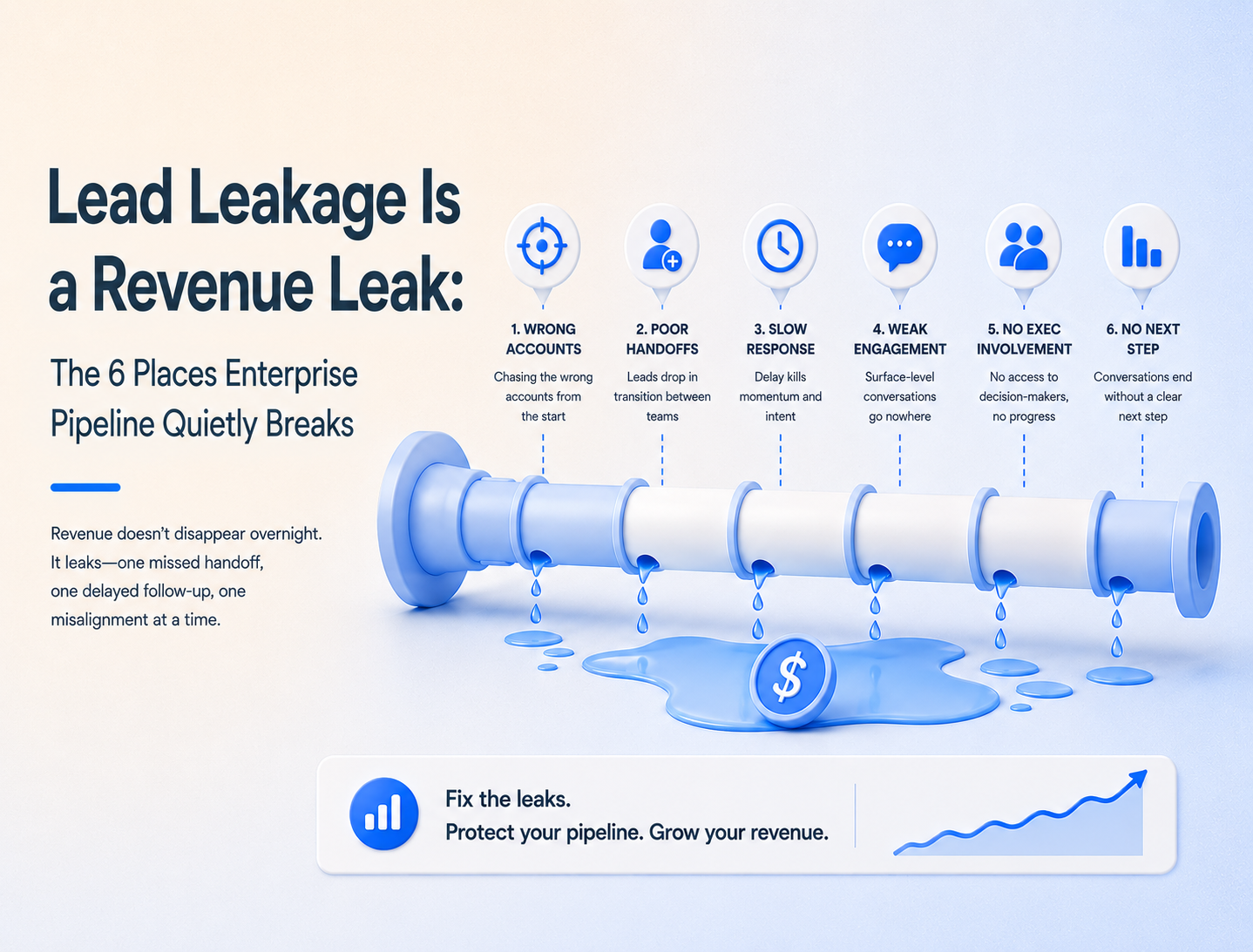
1) “Booked” becomes the KPI—and quality quietly degrades
Most meeting programs drift toward volume because it’s the easiest metric to report. But when “booked meetings” becomes the north star:
You’ll feel it as lower acceptance, lower attendance, and fewer next steps.
2) Seniority mismatch causes meetings to stall
A meeting with the wrong stakeholder can be worse than no meeting:
For enterprise motions, Director+ is not a nice-to-have. It’s often the difference between “learning” and “moving.”
3) Incentives favor activity, not outcomes
Many market options price on inputs:
Those models can scale activity while silently transferring risk back to you: no-shows, low quality, low next-step conversion.
4) Lack of visibility makes it impossible to fix problems mid-flight
If you only get reporting at the end of the month (or worse, end of the campaign), you can’t:
By the time you “learn,” the quarter is over.



.png)

%201.png)


.png)


Solutions that work
FAB becomes powerful when you apply it to the mechanics Site Ascend uses to protect quality. Here’s how.
Executive Meetings
Feature: Director-level and above targeting
Site Ascend is built around meetings with Director+ stakeholders in target accounts.
Advantage: Fewer dead-end conversations
Director+ stakeholders are more likely to:
That reduces the “nice chat” problem that kills next-step conversion.
Benefit: Higher next-step rate
When the right level is in the room, the first meeting is more likely to produce:
Lead Qualification
Feature: Converting opt-ins into qualified meetings
Site Ascend’s lead qualification motion turns opt-in leads (downloads, webinar signups, etc.) into meetings when there’s real readiness.
Advantage: Human context beats automated assumptions
Scoring can prioritize, but it often can’t reliably capture:
A human qualification layer can prevent low-quality meetings from ever getting booked.
Benefit: Better sales trust (and better follow-up)
When meetings come with usable context, sales is more likely to:
Feature: White-labeled outreach, funded via MDF
Site Ascend supports channel/partner motions through white-labeled appointment setting that can be paid for via market development funds.
Advantage: Easier partner activation, consistent execution standards
White-label delivery reduces friction for partners while keeping your quality bar intact:
Benefit: MDF becomes defensible
Instead of proving activity (campaigns run), you can prove outcomes:
Feature: Attendee procurement via outbound dialing + SMS support
Site Ascend’s event motion is focused on driving registrants through outbound dialing, then supporting attendance with SMS workflows up to the event date. (Not day-of onsite services.)
Advantage: Higher-intent registrants and better attendance support
Outbound dialing can produce a clearer commitment signal than passive registration flow alone, and SMS support reduces drop-off between “registered” and “attended.”
Benefit: Better event-to-meeting conversion
Events stop being a registration metric and start functioning like a pipeline motion:
Actionable steps for marketers
You can apply FAB immediately—without changing your entire funnel strategy—by using it as a scorecard for meeting quality.
The FAB Meeting Quality Checklist
Step 1: Define “quality” in measurable terms (before you launch)
Pick 3–5 metrics that reflect meeting value, not volume:
Step 2: Map each metric to a feature
If the metric misses, you want to know what to change.
Step 3: Run a weekly “FAB review”
Ask these questions weekly:
Step 4: Protect seniority like it’s budget (because it is)
If you can only enforce one standard, enforce this:
Step 5: Treat “no next step” as a quality failure
A held meeting without a defined outcome is a warning sign.
Standardize outcomes like:
Comparison of market solutions
You don’t need to name competitors to evaluate the landscape. Most options fall into predictable categories.
In-house SDR/BDR teams
Best for: teams with strong enablement, stable territories, and consistent capacity.
Tradeoffs: ramp time, turnover, inconsistent standards under pressure.
FAB lens: Great if you can enforce Features (process discipline) and verify Benefits (next steps), not just activity.
Outsourced appointment setting priced on activity
Best for: quick scale when you can tolerate variability.
Tradeoffs: incentives often favor bookings over attendance, and seniority may drift.
FAB lens: If the feature is “lots of meetings,” the benefit may still be “few next steps.”
Offshore/outsourced contact centers
Best for: cost sensitivity and broad coverage.
Tradeoffs: quality and consistency can vary, especially with senior stakeholders.
FAB lens: Lower cost is an advantage only if the benefit (meeting outcomes) holds up.
Partner/channel programs focused on campaign activity
Best for: awareness and partner engagement reporting.
Tradeoffs: attribution and follow-through are difficult; outcomes can be inconsistent.
FAB lens: If the feature is “partner activity,” the benefit rarely translates cleanly into meetings and pipeline.
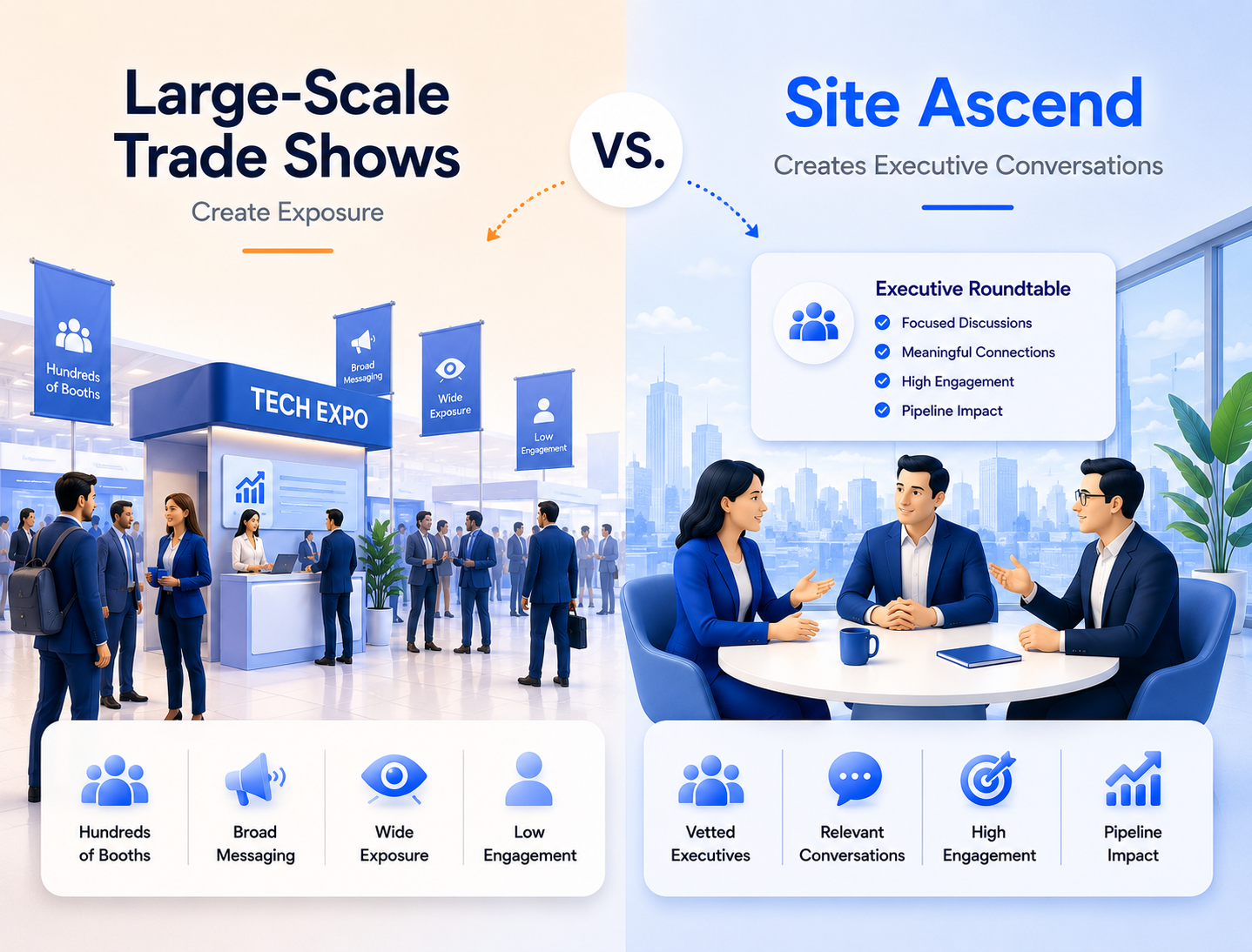
Event programs focused on day-of execution
Best for: onsite experience and logistics.
Tradeoffs: doesn’t automatically solve who attends or whether attendees convert afterward.
FAB lens: Great for experience—still needs procurement and conversion mechanics to produce meetings that progress.
Why Site Ascend tends to win on “quality proof”
Site Ascend’s differentiators are designed to make meeting quality measurable:
Conclusion
If you’re judged by pipeline, you can’t afford to judge meeting programs by volume alone.
FAB gives you a clean way to evaluate meeting quality:
If your current programs generate meetings but not momentum, the next move isn’t “more meetings.” It’s better proof—and better mechanics.
Reach out to Site Ascend to pilot a meeting program designed around outcomes—Director+ stakeholders, meetings that occur, and measurable next-step conversion.
What’s the fastest way to tell if a meeting program is quality-first or volume-first?

Why does Director+ targeting matter so much for demand gen?
How should I pilot a meeting program so I can defend it internally?


Start your pilot campaign today and explore the full range of Site Ascend's demand generation capabilities. Experience firsthand how we can enhance your efficiency, streamline your processes, and drive growth.