The Future of Partner Relationship Management (PRM): From Data Portals to Demand Generation Powerhouses
Demand Generation & Partner Marketing


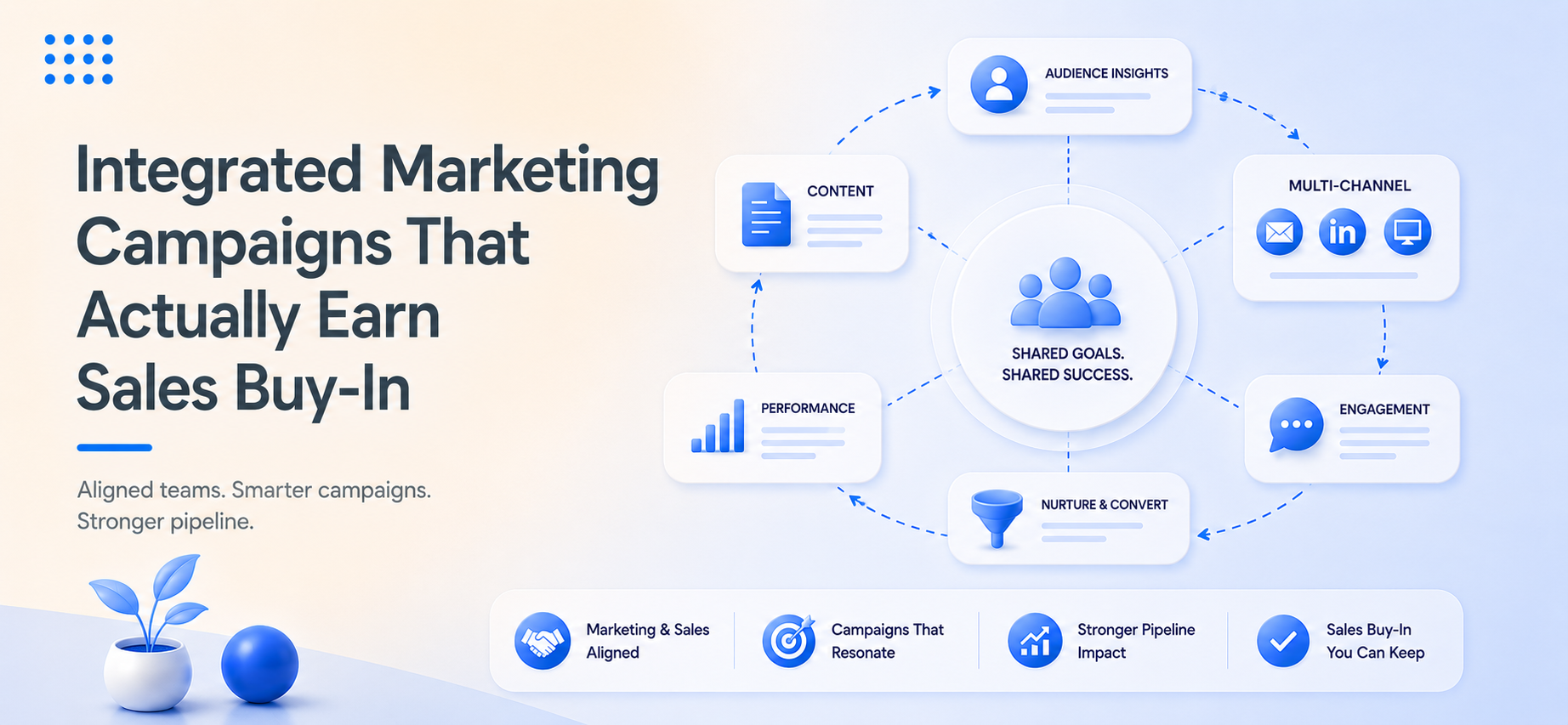
Most integrated marketing campaigns don’t fail on awareness—they fail on sales confidence. Here’s how to turn multi-channel engagement into qualified conversations, cleaner handoffs, and meetings that actually happen.
-
Demand Generation Strategy
Introduction
Most integrated marketing campaigns look “successful” on paper: clicks are up, engagement is up, maybe even MQLs are up. Then the handoff happens—and sales still doesn’t buy it.
Not because sales is difficult (okay, sometimes), but because the campaign didn’t create the kind of intent sales can act on. Integrated marketing campaigns only earn sales buy-in when they reduce uncertainty: Who is this? Why now? What do they want? And what’s the next step that won’t waste time?
That’s the bar. And it’s exactly where demand gen leaders can win—by designing integrated marketing campaigns around conversion to real conversations, not just aggregated engagement.
What “Integrated Marketing Campaigns” Means for Demand Gen Leaders
An integrated marketing campaign is supposed to do one thing well: coordinate multiple touchpoints (channels, offers, follow-up motions) so a target account experiences a coherent story—and you can move them forward faster.
In practice, most “integrated” campaigns are just parallel activity:
The result is familiar: marketing says “we created demand,” sales says “we got noise.”
A modern definition of integrated marketing campaigns—one sales will actually respect—is this:
A connected set of plays that turns interest into meetings that occur, with clear targeting, clean handoffs, and measurable next-step conversion.
That’s where Site Ascend fits in: not as a “channel,” but as the execution layer that helps integrated campaigns produce outcomes sales can’t ignore—executive meetings, qualified follow-up conversations, and reliable event attendance from the right people.
Common Challenges Marketers Face
Integrated marketing campaigns often break for reasons that have nothing to do with creative or spend. The cracks are usually operational.
The “good fit” problem
Targeting looks tight until the leads come in. Then you find out the campaign reached the wrong seniority, wrong function, or wrong segment inside the account.
The “speed” problem
A prospect can be interested and still go cold if the follow-up is late, generic, or routed to the wrong owner. Lag kills integrated campaigns because momentum is the whole point.
The “handoff” problem
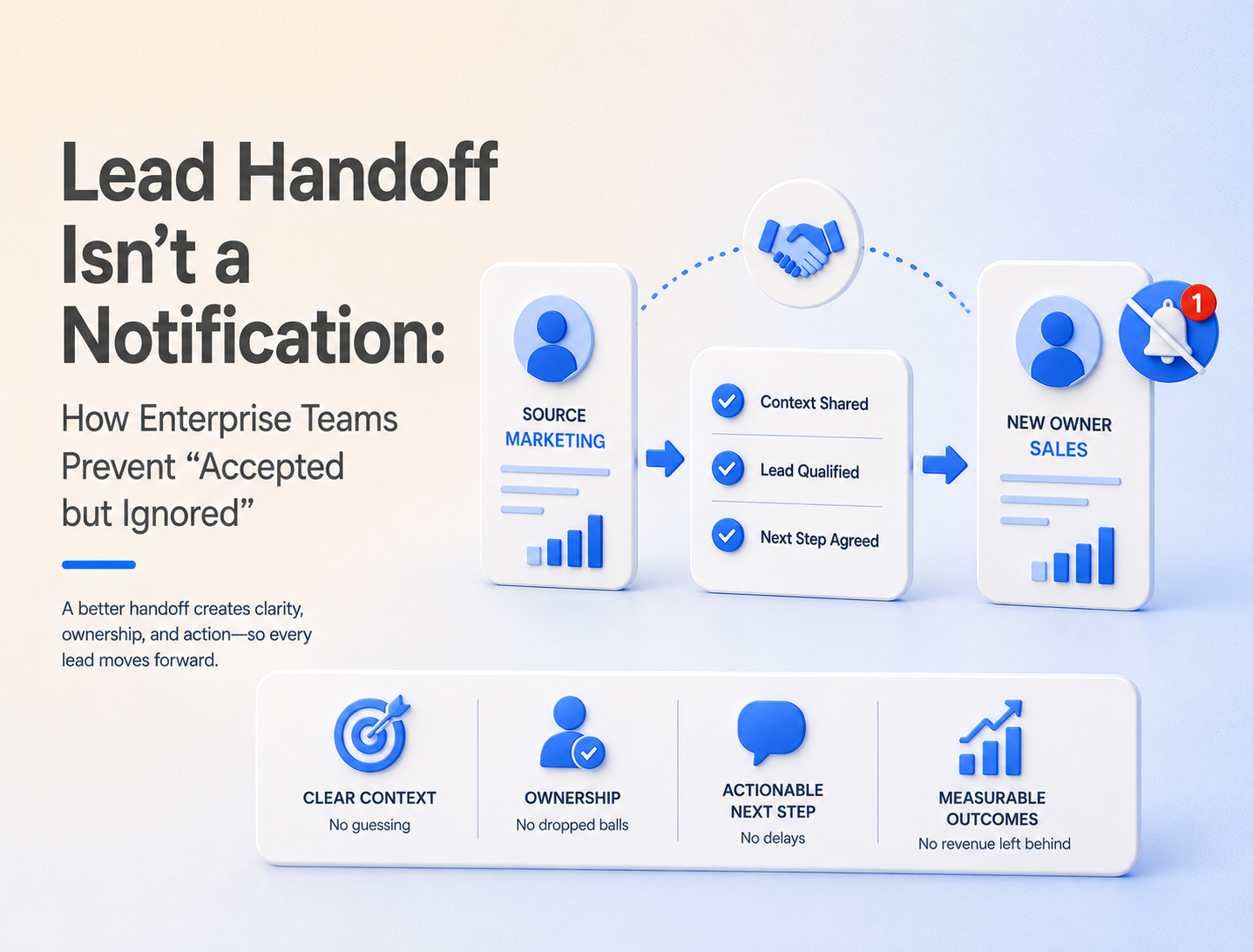
Sales wants context. Marketing hands over a lead record. Sales disengages. No one is wrong—your system is just missing the “why this meeting exists” story.
The “partner” problem
Channel-driven programs can create volume, but without a consistent qualification and follow-up motion, they create channel conflict, attribution debates, and lead leakage.
The “proof” problem
When it’s time to report, the campaign performance lives in fragments: ad metrics here, event metrics there, partner metrics somewhere else, and meeting outcomes… maybe in a spreadsheet.
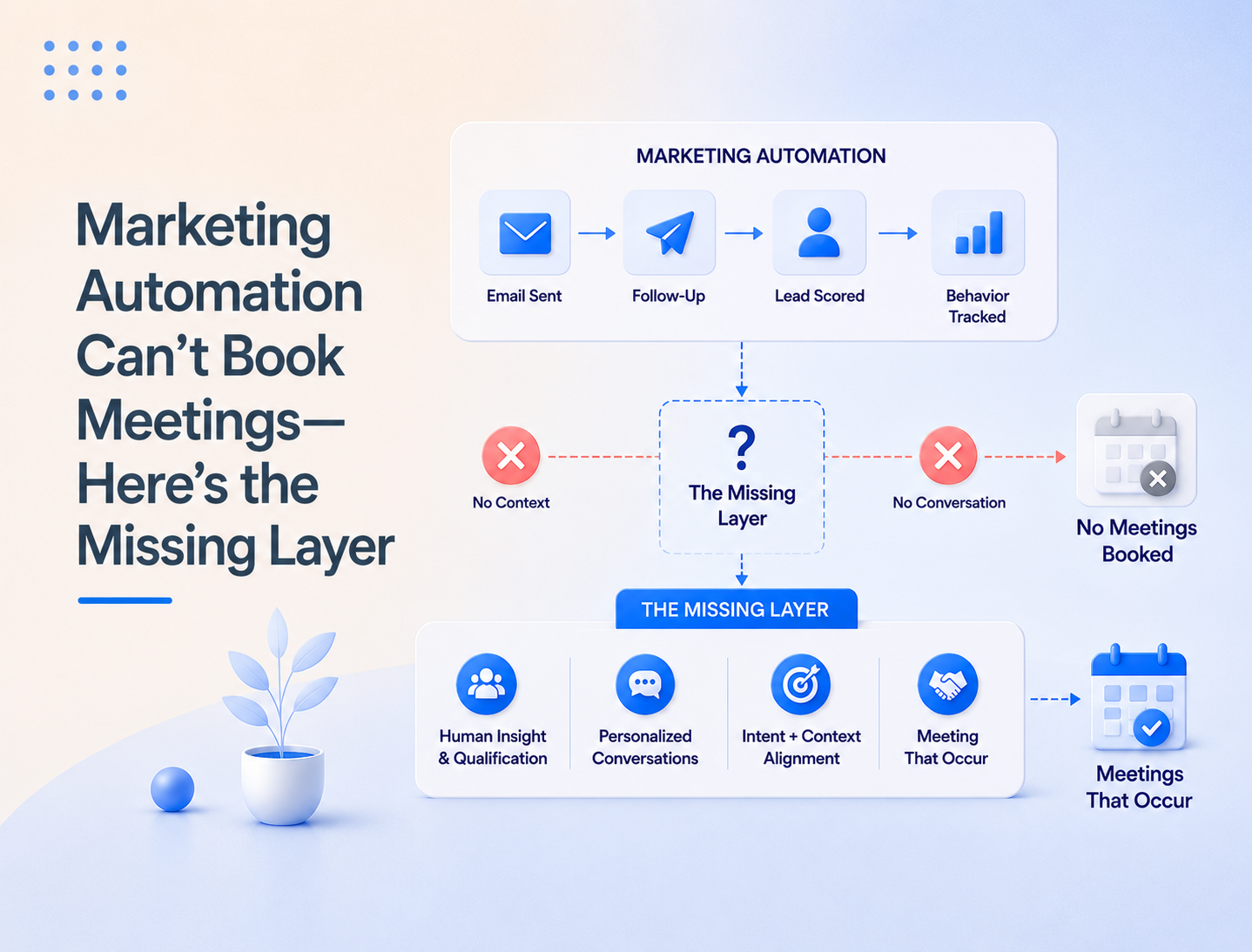
Integrated marketing campaigns don’t need more activity. They need a meeting standard—and the operational muscle to hit it.



.png)

%201.png)


.png)


Solutions That Work
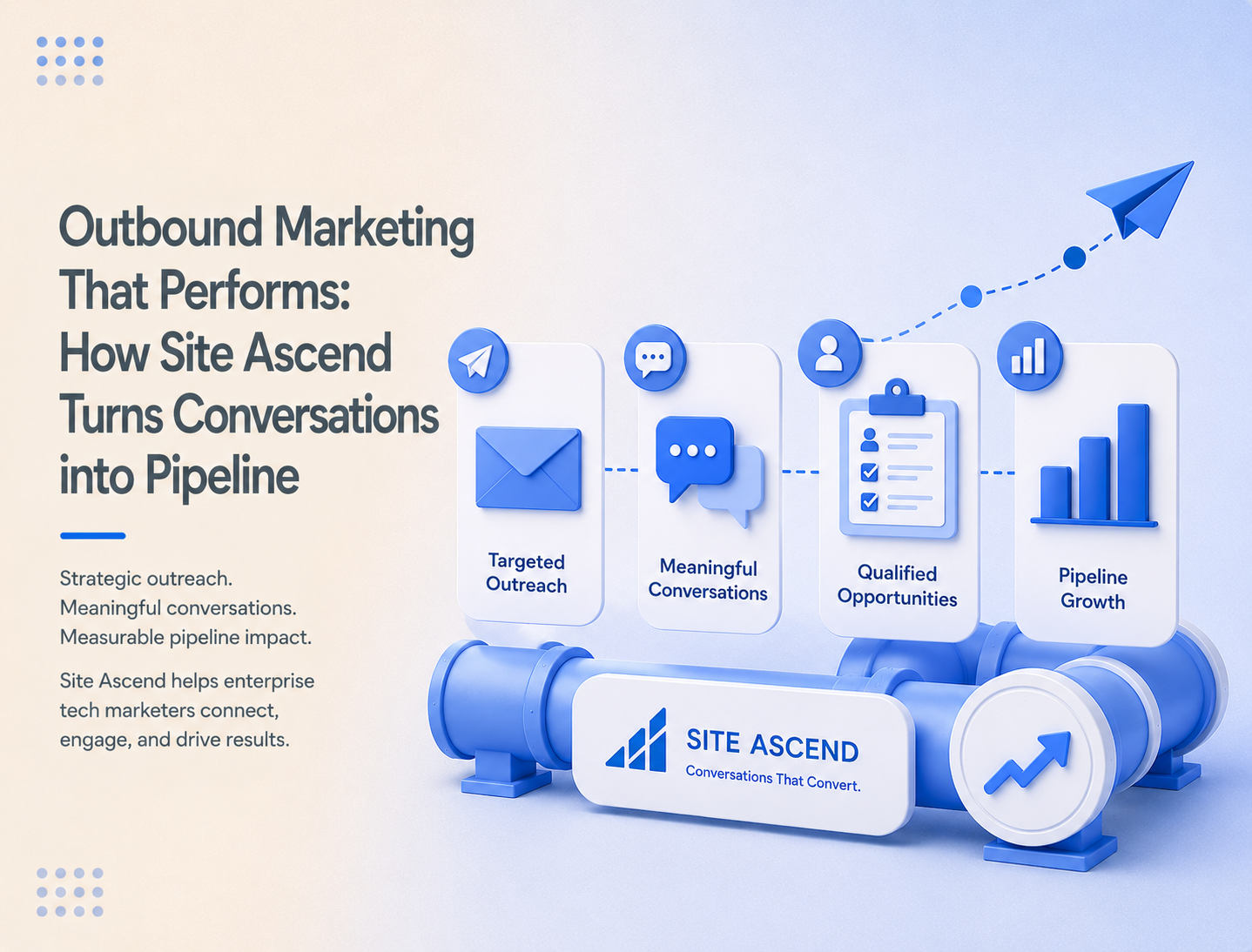
The fastest way to earn sales buy-in is to anchor integrated marketing campaigns around one outcome sales already values: qualified conversations.
Here’s how Site Ascend supports that across the campaign lifecycle.
Executive Meetings: turn engagement into scheduled conversations
If your campaign is aimed at named accounts, the real question isn’t “did they engage?” It’s “did we earn a conversation with someone who can move this forward?”
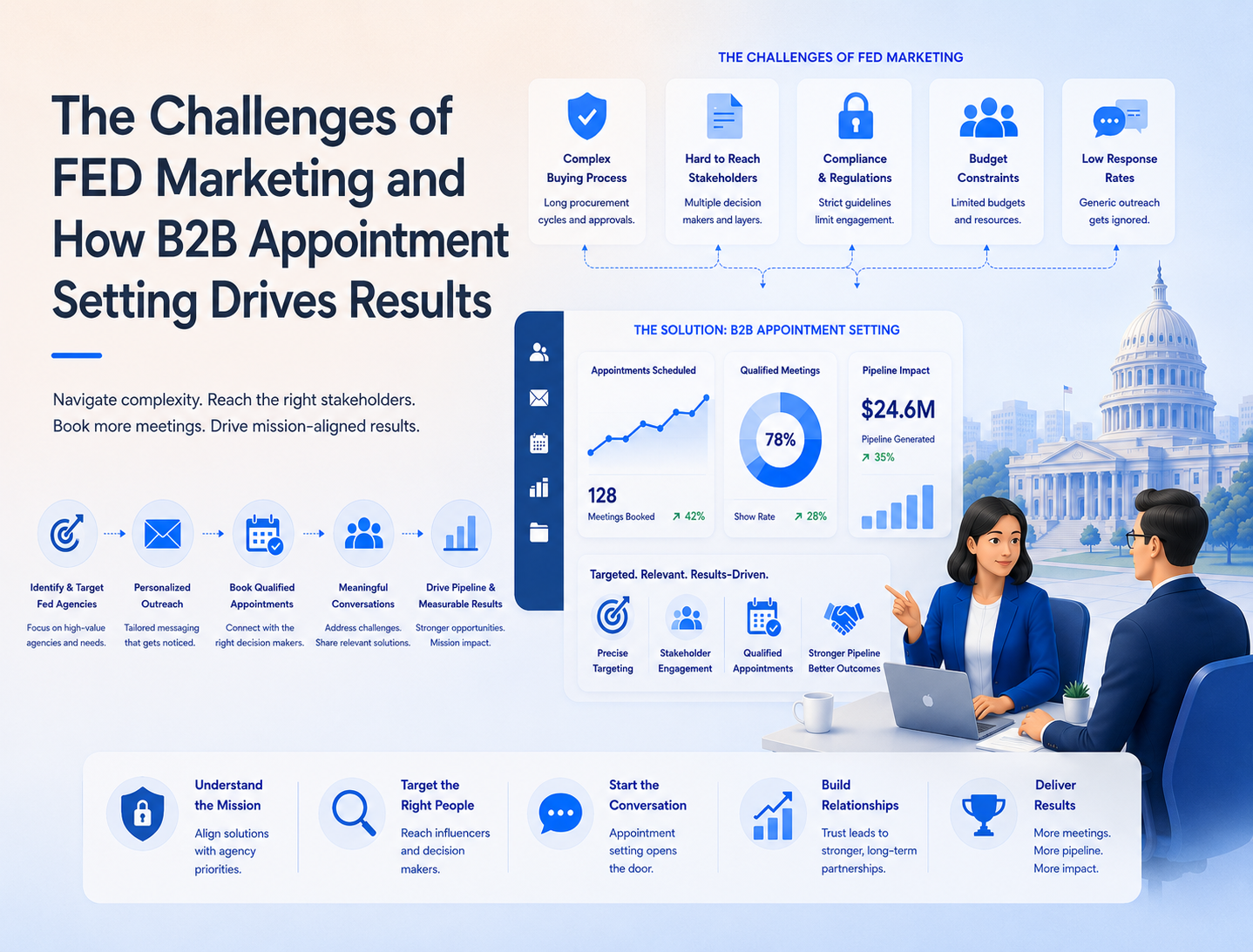
Site Ascend helps integrated marketing campaigns convert interest into 30-minute virtual meetings with director-level and above stakeholders in target accounts—so your campaign produces a measurable next step, not just a spike.
Key advantage: you only pay for meetings that occur, which changes how campaigns are evaluated. It shifts the conversation from “attributed influence” to “delivered outcomes.”
Lead Qualification: stop sending sales “maybe”
Integrated marketing campaigns create mixed intent. Some leads are real. Many are early. Some are simply the wrong fit.
Site Ascend’s lead qualification motion turns opt-ins (like content downloads or webinar sign-ups) into qualified sales meetings—so sales doesn’t have to guess what they’re walking into.
Event Marketing: attendance is the product
Events are a classic integrated play—until attendance underperforms, or the registrant list is the wrong seniority.
Site Ascend focuses on driving registrants using outbound dialing, then supports attendance with an SMS workflow up to the event date. (No day-of event services—this is about getting the right people to show up in the first place.)
Channel Marketing: partner pipeline without channel chaos
Partners can amplify integrated marketing campaigns—if follow-up is consistent and white-labeled.
Site Ascend supports channel marketing via white-labeled appointment setting funded through market development funds. That means partners get outcomes, you get cleaner execution, and sales gets conversations that are easier to accept.
Real-time reporting: make “integrated” measurable
Integrated marketing campaigns fall apart when you can’t see what’s happening across motions. Site Ascend provides a real-time reporting dashboard so you can track progress and outcomes without stitching it together later.
Actionable Steps for Marketers
If you want integrated marketing campaigns that earn sales buy-in, use this as your build checklist. It’s short on purpose—because the gap is usually discipline, not complexity.
Define the meeting standard (before launch).
Write down what “qualified” means for your campaign: target titles, target functions, account criteria, and what must be true for a meeting to be worth taking.
Design the follow-up motion as part of the campaign.
Your campaign isn’t integrated if follow-up is “we’ll see what SDR capacity looks like.” Define ownership, timing, and what happens when a lead isn’t ready.
Separate intent from engagement.
Engagement is a signal. Intent is a decision. Make sure your campaign captures what sales needs to know: priority, pain, timeline, stakeholders, and next step.
Plan for the “not now.”
Most enterprise buying isn’t “no,” it’s “not this quarter.” Build a re-engagement path that doesn’t burn SDR time and doesn’t rely on email alone.
Instrument the handoff.
A lead record isn’t a handoff. The handoff should tell a story sales can act on in one glance: who engaged, why they engaged, what they want, and the best next step.
Comparison of Market Solutions
When teams try to make integrated marketing campaigns “work,” they typically choose one of three paths. Each can succeed—but the tradeoffs are very real.
Building everything in-house
In-house teams can be great when you have consistent SDR capacity, strong enablement, and tight alignment with sales. The downside is variability: when priorities shift or staffing changes, the follow-up motion breaks first. Many integrated marketing campaigns fail not because the strategy was wrong, but because execution couldn’t stay consistent week to week.
Outsourcing pieces of the motion
Some teams outsource list building, enrichment, or broad appointment setting. This can increase activity quickly, but it often introduces a quality gap: mismatched targeting, inconsistent qualification, and handoffs that don’t match sales expectations—especially in enterprise accounts.
Outcome-driven execution (the “meetings that occur” model)
A more modern approach is to align the execution layer to outcomes rather than activity. This is where Site Ascend is different: director-level and above targeting, a U.S.-based contact center, white-labeled outreach when needed, and a pay-for-meetings-that-occur structure that keeps everyone accountable to the same definition of success.
If your goal is sales buy-in, this model tends to work because it doesn’t ask sales to trust marketing’s intent—it shows sales results they can accept.
Conclusion
Integrated marketing campaigns earn sales buy-in when they stop optimizing for “attention” and start optimizing for credible next steps. Tight targeting. Fast follow-up. Clear ownership. Qualification that tells a story. And an execution engine that consistently produces meetings that happen.
If you want your next integrated marketing campaign to produce real conversations—through executive meetings, channel motions, event attendee procurement, and lead qualification—Site Ascend can help you pilot an outcome-driven approach. Reach out to Site Ascend to start a pilot and see what “integrated” looks like when the result is meetings that occur.
What makes an integrated marketing campaign “integrated” (not just multi-channel)?

Why doesn’t sales trust campaign leads even when engagement is high?
Where does Site Ascend fit into integrated marketing campaigns?


Start your pilot campaign today and explore the full range of Site Ascend's demand generation capabilities. Experience firsthand how we can enhance your efficiency, streamline your processes, and drive growth.
RELATED