How Demand Gen Teams Can Maximize ROI from Trade Shows Without Relying on Onsite Engagement
Demand Generation


Discover how B2B tech marketers can turn Gartner’s Magic Quadrant recognition into real pipeline momentum. Learn how to align analyst validation with outbound campaigns, drive more qualified meetings, and prove ROI through pay-for-performance demand generation.
-
Enterprise Demand Generation
Introduction
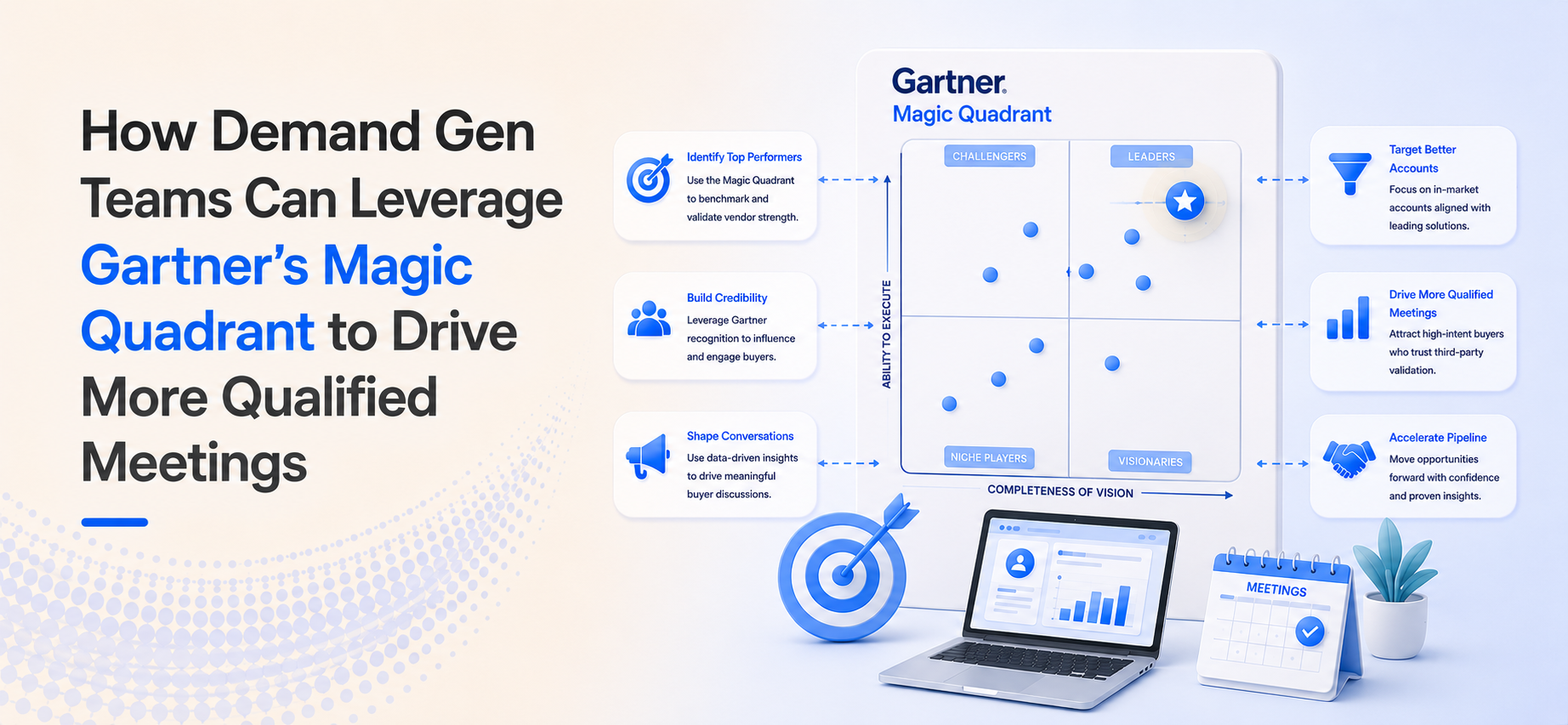
Earning a spot on Gartner’s Magic Quadrant is more than just an analyst win — it’s a moment of market validation. For enterprise and mid-market tech companies, that recognition signals credibility and leadership. But while Gartner’s evaluation fuels brand awareness, demand generation teams are often left asking: how do we turn this visibility into actual pipeline?
In 2025, demand gen leaders can no longer afford to let brand recognition live in a silo. The smartest teams are building go-to-market motions that connect Gartner visibility directly to qualified meeting generation — accelerating revenue by targeting the right personas at the right accounts, faster.
What Gartner’s Magic Quadrant Means for Demand Generation Marketers
For B2B tech marketers, Gartner’s Magic Quadrant serves as a trust accelerator. It’s often the first touchpoint where enterprise buyers validate whether a vendor is “worth the conversation.” But that validation only matters if it translates to action — and that’s where demand gen teams play a critical role.
Being featured in the Magic Quadrant gives marketers a golden opportunity to engage high-intent audiences. Decision-makers are already paying attention. The question becomes: how do you capture that momentum before competitors do?
By aligning outbound appointment-setting campaigns with Gartner-related messaging, marketers can turn awareness into pipeline by creating strategic outreach sequences that highlight analyst validation while targeting director+ prospects within ICP accounts.
Common Challenges Marketers Face
Even with a strong Gartner presence, many marketing teams face obstacles that limit conversion impact:
These challenges often cause marketers to fall short of turning awareness into action, leading to strong brand visibility but weak sales momentum.



.png)

%201.png)


.png)


Solutions That Work
To capitalize on Gartner momentum, demand gen teams should operationalize their recognition into a targeted meeting-generation strategy.
That means crafting outbound messaging that anchors on analyst validation and proof of market leadership — while focusing on the outcomes prospects care about most. By connecting Gartner’s credibility with direct conversations, marketers can open doors with decision-makers faster and with higher intent.
The most successful tech teams pair Gartner visibility with pay-for-performance appointment-setting programs, ensuring that every outreach campaign results in qualified meetings rather than just impressions or clicks. This shift allows marketing to directly measure the ROI of their Gartner recognition by tying it to tangible sales outcomes.
Actionable Steps for Marketers
Here’s how demand generation leaders can turn Gartner visibility into booked meetings:
By focusing on these steps, marketers can maximize the commercial impact of analyst recognition while shortening time-to-conversion.
Comparison of Market Solutions
Many B2B marketing teams rely on traditional inbound tactics — hoping that Gartner visibility alone will generate qualified leads. Others outsource appointment-setting to agencies that prioritize volume over precision.
The most effective approach integrates outbound demand generation with pay-for-performance accountability. This model ensures that teams engage verified prospects, secure director+ meetings, and maximize the impact of Gartner recognition without wasting spend on unqualified leads or passive impressions.
Conclusion
Gartner’s Magic Quadrant offers powerful validation — but its value peaks when it’s used as a springboard for pipeline acceleration. By combining analyst recognition with a performance-driven meeting strategy, demand generation marketers can convert awareness into revenue faster and more efficiently.
Now is the time to transform Gartner momentum into measurable growth.
Contact Site Ascend to pilot a pay-for-performance demand generation program that turns your next Gartner recognition into booked enterprise meetings.
How soon should marketers activate campaigns after a Gartner Magic Quadrant announcement?

What types of messaging perform best when referencing Gartner recognition?
How does pay-for-performance demand generation enhance ROI post-Gartner recognition?


Start your pilot campaign today and explore the full range of Site Ascend's demand generation capabilities. Experience firsthand how we can enhance your efficiency, streamline your processes, and drive growth.
RELATED