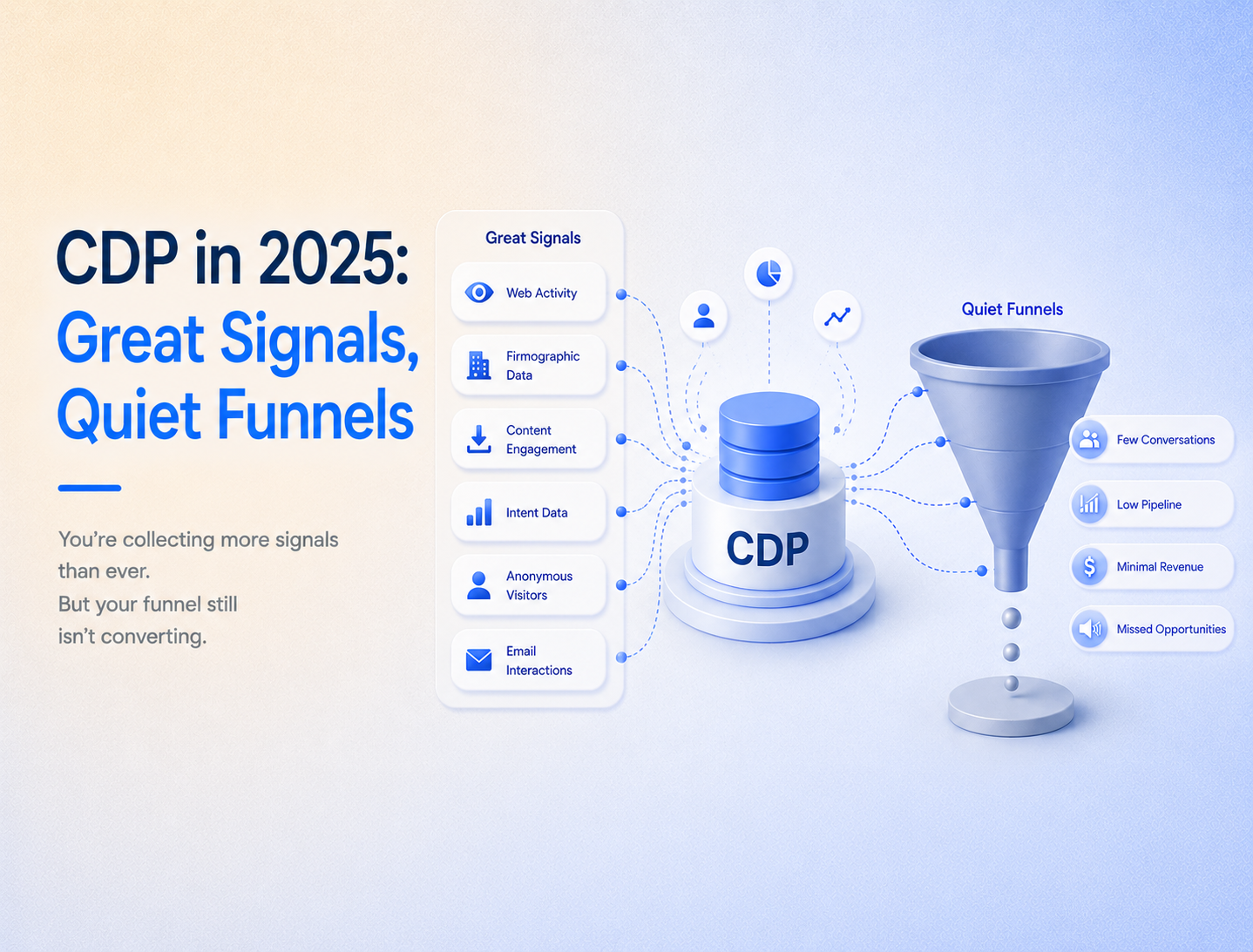
CDP in 2025: Great Signals, Quiet Funnels
Demand Generation


SPICED (Situation, Pain, Impact, Critical Event, Decision) is the fastest way to fix event ROI, reduce MDF waste, and improve meeting quality. Learn how Site Ascend operationalizes SPICED through outbound-driven event registrant procurement, white-labeled channel meetings, and Director+ executive appointments.
-
Demand Generation
Introduction
Demand gen leaders in enterprise tech have a familiar problem: your dashboards show activity, but your sellers feel friction.
That’s why the best teams are shifting from lead volume to decision-ready conversations—and why the SPICED framework (Situation, Pain, Impact, Critical Event, Decision) is suddenly the most practical operating system in modern B2B demand generation.
Site Ascend’s model is built for exactly that shift: 30-minute virtual meetings with Director+ prospects, performance-based pricing, outbound dialing executed by a U.S.-based contact center, and a real-time reporting dashboard so marketing can see what’s working while it’s happening—not weeks later.
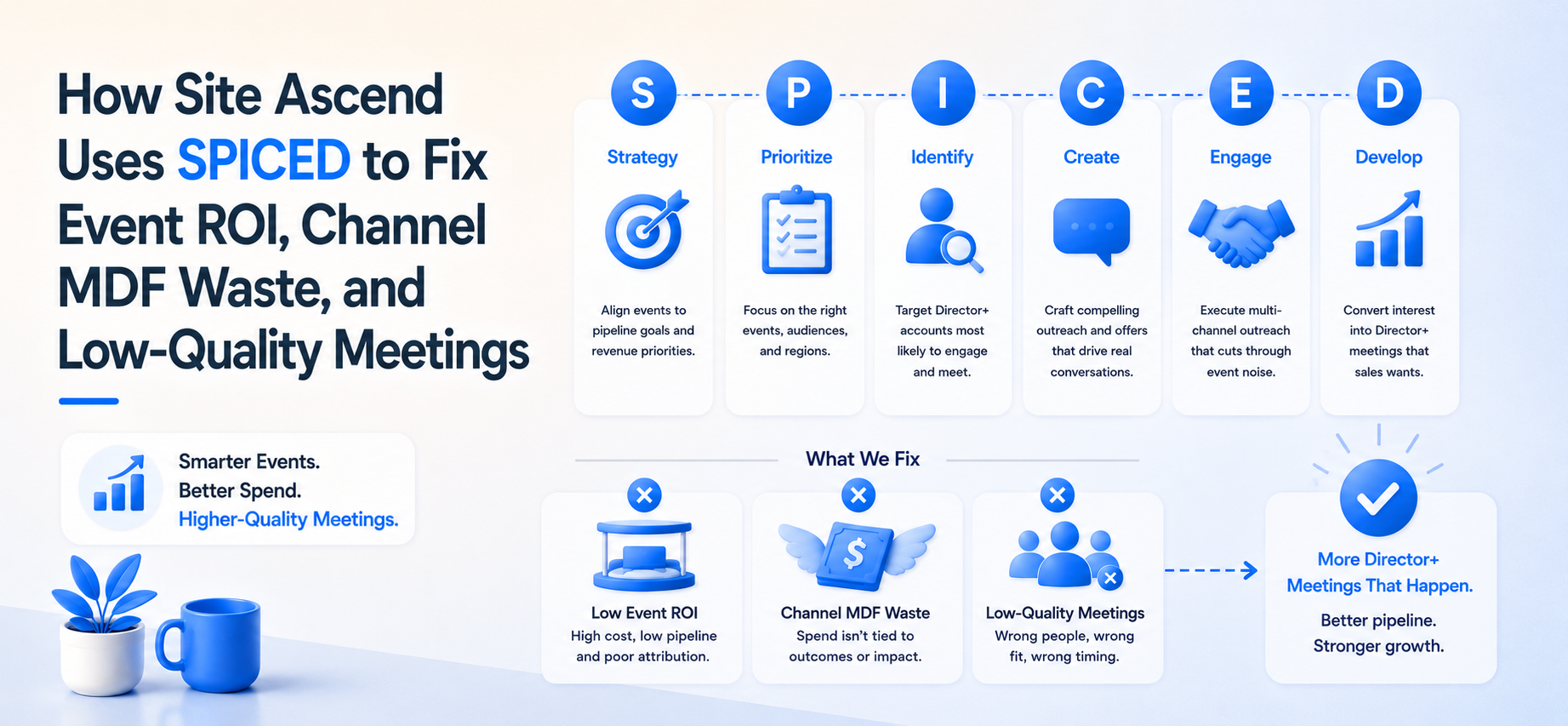
SPICED at a glance
Here’s the simplest way to think about SPICED in demand gen:
The hidden advantage: SPICED doesn’t just qualify leads—it qualifies meetings. It sets up sales with context they can convert, and it gives marketing a shared language to defend spend across events, partners, and outbound programs.
What SPICED means for demand generation marketers and Site Ascend’s ICP
If you’re a CMO, VP/Director of Demand Gen, ABM leader, Field/Partner/Event marketing leader, or revenue marketer, SPICED is a way to turn “engaged” into “sales-ready” without pretending a form fill is intent.
Where demand gen teams typically get stuck is the handoff:
SPICED is the bridge. It forces your programs—especially events and channel—to answer the questions that move pipeline forward:
Site Ascend operationalizes SPICED through four programs—Executive Meetings, Channel Marketing, Event Marketing, and Lead Qualification—all designed to consistently produce meetings with real context and measurable outcomes.
Common challenges marketers face
1) Event ROI gets crushed by “registrants” who never become conversations
Event teams can often drive registrations, but the pipeline story falls apart when:
Site Ascend focuses on attendee procurement—driving registrants via outbound dialing, then using an SMS workflow to support attendance through event day. Importantly: Site Ascend does not provide day-of-event onsite services—it fills the room with qualified registrants.
2) MDF turns into “activity” instead of partner pipeline
Channel leaders are under pressure to “use the funds,” prove ROI to partners, and keep internal stakeholders happy. The common failure mode is MDF spent on:
Site Ascend’s Channel Marketing is positioned as white-labeled appointment setting funded by MDF, meaning partners get booked meetings under their brand—without you building a full outbound engine in-house.
3) “Qualified leads” still produce low-quality meetings
You can score a lead… but you can’t score a meeting outcome.
Low-quality meetings usually happen when:
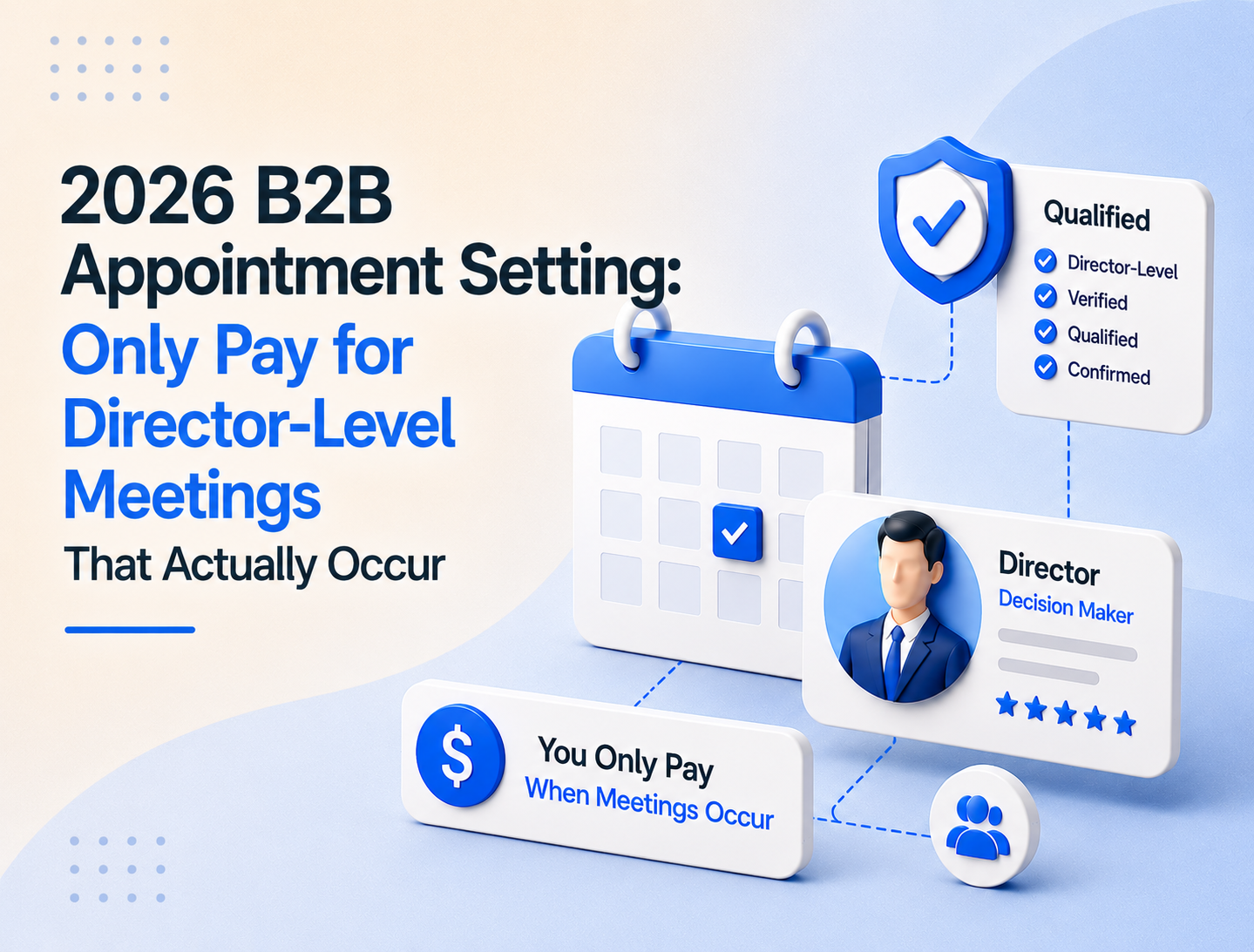
Site Ascend counters this by targeting Director-level and above and structuring programs around meetings that occur—so incentives align to quality, attendance, and relevance.
4) Reporting lags behind reality
When performance is only visible after the campaign ends, you can’t fix messaging, targeting, or conversion friction fast enough.
Site Ascend emphasizes a real-time reporting dashboard so teams can adjust while campaigns are live.



.png)

%201.png)


.png)


Solutions that work
Below is how SPICED maps directly to Site Ascend’s core programs—so you can see what’s happening operationally, not just conceptually.
Executive Meetings: SPICED-qualified conversations with Director+ stakeholders
What it solves: low-quality meetings, misaligned handoffs, “busywork” SDR cycles.
Site Ascend’s Executive Appointments focus on 30-minute virtual meetings with Director-level and above prospects in target accounts.
How SPICED shows up here:
Event Marketing: fix ROI by prioritizing “right-fit registrants” over raw volume
What it solves: empty rooms, wrong audiences, low conversion to pipeline.
Site Ascend’s Event Marketing is outbound-first: dialing to drive registrations, plus SMS support leading up to the event date.
Where SPICED fits:
Channel Marketing: use SPICED to turn MDF into meetings partners can convert
What it solves: MDF waste, weak partner follow-up, unverifiable “influence.”
Site Ascend’s Channel Marketing is white-labeled appointment setting funded by MDF—so you can deliver a measurable outcome (meetings) instead of hoping leads get worked.
SPICED makes it scalable across partners because it standardizes qualification language:
Lead Qualification: turn opt-in leads into meetings with actual context
What it solves: stalled MQL-to-SQL motion, “marketing passed too early,” dead leads.
Site Ascend positions lead qualification as human-led validation that converts opt-ins (downloads, webinar signups, etc.) into qualified sales meetings—especially when lead scoring can’t capture urgency or decision process.
SPICED transforms lead qualification from “verify details” into “verify readiness.”
Actionable steps for marketers
If you want to bring SPICED into your next event, MDF plan, or meeting program immediately, use this checklist.
The SPICED Demand Gen Checklist
If you want SPICED executed as an outcomes engine—not just a framework—Site Ascend’s performance model (only paying for meetings that occur) is designed to make this operationally sustainable.
Comparison of market solutions
You don’t need a vendor bake-off to make a smart choice. Most “market solutions” fall into a handful of models—each with predictable tradeoffs.
In-house SDR/BDR teams
Best for: teams with stable territories, mature enablement, and capacity to run consistent outbound.
Common drawbacks: ramp time, turnover, competing priorities, and inconsistent SPICED capture across reps.
Where Site Ascend fits: as a way to add scalable Director+ meeting capacity without rebuilding headcount every time priorities shift.
Outsourced appointment setting (volume-first)
Best for: short-term activity spikes where quality expectations are lower.
Common drawbacks: paid per lead/list/activity; inconsistent seniority; meetings that don’t happen; murky accountability.
Where Site Ascend fits: the pay-for-meetings-that-occur model changes the incentive system—quality and attendance stop being “nice to have” and become the business model.
Channel MDF programs (activity reporting vs. pipeline outcomes)
Best for: checking the “used MDF” box.
Common drawbacks: hard attribution, uneven partner execution, leads not followed up.
Where Site Ascend fits: MDF-backed white-labeled appointment setting creates a clearer output (meetings), so partner value is tangible and reportable.
Event “success” measured by registrations alone
Best for: awareness events where pipeline isn’t the primary goal.
Common drawbacks: the wrong registrants inflate numbers; ROI collapses after the event.
Where Site Ascend fits: outbound-first registrant procurement with support workflows—designed to improve event attendance quality and downstream conversion.
Conclusion
SPICED works because it’s brutally practical: it forces every demand gen motion to answer who, why now, and what happens next.
When you apply SPICED to the three areas that most often break pipeline math—event ROI, channel MDF, and meeting quality—you stop buying activity and start engineering conversations.
That’s exactly what Site Ascend is built to do, through:
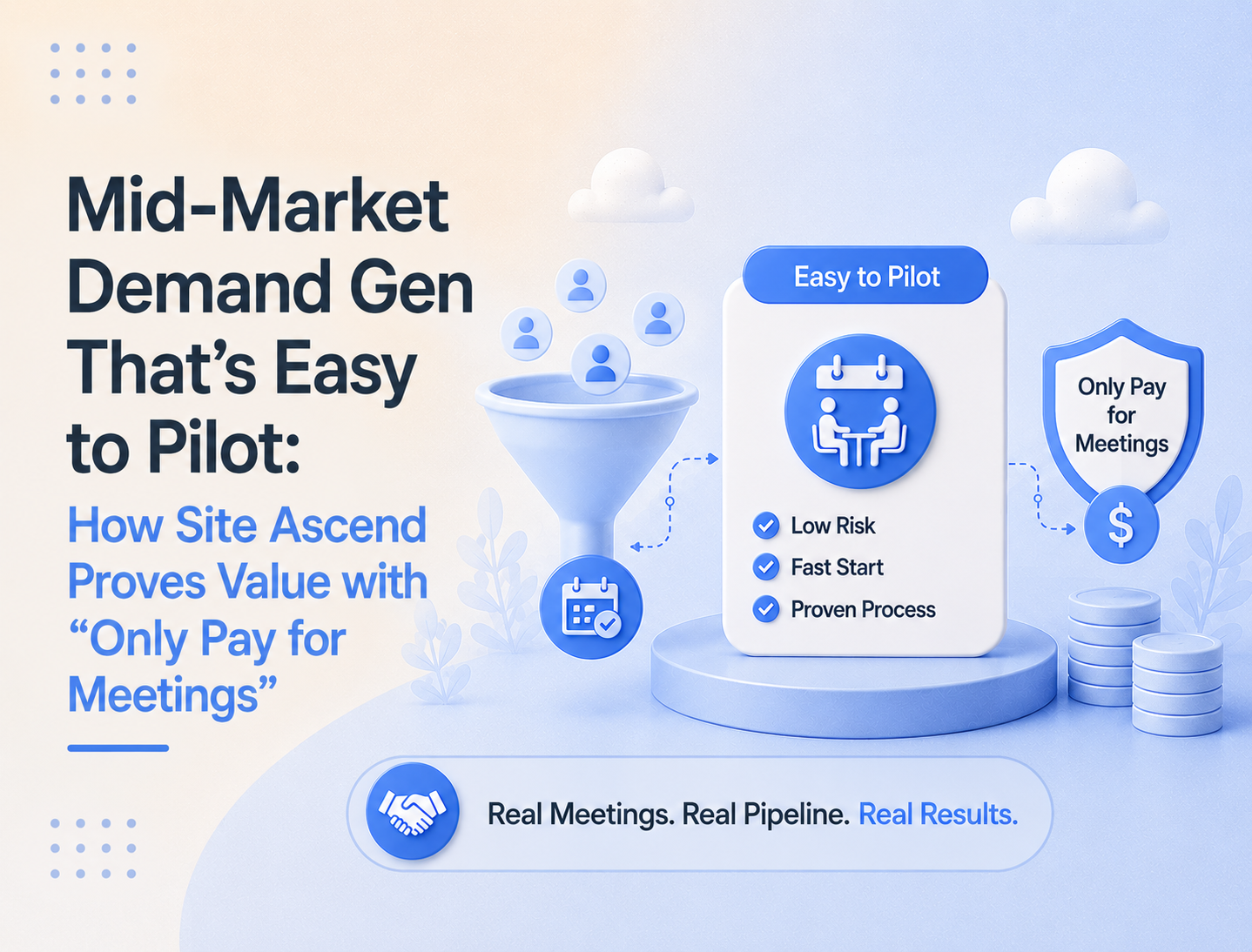
If you’re ready to see SPICED executed end-to-end—not just discussed—start with a pilot.
Is SPICED a replacement for MQLs and lead scoring?

What makes Site Ascend different from typical appointment setting programs?
Does Site Ascend run onsite event lead capture or day-of-event services?


Start your pilot campaign today and explore the full range of Site Ascend's demand generation capabilities. Experience firsthand how we can enhance your efficiency, streamline your processes, and drive growth.
RELATED