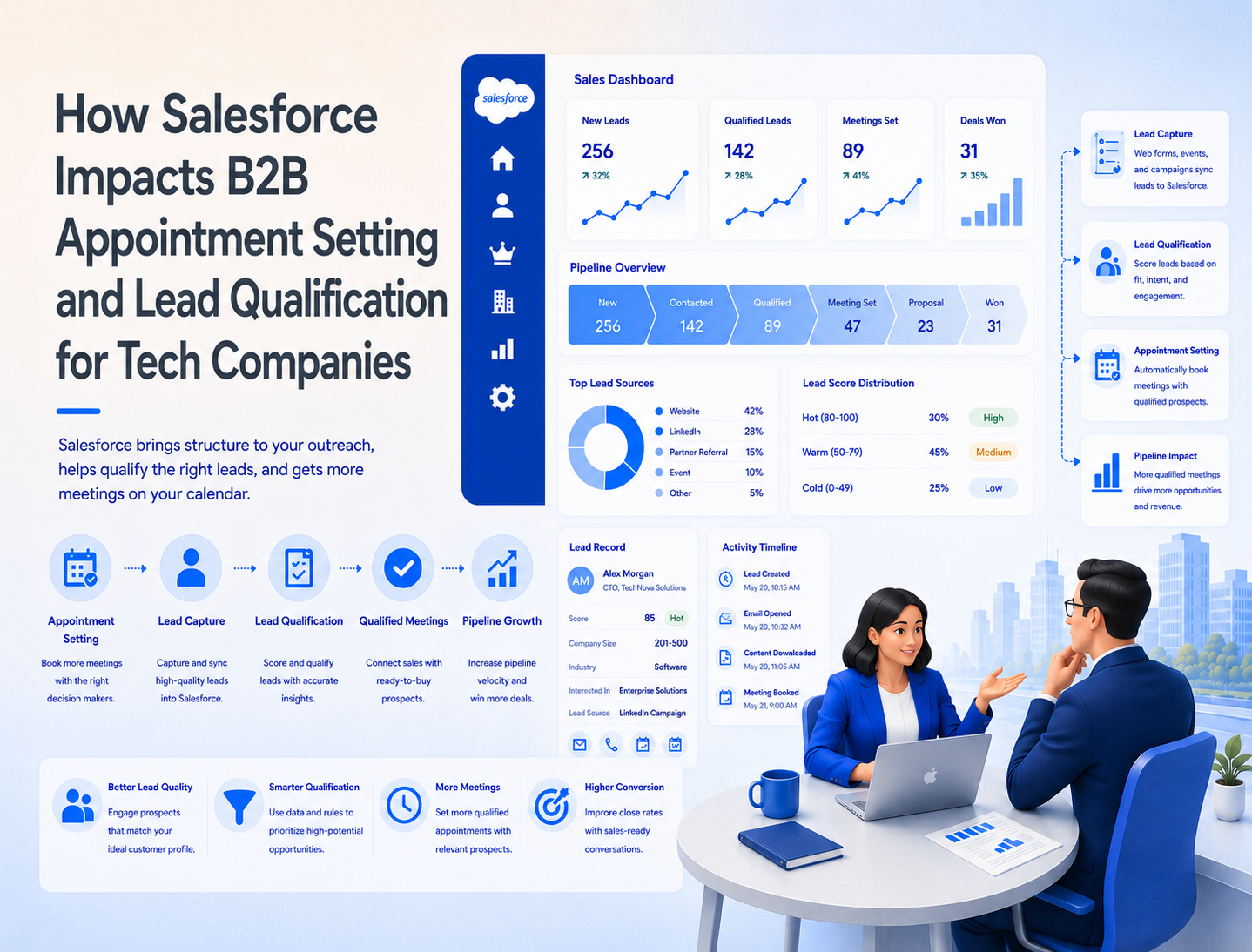
How Salesforce Impacts B2B Appointment Setting and Lead Qualification for Tech Companies
B2B Appointment Setting


Form fills aren’t pipeline. This guide reframes CRO around outcomes—qualified conversations, meetings that happen, and higher sales acceptance—so enterprise demand gen teams reduce lead risk and turn interest into real next steps.
-
Demand Generation
Introduction
Most demand gen teams can lift conversion rates. The harder problem is lifting conversion confidence.
You know the pattern: landing pages improve, form fills climb, MQL volume looks healthy—and Sales still says, “These aren’t real.” Or worse: they “accept” the lead in the CRM, but nothing happens. No meeting. No next step. No pipeline.
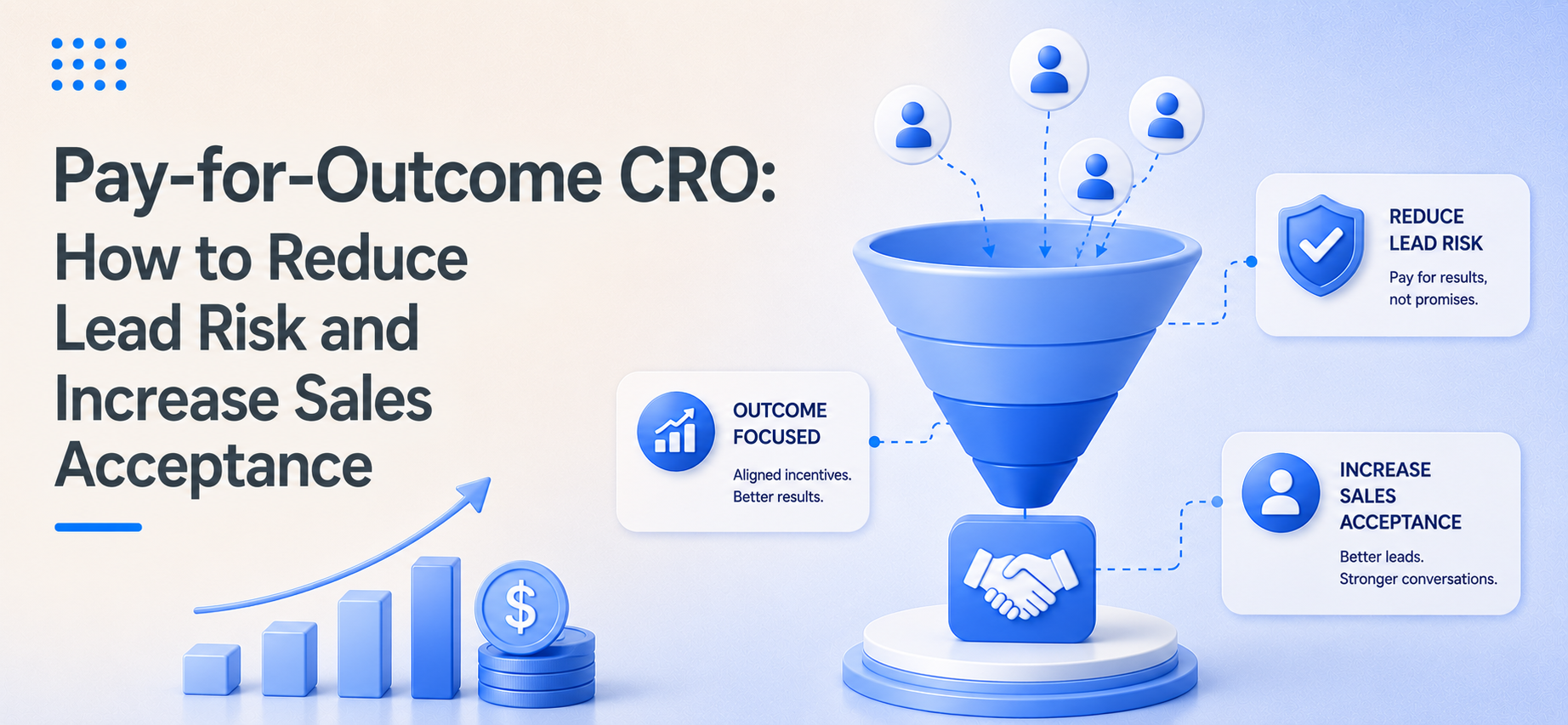
That’s why Conversion Rate Optimization (CRO) needs an upgrade for enterprise demand gen. CRO can’t stop at “submitted.” It has to optimize for the outcome that actually de-risks spend: a qualified meeting that occurs and a lead Sales will work.
This is where pay-for-outcome models change the conversation. When your “conversion” is defined as a meeting that happens, CRO stops being a vanity exercise and starts becoming a pipeline system.
What CRO Means for Demand Generation Leaders (When Pipeline Is the KPI)
In B2B, CRO typically gets framed as:
But enterprise reality is messier. Buying committees are larger, timelines are longer, intent signals are noisier, and “good fit” doesn’t always mean “good timing.”
So CRO, in practice, becomes two different games:
Volume CRO optimizes for more conversions (often form fills).
Outcome CRO optimizes for fewer, higher-quality conversions that reliably become accepted conversations and next steps.
If you’re accountable for pipeline, outcome CRO is the standard. It means improving:
Common Challenges Marketers Face
“Our conversion rate is up, but Sales says the leads are soft.”
That usually means the conversion point is too early. The funnel is optimized to capture interest, not to confirm it.
Sales acceptance is inconsistent
Some reps work every lead. Others ignore the same leads. That inconsistency isn’t a rep problem—it’s a definition problem. The “accepted” bar isn’t operationalized, so acceptance becomes subjective.
The follow-up window is too slow
Enterprise interest decays quickly when the next step is unclear. If outreach happens days later (or not at all), you’re measuring a conversion that has already expired.
Lead quality varies wildly by channel
Partner-sourced leads, event registrants, inbound form fills, and outbound-sourced conversations aren’t interchangeable. Treating them the same destroys CRO learning because you can’t isolate what actually converts into meetings and pipeline.
You can’t prove ROI without attribution arguments
If the only measurable conversion is “lead captured,” ROI discussions become political: Sales questions quality, Marketing questions follow-up, and Finance questions both.



.png)

%201.png)


.png)


Solutions That Work
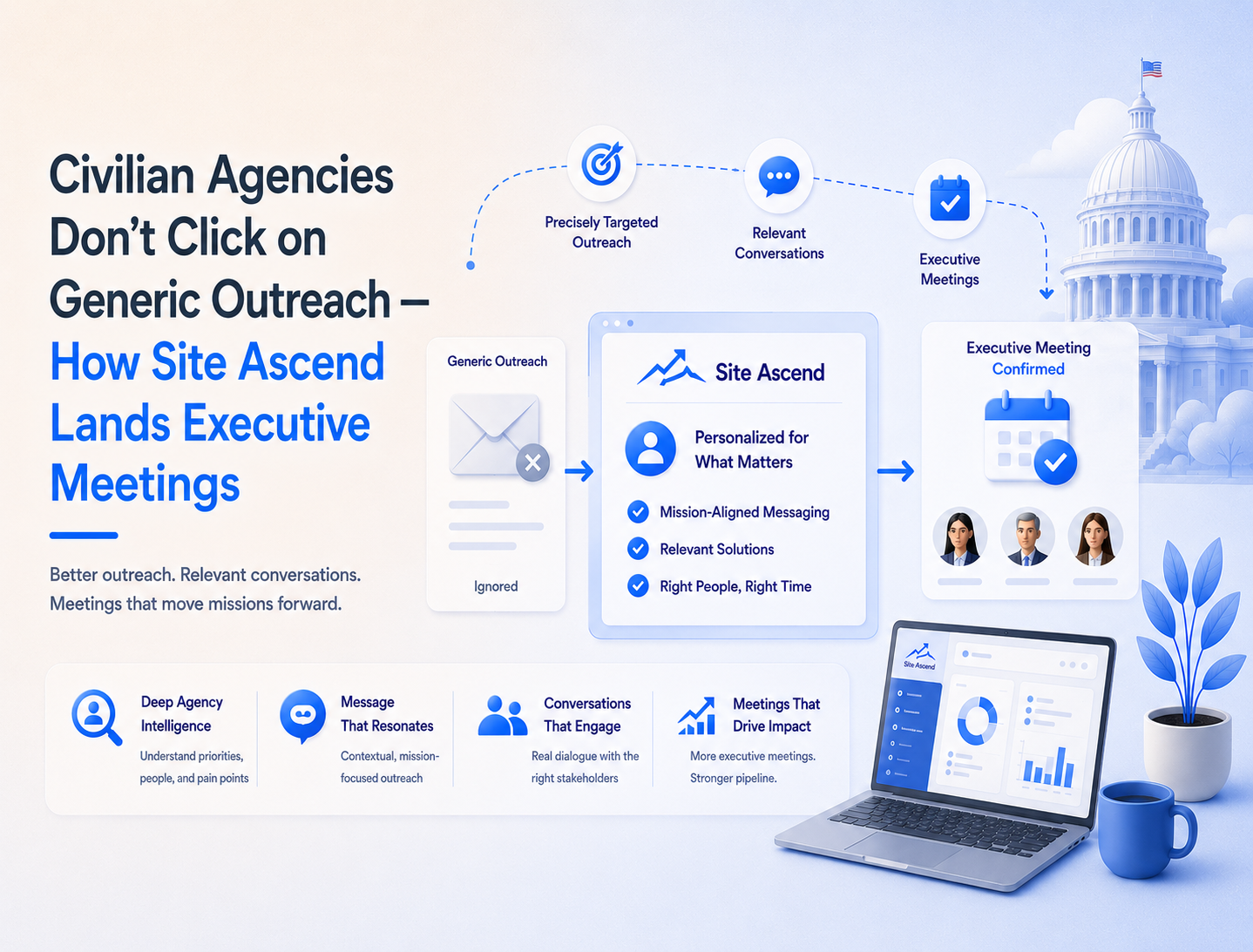
Outcome CRO is easier when your execution model matches your KPI. This is where Site Ascend’s programs fit—because they’re built around reducing lead risk and increasing Sales acceptance by moving the conversion point closer to pipeline reality.
Executive Meetings: redefine “conversion” as a meeting that occurs
Instead of optimizing for “submitted,” optimize for scheduled + attended. Site Ascend’s Executive Meetings focus on 30-minute virtual meetings with director-level and above stakeholders in target accounts.
That changes CRO math immediately:
Lead Qualification: convert opt-ins into sales-ready next steps
A form fill isn’t an outcome—it’s a signal. Site Ascend’s Lead Qualification program turns opt-in leads (like content downloads) into qualified sales meetings, so the “conversion” includes validation, not hope.
Outcome CRO here means improving:
Channel Marketing: make partner leads behave like pipeline
Partner programs often create “leads,” but not ownership. Site Ascend’s Channel Marketing supports white-labeled appointment setting on behalf of partners, funded through MDF/market development motions.
That reduces channel friction because:
Event Marketing: optimize for registrants who show up—and convert after
For events, the real CRO is not “registrations.” It’s attendance and post-event meetings.
Site Ascend focuses on driving registrants via outbound dialing and supporting attendance through an SMS workflow up to the event date. The result is a cleaner chain:
registrant → attendee → qualified conversation → meeting that occurs
And that makes event ROI far easier to defend.
The pay-for-performance advantage: CRO without the lead risk
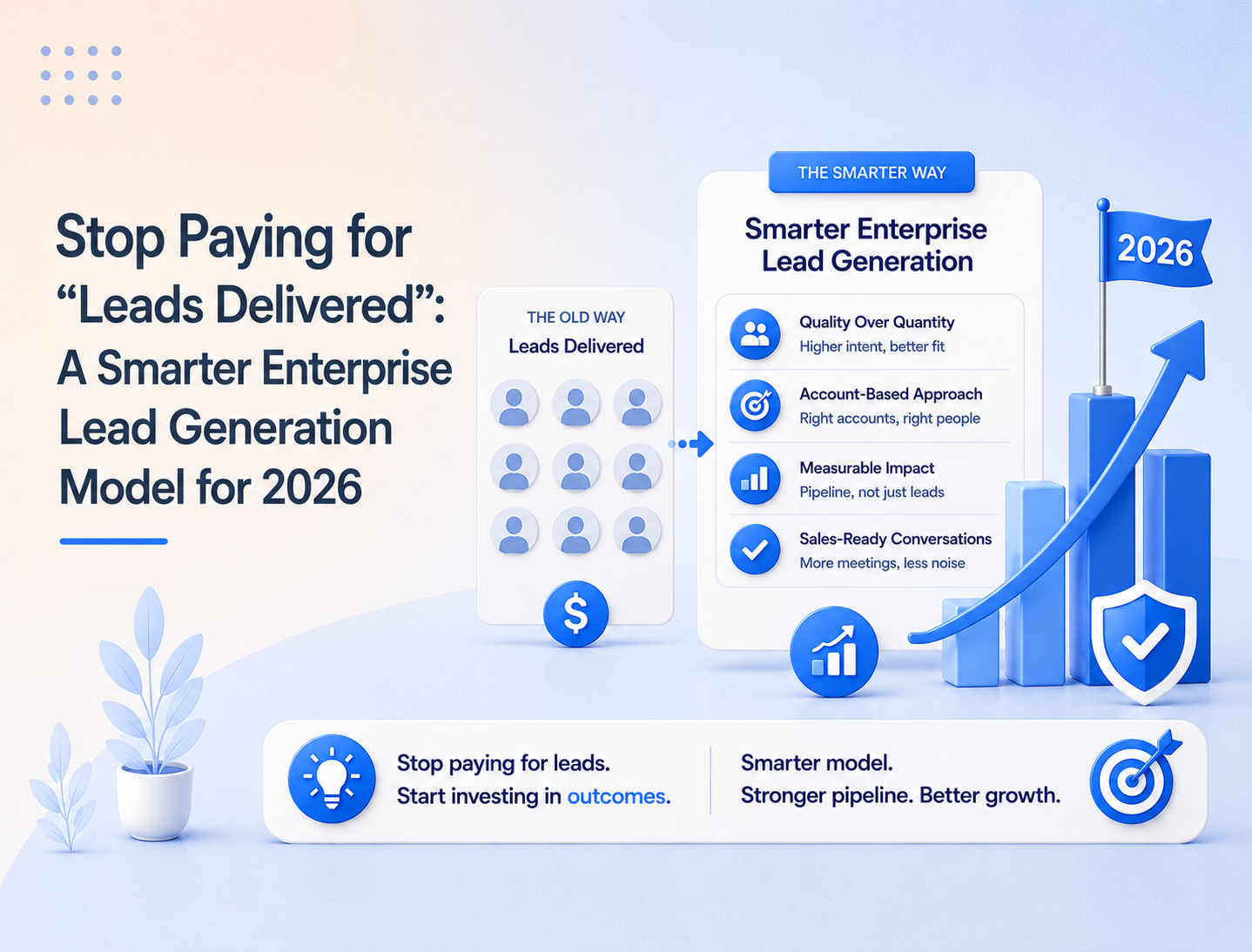
Traditional models ask Marketing to pay for activity and absorb the quality risk. Site Ascend flips that: Only pay for meetings that occur.
That creates:
Actionable Steps for Marketers
If you want CRO that increases Sales acceptance (not just conversions), start here:
Define your “conversion” in Sales language
If Sales wouldn’t take a meeting based on the data captured at conversion, it’s not a conversion—it’s a lead capture.
Move qualification earlier
Add a qualification step between inbound interest and Sales handoff. This can be a call-based approach when deal sizes are enterprise-level and the buying committee is complex.
Optimize for speed-to-human
The single biggest CRO leak is time. Reduce lag between signal and outreach. Faster contact creates more conversations; more conversations create more qualified next steps.
Segment your CRO by source type
Treat inbound, partner-sourced, and event-sourced leads as different funnels. Each requires a different standard and follow-up motion.
Adopt outcome-based reporting
Track conversions as:
If you can’t report these consistently, your CRO program is still upstream of the thing leadership cares about.
Comparison of Market Solutions
Most enterprise teams end up choosing between a few familiar options. Each can work—but they behave very differently when you’re accountable for pipeline.
In-house SDR/BDR teams
Great for control and tight alignment—until bandwidth becomes the limiter. When SDR time gets consumed by low-quality follow-up, “CRO gains” turn into more work, not more pipeline.
Best when: you have capacity, strong enablement, and tight routing discipline.
Risk: lead quality variance becomes Sales burnout.
Pay-per-lead vendors and list-driven “lead generation”
These models optimize for volume and deliverables. The problem is the conversion definition: leads are delivered whether or not Sales can convert them into conversations.
Best when: your Sales team can handle heavy filtering and fast follow-up.
Risk: Marketing absorbs lead risk and fights attribution battles later.
Offshore appointment setting
Lower cost can look attractive on paper, but quality control, persona depth, and buyer experience often suffer—especially in complex enterprise categories.
Best when: the product is simple, deals are smaller, and your qualification needs are light.
Risk: lower acceptance and weaker meetings.
Outcome-based meeting programs (the “pay for meetings that occur” model)
This is the CRO-friendly model because your “conversion” aligns with Sales reality. When meetings are the deliverable, targeting and qualification have to be strong—or the model breaks.
Best when: you need executive conversations, clean reporting, and predictable outcomes.
Why Site Ascend stands out: U.S.-based contact center, director-level and above targeting, white-labeled outreach, real-time reporting dashboard, and payment tied to meetings that occur.
Conclusion
CRO isn’t just a website discipline anymore. For enterprise demand gen, it’s a revenue discipline.
When you optimize for outcomes instead of activity, you reduce lead risk, increase Sales acceptance, and build a pipeline engine you can defend in any QBR—because your conversions are conversations that happen.
If you’re ready to shift from lead volume to outcome-based performance, Site Ascend can help you pilot a meeting-first CRO approach built around qualified conversations and meetings that occur.
What’s the difference between traditional CRO and “outcome CRO”?

How do I increase Sales acceptance without shrinking lead volume to zero?
Why does “pay for meetings that occur” matter for CRO?


Start your pilot campaign today and explore the full range of Site Ascend's demand generation capabilities. Experience firsthand how we can enhance your efficiency, streamline your processes, and drive growth.
RELATED