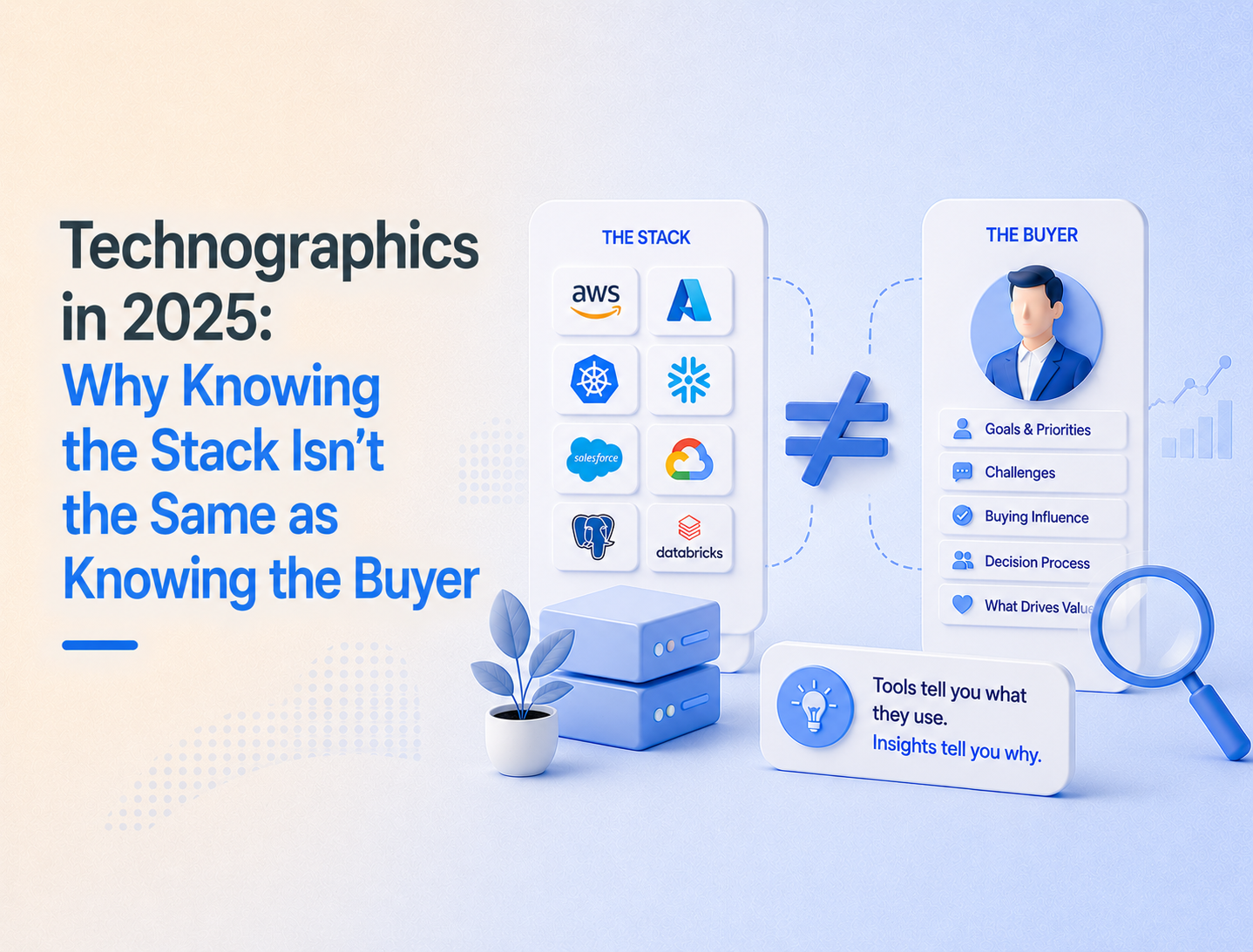
Technographics in 2025: Why Knowing the Stack Isn’t the Same as Knowing the Buyer
Demand Generation


Your strongest buying signals are already in your funnel. Learn why 1st party intent data outperforms third-party signals in 2025—and how fast, human follow-up turns known engagement into director-level meetings before intent goes cold.
-
Demand Generation
Introduction
Third-party intent data used to feel like a superpower. It helped B2B tech marketers find accounts they didn’t know were researching, and it gave demand gen teams a way to prioritize outreach beyond raw lead volume.
But in 2025, there’s a different signal outperforming everything else — and it’s hiding in plain sight.
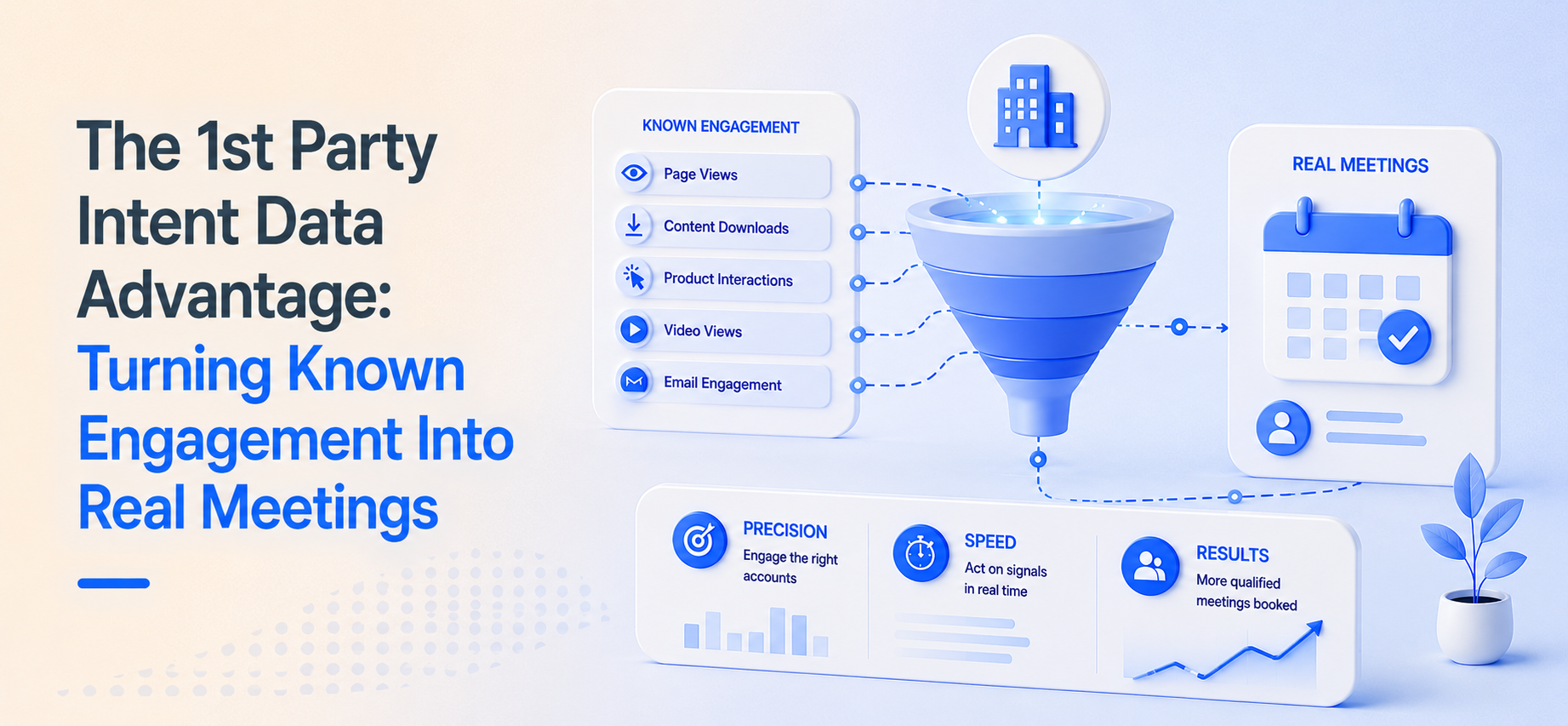
It’s your 1st party intent data: the engagement that already exists inside your funnel. The webinar registrations. The pricing page visits. The asset downloads. The repeat product-page traffic. The partner campaign clicks. The event opt-ins that look warm but haven’t gone anywhere yet.
These signals aren’t mysterious. They’re yours. They’re accurate. And they’re tied directly to your story and your category.
The problem is that most teams still treat 1st party intent as a reporting artifact — something to track, score, and admire — rather than a trigger that should spark human action right now.
That’s the advantage in 2025: not collecting more intent, but converting the intent you already have into real meetings before it goes cold.
What 1st Party Intent Data Means for Demand Generation Marketers and other titles that meet Site Ascend’s ICP
1st party intent data is the set of behavioral signals prospects generate while interacting directly with your ecosystem. It’s the closest thing demand gen has to truth, because it reflects real engagement with your message, your content, and your value.
For directors and VPs of demand generation, that means 1st party intent is uniquely powerful in three ways.
First, it’s high-context. If someone watches your integration demo, reads your ABM playbook, then comes back a week later to view your case-study hub, they’re not just “in market.” They’re leaning into your specific positioning.
Second, it’s persona-anchored. A lot of 3rd party intent data tells you an account is researching, but 1st party engagement can show you which people are raising their hand.
Third, it’s activation-ready. This intent isn’t abstract. It’s already in your CRM, your MAP, your event platform, your partner portal. You don’t need better signal. You need a faster path from signal to conversation.
In modern demand generation, 1st party intent data is less like a compass and more like a starting gun.
Common Challenges Marketers Face
If 1st party intent is so rich, why does it so often fail to turn into pipeline?
The most common issue is speed. Intent inside your funnel spikes quickly, but follow-up doesn’t. A director-level prospect downloads a high-value asset, but internal SDR capacity means the outreach happens next week. By then, their buying moment has shifted — or your competitor got there first.
Another challenge is volume without prioritization. Marketing teams can drown in their own signals: every campaign generates clicks, registrants, and return visits. Without a clear activation playbook, teams either chase everything (wasting time) or chase nothing (wasting intent).
Then there’s the “false positive” problem. Engagement may be real, but readiness may not be. Inbound interest can come from junior evaluators, students, agencies, or curious users without buying authority. So even when follow-up happens, it may not reach the stakeholders who move deals forward.
Events and partner programs add another layer. Your 1st party intent might show a spike across a co-marketing webinar or sponsored event. But those signals often stall in the gap between registration and attendance or between partner awareness and partner follow-through.
Across all of it, the same pattern emerges: 1st party intent is strong, but activation is inconsistent.



.png)

%201.png)


.png)


Solutions That Work
The demand gen teams winning with 1st party intent in 2025 aren’t doing wildly different targeting. They’re doing faster, more human activation.
They treat 1st party intent as an immediate outreach trigger — especially when the signal comes from a senior persona or indicates late-stage readiness. They don’t wait for nurture to “do its thing.” They move while the moment is live.
This is where Site Ascend fits cleanly into a modern 1st party intent strategy.
When high-intent opt-ins happen — content downloads, demo requests, webinar registrations, event sign-ups — Site Ascend provides the human engagement layer to qualify the signal and convert it into a meeting with a director-level decision maker. Instead of letting engagement sit passively in marketing automation, demand gen teams activate it through U.S.-based outbound calling that validates urgency, confirms fit, and books real conversations.
For event intent, Site Ascend closes the most common leak. A registration signal becomes a confirmed attendee through outbound confirmation and SMS touchpoints leading up to the event. Your funnel doesn’t just “capture intent” — it carries it forward.
For partner-generated intent, white-labeled outreach keeps follow-through consistent and brand-aligned, so the interest you create doesn’t slow down in partner queues.
1st party intent is already yours. Site Ascend helps ensure it doesn’t expire before it turns into revenue.
Actionable Steps for Marketers
If you want 1st party intent to drive predictable meetings, the path forward is surprisingly simple — but it requires discipline.
Start by defining which signals are truly high-intent for your category. Not every click matters equally; some are early curiosity, others are buying motion. The goal is to separate noise from momentum.
Next, align activation to persona seniority. When director-level and above signals show up, they deserve immediate human engagement — not automated nurturing or slow SDR triage.
Then build consistency into your follow-through, especially for events and partner motions. Intent from those channels is often your highest-value signal, but also your easiest to lose without a human layer.
Finally, measure your 1st party intent strategy by outcomes, not activity. The question isn’t “Did we capture engagement?” It’s “Did we convert it into a qualified conversation?”
Comparison of Market Solutions
Many tech companies rely on internal SDR teams to activate 1st party intent. That works when SDR capacity is stable and intent follow-up is prioritized, but in most organizations intent volume outpaces internal bandwidth. The result is slow outreach and missed windows.
Traditional outsourced providers can add scale, but they often optimize for activity instead of meetings held, and may not maintain the senior-persona focus or brand alignment required to capitalize on high-context signals.
Performance-based activation has become the preferred model in 2025 because it aligns execution to what intent actually needs: fast conversion into real conversations. With U.S.-based teams, director-level targeting, white-labeled outreach, and pay-for-outcomes accountability, this approach ensures the intent you already earned doesn’t fade unused.
Conclusion
In 2025, the advantage isn’t finding intent. It’s using it before it disappears.
Your 1st party intent data is already the most accurate view you have of who’s leaning in, which accounts are warming up, and which buyers are close to a decision. But signals don’t build pipeline on their own. Conversations do.
If you want to turn known engagement into director-level meetings — quickly, consistently, and with performance accountability:
Contact Site Ascend to add a performance-led human activation layer to your 1st party intent strategy and start converting signals into real pipeline momentum.
What makes 1st party intent data more reliable than 3rd party intent?

Why do 1st party intent signals go cold so often?
How do you turn 1st party intent into real meetings?


Start your pilot campaign today and explore the full range of Site Ascend's demand generation capabilities. Experience firsthand how we can enhance your efficiency, streamline your processes, and drive growth.
RELATED