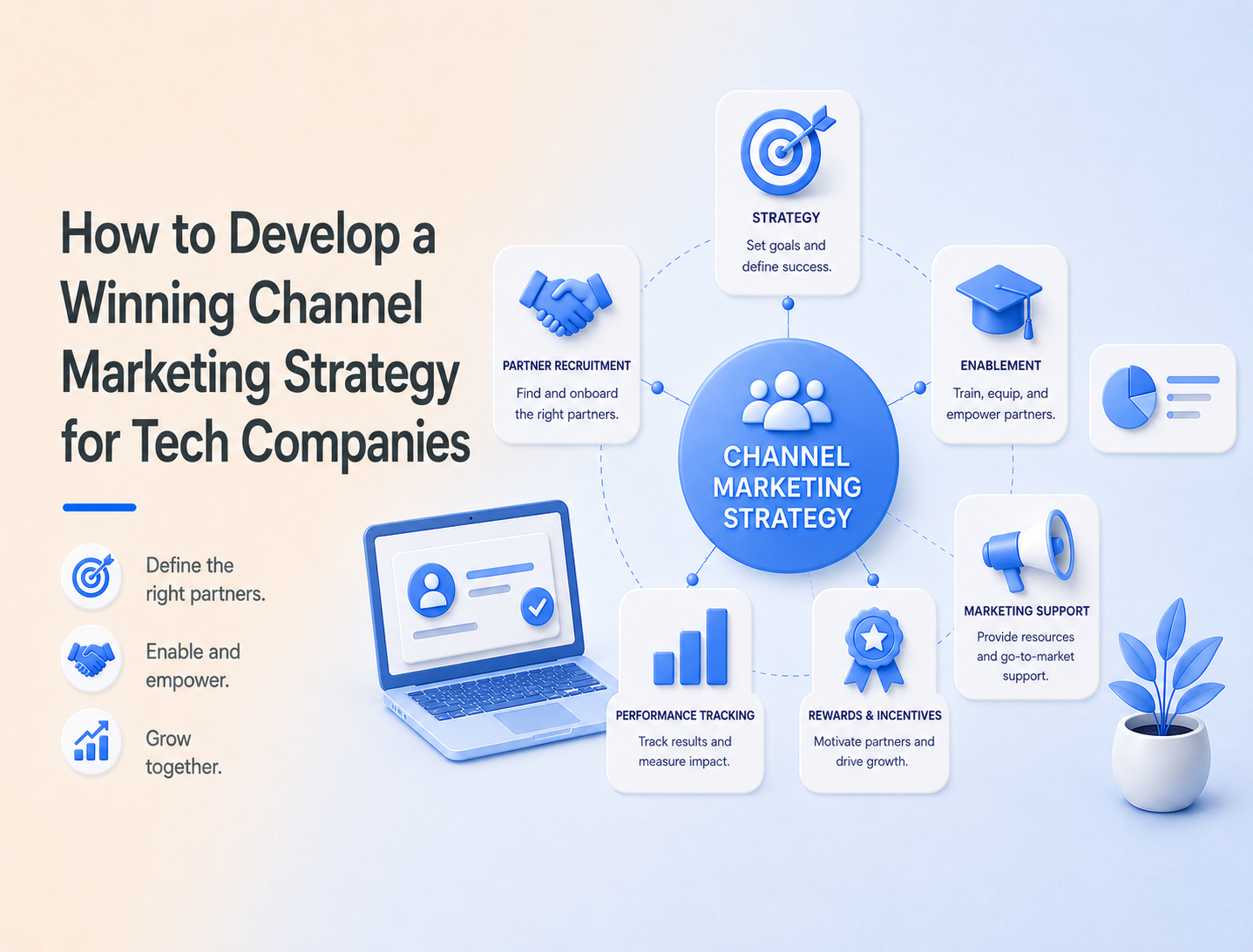
How to Develop a Winning Channel Marketing Strategy for Tech Companies
channel marketing strategy


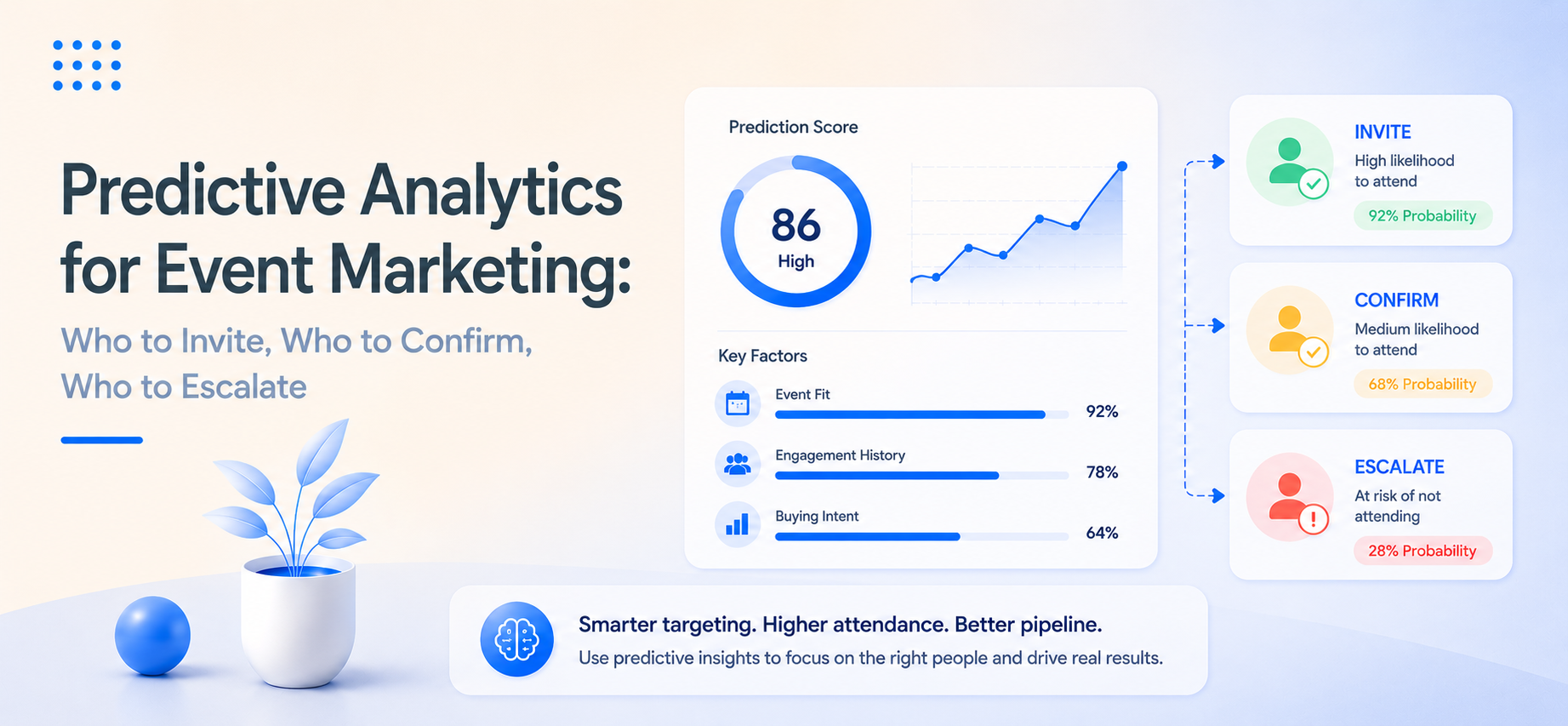
Predictive analytics can improve event outcomes—but only if you use it to drive action, not just scoring. This framework shows how enterprise teams prioritize invite lists, confirm the right registrants, and escalate high-value accounts into real sales conversations.
-
Event Marketing
Introduction
Most enterprise event programs don’t fail because the topic is wrong. They fail because the invite list is too broad, confirmation is treated like a last-mile admin task, and “hot” accounts never get escalated into a meeting motion while intent is still fresh.
Predictive analytics can fix that—but only when it’s used as an operating system for decisions, not a scoring experiment that lives in a dashboard.
In this blog, we’ll break down a practical, marketer-friendly framework for using predictive analytics to:
Along the way, we’ll tie the playbook to what Site Ascend does best: director+ appointment setting, outbound-sourced event attendance procurement, and lead qualification that converts opt-ins into real sales meetings—while only paying for meetings that occur.
What Predictive Analytics Means for Demand Generation Marketers and Similar Titles
In event marketing, “predictive analytics” should mean one thing: using data signals to prioritize who gets time, attention, and human follow-up—before and after the event.
At enterprise scale, you’re not trying to guess whether someone will click an email. You’re trying to answer three operational questions:
For demand gen, field, partner, and revenue marketing leaders, predictive analytics isn’t a “data science project.” It’s a way to:
Common Challenges Marketers Face
Even teams with solid tools and strong event themes run into the same problems:
1) “Great registration numbers” that don’t translate into pipeline
If your registrants skew too junior or outside your ICP, you don’t have an event problem—you have a targeting and qualification problem.
2) Confirmation happens late, lightly, or inconsistently
Many teams treat confirmation as a reminder email. But for enterprise events, confirmation is where you protect show rate and quality—especially when calendars change.
3) High-value accounts get lost in the noise
When a director-level prospect registers, attends, or engages—but nothing changes in the follow-up motion—sales sees events as “marketing activity,” not pipeline.
4) Too much manual work, not enough repeatability
Events multiply fast: invites, reminders, no-show handling, post-event follow-up. Without a prioritization framework, you end up with heroics instead of a system.
5) Sales doesn’t trust the output
If the handoff is unclear (“Here’s a list of attendees”), sales has no reason to treat it as a pipeline motion. The result is predictable: accepted, then ignored.



.png)

%201.png)


.png)


Solutions That Work
Predictive analytics works best when it’s connected to a human follow-up engine that can execute consistently—especially when you’re targeting director+ audiences.
Here’s a practical three-stage model you can run for every event.
Stage 1: Who to Invite
Your first predictive model isn’t about likelihood to attend. It’s about likelihood to matter.
Invite prioritization inputs that tend to hold up in enterprise:
What Site Ascend adds here:
Stage 2: Who to Confirm
Confirmation isn’t a reminder. It’s a risk-reduction step.
Confirmation prioritization should answer:
A clean confirmation approach looks like this:
What Site Ascend adds here:
Stage 3: Who to Escalate
This is where predictive analytics either becomes pipeline—or becomes trivia.
Escalation is triggered by a combination of:
A useful escalation definition is simple:
If an attendee is director+ in an ICP account and aligns to the topic, your “next step” should not be a nurture path. It should be a sales conversation with a defined purpose.
What Site Ascend adds here:
Actionable Steps for Marketers
Use this checklist to turn predictive analytics into an event operating system.
A 7-Step Predictive Event Framework
Comparison of Market Solutions
Enterprise teams typically choose one of four approaches. Each can work—but they fail in predictable ways.
1) In-house teams only
Best for: organizations with mature ops, stable staffing, and the ability to run consistent outreach cycles.
Where it breaks: event volume increases, SDR time gets rationed, and confirmation/escalation becomes inconsistent. You get spikes of success and long stretches of underperformance.
2) Tools-first automation (scores, sequences, reminders)
Best for: baseline event operations and lightweight programs.
Where it breaks: automation can’t reliably confirm attendance for high-value accounts, and it doesn’t convert director+ attendance into meetings without a human motion. You end up with dashboards that look good and outcomes that don’t.
3) Outsourced appointment setting priced on activity
Best for: teams trying to scale outreach quickly.
Where it breaks: activity-based pricing can bias toward volume over quality. If incentives aren’t tied to meetings held, you may pay for effort without durable pipeline impact.
4) Outcome-based meeting programs (Site Ascend’s model)
Best for: enterprise demand gen teams accountable for pipeline who need predictable execution.
Why it’s different:
For predictive event marketing, the key advantage is simple: your prioritization framework actually gets executed—invite, confirm, and escalate—without burning internal SDR time.
Conclusion
Predictive analytics becomes real when it tells your team what to do next: who to invite, who to confirm, and who to escalate into a sales conversation while the event momentum is still alive.
If you want your event program to produce qualified meetings instead of “good engagement,” Site Ascend can help you operationalize this framework with director+ targeting, outbound attendance procurement, confirmation support, and outcome-based meetings your sales team will actually work.
If you’re ready to pressure-test this approach, start a pilot with Site Ascend and only pay for meetings that occur.
What’s the difference between predictive analytics and lead scoring for events?

How do I prevent predictive event routing from creating sales friction?
Do I need a sophisticated model to start using predictive analytics for event decisions?


Start your pilot campaign today and explore the full range of Site Ascend's demand generation capabilities. Experience firsthand how we can enhance your efficiency, streamline your processes, and drive growth.
RELATED