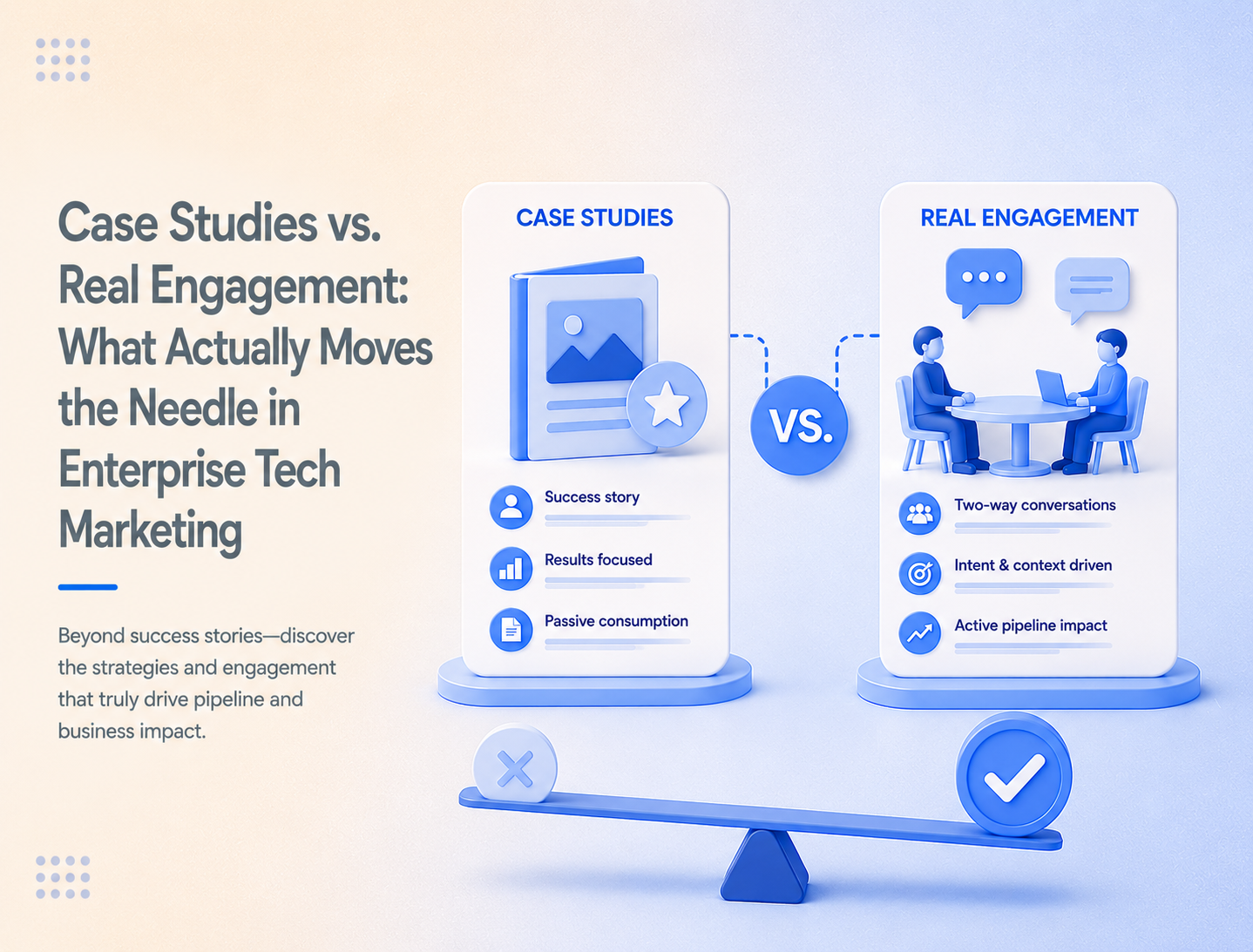
Case Studies vs. Real Engagement: What Actually Moves the Needle in Enterprise Tech Marketing
Demand Generation


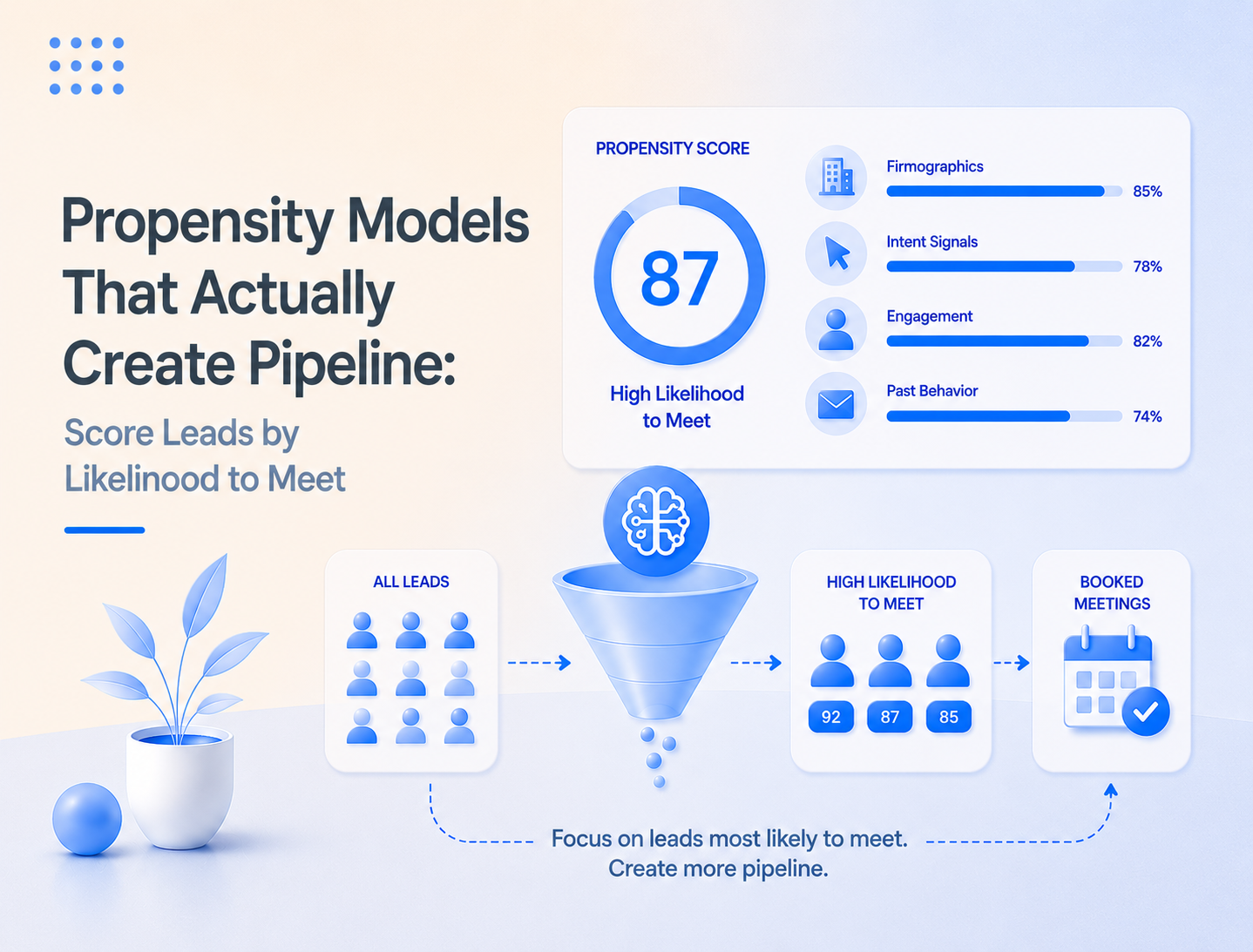
Intent data can tell you who’s researching—but it won’t create pipeline on its own. Here’s how to turn 1st-party signals into qualified, director-level meetings that actually happen using a pay-for-performance outreach motion (not more dashboards or SDR time).
-
Demand Generation
Introduction
Intent data is supposed to make pipeline easier. You can see which accounts are researching. You can watch engagement spike. You can even route “hot” signals to sales in real time.
And yet, a familiar thing happens: nothing moves.
Your dashboards look better than your calendar.
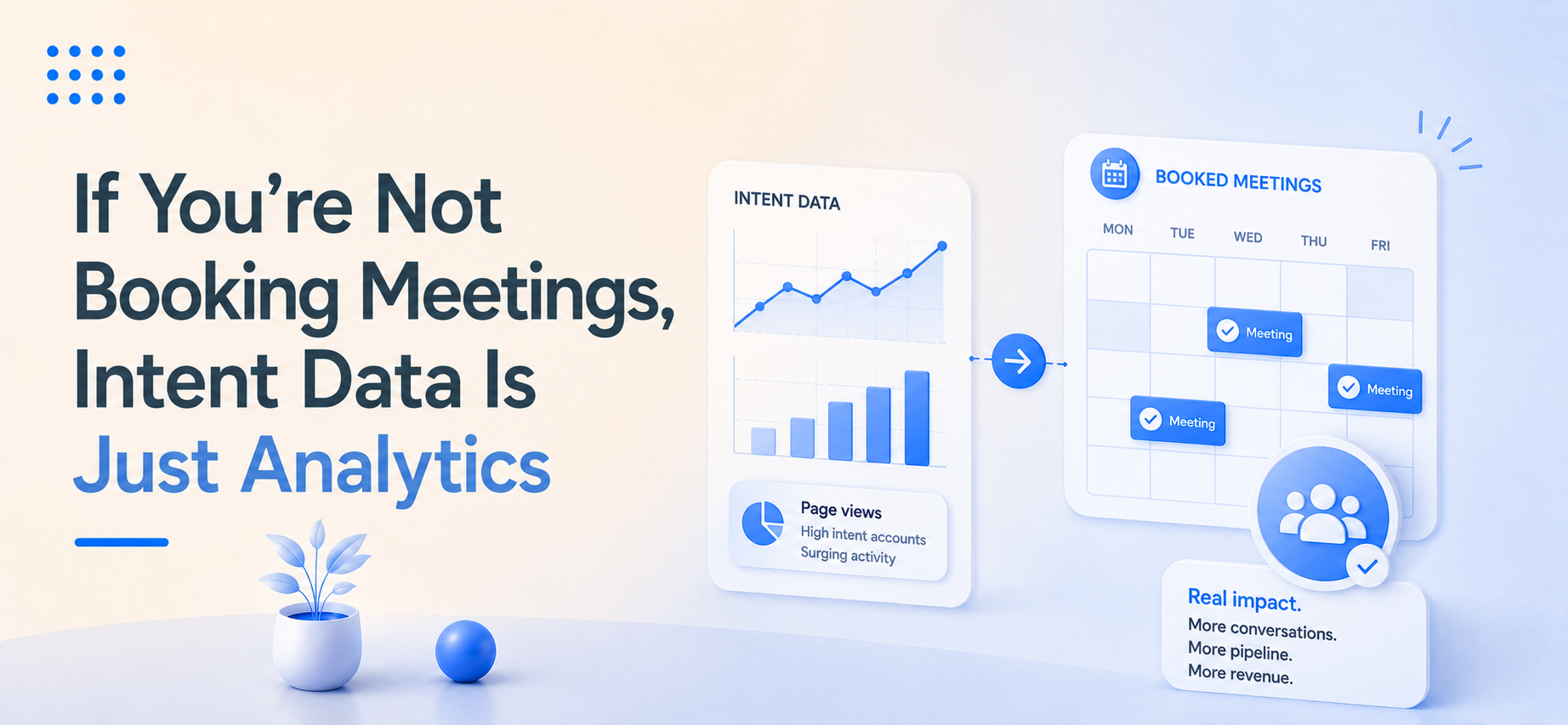
That’s because intent data doesn’t create demand—it reveals it. The difference matters. Enterprise buying committees can research quietly for weeks. They can binge content and still not be ready to talk. They can signal interest without any urgency to meet.
So if your goal is meetings that happen—especially with director+ stakeholders—your job isn’t to “activate intent.” It’s to convert intent into a credible next step that sales will accept and work.
This blog breaks down what 1st-party intent data actually means for demand gen, where it falls apart in the real world, and how to operationalize it into booked meetings using Site Ascend’s meeting-first model.
What 1st-Party Intent Data Means for Demand Generation Marketers (and other titles that meet Site Ascend’s ICP)
1st-party intent data is behavior captured on assets you control: your website, product pages, pricing pages, webinars, events, content hubs, demos, chat interactions, and inbound forms. It’s valuable because it’s real, owned, and typically more specific than third-party “topic interest.”
For demand gen leaders, 1st-party intent data should do three things:
But here’s the catch: enterprise pipeline doesn’t move because someone visited a page. It moves when you secure agreement on a next step—usually a conversation that includes the right people.
That’s why the most useful definition of “intent” isn’t “interest.” It’s momentum:
If your current intent workflow can’t reliably answer those questions, then intent is still just analytics.
Common Challenges Marketers Face
1) “Hot” signals don’t equal “ready to talk”
In enterprise, research is cheap. Meetings are expensive. A director can read a report, scan your pricing page, and forward a link—without any desire to meet this quarter.
2) Sales ignores leads because the handoff is weak
Even good leads stall when the handoff is vague:
Sales doesn’t reject “marketing leads.” They reject uncertainty.
3) SDRs burn cycles chasing ghosts
When intent spikes, SDRs get pressure to “work the list.” That turns into short bursts of low-context outreach, limited coverage across personas, and fast fatigue—especially when no one answers.
4) Director+ contacts are harder to reach with digital-only follow-up
If your intent playbook relies on email sequences and LinkedIn touches, you’re fighting two problems:
5) Reporting optimizes for activity instead of outcomes
It’s easy to measure:
It’s harder (and more important) to measure:



.png)

%201.png)


.png)


Solutions That Work
Intent becomes pipeline when you design an operating system that turns signals into conversations—not just “follow-up.”
Here’s what that looks like when you align it to Site Ascend’s programs.
1) Translate intent into a meeting hypothesis
Before outreach starts, your team needs one clear sentence:
“We believe they’re evaluating ___ because we saw ___; the most credible next step is ___.”
Examples:
This is the bridge between marketing signals and sales relevance.
2) Use outreach that matches the persona and stakes
Director+ outreach requires:
Site Ascend’s Executive Meetings program is designed for this: 30-minute virtual meetings with director-level and above contacts in your target accounts—so you can stop treating “engaged accounts” like they’ll magically book themselves.
3) Build a conversion path that doesn’t consume SDR bandwidth
If your SDR team is small (or already maxed), intent follow-up becomes a trade-off: do you chase engaged accounts or prospect net-new?
Site Ascend’s Lead Qualification and meeting-setting approach converts opt-in and high-signal leads into qualified sales meetings—without forcing your SDRs to do “intent triage” all day.
4) Create a multi-threaded plan—without creating channel conflict
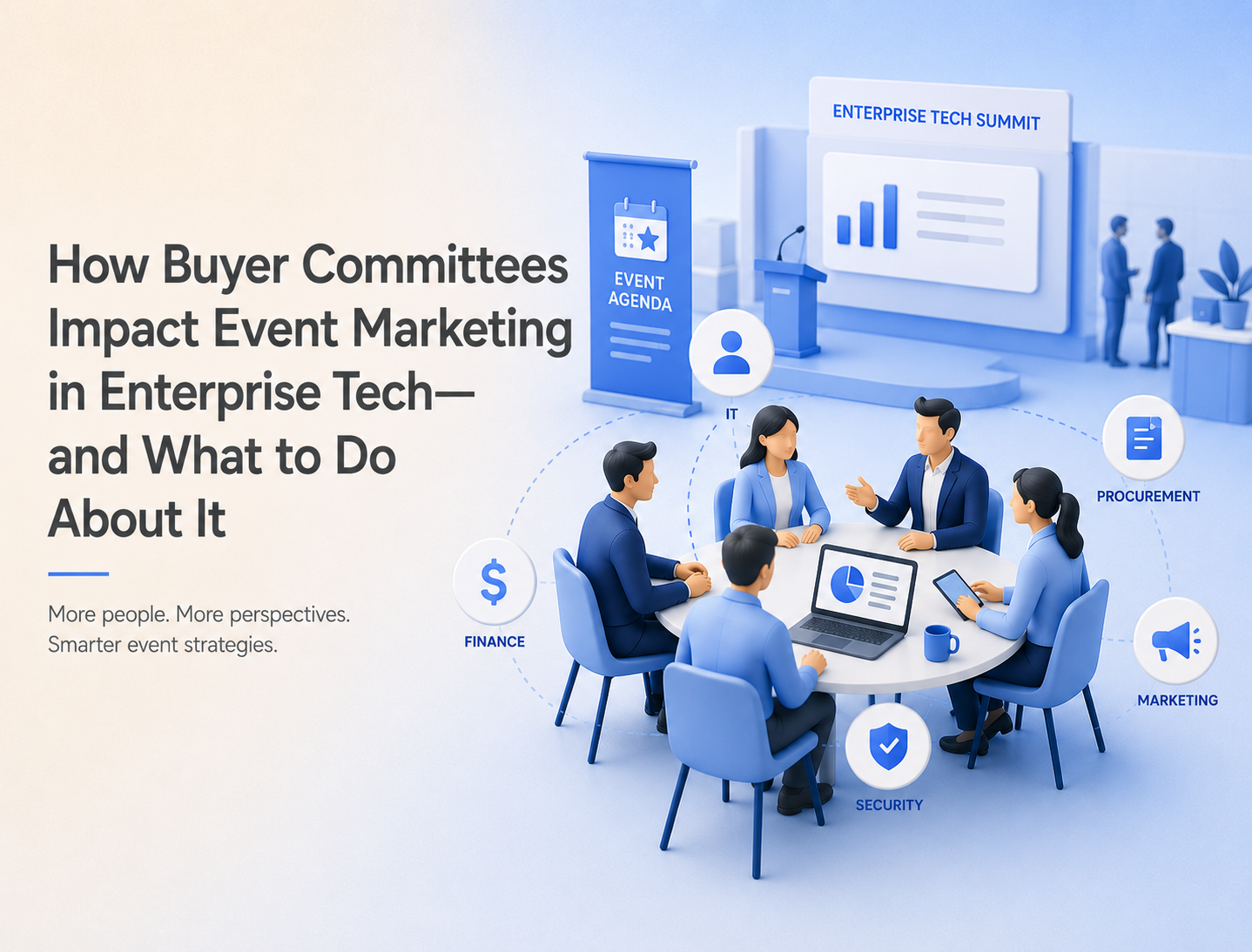
Intent often comes from one contact, but buying decisions rarely do.
A practical approach is to:
For channel motions, Site Ascend’s Channel Marketing program supports white-labeled outreach on behalf of partners—so you can execute follow-up without muddying ownership or stepping on partner toes.
5) Tie events to outcomes, not attendance
Event intent is real—especially when someone registers or attends. But “attended” isn’t the finish line.
Site Ascend’s Event Marketing focuses on driving registrants via outbound dialing, then supporting attendance with SMS workflows. The point is to create the conditions for conversations after the event—not just inflate registration numbers that don’t convert.
6) Reduce risk with a pay-for-performance model
The problem with most intent plays is risk: you invest effort, tools, and time—then hope it turns into pipeline.
Site Ascend flips that equation with a core advantage: Only Pay for Meetings That Occur.
That’s a fundamentally different way to operationalize intent. You’re not paying for “activity.” You’re paying for held conversations that sales can work.
Actionable Steps for Marketers
Use this checklist to turn 1st-party intent from “interesting” into “convertible.”
The Intent-to-Meeting Checklist
1) Define your “meeting-ready” threshold
2) Assign the signal to a persona, not just an account
3) Write a meeting hypothesis
4) Standardize the meeting offer
Keep it simple:
5) Decide what not to do
If a signal doesn’t meet your threshold, don’t force it into SDR sequences. Put it into a lower-intensity track or hold until the next signal appears.
6) Track the metrics that matter
If you want an intent workflow that produces meetings without burning SDR capacity, this is where Site Ascend fits: taking high-signal leads and turning them into sales-accepted conversations through onshore outreach, director+ targeting, and pay-for-performance outcomes.
Comparison of Market Solutions
Most teams try to operationalize intent using one of these approaches. Each can work—but they break differently at enterprise scale.
Option 1: In-house SDR follow-up on intent spikes
Why teams choose it: Fast to deploy, uses existing headcount.
Where it breaks: SDR time gets consumed by triage, messaging becomes inconsistent, and senior stakeholders are difficult to reach. It’s also hard to maintain coverage across multiple personas in a buying committee.
Option 2: Automation-heavy “digital nurture” around intent
Why teams choose it: Feels scalable, easy reporting, low incremental cost.
Where it breaks: Senior buyers often don’t respond to automated follow-up, and the play rarely creates a clear meeting moment. You get engagement signals—but not scheduled conversations.
Option 3: Outsourced outreach paid for activity
Why teams choose it: Adds capacity quickly.
Where it breaks: Activity-based models can incentivize volume over outcomes, offshore variability, and meetings that don’t hold—creating friction with sales.
Option 4: Outcome-based meeting programs (Site Ascend’s model)
Why teams choose it: It aligns incentives to pipeline outcomes.
Why it’s different:
For intent-driven pipeline, this model reduces risk and removes the operational bottleneck: converting signals into conversations.
Conclusion
Intent data is a powerful input—but it’s not a pipeline strategy. If your teams can’t consistently turn 1st-party signals into meetings that happen, then you’re measuring interest while revenue waits.
The fix isn’t more dashboards or more sequences. It’s building a conversion motion that’s designed for enterprise reality: multi-threaded buying committees, director+ accessibility challenges, and a sales team that needs certainty before they commit effort.
If you want to turn intent into held meetings—without burning SDR time—Site Ascend can help through Executive Meetings, Lead Qualification, Channel Marketing, and Event Marketing programs built around outcomes.
If you’d like to test an outcome-based approach, contact Site Ascend to start a pilot focused on meetings that occur—not just signals that spike.
What’s the difference between intent data and demand?

How do I know if intent signals are strong enough to warrant outreach?
Why does sales ignore intent-based leads even when the account is “engaged”?


Start your pilot campaign today and explore the full range of Site Ascend's demand generation capabilities. Experience firsthand how we can enhance your efficiency, streamline your processes, and drive growth.
RELATED