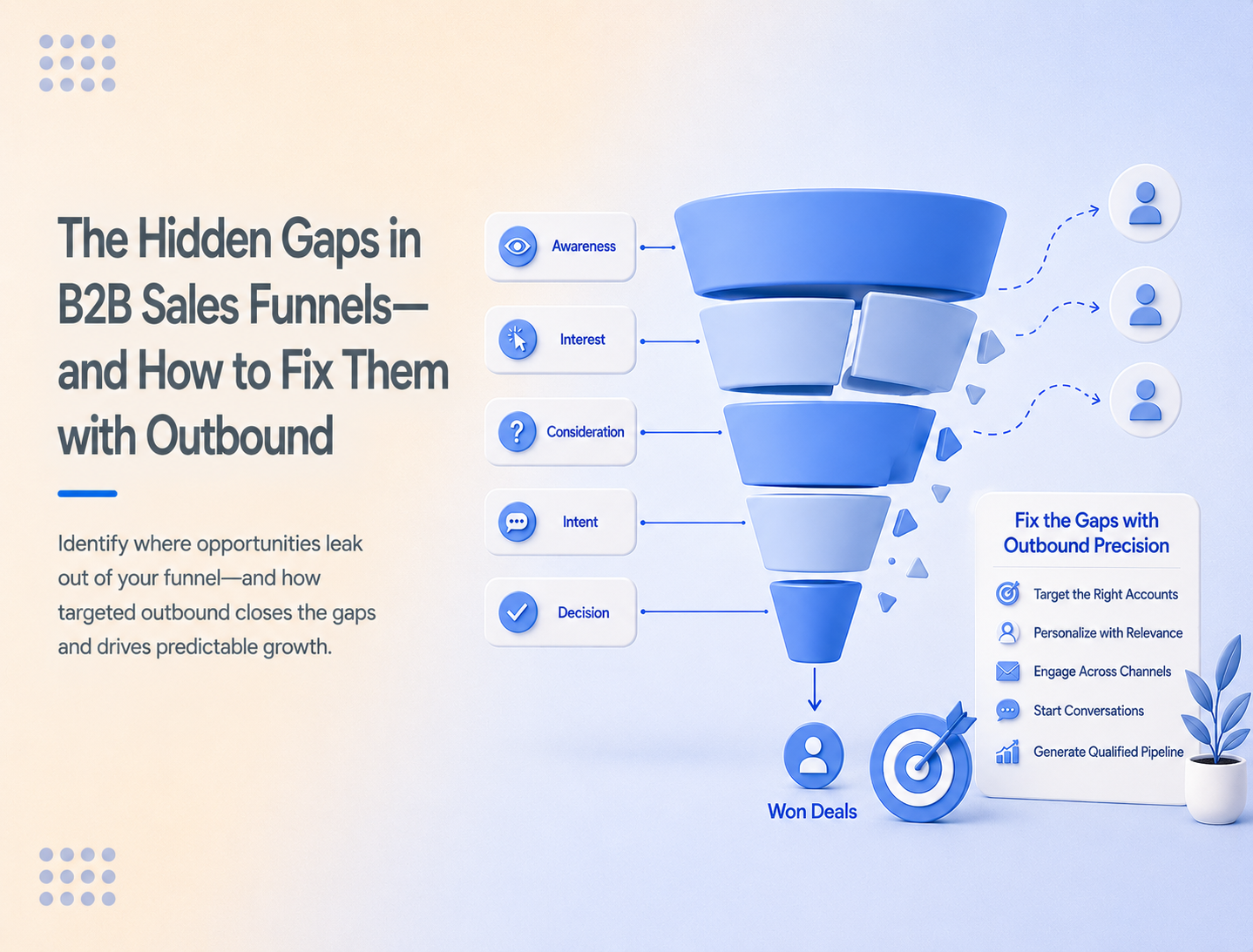
The Hidden Gaps in B2B Sales Funnels—and How to Fix Them with Outbound Precision
Demand Generation Strategy


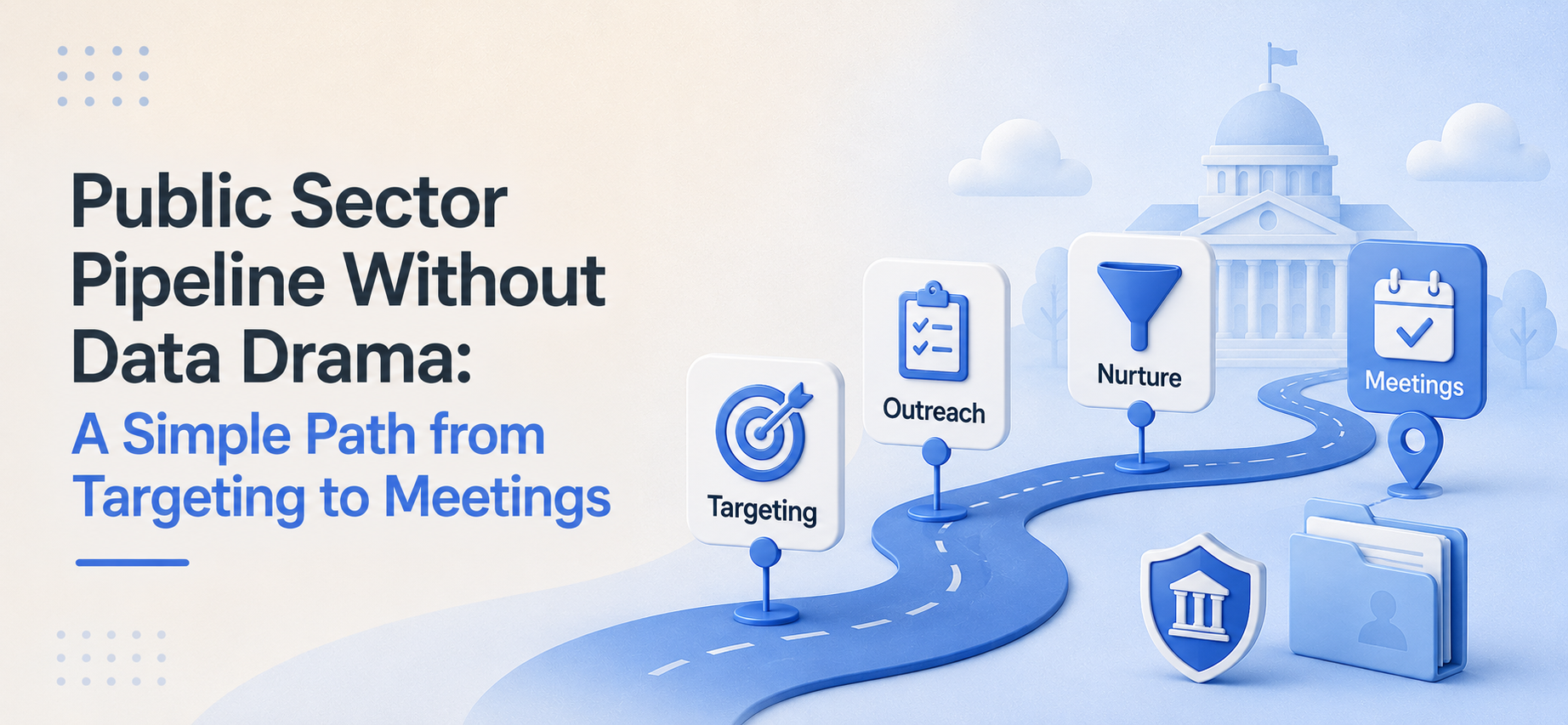
Public sector pipeline breaks down when targeting is treated like the finish line. This post outlines a practical, low-friction workflow to move from account selection to director-level meetings—using outcome-based appointment setting, onshore outreach, and event/lead qualification motions that sales will actually accept.
-
Public Sector Demand Generation
Introduction
Public sector demand gen has a unique problem most commercial teams underestimate: your “perfect” targeting can still fail if the next step isn’t operational. In SLED and Federal, the buying committee is harder to map, titles are inconsistent, inboxes are guarded, and the risk of wasted follow-up is high. That’s why so many public sector programs look strong on paper—great account lists, clean segmentation, “engaged” contacts—and still underperform on what actually matters: booked meetings that move pipeline.
If you’re accountable for pipeline, your job isn’t to generate more activity. It’s to reduce conversion risk between targeting and conversations.
This is the simplest path we’ve seen work at scale for public sector teams—especially when you need to pilot quickly, prove impact, and avoid “data drama” (endless debates about scoring, enrichment, routing, and attribution that delay execution).
What “Public Sector” Means for Demand Gen Marketers (and why it changes the funnel)
In a public sector context, “pipeline creation” isn’t a volume game. It’s a precision + follow-through game.
Here’s what changes:
So the point isn’t to perfect the dataset. The point is to build a repeatable conversion system that gets from “targeted” to “meeting held.”
That’s where Site Ascend fits: we operationalize the messy middle—executive meetings, event attendee procurement, partner/MDf appointment setting, and lead qualification—with a pay-for-outcome model that reduces risk for demand gen.
Common challenges marketers face in public sector pipeline creation
1) Targeting becomes the project (instead of the starting point)
Teams spend weeks refining lists, intent filters, account tiers, and routing logic—then run out of time (or budget) to execute follow-up properly.
Symptom: “We have great targets, but meetings aren’t happening.”
2) SDR bandwidth collapses in the follow-up window
Even when you generate opt-ins or event registrants, conversion dies when response management is slow or inconsistent—especially in public sector where timeliness and persistence matter.
Symptom: “We got registrations / downloads, but sales says they’re not real.”
3) Title quality is inconsistent (and deal velocity suffers)
Public sector outreach fails when it lands on the wrong role level. Director+ matters because it’s the level where projects get funded, prioritized, or sponsored internally.
Symptom: “We’re getting conversations, but they don’t go anywhere.”
4) Events generate “attendees,” not pipeline
Most event programs are optimized for registration counts, not right-title attendance and post-event conversion. If you’re not running disciplined outreach to secure and confirm the right people, you pay for noise.
Symptom: “The event looked successful, but pipeline attribution is thin.”
5) Partner motions stall without a meeting engine
Channel and MDF programs often die between “campaign launched” and “partner-sourced pipeline,” because the execution layer isn’t built to convert interest into scheduled conversations.
Symptom: “Partners are engaged, but sourcing is inconsistent.”



.png)

%201.png)


.png)


Solutions that work
Site Ascend is built around one principle: pipeline outcomes beat lead volume. Our programs focus on the conversion steps that actually move opportunity creation—without requiring you to rebuild your stack or overload your SDR team.
1) Executive Meetings: director+ conversations with target accounts
If your team is running public sector ABM, account-based outreach, or territory-based programs, you need a dependable mechanism to secure 30-minute virtual meetings with director+ titles in your target accounts.
What changes when the goal is “meeting held” instead of “lead delivered”:
Site Ascend advantage: You only pay for meetings that occur, and we focus on director-level and above.
2) Lead Qualification: convert opt-ins into booked meetings
Opt-in leads (downloads, webinar sign-ups, inbound forms) are not pipeline until they’re qualified and scheduled. The break usually happens after the click—when follow-up is late, inconsistent, or handled by overstretched SDRs.
Site Ascend’s approach:
3) Event Marketing: attendee procurement that prioritizes the right titles
Events can work in public sector—but only when you treat the attendee list like a pipeline asset. Site Ascend focuses specifically on driving registrants through outbound dialing, then supporting attendance with an SMS workflow through the event date.
What we do (and don’t do):
This matters because it keeps the scope clean: your program is optimized for who shows up, not just how many register.
4) Channel Marketing: white-labeled appointment setting funded through MDF
Partner programs in public sector often need “white-labeled execution” to maintain partner relationships while still delivering measurable outcomes.
Site Ascend supports channel programs by:
Result: partner motions that produce meetings, not just activity.
Actionable steps for marketers: the “no data drama” public sector workflow
If you want a simple operating model that doesn’t require new tooling, use this checklist.
The Public Sector Pipeline Checklist (Targeting → Meetings)
1) Define the outcome in one sentence
2) Lock the “director+ only” requirement
3) Choose one conversion motion (start with the fastest)
4) Create a two-lane follow-up plan
5) Instrument what matters
6) Run a pilot that forces clarity
This is where Site Ascend is designed to slot in: we operate the conversion layer and report outcomes in real time.
Comparison of market solutions
Public sector teams typically pick one of three approaches:
Example 1: The Procurement View
Outcome 1: Pipeline confidence (Will this create sales-accepted conversations?)
Outcome 2: Budget efficiency (Do we pay for activity or outcomes?)
Outcome 3: Operational simplicity (Can we run this without adding internal complexity?)
Conclusion
Public sector pipeline doesn’t fail because marketers don’t know how to target. It fails because the conversion layer between targeting and meetings is under-resourced, under-instrumented, or measured on the wrong outcome.
If you want a cleaner path from “we know who to reach” to “sales is having director-level conversations,” build your program around:
Site Ascend exists to operationalize that layer—across executive meetings, event attendee procurement, channel appointment setting, and lead qualification—so your public sector programs create pipeline without the usual data drama.
If you’re planning a public sector ABM, event, or partner push this quarter, pilot Site Ascend for outcomes. Start with one motion, one segment, and one measurable goal: meetings that occur.
Why does pipeline “die” after targeting in public sector programs?

What’s the difference between “leads delivered” and “meetings that occur”?
How does Site Ascend support event marketing if you don’t do onsite services?


Start your pilot campaign today and explore the full range of Site Ascend's demand generation capabilities. Experience firsthand how we can enhance your efficiency, streamline your processes, and drive growth.
RELATED