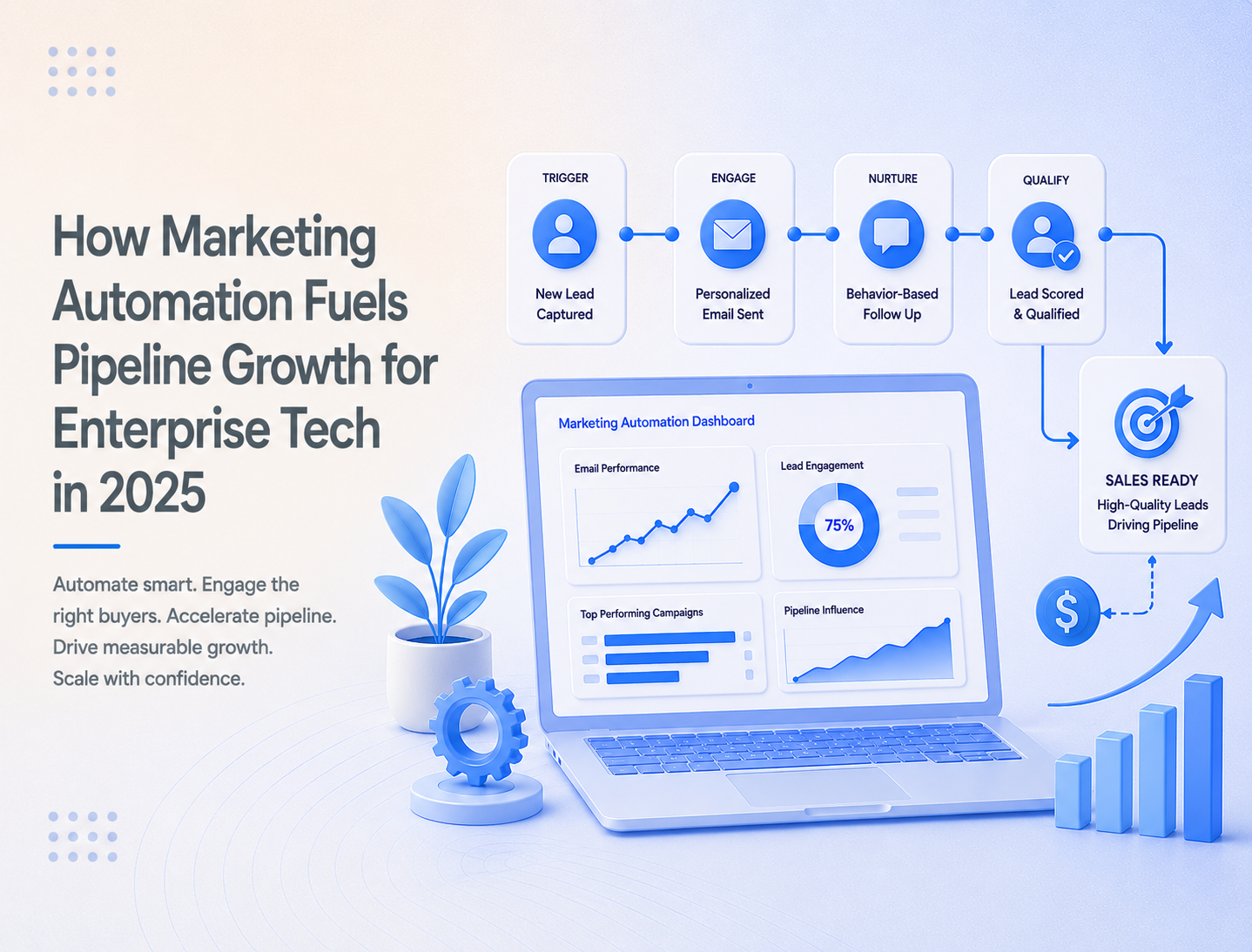
How Marketing Automation Fuels Pipeline Growth for Enterprise Tech in 2025
Lead Qualification


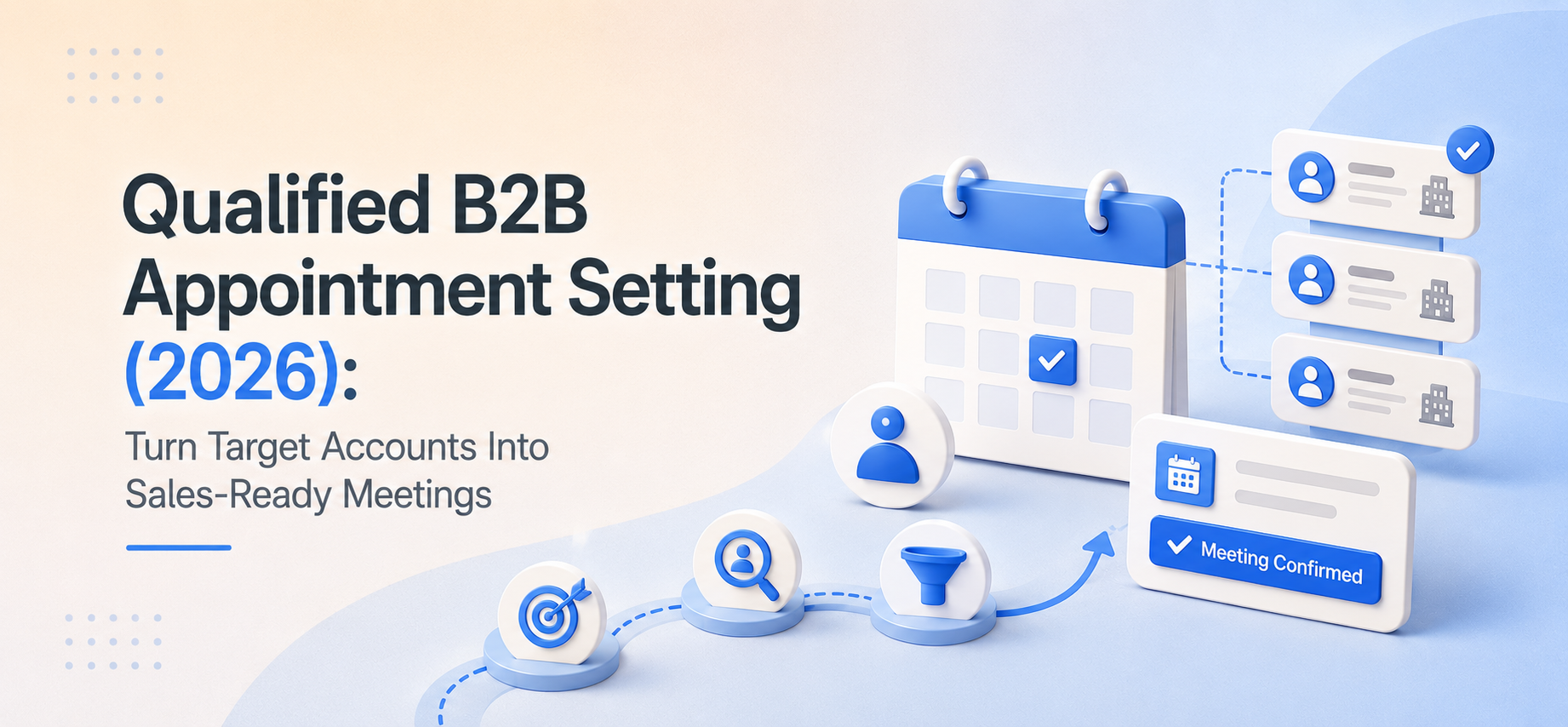
Turn target accounts into sales-ready meetings—without wasting sales time. A 2026 framework for qualified B2B appointment setting with director+ prospects.
-
B2B Appointment Setting
Introduction
If your pipeline plan still depends on “more leads,” you’re already behind.
In 2026, demand generation teams are operating in a reality where volume is easy to buy and hard to trust. Your MarTech stack can capture clicks, form fills, and engagement signals all day long—but sales doesn’t forecast off activity. Sales forecasts off meetings that happen with the right people in the right accounts.
That’s why qualified B2B appointment setting is no longer a “nice-to-have SDR assist.” It’s a revenue control layer—one that turns target account strategy into sales-ready conversations, without forcing your team to add headcount or accept low-quality meetings just to hit a number.
At Site Ascend, we focus on the most direct conversion in demand gen: turning target accounts into scheduled conversations with director-level and above buyers. We do it through a performance-aligned model (you only pay when meetings occur), a U.S.-based contact center, and a process built around real-time reporting so marketing and sales can finally operate from the same source of truth.
This post breaks down what “qualified appointment setting” actually means today, why so many programs stall after early engagement, and how to build a motion that produces meetings sales accepts—consistently.
What Qualified B2B Appointment Setting Means for Demand Gen Leaders
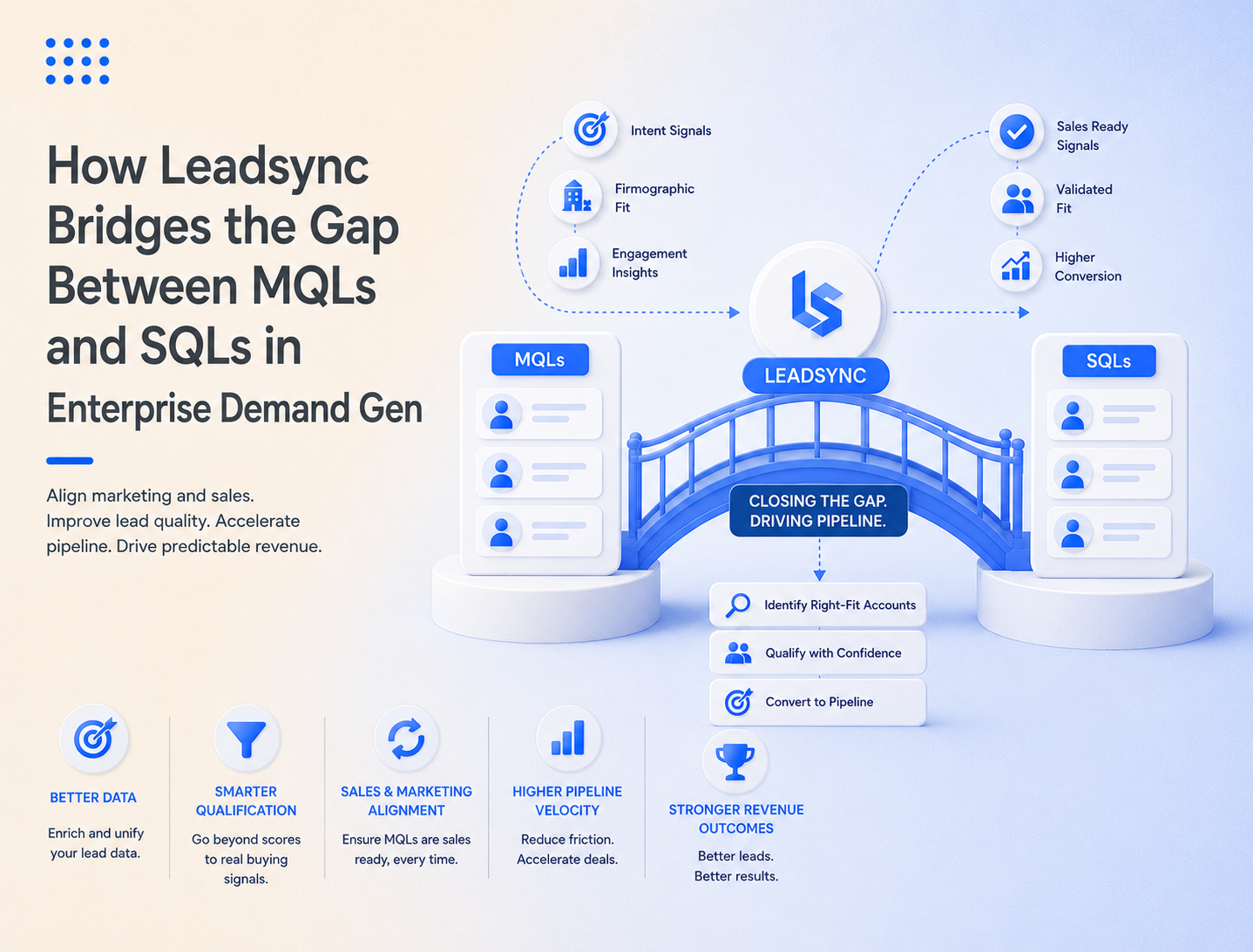
Qualified B2B appointment setting is the operational bridge between “we have demand signals” and “sales has real conversations.”
It’s not list buying. It’s not activity reporting. And it’s definitely not “leads delivered.”
In practice, qualified appointment setting means:
For demand gen, the strategic value is simple: appointment setting makes pipeline creation measurable, repeatable, and improvable—because the output is a booked meeting, not an ambiguous “MQL.”
Site Ascend’s approach is built around that output. Our core programs—Executive Meetings, Lead Qualification, Channel Marketing, and Event Marketing attendee procurement—are all designed to convert marketing inputs into one tangible sales outcome: qualified meetings that happen.
Common Challenges Marketers Face
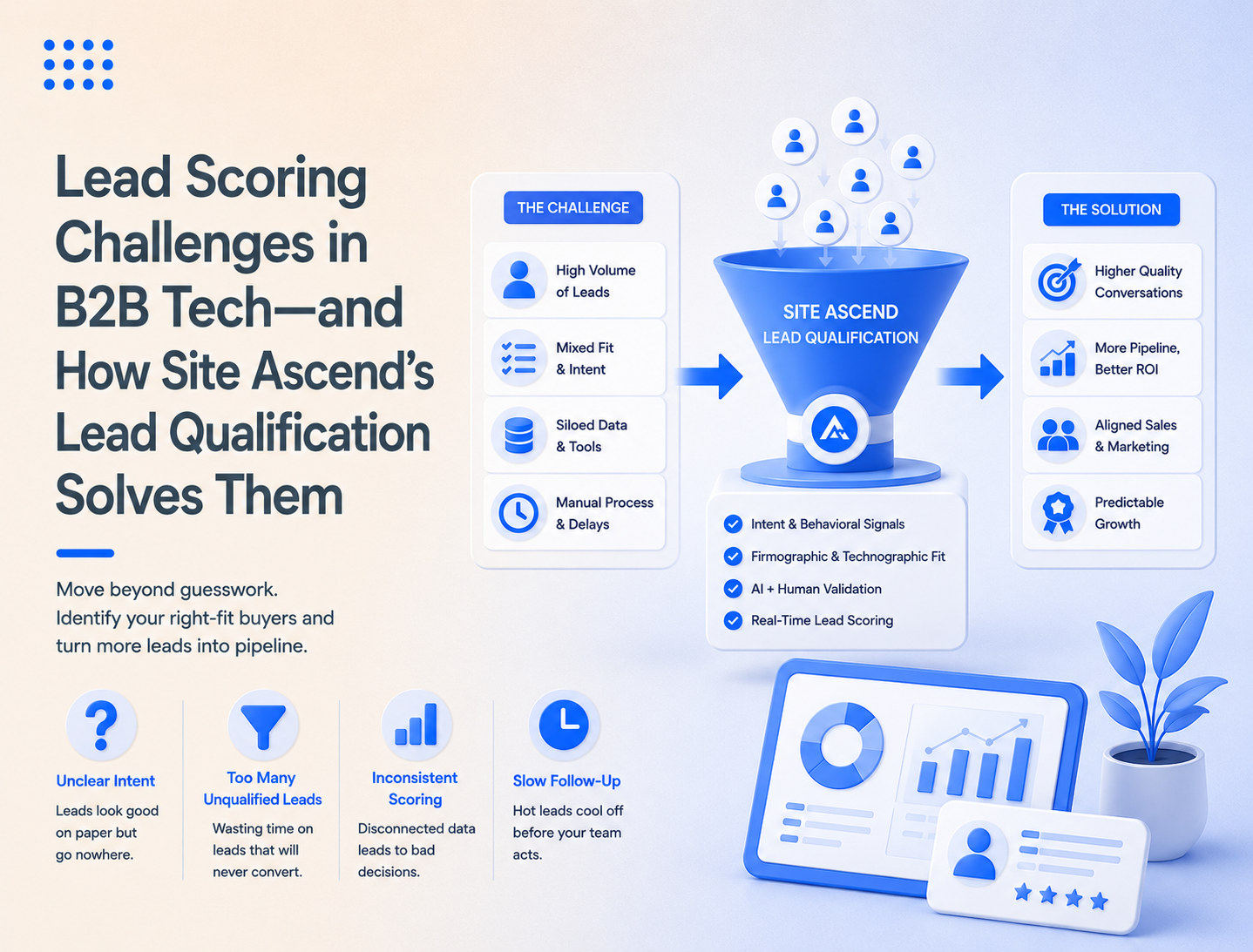
If you’re struggling to turn engagement into pipeline, the failure is rarely “top-of-funnel.” It’s almost always the conversion layer between marketing and sales.
Here are the most common breakdowns Site Ascend sees inside high-performing tech marketing teams:
1) Engagement isn’t the same as intent
A form fill can mean curiosity, research, student interest, vendor comparison—or pure automation. Without human validation, “high intent” can still be low value.
2) Meetings get booked—but sales doesn’t accept them
Sales teams reject meetings when:
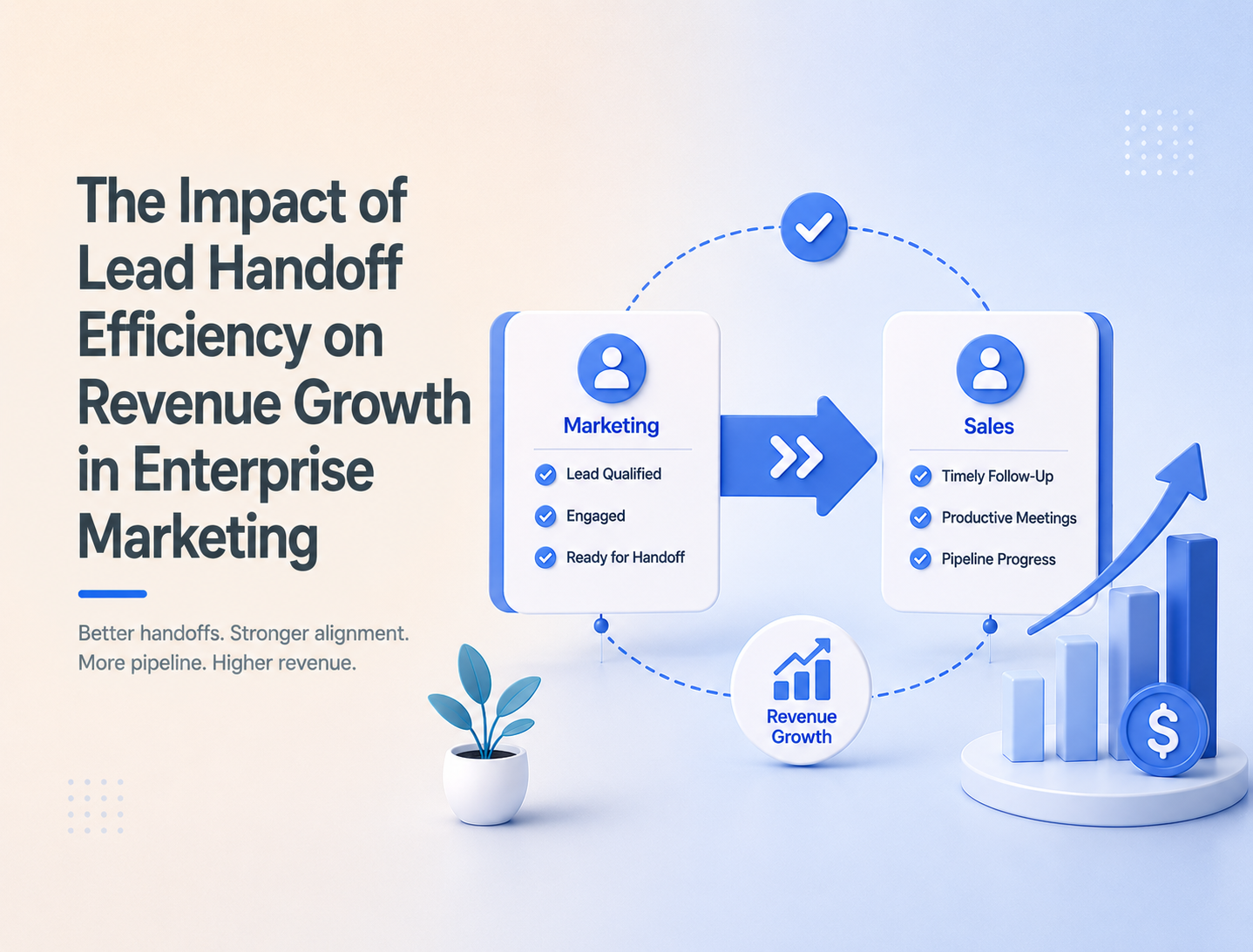
That rejection creates friction fast: marketing blames sales, sales blames lead quality, and meetings become political instead of productive.
3) No-shows quietly kill ROI
Even strong programs leak ROI at the last mile. A scheduled meeting is not an attended meeting—especially when confirmation and reminders are inconsistent.
4) In-house teams can’t scale the follow-up
SDR teams are not optimized for consistent, high-touch follow-up across every “maybe.” They’re optimized for throughput and multi-threading. That leaves a large middle layer of leads and accounts underworked.
5) Reporting is delayed or unclear
If marketing can’t see what’s happening in real time—what accounts are being worked, what outcomes are trending, where drop-off occurs—optimization becomes guesswork.



.png)

%201.png)


.png)


Solutions That Work
Here’s what actually closes the conversion gap: a qualified appointment-setting motion that is built to create real conversations, not report activity.
This is where Site Ascend’s programs fit—because each one solves a different “conversion failure point” inside demand gen.
Executive Meetings: Director+ conversations inside target accounts
Site Ascend runs 30-minute virtual meetings exclusively with director-level and above buyers in your target accounts. That matters because:
Most importantly: you only pay for meetings that occur—which aligns incentives around attendance, not calendar activity.
Lead Qualification: Convert opt-in leads into real meetings
Your opt-in leads (downloads, webinar registrations, event inquiries) don’t become pipeline unless someone does the hard work of:
Site Ascend’s lead qualification program is built to convert that “interest layer” into meetings that sales will actually take.
Event Marketing: Attendee procurement via outbound dialing + SMS support
Events fail when attendance doesn’t match the target account list.
Site Ascend focuses on what drives ROI: registrants procured through outbound dialing, followed by an SMS workflow that supports confirmation through the event date. We don’t provide day-of-event staffing; we drive the registrants and protect attendance.
Channel Marketing: White-labeled appointment setting funded by MDF
Channel demand gen breaks when:
Site Ascend enables channel teams to deploy white-labeled outreach that generates meetings while protecting your brand and keeping execution consistent.
Real-time reporting that supports optimization
Appointment setting becomes a scalable growth lever when you can see, in real time:
Actionable Steps for Marketers
Here’s a practical checklist demand gen leaders can implement immediately to improve appointment-setting outcomes—even before changing vendors or org structure.
A short checklist for qualified appointment setting
1) Define “sales-ready” in one sentence
Example: “A director+ buyer in an ICP account agrees to a meeting to evaluate a relevant use case within X timeframe.”
2) Build a two-layer qualification model
3) Set an acceptance rule with sales
If sales can’t accept it consistently, it’s not qualified—no matter how hard it was to book.
4) Protect attendance like it’s pipeline (because it is)
Confirmations, reminders, and rescheduling workflows should be part of the program—not an afterthought.
5) Measure the right conversion
Track: target account → director+ conversation → meeting occurs → meeting accepted → pipeline influenced.
If you want a faster path to execution, Site Ascend can stand up a pilot motion that operationalizes all five steps with a performance-aligned delivery model.
Comparison of Market Solutions
When evaluating qualified appointment setting, most teams weigh two paths:
Option 1: Build it fully in-house
Pros
Cons
This model can work—but only if you can afford the headcount and operational overhead required to keep quality high.
Option 2: Outsource appointment setting to a traditional vendor
Pros
Cons
Many outsourced programs optimize for what’s billable—activity and quantity—not necessarily what’s valuable.
Why Site Ascend is different
Site Ascend is built around three differentiators that matter to demand gen leaders:
For teams that want predictable pipeline contribution without building a full outbound engine internally, this model reduces risk while improving sales acceptance.
Conclusion
If your demand gen strategy stops at engagement, you’re leaving pipeline to chance.
Qualified B2B appointment setting is what converts interest into conversations—and conversations into revenue motion. It’s how modern marketing teams protect funnel efficiency, reduce lead risk, and create outcomes sales actually trusts.
If you want to prove this quickly, the fastest path is a pilot that aligns incentives to what matters: meetings that occur with director-level buyers in your target accounts.
If you’re ready to turn target accounts into sales-ready meetings, contact Site Ascend to start a pilot of our Executive Meetings, Lead Qualification, Channel Marketing, or Event Marketing attendee procurement programs.
What makes an appointment “qualified” in B2B appointment setting?

How do you reduce meeting no-shows?
What titles should qualify for “director-level and above” outreach?


Start your pilot campaign today and explore the full range of Site Ascend's demand generation capabilities. Experience firsthand how we can enhance your efficiency, streamline your processes, and drive growth.
RELATED