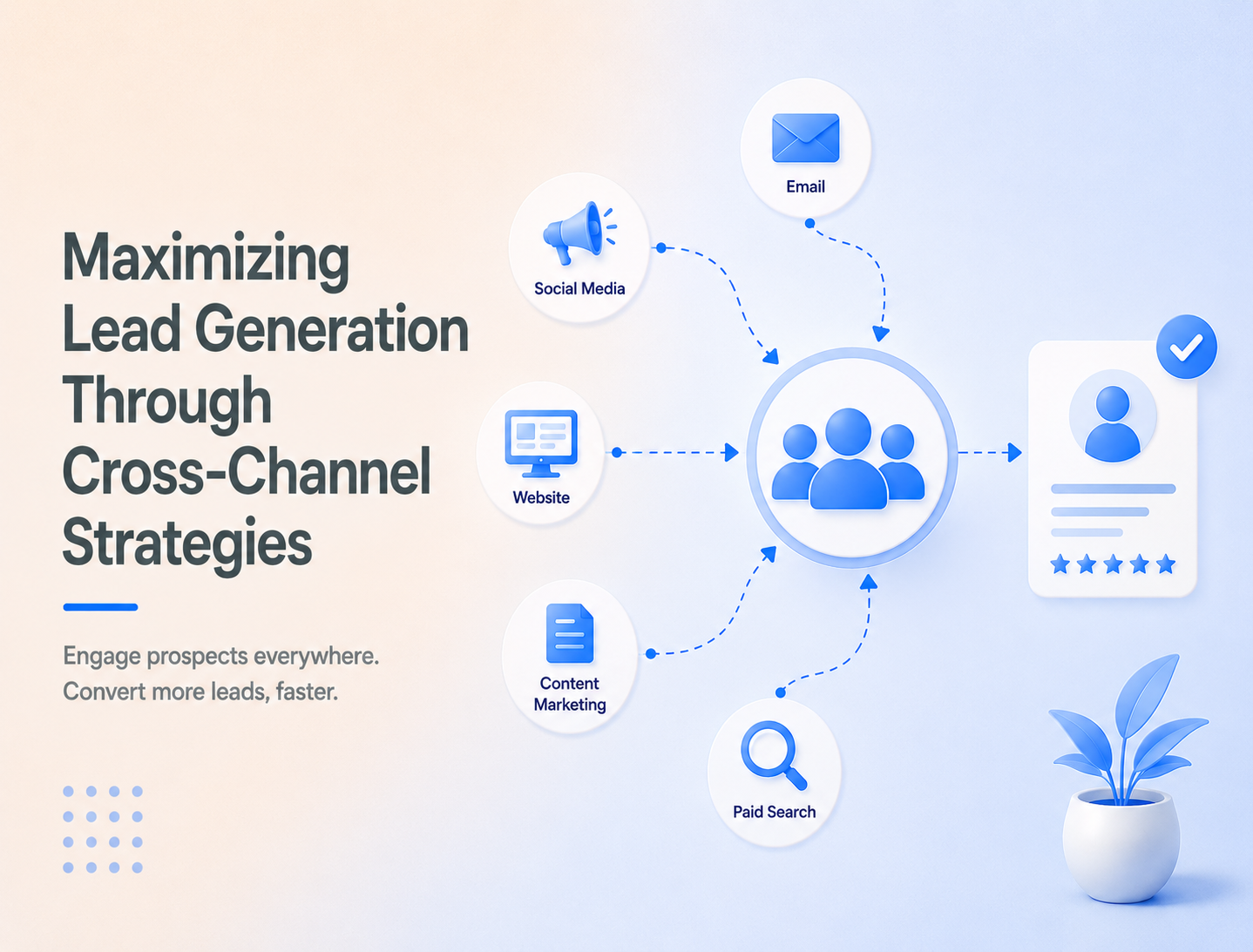
Maximizing Lead Generation Through Cross-Channel Strategies
cross-channel lead generation


Salesforce can capture every lead, signal, and partner touch—but it can’t force alignment. This post breaks down how Site Ascend uses Salesforce to orchestrate marketing, SDR, and partner-sourced outreach into one measurable outcome: director-level meetings that actually occur.
-
evenue Operations (RevOps) / Demand Generation
Introduction
Salesforce is where demand gen, SDR, and partner motions are supposed to converge. In practice, it’s where “good leads” get misrouted, follow-up gets inconsistent, and attribution becomes a debate instead of a decision.
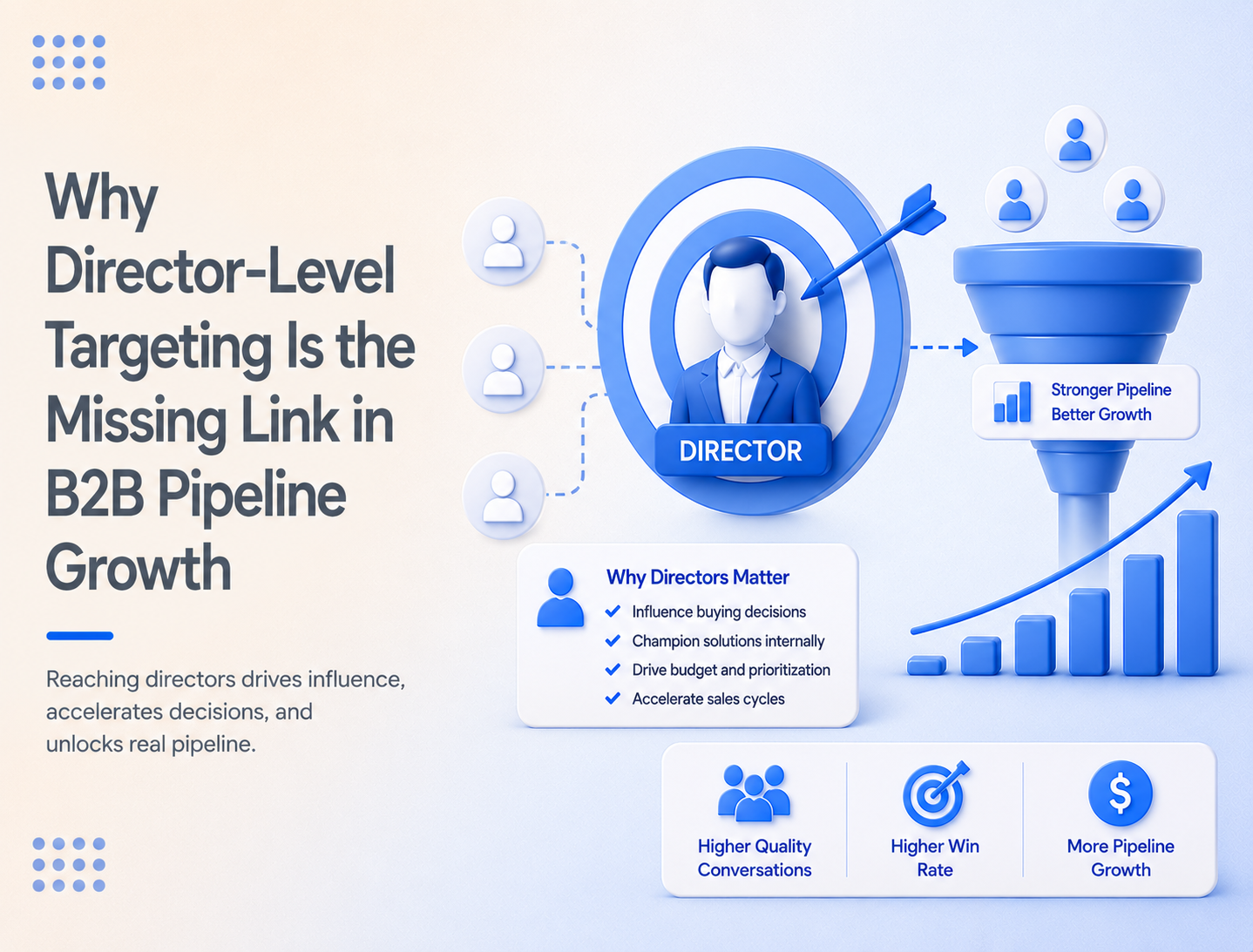
That coordination gap is why many enterprise teams can report lead volume and campaign responses—but struggle to consistently produce the next step that matters: a meeting that occurs with the right persona in the right account.
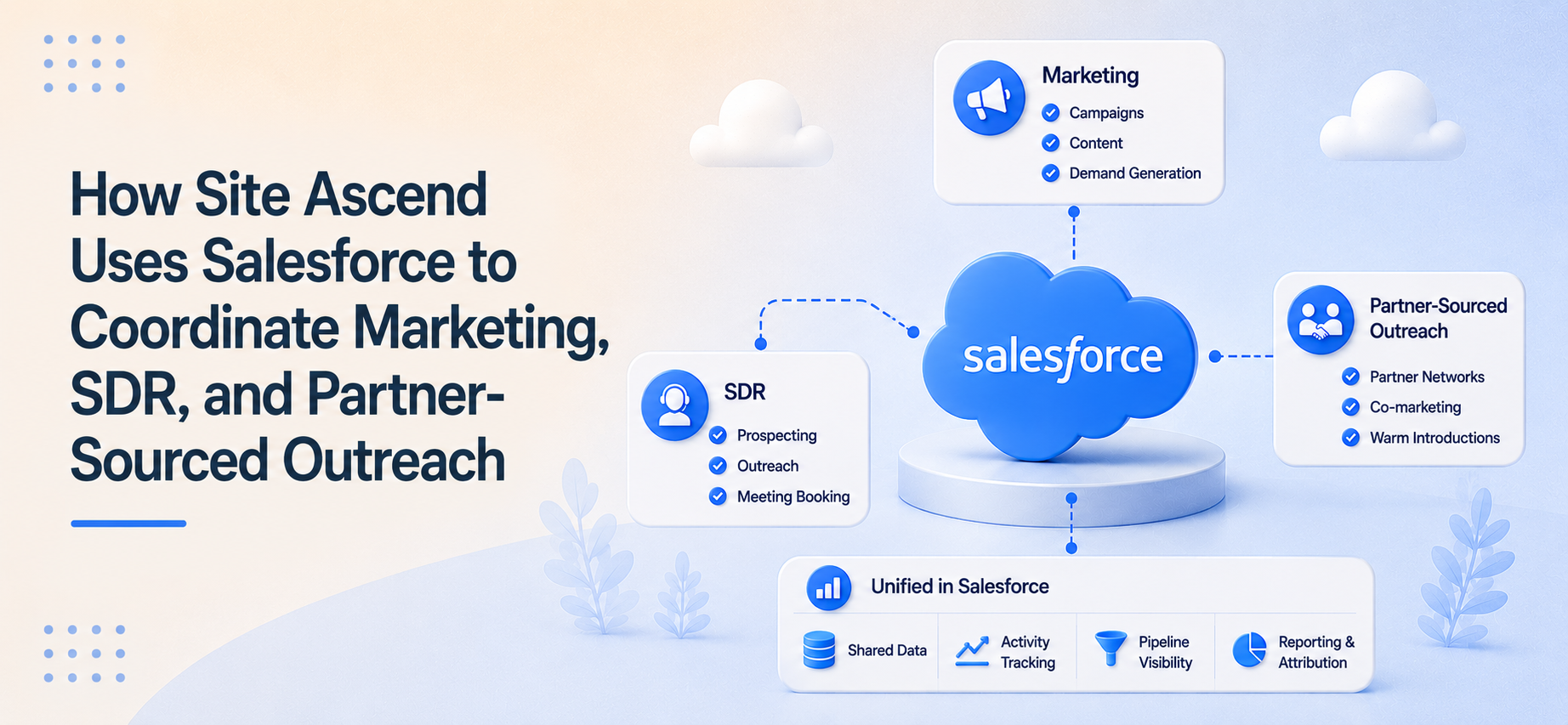
This post breaks down how Site Ascend uses Salesforce as the operating system for coordinated outreach, so marketing, SDR, and partner-sourced motions stop working in parallel—and start producing sales-accepted outcomes together.
What Salesforce Means for Demand Generation Marketers (and other titles that meet Site Ascend’s ICP)
For demand gen leaders, Salesforce isn’t “the CRM.” It’s the system of record for revenue coordination—the place where:
In other words: Salesforce is the platform that either creates operational alignment or records operational friction.
Site Ascend treats Salesforce as the orchestration layer across four motions that demand gen teams care about most:
Common Challenges Marketers Face
Even well-run teams experience the same breakdowns once multiple motions share the same pipeline.
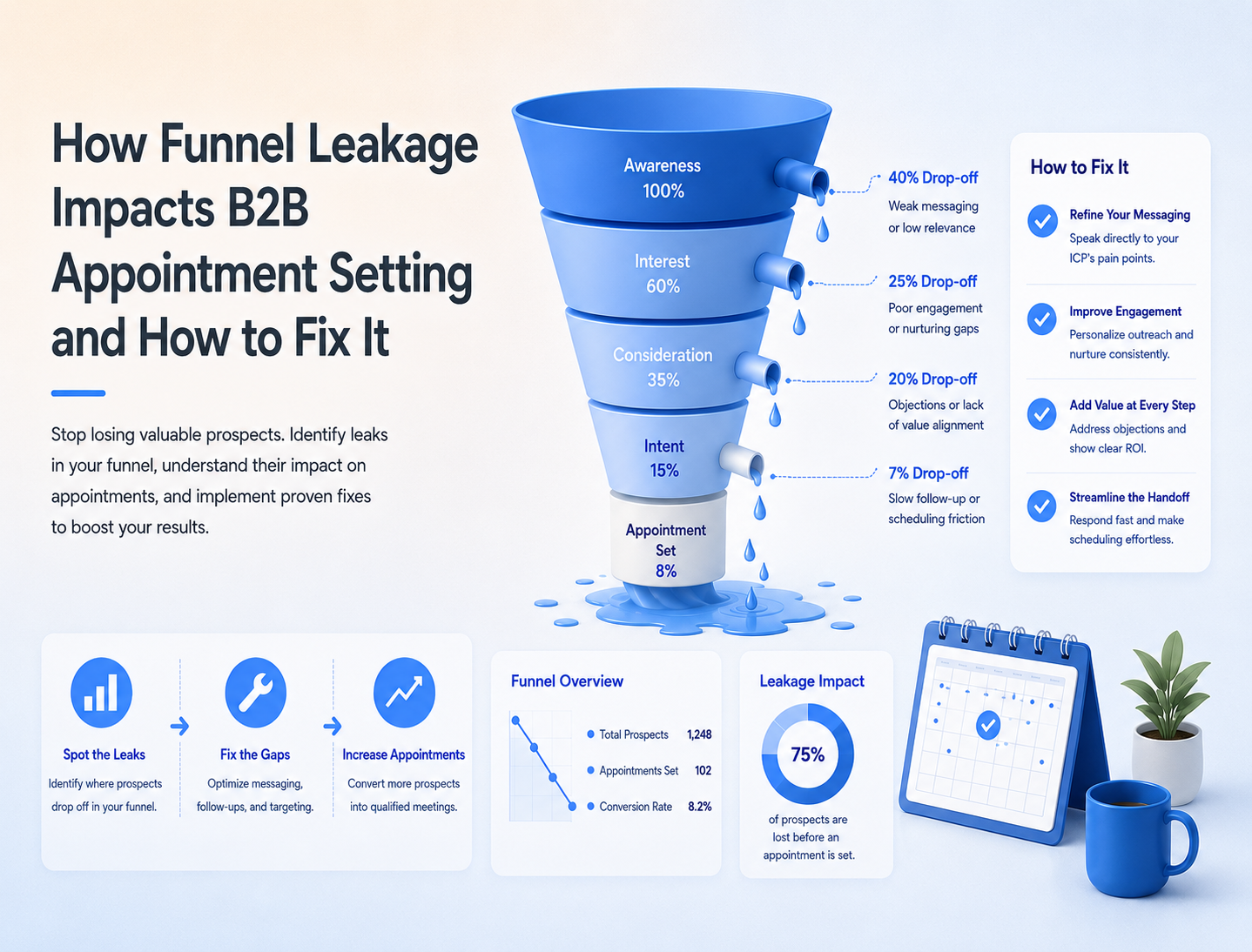
1) “Ownership” is unclear after the click
Marketing captures the response. SDRs inherit the lead. Partners want visibility. Sales wants meetings. Salesforce contains all of it—yet the handoff is still ambiguous.
Symptoms in Salesforce:
2) Prioritization is based on fields, not intent-to-meet
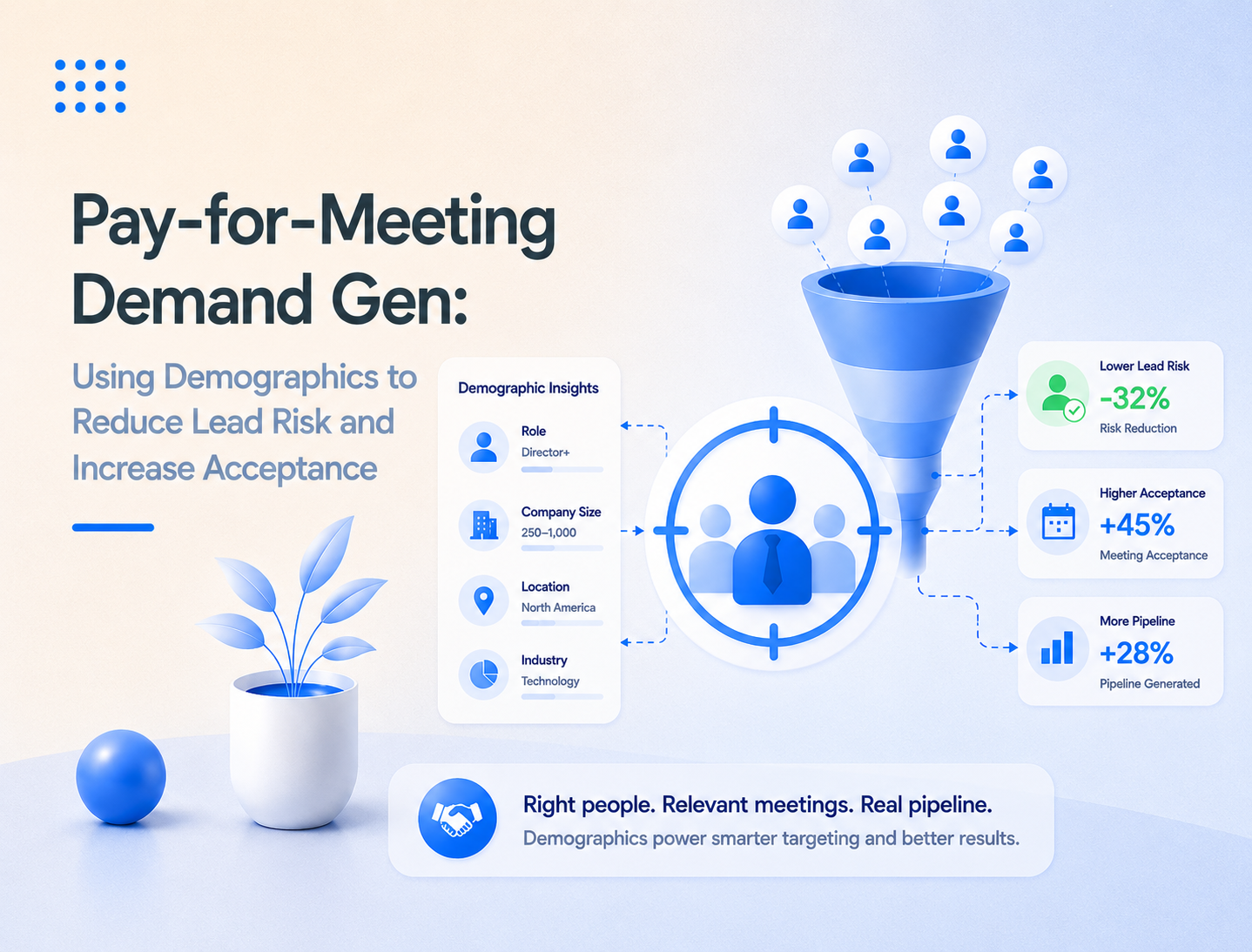
Teams build routing rules around demographics, account tiers, and timestamps. But the real question is: Is this person likely to take a meeting?
Result: high activity, low acceptance.
3) Partner-sourced programs turn into reporting exercises
Channel teams need MDF accountability. Marketing needs reach. SDRs need context. If Salesforce isn’t structured for partner-driven workflows, you get:
4) Event pipelines stall between registration and attendance
Most teams treat registration as the win, then scramble to confirm attendance. Without a defined operational workflow, no-shows rise and post-event conversion drops.
5) “Leads delivered” becomes the metric—because “meetings that occur” is hard
When outcomes are difficult to operationalize, organizations default to volume metrics. That’s where cost and risk creep in.



.png)

%201.png)


.png)


Solutions That Work
Site Ascend uses Salesforce to coordinate execution across teams by aligning on one shared truth:
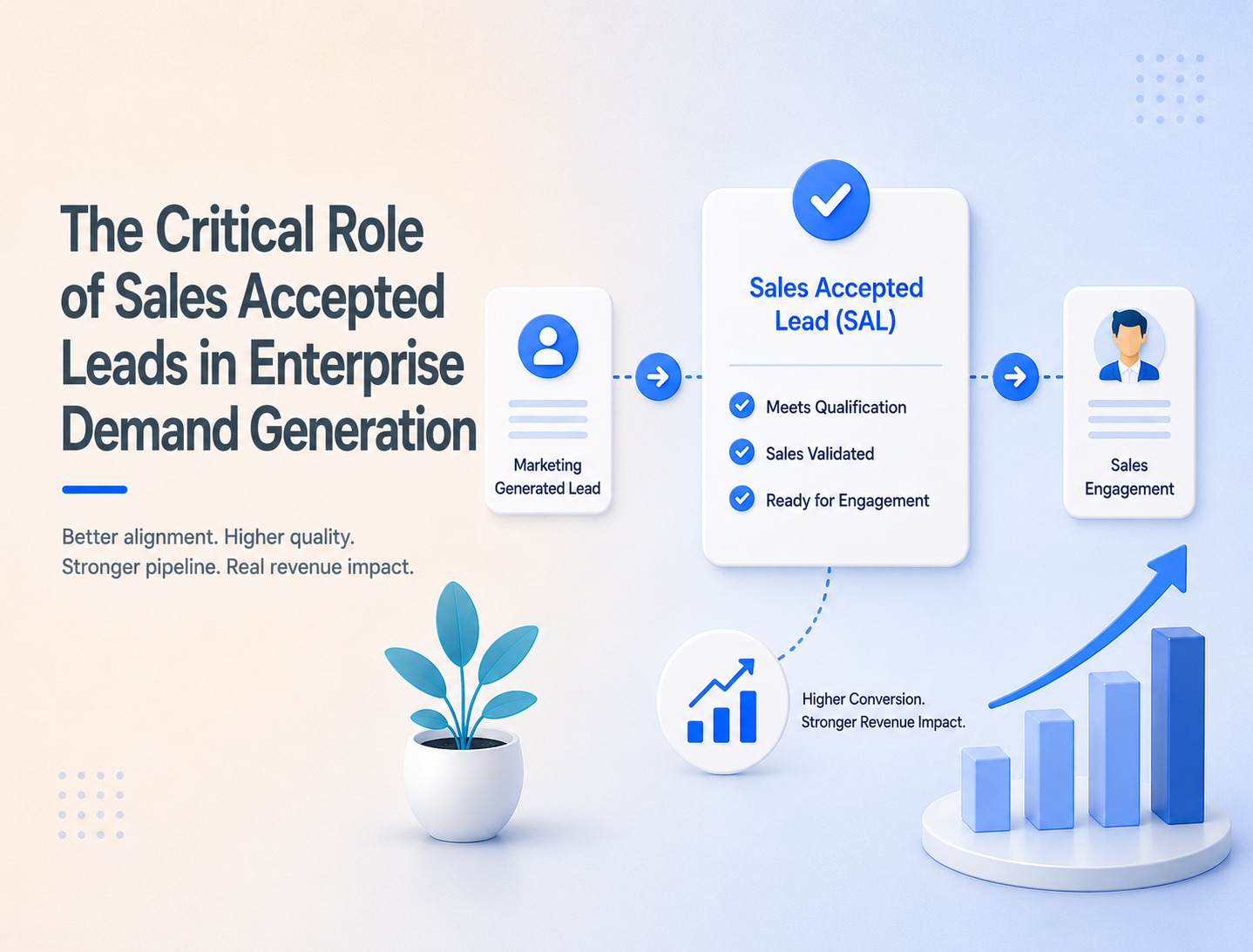
A lead is only valuable if it advances to a sales-accepted meeting that occurs.
Here’s how that shows up operationally.
1) One coordinated intake, multiple controlled routes
Site Ascend helps teams structure Salesforce so inbound responses, event registrants, and partner-sourced leads don’t land in the same generic queue.
Instead, routing reflects how the lead entered the system and what should happen next:
This preserves context and prevents “one-size-fits-none” follow-up.
2) A shared definition of “Sales-Ready” that Sales will actually accept
Sales acceptance improves when the CRM reflects reality—not aspiration.
Site Ascend aligns Salesforce fields and stages to match what Sales actually needs to say “yes,” such as:
3) Salesforce-driven orchestration—without burning SDR time
Your SDR team has finite bandwidth. The goal isn’t more tasks. The goal is less waste per task.
Site Ascend adds a performance layer to Salesforce execution by focusing effort where meeting likelihood is highest, and by taking on the work that typically drains SDR cycles:
4) Partner-sourced outreach that stays white-labeled and measurable
Partner motions fail when they feel “bolted on.” Site Ascend supports channel marketing by enabling:
5) Event marketing that converts registrants into actual attendees
Site Ascend focuses on driving registrants through outbound dialing and then uses an SMS workflow to support attendees until the date of the event.
In Salesforce terms, that means your team can operationalize a clean “registrant to attendee” path with clear checkpoints:
Actionable Steps for Marketers
If Salesforce is your coordination layer, here’s a practical way to reduce leakage across marketing, SDR, and partner motions.
The Salesforce Coordination Checklist (built for meetings, not activity)
Operational alignment
Routing and prioritization
Execution and reporting
Comparison of Market Solutions
Example 1: The Procurement View
When procurement evaluates meeting-generation support, the decision typically comes down to three outcomes:
Outcome 1: Reduce performance risk
Outcome 2: Protect brand and partner relationships
Outcome 3: Improve sales acceptance and internal efficiency
Comparison of Market Solutions
Example 1: The Procurement View
When procurement evaluates meeting-generation support, the decision typically comes down to three outcomes:
Outcome 1: Reduce performance risk
Outcome 2: Protect brand and partner relationships
Outcome 3: Improve sales acceptance and internal efficiency
Conclusion
Salesforce can absolutely coordinate marketing, SDR, and partner-sourced outreach—but only if the operating model is built around outcomes, not activity.
If your CRM is full of leads and your teams are busy, yet meetings are inconsistent, the gap is almost always the same: handoff and follow-through. Site Ascend closes that gap by converting response signals into director+ conversations and meetings that occur, with real-time visibility and a pay-for-outcome approach.
If you want to pilot a coordinated Salesforce execution layer—across executive meetings, channel/MDF outreach, event attendee procurement, and opt-in lead qualification—Site Ascend can map your current funnel to a meeting-first workflow and run a focused test tied to sales-accepted outcomes.
How do you prevent duplicate outreach when marketing, SDR, and partners share the same accounts?

What does “meetings that occur” change in how Salesforce is managed?
How does Site Ascend support Salesforce reporting without creating extra admin work?


Start your pilot campaign today and explore the full range of Site Ascend's demand generation capabilities. Experience firsthand how we can enhance your efficiency, streamline your processes, and drive growth.
RELATED