Outbound Marketing in 2025: The Return of Real Human Engagement
B2B Demand Generation


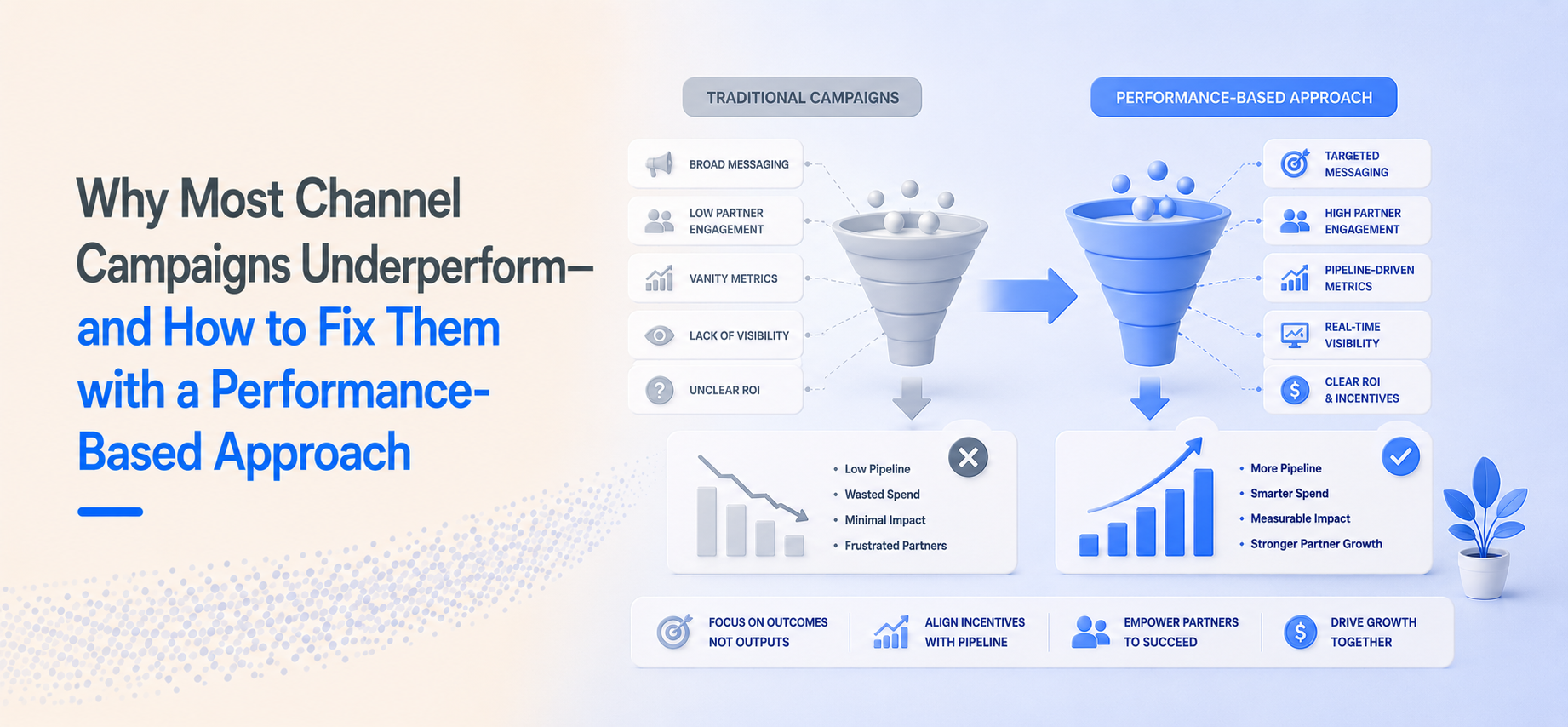
Most channel campaigns underperform because they prioritize activity over outcomes. Learn how demand generation leaders are transforming channel marketing with a performance-based approach that drives measurable pipeline and aligns vendors and partners around shared revenue goals.
-
Demand Generation & Channel Marketing
Introduction
For many B2B technology marketers, channel campaigns are a powerful lever — a way to scale demand generation by partnering with vendors and resellers who share both audience and goals. Yet despite their potential, most channel campaigns fall short of expectations.
The problem isn’t lack of effort or funding. It’s that many campaigns are built around activity, not performance. In today’s marketing environment — where pipeline accountability reigns supreme — channel marketers can’t afford to run programs that stop at brand awareness.
To get results, channel campaigns must evolve from passive marketing spend to performance-based growth engines.
What Channel Campaigns Mean for Demand Generation Marketers
At their core, channel campaigns are joint marketing initiatives — designed to align vendors and partners around shared revenue objectives. They fund activities like co-branded outreach, event promotion, and lead nurturing.
For demand generation leaders, these programs offer scalability that’s difficult to achieve alone. When managed effectively, channel campaigns can extend reach into new markets, leverage shared data, and multiply sales opportunities through collaborative investment.
However, without accountability to measurable outcomes — like qualified meetings or opportunity creation — channel programs often become budget line items rather than growth drivers.
That’s where performance-based marketing transforms the model. Instead of funding campaigns based on participation or impressions, marketers are increasingly directing co-op and MDF budgets toward initiatives that guarantee results.
Common Challenges Marketers Face
Even experienced channel marketers encounter friction when running campaigns through partners. The most common challenges include:
Each of these challenges points to a single root issue: a lack of measurable accountability.



.png)

%201.png)


.png)


Solutions That Work
High-performing marketing organizations are solving these challenges by rethinking their approach to channel campaigns. Instead of viewing them as “marketing support,” they’re treating them as revenue-generating programs with clear outcomes.
Here’s what that shift looks like:
This modern approach repositions channel marketing as a revenue engine rather than an operational cost center.
Actionable Steps for Marketers
If you’re ready to elevate your channel campaigns from tactical to transformational, here’s a quick framework to start:
The result is greater partner accountability, tighter sales alignment, and more predictable pipeline outcomes.
Comparison of Market Solutions
When it comes to executing channel campaigns, most demand generation teams face a familiar choice: manage everything internally, outsource to an external vendor, or adopt a performance-based partnership model. Each approach has its merits — but the differences in control, scalability, and accountability are significant.
Managing campaigns in-house offers the greatest control. Marketers can maintain brand consistency, align closely with internal sales teams, and ensure that every message is on-brand. However, the tradeoff is often speed and scalability. Building and running campaigns internally demands substantial time, resources, and specialized talent — something many marketing teams simply don’t have at scale.
Traditional outsourcing provides faster execution and access to external expertise. It can help fill bandwidth gaps, especially when launching multiple campaigns across different partners or regions. Yet, this model frequently comes with fixed costs and limited transparency. Results are often measured by activity — not outcomes — making it difficult to tie investment directly to pipeline impact.
A performance-based partnership, by contrast, bridges the gap between control and scalability. Instead of paying for effort, marketers pay for results — such as completed meetings or qualified opportunities. This approach brings transparency, agility, and accountability to every channel initiative. It’s a model that aligns both vendor and partner incentives around measurable outcomes, ensuring that every campaign contributes directly to pipeline growth.
In today’s demand-driven market, that accountability isn’t optional — it’s the new standard for channel success.
Conclusion
The era of running channel campaigns based solely on participation is ending. Modern demand generation leaders know that accountability, precision, and measurable outcomes are the new standard.
By adopting a performance-based approach, channel marketers can turn shared budgets into shared success — creating campaigns that not only engage partners but also deliver tangible revenue impact.
Ready to see what a performance-driven channel program looks like?
Contact Site Ascend to explore how your next channel campaign can generate measurable, director-level conversations that drive real growth.
What makes channel campaigns underperform?

How can I make my channel campaigns more effective?
Are performance-based channel programs scalable?


Start your pilot campaign today and explore the full range of Site Ascend's demand generation capabilities. Experience firsthand how we can enhance your efficiency, streamline your processes, and drive growth.