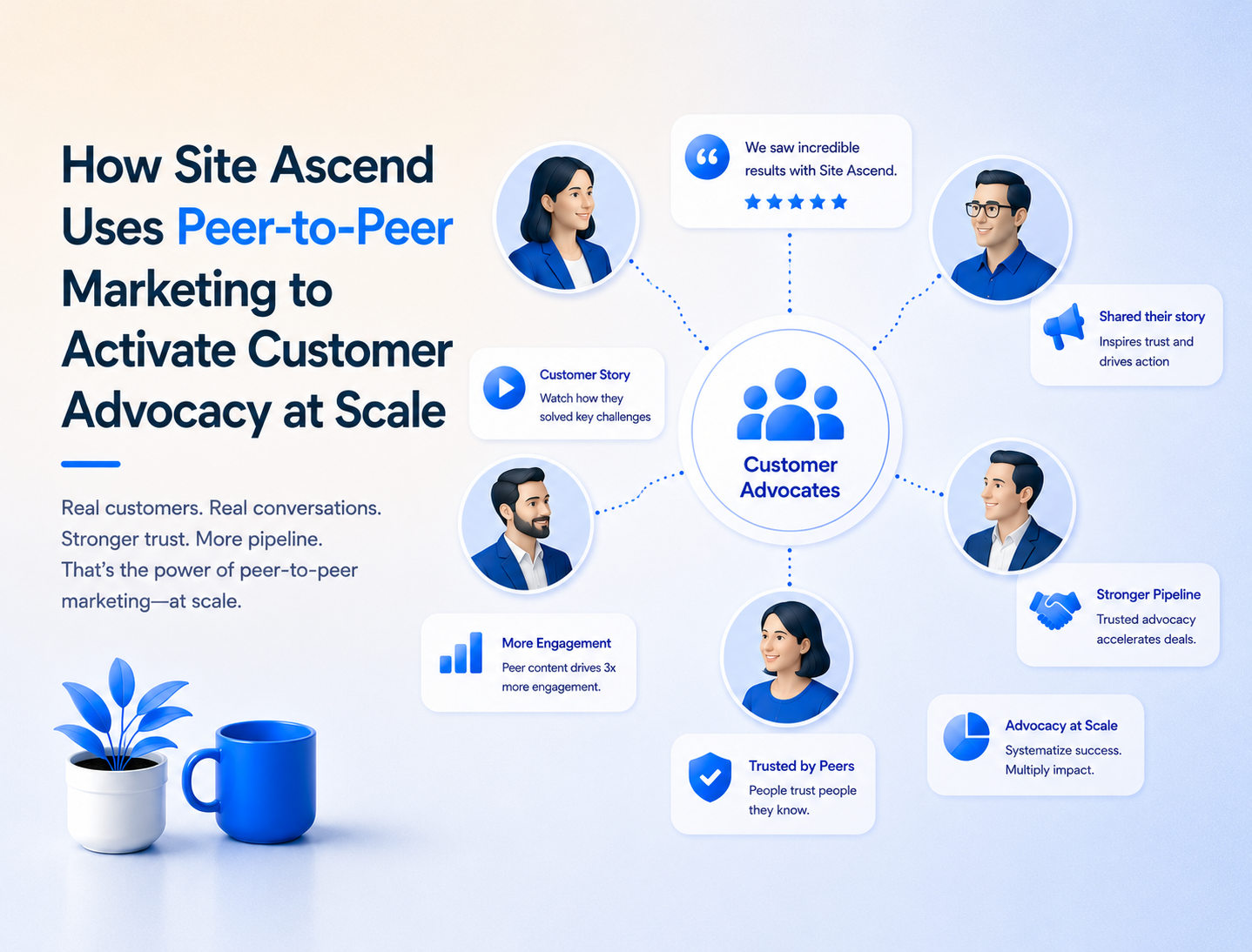
How Site Ascend Uses Peer‑to‑Peer Marketing to Activate Customer Advocacy at Scale
Demand Generation


Outbound marketing enables B2B technology companies to proactively engage high-value accounts instead of waiting for buyers to initiate contact. Discover how a strategic outbound approach helps demand generation teams reach decision-makers, accelerate sales cycles, and build a more predictable pipeline.
-
Outbound Marketing
Introduction
For years, B2B marketers have invested heavily in attracting buyers through content, SEO, webinars, and digital campaigns. These inbound strategies remain valuable, but they depend on one important assumption: that the right prospects will eventually find you.
Enterprise demand generation doesn't always work that way.
Many of the highest-value accounts aren't actively searching for solutions when you need to build pipeline. Others may recognize a business problem but haven't prioritized solving it. Waiting for these organizations to engage on their own often results in unpredictable pipeline, inconsistent revenue forecasting, and missed market opportunities.
That's why outbound marketing continues to play a critical role in enterprise demand generation. Rather than waiting for demand to appear, outbound enables organizations to proactively engage strategic accounts, introduce new opportunities, and create meaningful conversations with decision-makers who might otherwise remain out of reach.
For B2B technology companies seeking consistent pipeline growth, outbound marketing isn't a replacement for inbound—it's a necessary complement.
What Outbound Marketing Means for Demand Generation Marketers
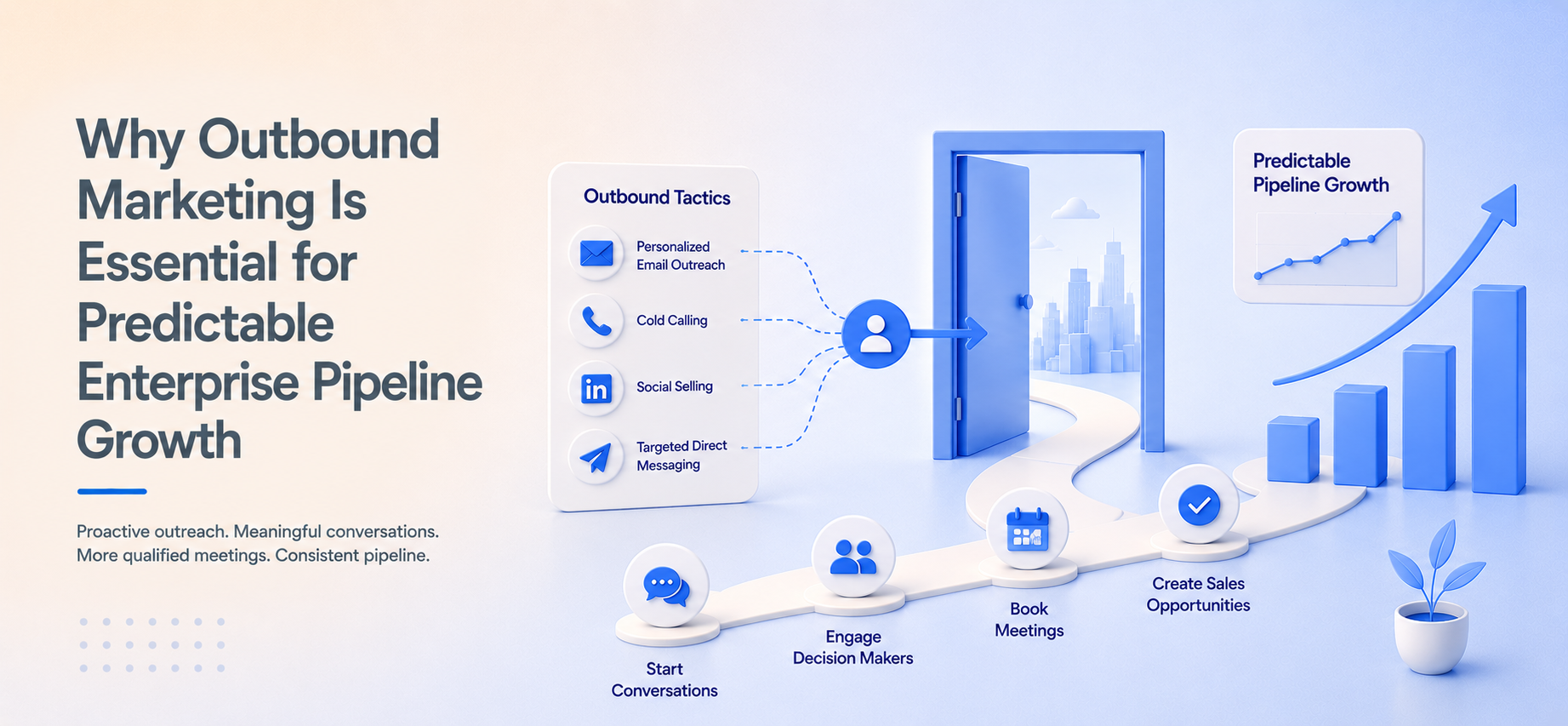
Outbound marketing is the proactive process of initiating conversations with targeted prospects instead of waiting for them to engage first. Unlike broad awareness campaigns designed to attract unknown audiences, outbound focuses on reaching specific organizations and stakeholders that closely match an ideal customer profile.
For demand generation leaders, outbound marketing provides greater control over pipeline creation. Instead of relying solely on existing market demand, marketing and sales can deliberately engage target accounts, introduce relevant business challenges, and begin conversations that align with strategic growth objectives.
Modern outbound marketing is no longer about maximizing activity. It's about delivering relevant, personalized outreach that creates value for prospective buyers and opens the door to qualified sales discussions.
Common Challenges Marketers Face
One of the biggest outbound mistakes is prioritizing volume over precision. Large prospect lists and generic messaging may create activity, but they rarely generate meaningful conversations with enterprise decision-makers.
Another challenge is poor alignment between marketing and sales. If marketing targets one set of accounts while sales focuses elsewhere, outbound efforts become fragmented and difficult to measure.
Many organizations also fail to personalize outreach based on industry, organizational priorities, or stakeholder responsibilities. Executive buyers are far less likely to engage with messaging that feels generic or product-focused.
Finally, outbound performance is often evaluated using emails sent or calls completed instead of meetings booked, opportunities created, and pipeline influenced. Activity alone doesn't indicate business impact.



.png)

%201.png)


.png)


Solutions That Work
Focus on Account Quality Before Outreach
Successful outbound programs begin with disciplined account selection. Prioritize organizations based on strategic fit, revenue potential, buying characteristics, and market opportunity rather than building the largest possible prospect list. Better targeting almost always produces stronger conversations.
Personalize Around Business Challenges
Executive decision-makers respond to insights—not generic pitches. Tailor outreach around industry trends, operational challenges, business objectives, or competitive pressures that are relevant to each account. Demonstrating understanding creates credibility and improves engagement.
Coordinate Marketing and Sales Activities
Outbound works best when marketing and sales operate from a shared account strategy. Align messaging, outreach timing, qualification criteria, and follow-up responsibilities so prospects experience one coordinated buying journey instead of disconnected interactions.
Measure Conversation Quality, Not Outreach Volume
Success should be measured by qualified meetings, executive engagement, opportunity creation, and pipeline progression rather than emails delivered or calls completed. Focusing on business outcomes encourages continuous improvement instead of maximizing activity.
Where Site Ascend Fits
Developing an outbound strategy is only one part of building predictable pipeline—consistent execution is what turns strategy into results. Site Ascend helps technology companies operationalize outbound programs through Executive Meetings with director-level and above decision-makers, Channel Marketing initiatives that support partner-led outreach, Event Marketing campaigns that generate qualified registrants, and Lead Qualification services that validate buyer readiness before opportunities move to sales. These programs help organizations scale outbound efforts while maintaining a focus on qualified pipeline rather than activity.
Actionable Steps for Marketers
Conduct an Outbound Pipeline Readiness Review
Rather than asking whether your team is sending enough outreach, evaluate whether your outbound strategy is capable of consistently producing qualified opportunities.
Step 1: Audit Your Target Account List
Review your target accounts against your ideal customer profile. Remove organizations that no longer align with your market strategy and prioritize those with the greatest revenue potential and strongest business fit.
Step 2: Evaluate Message Relevance
Read recent outbound messaging from the perspective of an executive buyer. Does it address a meaningful business challenge, or does it immediately discuss products and services? Strong outbound messaging earns attention by offering insight first.
Step 3: Review Sales and Marketing Alignment
Confirm that marketing, business development, and sales teams are targeting the same accounts, using consistent messaging, and following shared qualification standards.
Step 4: Analyze Conversion Points
Identify where outbound opportunities slow down. Is engagement low? Are meetings not being booked? Are qualified conversations failing to become pipeline? Improving one weak stage often has a significant impact on overall results.
Step 5: Measure Pipeline Predictability
Compare outbound activity with business outcomes. Determine how consistently outreach generates qualified meetings, opportunities, and revenue. Reliable forecasting depends on repeatable conversion rates—not simply increased activity.
Performing this review each quarter helps organizations refine their outbound strategy while improving the consistency of pipeline generation.
Comparison of Market Solutions
Organizations take several approaches to outbound marketing depending on their resources and growth objectives.
Some build fully internal outbound teams that manage prospecting, messaging, qualification, and meeting generation. This provides maximum control but often requires significant investment in hiring, training, technology, and ongoing management.
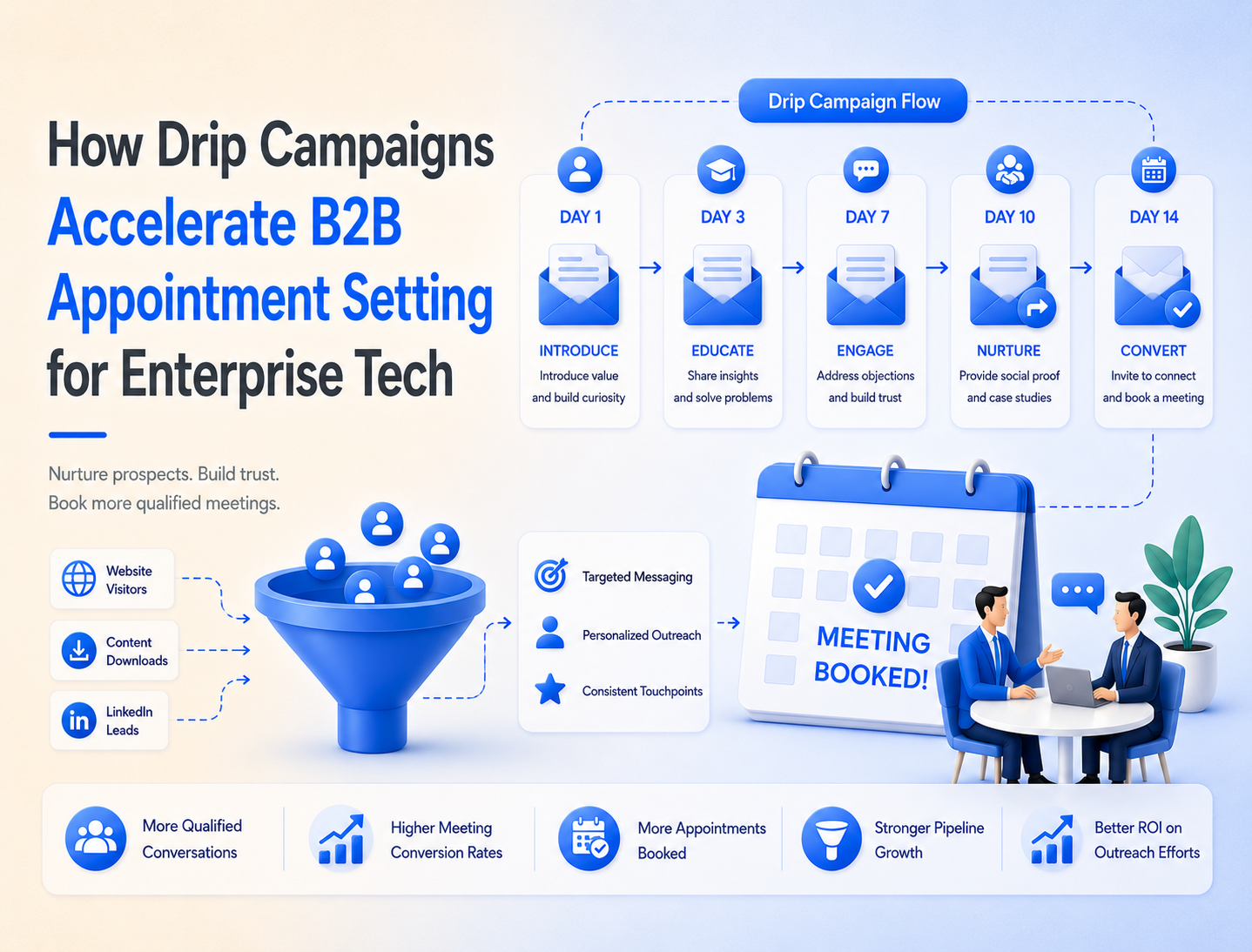
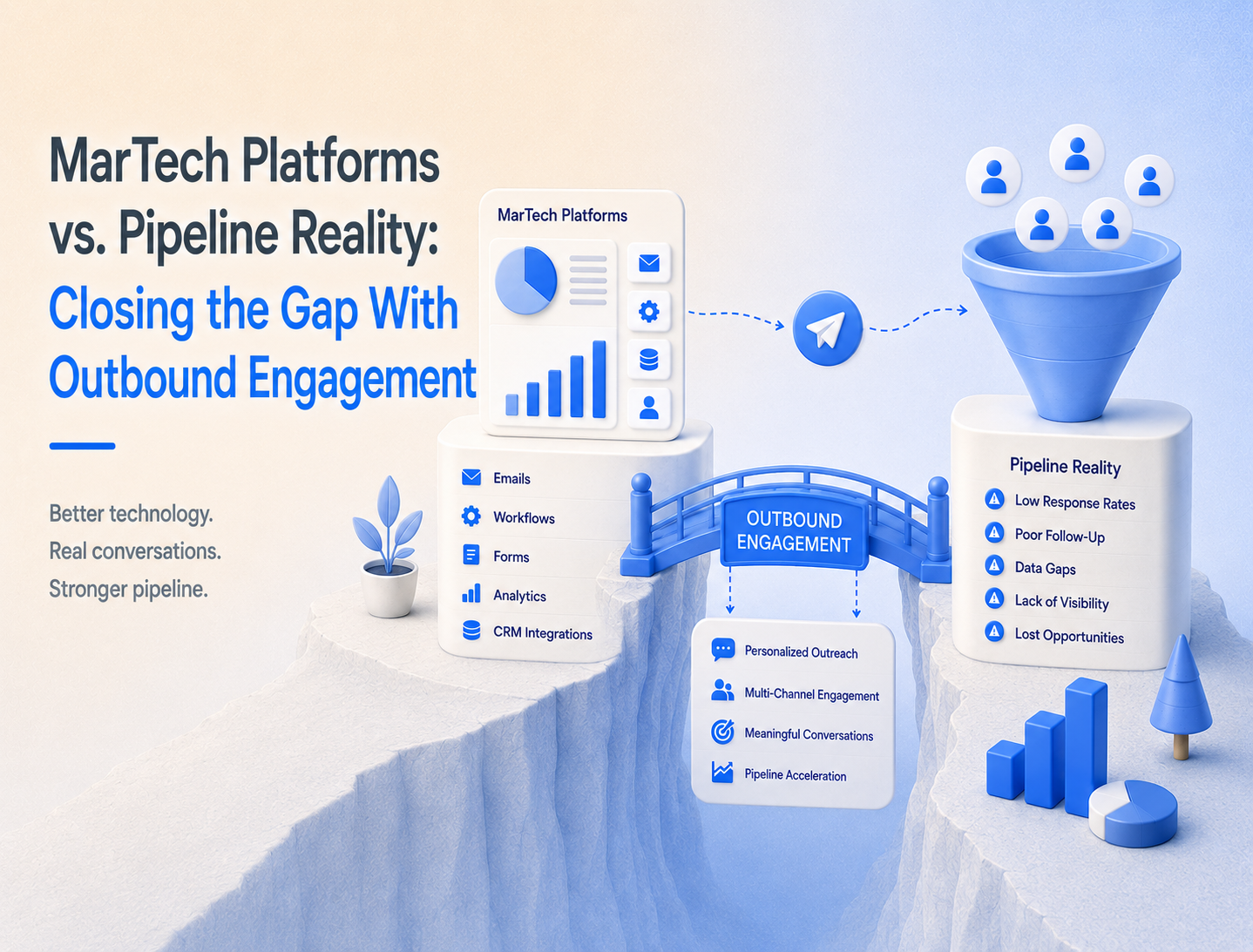
Others rely heavily on automation platforms to increase outreach volume and streamline prospecting workflows. While automation improves efficiency, it delivers the strongest results when paired with thoughtful account selection, personalization, and coordinated human engagement.
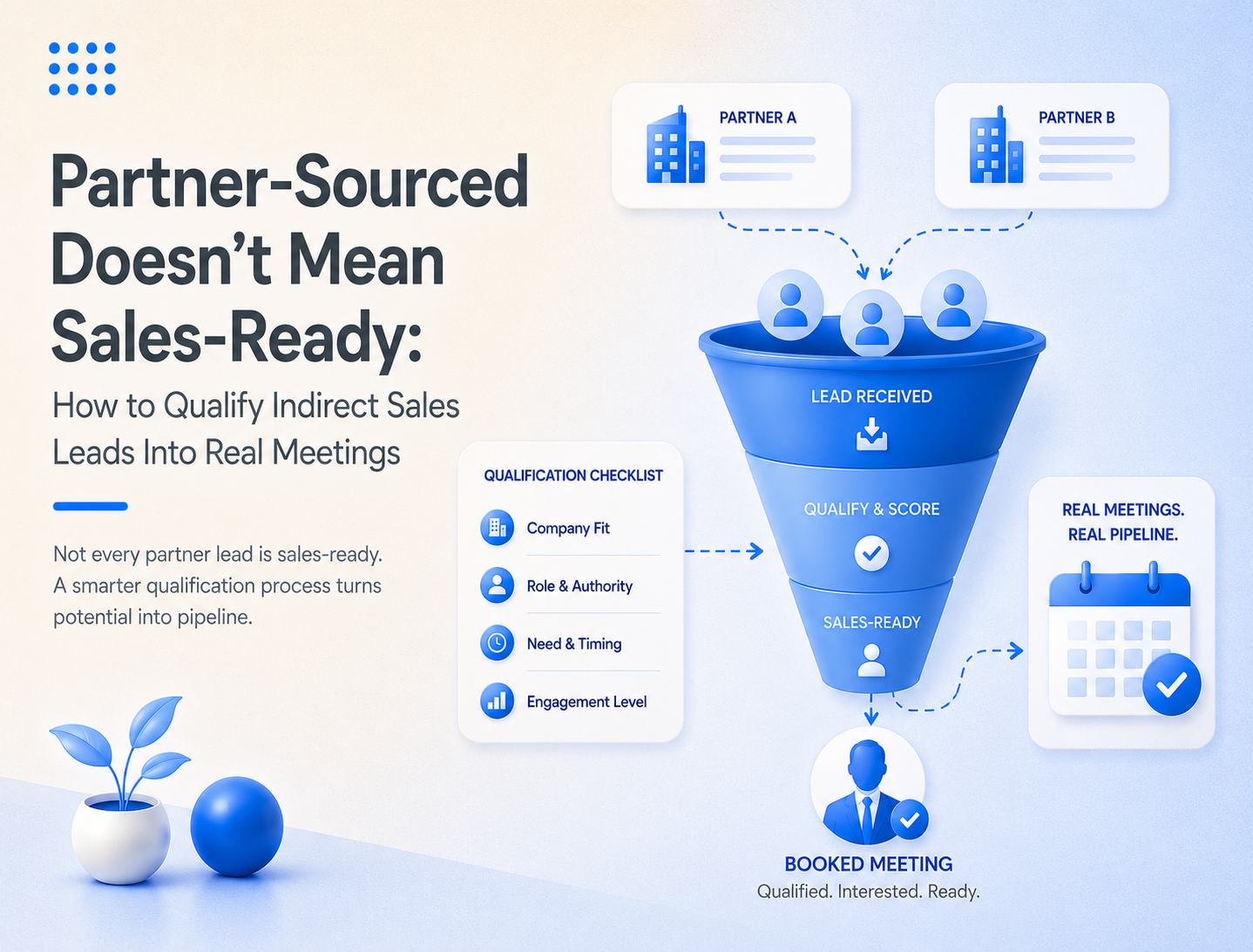
Many enterprise organizations also extend their internal capabilities by partnering with specialized outbound execution providers. These partners support activities such as executive outreach, lead qualification, partner engagement, and appointment setting, allowing internal marketing and sales teams to focus on strategy, account planning, and opportunity development.
The strongest outbound programs rarely depend on a single approach. Instead, they combine strategic targeting, coordinated execution, disciplined measurement, and continuous optimization to create predictable pipeline over time.
Conclusion
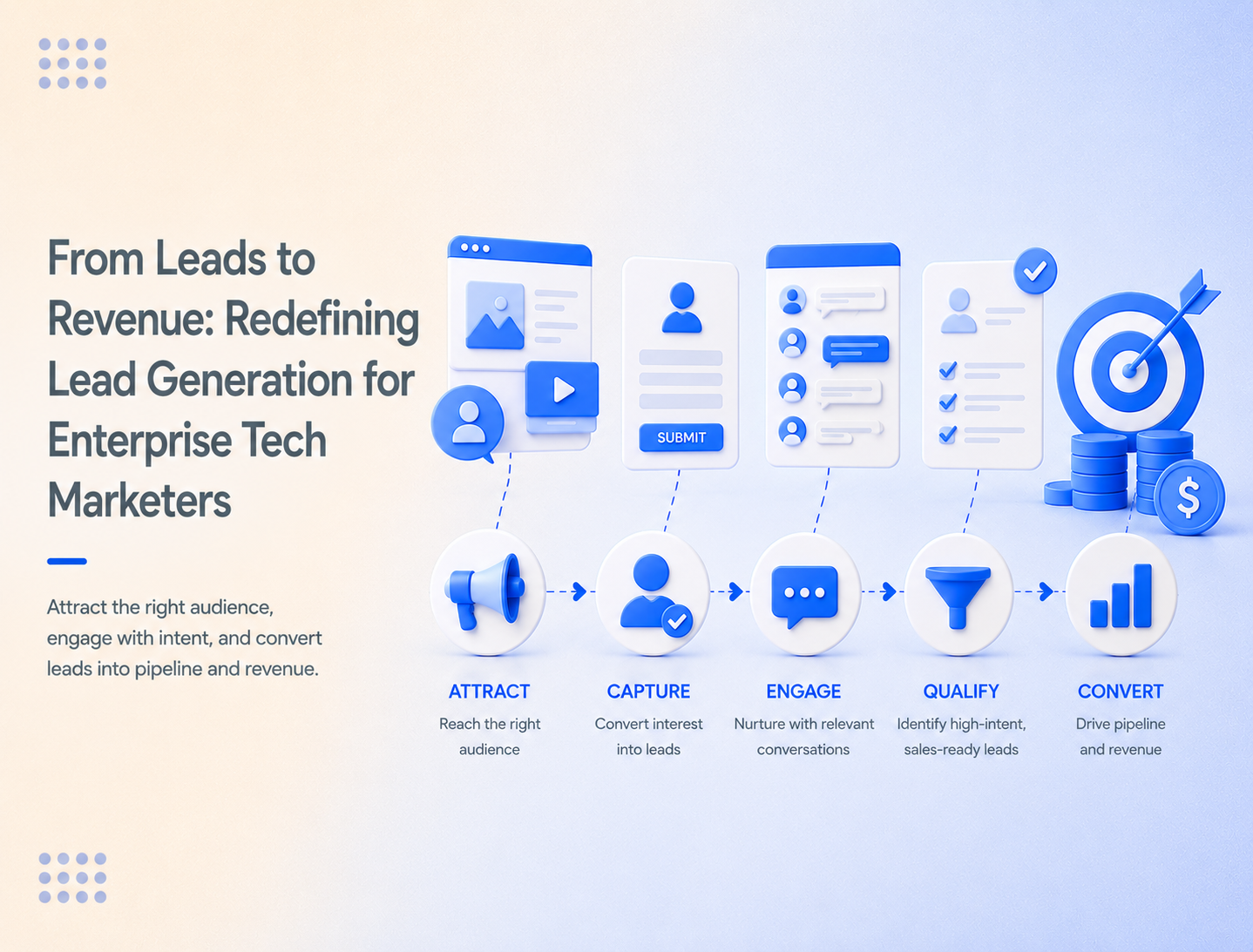
Outbound marketing continues to be one of the most reliable ways for B2B technology companies to build predictable enterprise pipeline because it gives organizations greater control over who they engage and when those conversations begin.
By focusing on high-value accounts, personalizing outreach around business challenges, aligning marketing and sales, and measuring success through qualified opportunities rather than activity, organizations can consistently create stronger pipeline and more accurate revenue forecasts.
If your organization is looking to strengthen its outbound strategy and generate more qualified conversations with enterprise decision-makers, contact Site Ascend.
Is outbound marketing still effective for enterprise B2B companies?

What makes modern outbound marketing different from traditional cold outreach?
How should outbound marketing success be measured?


Start your pilot campaign today and explore the full range of Site Ascend's demand generation capabilities. Experience firsthand how we can enhance your efficiency, streamline your processes, and drive growth.
RELATED