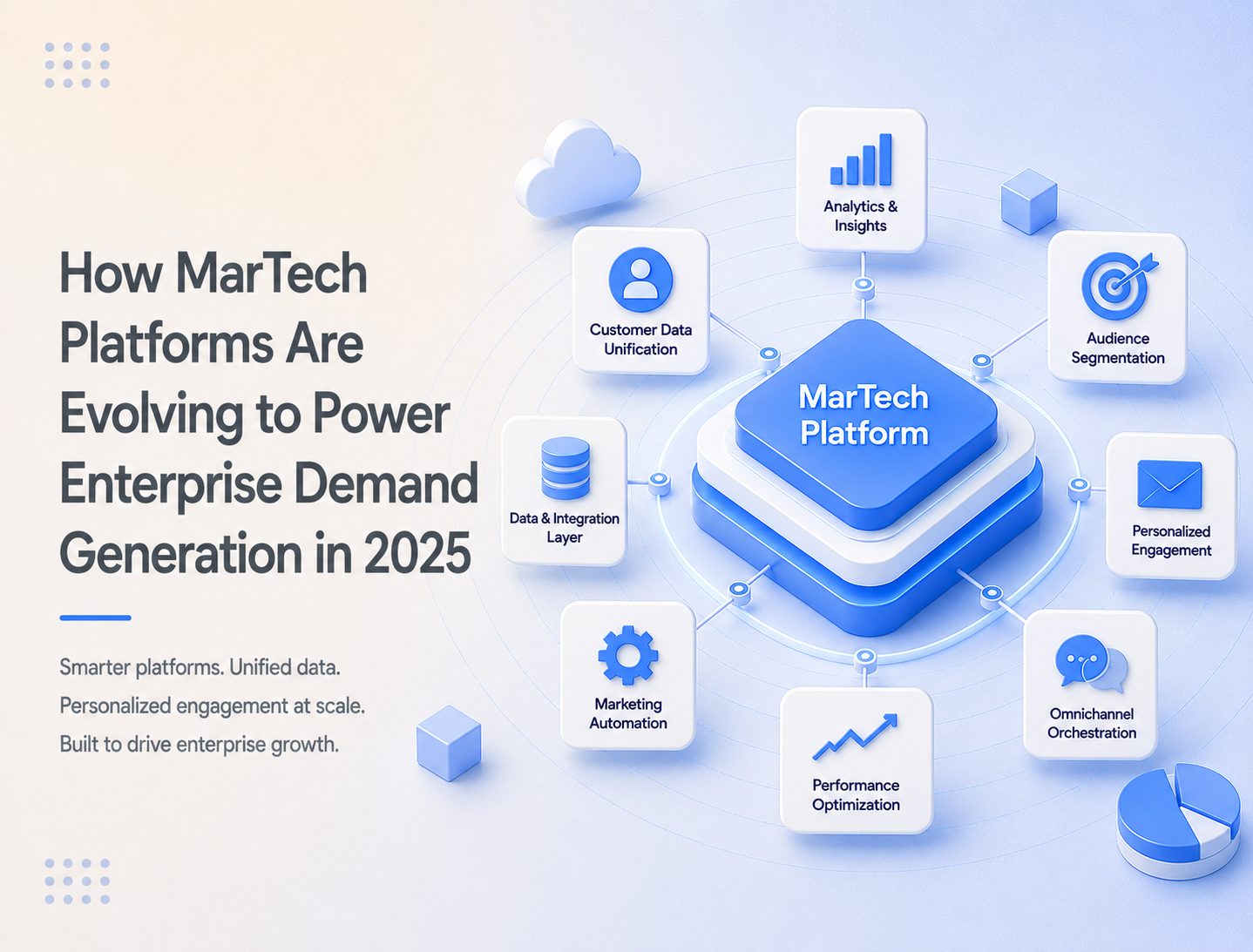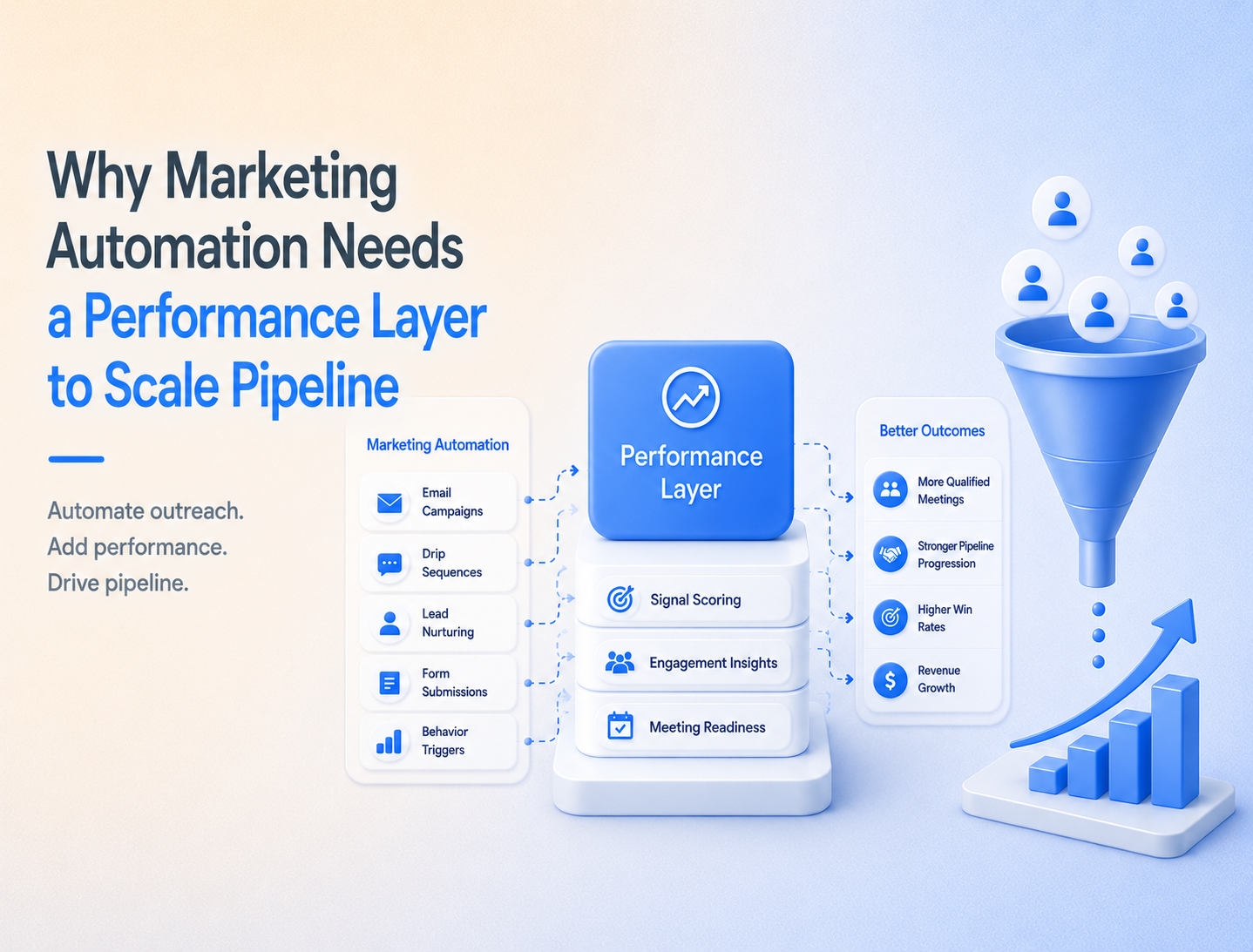
Why Marketing Automation Needs a Performance Layer to Scale Pipeline
Marketing Automation


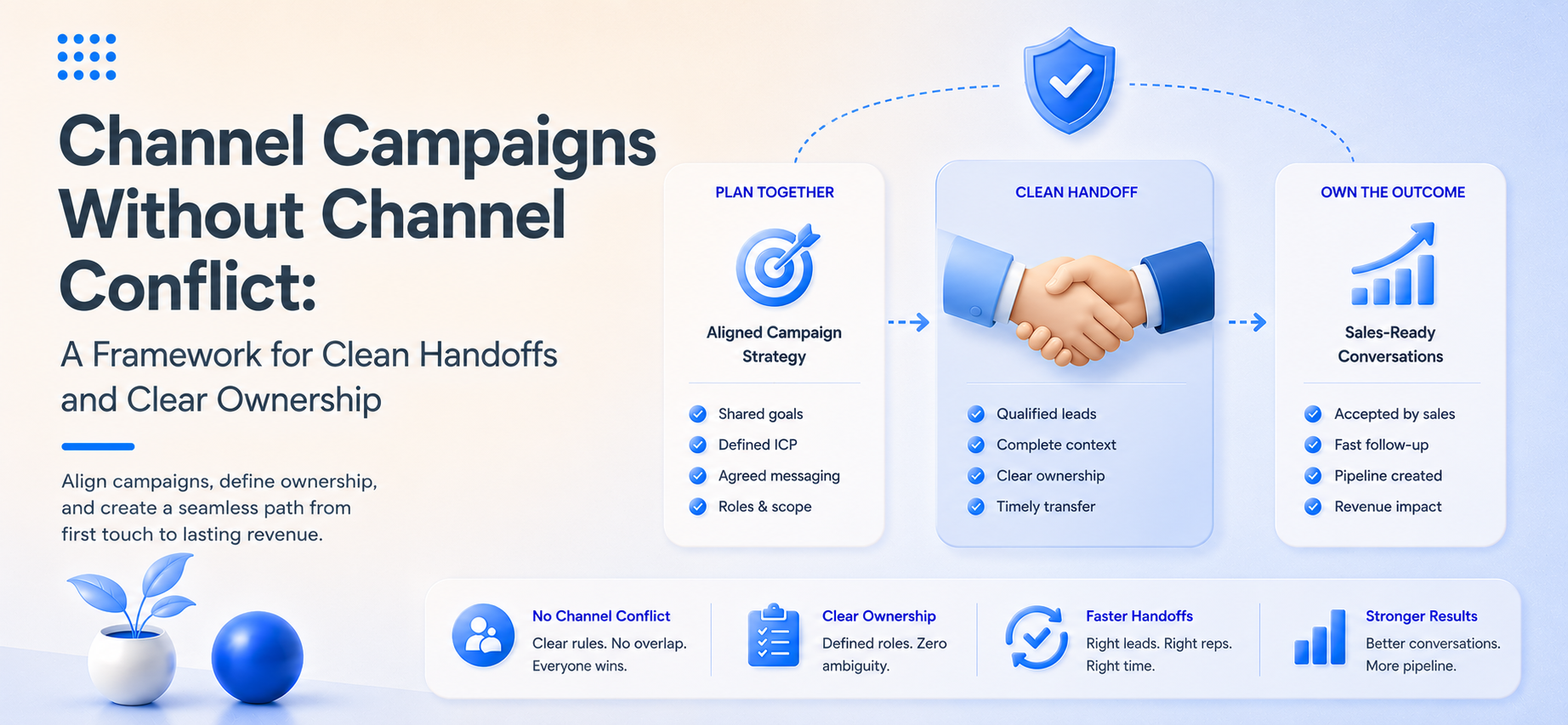
Channel campaigns fail when ownership is unclear and follow-up gets messy. This framework shows enterprise demand gen teams how to prevent channel conflict with clean handoffs, clear rules of engagement, and a consistent path from partner interest to Director+ meetings that occur.
-
Channel & Partner Marketing
Introduction
Channel campaigns are supposed to be the best of both worlds: you get partner credibility and distribution, plus a clear path to new accounts.
In practice, they often create a third thing—channel conflict. Not always the dramatic kind. The quiet kind. The kind that shows up as:
The root issue usually isn’t the campaign theme, the partner list, or the offer.
It’s the operating model behind the campaign—specifically, handoffs and ownership.
This post lays out a practical framework enterprise teams can use to run channel campaigns that scale without stepping on toes: clean ownership, consistent follow-up, and Director+ conversations that actually progress.
What Channel Campaigns Means for Demand Generation Marketers and other titles that meet Site Ascend’s ICP
For enterprise demand gen and partner marketing, “channel campaigns” aren’t just co-branded activity. They’re a coordinated revenue motion that has to satisfy three stakeholders at the same time:
The partner: protect trust, protect brand, protect relationship economics.
Sales: don’t waste time, don’t confuse the account, create real next steps.
Marketing: prove ROI with outcomes that stand up in pipeline reviews.
That’s why channel campaigns require a different standard than most demand gen plays. You’re not just generating demand—you’re orchestrating it across multiple teams and brands.
When channel campaigns work, they do three things reliably:
Common Challenges Marketers Face
Channel conflict is rarely a single mistake. It’s usually a chain reaction created by ambiguity.
Ownership drift: “everyone supports” becomes “no one owns”
The partner thinks your team will follow up. Your team assumes the partner will. Sales assumes an SDR motion is in place.
Nobody is trying to drop the ball. The system just never assigns a quarterback.
Account confusion: too many touches, not enough coordination
A prospect gets an invite from a partner rep, a follow-up from your SDR, a separate outreach from an AE, and a reminder from a marketing automation tool.
Even if each touch is “reasonable,” the combined effect is chaos. Enterprise stakeholders don’t lean into chaos—they opt out.
Handoff gaps: campaign engagement arrives without context
A registrant is not a qualified conversation. A download is not intent. A “warm lead” is often just a moment of curiosity.
When the follow-up motion doesn’t capture basic context (why now, what triggered interest, what role they play, what next step makes sense), sales sees the lead as friction—not opportunity.
Seniority mismatch: activity looks good, meetings don’t progress
Channel campaigns can produce volume. Volume can disguise a core issue: the wrong roles are engaging.
If you want enterprise progression, Director+ stakeholders need to show up early enough to sponsor next steps. Otherwise, your campaign “works” on paper and fails in pipeline.
Partner risk: the campaign feels like it’s being “taken over”
Partners are allergic to programs that put their brand at risk or make them feel sidelined.
If follow-up is aggressive, inconsistent, or off-message, channel conflict becomes inevitable—even if pipeline is being created.



.png)

%201.png)


.png)


Solutions That Work
The fix isn’t “more coordination meetings.” It’s a campaign operating model that makes ownership visible and execution consistent.
1) Define a single owner for follow-up—before launch
Channel campaigns need a named owner for outreach and meeting progression. Not a shared Slack channel. A defined owner.
When Site Ascend supports Channel Marketing, that ownership is built into the program: follow-up is not a “handoff later.” It’s part of the execution layer.
2) Use a white-labeled outreach motion to protect the partner relationship
The fastest way to reduce channel conflict is to reduce message variance. White-labeled outreach keeps the experience consistent and partner-safe while still moving fast enough to convert interest into conversation.
This is one of the biggest reasons channel programs stall: the partner wants consistency and control, while the vendor wants speed and outcomes. White-labeling can satisfy both.
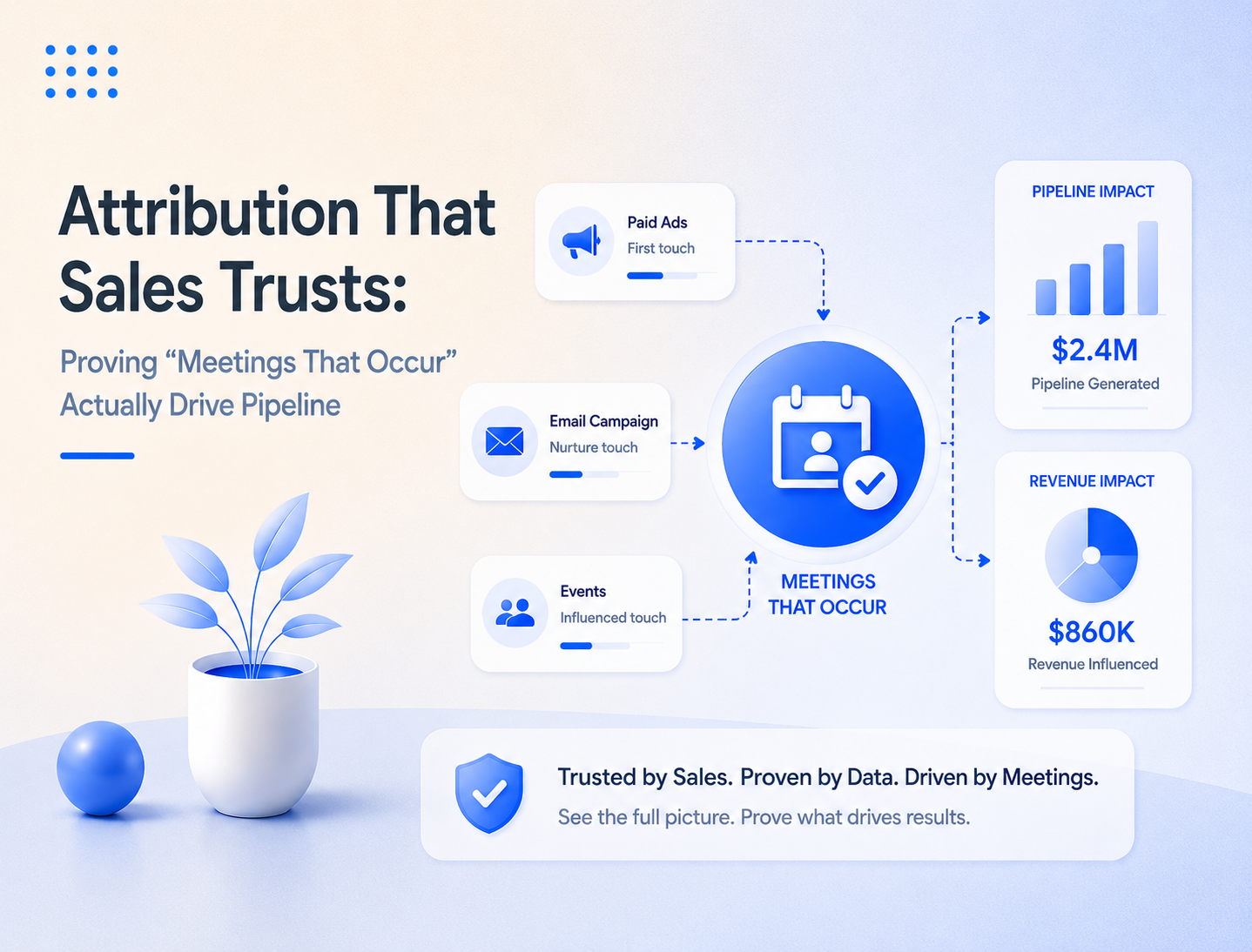
3) Anchor success to meetings that occur—not “leads delivered”
Partner programs create a lot of “deliverables.” But enterprise teams don’t renew budgets based on deliverables. They renew budgets based on outcomes.
Site Ascend’s model is designed around only paying for meetings that occur, which creates an important discipline in channel campaigns:
It also gives you a clean narrative internally: “Here’s what the spend produced.”
4) Make Director+ a default, not a stretch goal
Channel campaigns are often treated like broad awareness plays with a pipeline hope attached.
If the goal is pipeline, you need seniority standards that match that goal. Site Ascend’s targeting is Director-level and above only, which helps prevent the classic pattern of high activity and low progression.
5) For event-based channel campaigns, treat registration as step one—not the finish line
Many channel campaigns are event-led: webinars, lunch-and-learns, field events, sponsored sessions.
Site Ascend’s Event Marketing focuses on driving registrants via outbound dialing and then supporting attendance through an SMS workflow—without day-of event services. That matters because the event outcome isn’t “registrants.” It’s “attendance + next steps.”
When your follow-up motion is built to carry prospects from registration through attendance to meeting, conflict drops and conversion rises.
6) Build real-time visibility so you can manage the motion mid-flight
Channel campaigns fail quietly when nobody can see what’s happening until the wrap-up meeting.
A real-time reporting dashboard changes the behavior of the program. It creates early signals:
When you can see friction quickly, you can fix it before it becomes “channel conflict.”
Actionable Steps for Marketers
Here’s a practical checklist you can apply to your next channel campaign to reduce conflict and increase conversion—without adding unnecessary complexity.
Channel campaigns conflict-prevention checklist
Clarify who owns follow-up
Set an “account coordination rule”
Standardize the follow-up motion
Align on the success metric that sales will accept
Instrument the program like revenue
Have a clean escalation path
Comparison of Market Solutions
Most enterprise teams choose one of a few paths for channel campaign execution. The tradeoffs are predictable.
Model 1: Partner-led follow-up
This works when partners have consistent coverage, strong process, and the same urgency you do. But it often varies widely by partner. One partner moves fast and qualifies well; another sits on leads for weeks. The result is inconsistent ROI—and an internal debate about whether the channel is “working.”
Model 2: In-house SDR/AEs handle everything
This can be effective when you have stable SDR capacity and tight routing. The challenge is prioritization. Channel leads frequently compete with inbound, outbound, events, and existing account plays. Even good leads can become “later,” and “later” is where enterprise momentum goes to die.
Model 3: Outsourced execution optimized for activity
Some options can generate volume quickly, but when the model is centered on effort, lead counts, or booked meetings (instead of meetings held with the right seniority), channel conflict tends to rise: messaging inconsistency, duplicate touches, and meetings that don’t progress.
Model 4: A partner-safe follow-up layer designed for outcomes
This is where performance-aligned execution fits best: white-labeled outreach, Director+ targeting, and a definition of success anchored to meetings that occur—supported by real-time visibility. The program becomes easier to defend internally because the outcome is concrete, and it becomes easier to run externally because partners aren’t asked to improvise follow-up.
This is the lane Site Ascend is built for—helping enterprise teams run channel campaigns that protect partner trust while producing measurable, sales-credible outcomes.
Conclusion
Channel conflict isn’t a channel problem. It’s an operating problem.
When ownership is unclear, outreach is inconsistent, and follow-up lacks a shared standard, even well-designed channel campaigns can quietly break. But when you treat follow-up as the core system—clear ownership, partner-safe messaging, Director+ targeting, and outcomes tied to meetings held—channel campaigns become one of the most defensible growth levers in enterprise demand gen.
If you’re ready to turn channel campaigns into partner-sourced pipeline you can defend, start a pilot with Site Ascend and measure success the way sales does: Director+ meetings that occur.
How do we run channel campaigns without stepping on our partners’ toes?

Who should own follow-up: partner marketing, demand gen, or sales?
What’s the best metric for channel campaign ROI?


Start your pilot campaign today and explore the full range of Site Ascend's demand generation capabilities. Experience firsthand how we can enhance your efficiency, streamline your processes, and drive growth.
RELATED