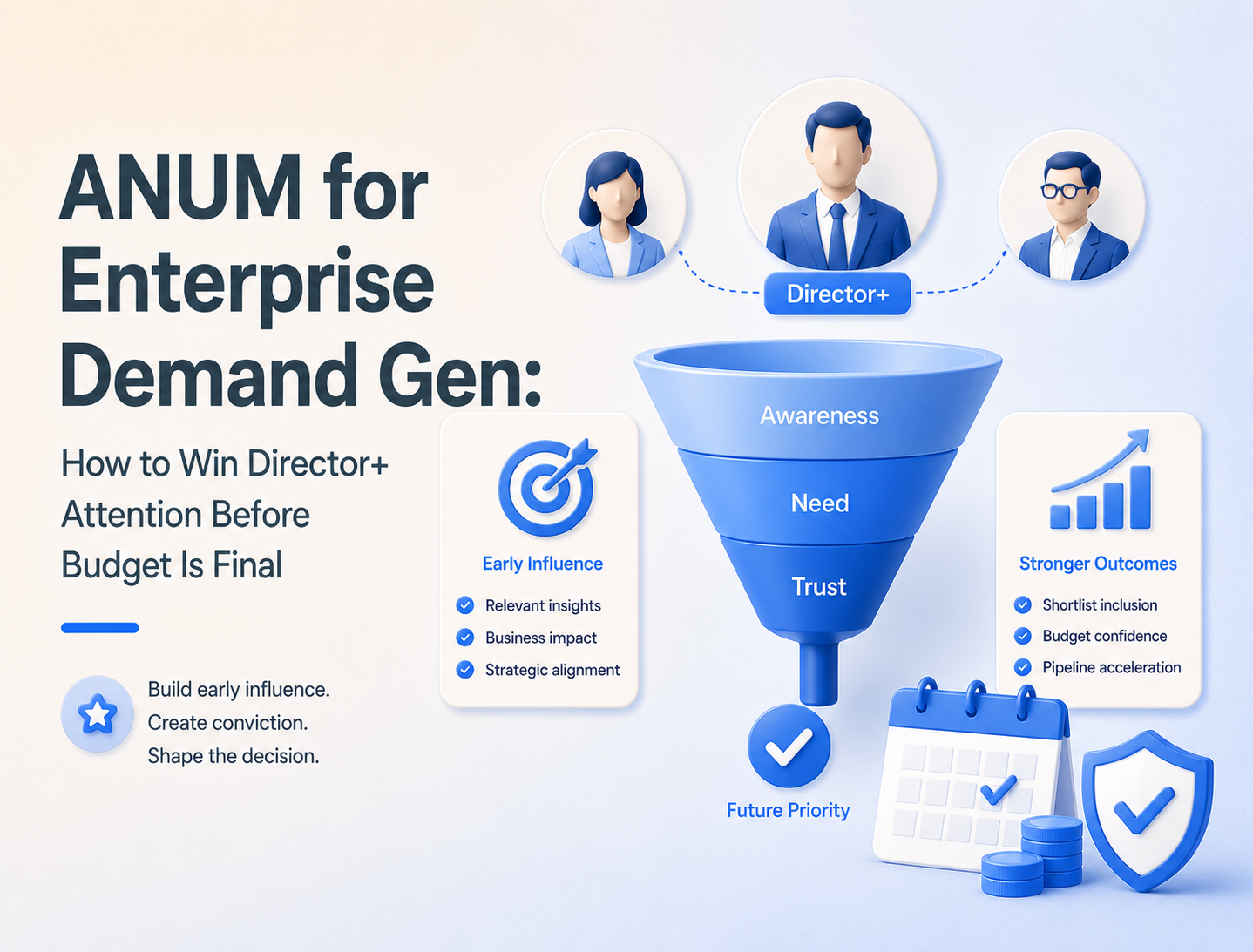
ANUM for Enterprise Demand Gen: How to Win Director+ Attention Before Budget Is Final
Enterprise Demand Generation


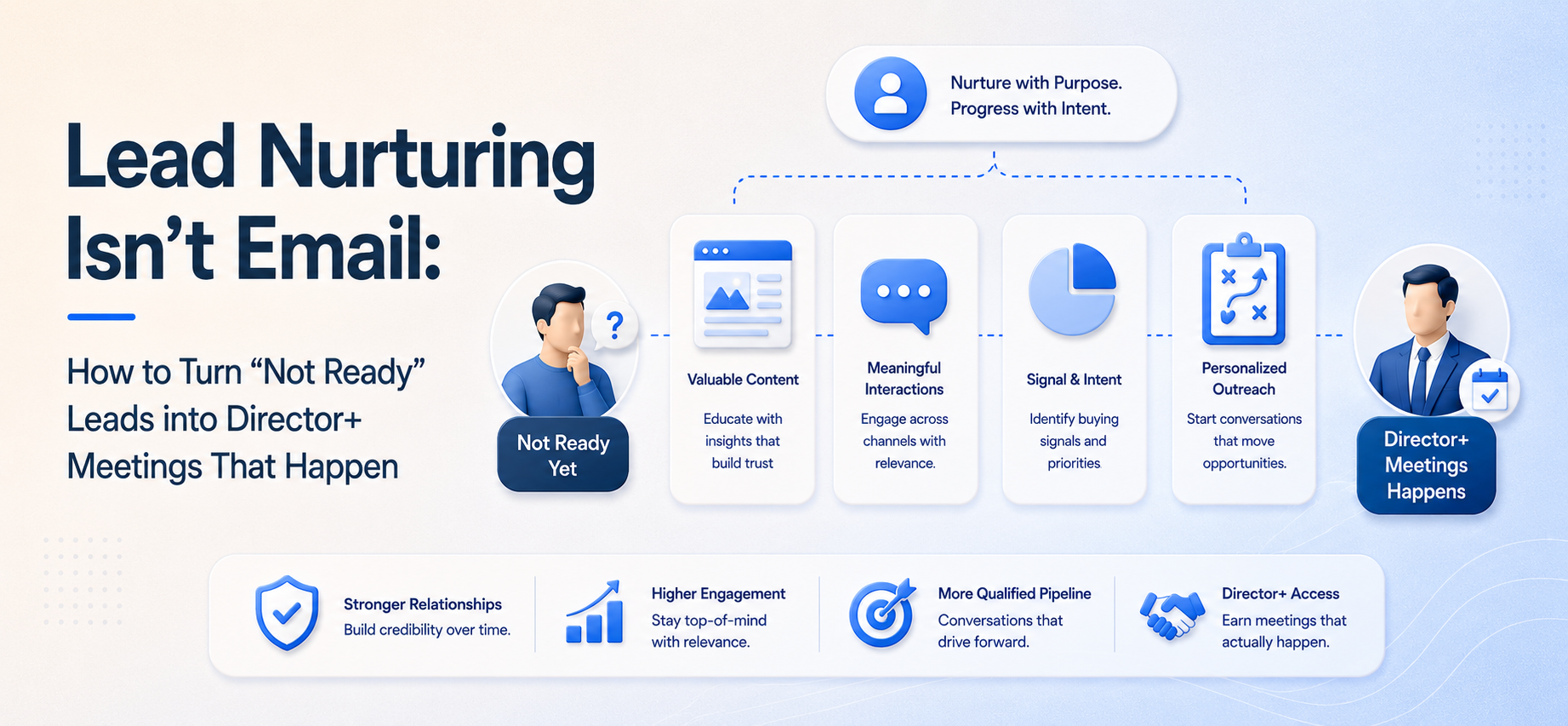
Lead nurturing isn’t just email—it’s turning uncertainty into meeting-ready clarity. This blog explains how enterprise demand gen teams move “not ready” leads forward by validating authority, need, and timing through human qualification, then converting them into Director+ meetings that occur and drive next steps with Site Ascend.
-
Demand Generation
Introduction
If you run demand gen at a tech company, you already know the quiet truth about lead nurturing:
Most “nurture” programs are really lead storage.
Leads enter a workflow, collect a few clicks, and then… nothing changes. Sales still won’t touch them. The buyer still isn’t ready. And the same names show up quarter after quarter with a different score and the same outcome.
The issue isn’t that email is bad. It’s that email-only nurturing rarely answers the questions that move enterprise buying forward:
When you can’t answer those, “not ready” leads stay “not ready.”
This blog lays out a modern lead nurturing approach built for enterprise tech: use nurture to earn a human conversation, then use that conversation to create Director+ meetings that occur with clear next steps. We’ll also show how Site Ascend supports that shift through Lead Qualification and Executive Meetings (and, when relevant, channel and event motions where leads often stall).
What lead nurturing means for demand generation marketers
Traditional lead nurturing is defined as “moving leads through the funnel over time.”
In practice, enterprise demand gen needs a sharper definition:
Lead nurturing is the process of converting uncertainty into clarity—until a sales conversation becomes worth it.
That means your nurture program isn’t successful because it produces engagement. It’s successful when it produces:
If your nurture motion isn’t producing those, it’s not nurturing. It’s waiting.
Common challenges marketers face
“Not ready” becomes an excuse for weak qualification
A lead can be early and still be valuable. But “not ready” often hides the real problem: you don’t have enough context to know what would make them ready.
Seniority stays unclear
Nurture programs frequently engage practitioners while the real decision sponsor stays invisible. The lead looks “warm,” but the buying committee hasn’t formed.
Timing triggers are missing
Enterprise deals accelerate when something changes: renewal windows, mandates, deadlines, audits, migrations, planning cycles. Email nurture rarely uncovers these triggers unless the buyer volunteers it.
Too many leads, too little human capacity
The moment you have volume, your team defaults to automation. But automation can’t qualify urgency, authority, or next-step readiness by itself.
The handoff moment creates friction
Sales hears “they’re engaged.” Sales asks “so what?” Marketing can’t answer with specificity, and trust erodes.



.png)

%201.png)


.png)


Solutions that work
The strongest nurture programs don’t try to “educate someone into buying.” They do something more practical:
They identify who is worth a conversation, then use that conversation to confirm whether a meeting should happen.
This is where Site Ascend fits—because Site Ascend’s services are built around moving leads into real conversations and accountable meetings, not managing long-form nurture content.
Lead Qualification: the missing layer between nurture and sales
A high-performing nurture system has a middle step:
Marketing engagement → qualification conversation → meeting (or disqualify/park with reasons).
Site Ascend’s Lead Qualification program is designed to run that middle step at scale for demand gen teams.
What the qualification conversation is built to surface:
Authority
Need
Timing
Next step
The effect is immediate: you stop treating “nurture” as a holding pattern and start treating it as a filter that produces sales-ready meetings.
Executive Meetings: when you need Director+ conversations in target accounts
Some leads don’t stall because they’re early—they stall because your team can’t reliably reach the right stakeholders.
Site Ascend’s Executive Meetings program is designed to deliver:
For lead nurturing, this matters because it gives you a clean conversion target:
Your nurture motion should feed meetings that actually happen with decision-relevant attendees.
That turns “nurture ROI” into something you can defend in pipeline reviews.
Channel and event motions (when nurture starts outside your control)
Two common sources of “stuck” leads:
Partner/Channel leads
Event leads
Site Ascend supports:
When those motions are run with a meeting outcome in mind, they become nurture accelerators instead of lead warehouses.
Actionable steps for marketers
If your nurture program is producing clicks but not conversations, this is a practical reset you can implement quickly.
The “Conversation-First Nurture” checklist
Define what “ready” actually means
A lead is meeting-ready when you can answer:
Create a nurture exit that’s not a guess
Instead of “score threshold reached,” use signals that justify a human touch:
Standardize a short qualification script
You don’t need a long discovery call. You need clarity:
Measure nurture by outcomes, not opens
Three weekly metrics tell you whether nurture is working:
Triage “not ready” into reasons
Not ready is not a category. It’s a reason:
Those reasons become your optimization map.
Comparison of market solutions
Here’s the market landscape through a procurement lens—how organizations typically choose a nurture-related solution.
Lowest cost per activity
What you’re buying: touches, sends, and surface-level engagement.
Why teams choose it: it scales and looks efficient.
Where it breaks: activity doesn’t confirm authority, urgency, or next steps—so leads stay “not ready” indefinitely.
Predictable volume
What you’re buying: a steady stream of leads, registrations, or booked meetings.
Why teams choose it: forecasting feels easier.
Where it breaks: volume doesn’t guarantee that meetings occur or that the stakeholder is Director+—so sales trust doesn’t improve.
Defensible pipeline impact
What you’re buying: outcomes that map to revenue—qualification that validates readiness and meetings that occur with decision-relevant stakeholders.
Why teams choose it: it’s easier to defend in pipeline reviews.
Why Site Ascend fits: lead qualification that converts engagement into clarity, executive meetings targeted to Director+ stakeholders, accountability to meetings that occur, U.S.-based execution, and real-time reporting visibility.
Conclusion
Lead nurturing isn’t email. Email is a tool.
Real nurturing is what happens when uncertainty turns into clarity—until a sales conversation becomes the obvious next step.
If your “not ready” leads are piling up, a practical pilot can change the outcome quickly:
Contact Site Ascend to pilot a nurture-to-meeting motion designed to turn “not ready” leads into Director+ meetings that happen and convert into next steps.
Isn’t lead nurturing supposed to be automated?

How do we nurture without overwhelming sales?
What’s the biggest mistake teams make with lead nurturing?


Start your pilot campaign today and explore the full range of Site Ascend's demand generation capabilities. Experience firsthand how we can enhance your efficiency, streamline your processes, and drive growth.
RELATED