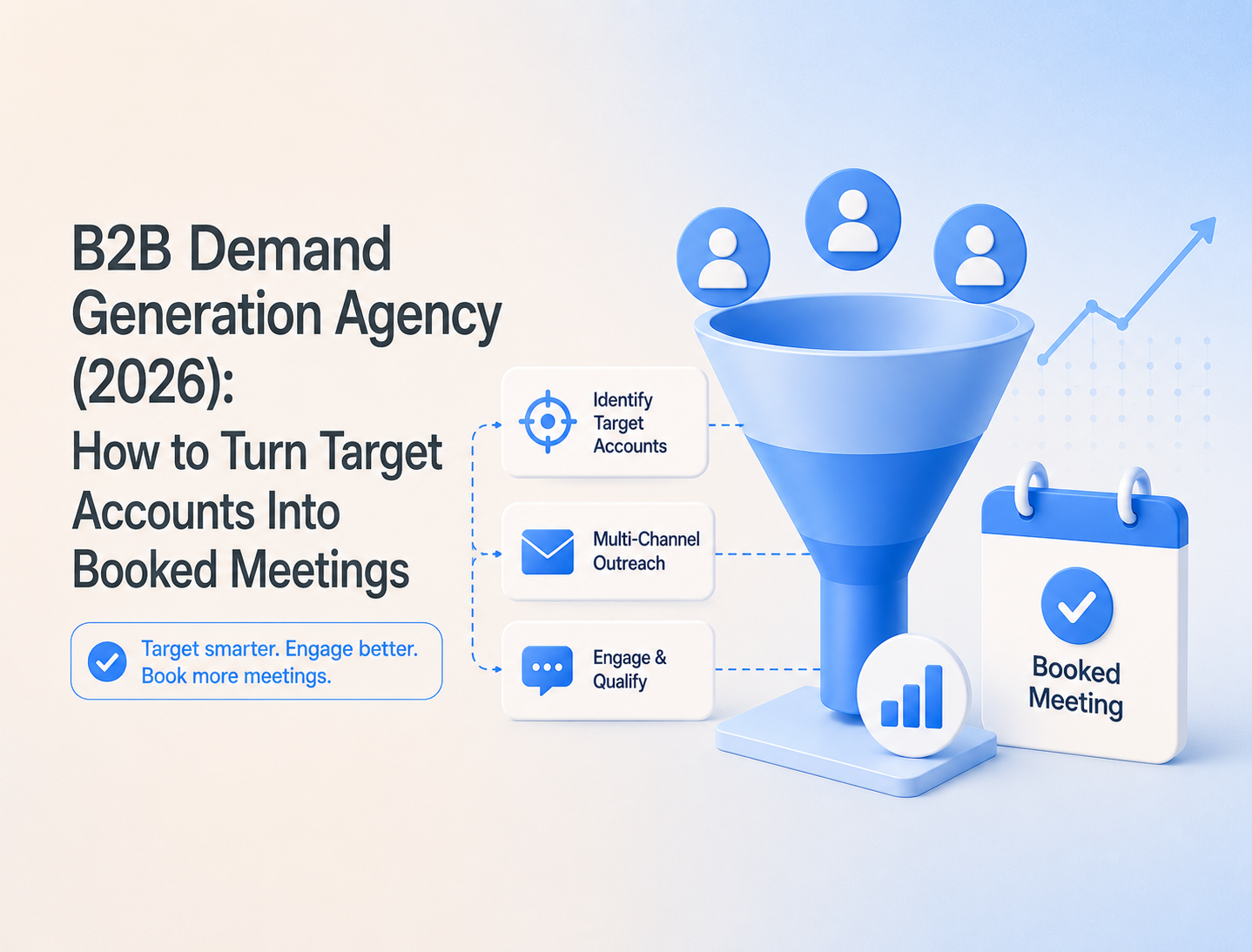
B2B Demand Generation Agency (2026): How to Turn Target Accounts Into Booked Meetings
Demand Generation


MQLs help prioritize follow-up, but they don’t prove pipeline. This blog explains why demand gen leaders are shifting ROI proof to meetings that occur—especially Director+ meetings—and how Site Ascend turns opt-ins into sales-ready conversations with higher show rates and next-step conversion.
-
Demand Generation
Introduction
If you run demand gen at a technology company, you’ve probably lived this sequence:
The uncomfortable truth is that MQLs are an internal measurement tool, not an external buying signal. They tell you someone engaged with marketing, but they rarely prove the three things revenue teams need to forecast:
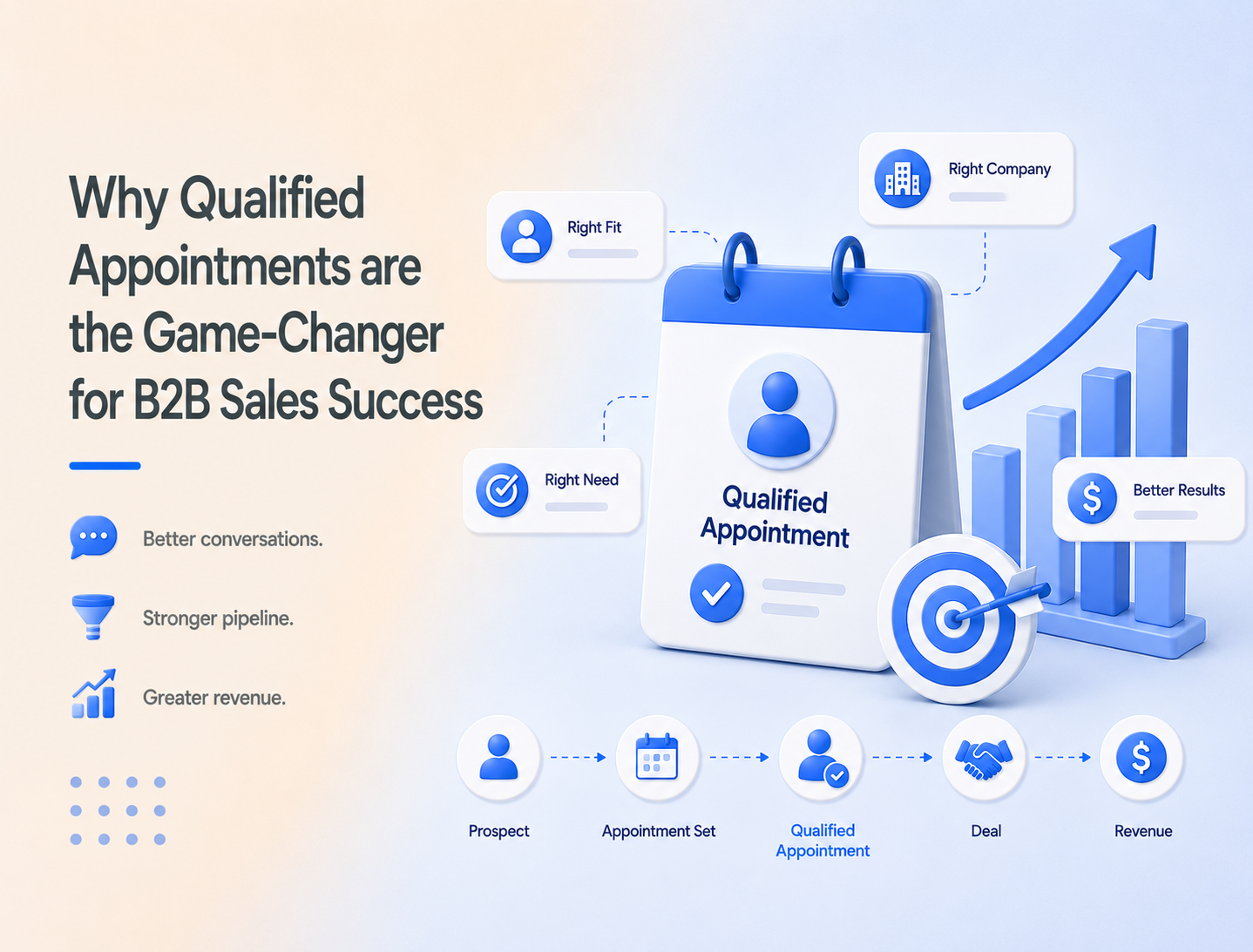
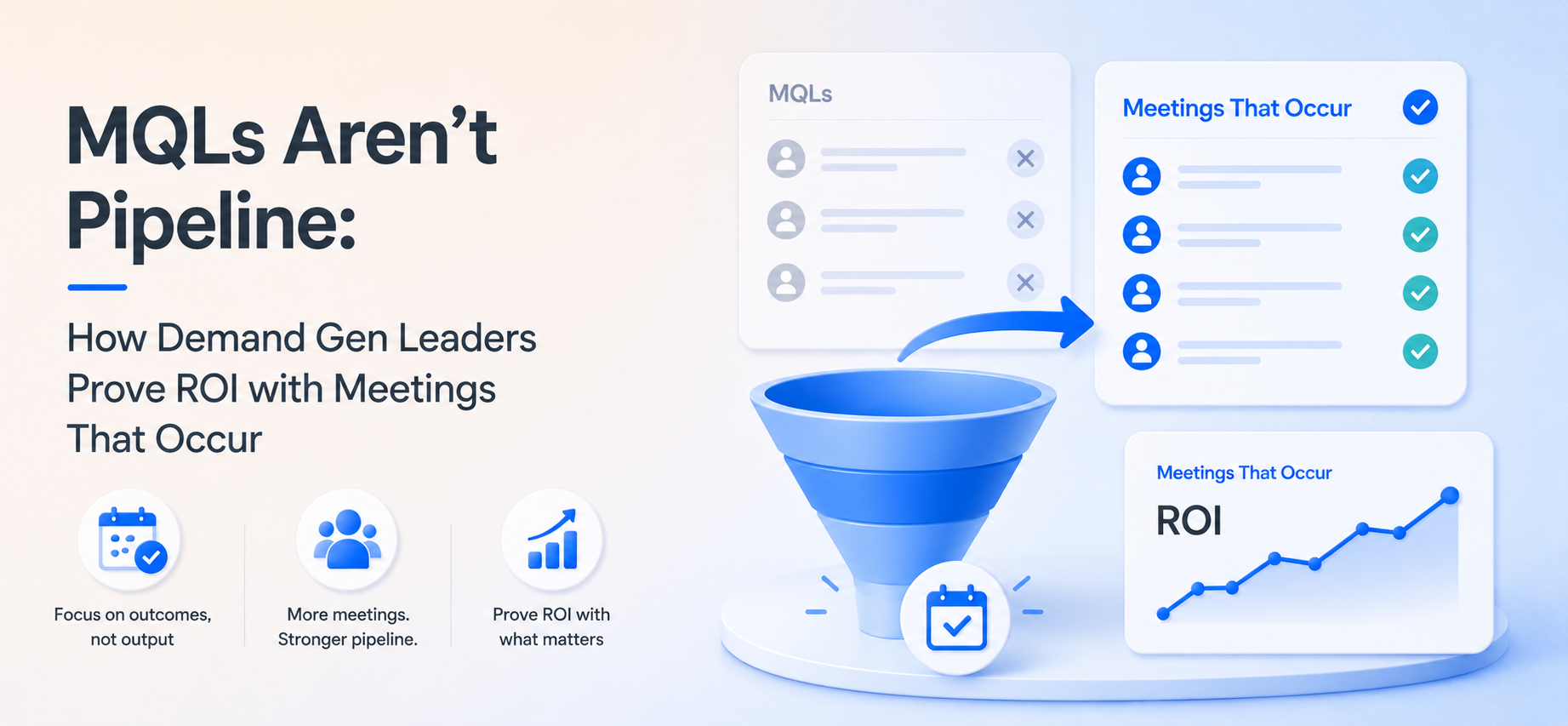
That’s why more enterprise demand gen teams are shifting the proof point from “qualified leads” to meetings that occur—especially Director+ meetings with enough context for sales to commit to a follow-up.
This post breaks down what an MQL is (and isn’t), why the MQL-to-pipeline gap happens, and how Site Ascend helps teams convert opt-ins into qualified meetings that occur and advance through Lead Qualification and Executive Meetings.
What “MQL” means for demand generation marketers (and why it’s misunderstood)
An MQL (Marketing Qualified Lead) is typically defined as someone who meets a threshold of:
That’s useful for prioritizing follow-up. But MQLs break down in enterprise B2B because they don’t reliably capture what sales needs to move a deal forward:
What MQLs can do well
What MQLs can’t prove (without help)
So when a demand gen leader says “we drove pipeline,” revenue leadership hears:
“Did sales run the meetings, and did they go somewhere?”
That’s why “meetings that occur” has become a more defensible ROI unit than “MQLs created.”
Common challenges marketers face
1) MQL volume rises while sales acceptance drops
When you optimize to hit MQL targets, it’s easy to broaden scoring rules or lower thresholds. You’ll get more “qualified” leads—and more skepticism from sales.
Result: marketing reports success; sales feels flooded.
2) Seniority mismatch kills conversion
Enterprise pipeline doesn’t move because a practitioner downloaded a guide. It moves when a Director+ stakeholder is engaged in an initiative with consequences.
Result: meetings happen at the wrong level and stall after the first call.
3) “Interest” gets mistaken for “readiness”
Opt-ins are signals, not decisions. Many MQLs are:
Result: sales follows up, gets polite responses, and deprioritizes.
4) No-show and reschedule rates quietly erase ROI
Even when you convert MQLs into meetings, booked meetings that don’t occur create invisible waste:
Result: you can’t defend ROI because the conversion chain is leaky.
5) Reporting doesn’t connect effort to outcome
Most teams can report MQLs, but can’t consistently report:
Result: you can’t optimize the program like a revenue motion.



.png)

%201.png)


.png)


Solutions that work
The goal isn’t to eliminate MQLs. The goal is to stop treating them as pipeline proof.
Here’s the practical shift: use MQLs as inputs, and meetings-that-occur as outputs. Site Ascend supports that shift with two motions that map directly to enterprise reality: Lead Qualification (opt-ins → meetings) and Executive Meetings (Director+ conversations in target accounts).
1) Lead Qualification: turn MQLs into sales-ready meetings (instead of sales chores)
Site Ascend’s Lead Qualification program is designed to convert opt-in leads into qualified sales meetings by capturing the information MQL scoring often can’t.
What changes when you add human qualification:
This reduces the most common cause of MQL failure: sales doesn’t trust the handoff.
2) Executive Meetings: prove ROI with Director+ meetings that occur
Executive meeting programs win when they protect two things:
Site Ascend’s Executive Meetings are built around 30-minute virtual meetings with Director-level and above stakeholders in target accounts—so the conversation is more likely to be decision-relevant.
Why that matters for MQL ROI:
And when the commercial model is aligned to meetings that occur, it naturally prioritizes show-rate discipline over calendar stuffing.
When channel and events matter (only if you’re measuring them as pipeline motions)
If your organization treats partner/MDF programs or sponsored events as pipeline drivers, the same logic applies:
Site Ascend can support those motions when your measurement model is meeting-driven (not just activity-driven).
Actionable steps for marketers
You can keep your MQL system—and still prove ROI—by adding a “meeting standard” layer.
The MQL-to-Meeting ROI Checklist
Step 1: Redefine “qualified” as a meeting outcome
Instead of “MQL created,” define success as:
Step 2: Require 5 fields before a meeting counts
Sales is far more likely to commit to a second call when these are clear:
Step 3: Track three metrics weekly (not monthly)
Step 4: Use MQLs for prioritization, not proof
Keep MQLs as a routing signal, but don’t use them as your ROI claim.
Step 5: Pilot one motion for 30 days
Pick one stream (highest-intent opt-ins, one segment, one region) and measure:
Comparison of market solutions
Here’s the market landscape through a procurement lens—how organizations typically evaluate solutions tied to MQL conversion and meeting creation.
1) Lowest cost per activity
What you’re buying: attempts (dials, touches, hours) and raw volume.
Why it’s attractive: unit costs look efficient.
Where it breaks: it optimizes for activity, not meeting quality. Seniority drifts, show rates suffer, and sales trust erodes—so MQLs remain “noise.”
2) Predictable volume
What you’re buying: a guaranteed number of leads, registrations, or booked meetings.
Why it’s attractive: forecasting feels easier.
Where it breaks: booked ≠ held, and volume ≠ Director+. You can hit the number and still miss pipeline because next-step conversion is inconsistent.
3) Defensible pipeline impact
What you’re buying: outcomes that map to revenue reality—meetings that occur, with senior stakeholders, and a measurable path to next steps.
Why it’s attractive: it aligns with how sales and finance evaluate performance.
Why Site Ascend fits: Director-level-and-above targeting, accountability to meetings that occur, U.S.-based execution, and real-time visibility to manage quality in-flight.
Conclusion
MQLs can tell you who engaged—but they don’t automatically tell you who will buy.
If you want an ROI story that holds up with sales leadership and finance, shift the proof point from “qualified leads” to qualified meetings that occur, with Director+ stakeholders and a defined next step.
If your team wants to pilot a meeting-driven model that converts opt-ins into sales-ready conversations—and proves quality beyond MQL volume—contact Site Ascend to explore a pilot focused on:
Are you saying MQLs are useless?

What’s the fastest way to improve MQL-to-pipeline conversion?
How do I avoid slowing down lead flow if we add qualification?


Start your pilot campaign today and explore the full range of Site Ascend's demand generation capabilities. Experience firsthand how we can enhance your efficiency, streamline your processes, and drive growth.
RELATED