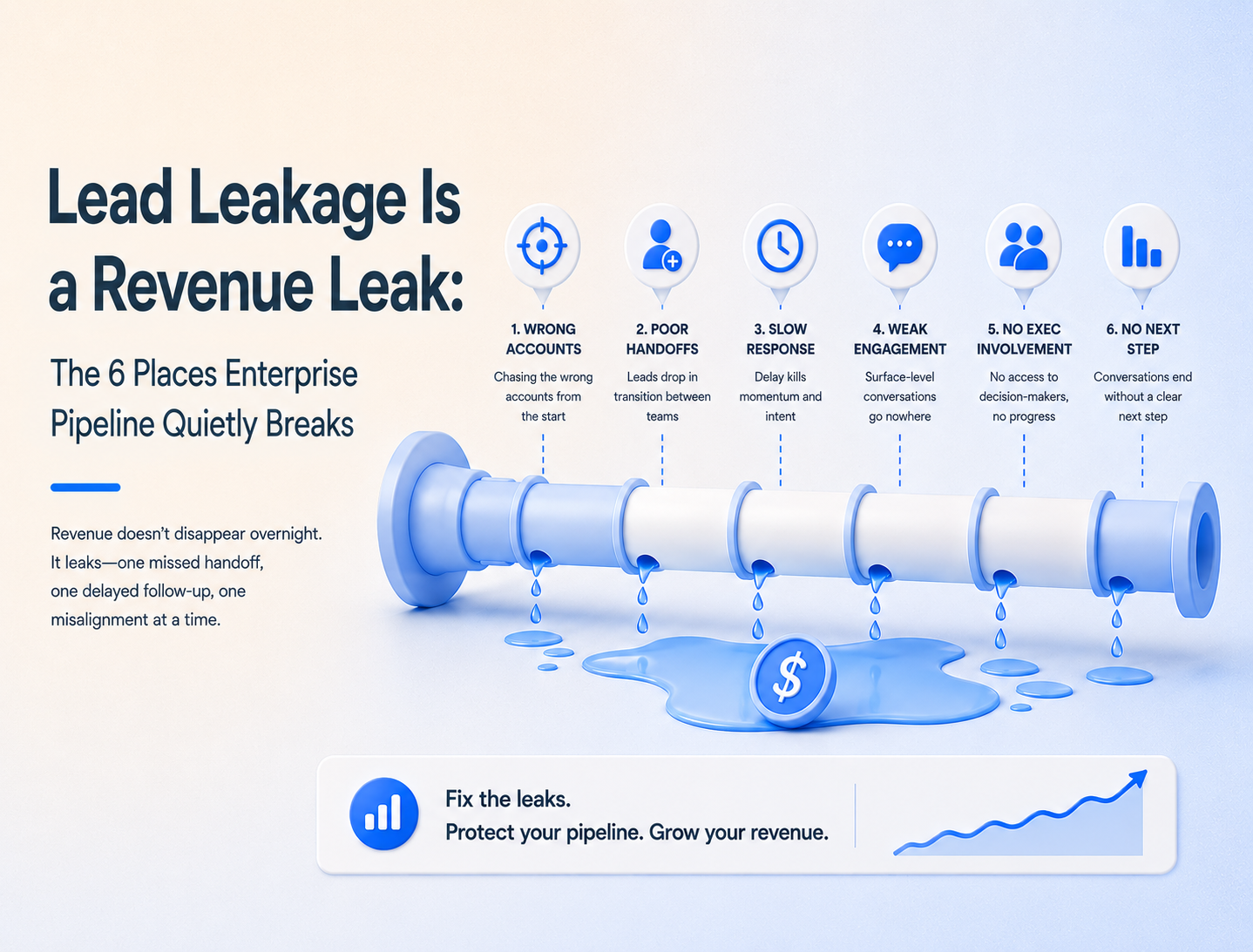
Lead Leakage Is a Revenue Leak: The 6 Places Enterprise Pipeline Quietly Breaks
Pipeline Conversion


Outbound Demand Generation (SDR Outsourcing)
-
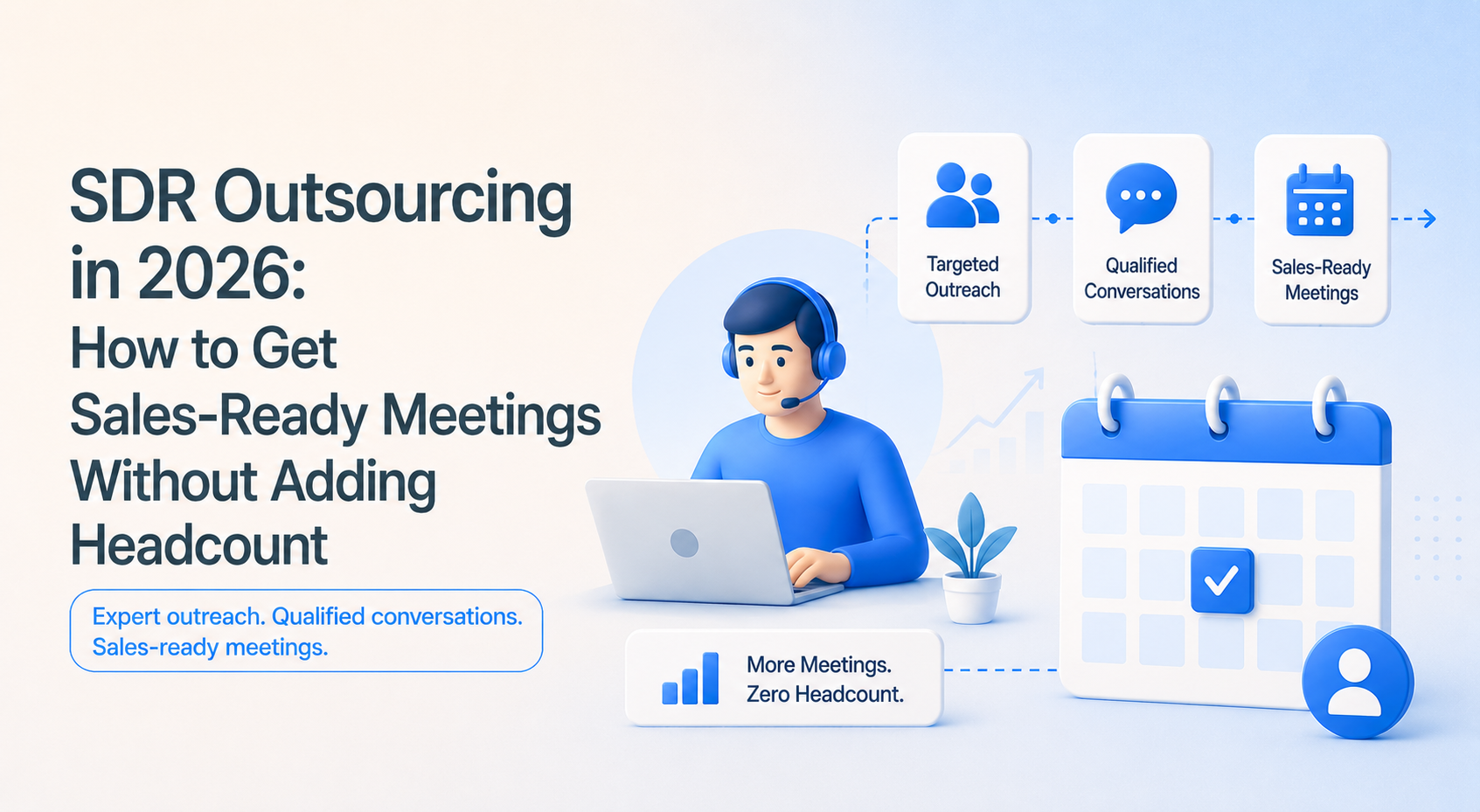
Outcome-first SDR outsourcing only works when it produces meetings Sales will actually take. Here’s how to get sales-ready conversations—without adding headcount.
Introduction
SDR outsourcing has a branding problem.
A lot of teams hear “outsourced SDRs” and immediately think: activity, not outcomes. Lists, not conversations. Leads delivered, not meetings held. And worst of all—internal friction when Sales feels like Marketing is handing over more work, not more pipeline.
But in 2026, the best demand gen teams aren’t outsourcing to “scale outreach.” They’re outsourcing to reduce risk and increase acceptance—by operationalizing a meeting-first layer that turns target accounts (and opt-in leads) into sales-ready meetings that actually happen.
This is the difference between SDR outsourcing that creates noise and SDR outsourcing that creates pipeline.
What SDR Outsourcing Means for Demand Generation Marketers (and Site Ascend’s ICP)
For demand gen leaders, “SDR outsourcing” should mean outsourcing the hardest middle step:
That middle step is where pipeline typically dies—especially when teams rely on a mix of partial systems: intent tools, automation, sequences, and a busy in-house SDR team that’s constantly pulled between inbound follow-up and outbound coverage.
Site Ascend’s model is designed for that exact gap. Instead of selling generic “SDR coverage,” we focus on outcome-based conversations across four programs:
And the core idea stays the same across all four: Sales doesn’t need more leads. Sales needs meetings they’ll accept—and show up for.
Common Challenges Marketers Face
If SDR outsourcing hasn’t worked for you before, it usually failed in one of these places:
The “busywork trap”
Outreach gets measured by dials and emails instead of meetings held. Marketing gets reporting, but Sales gets disappointed.
Lead volume creates Sales friction
When outsourced teams optimize for form-fills or “qualified leads,” Sales gets flooded with contacts that aren’t ready, relevant, or senior enough.
Qualification is inconsistent
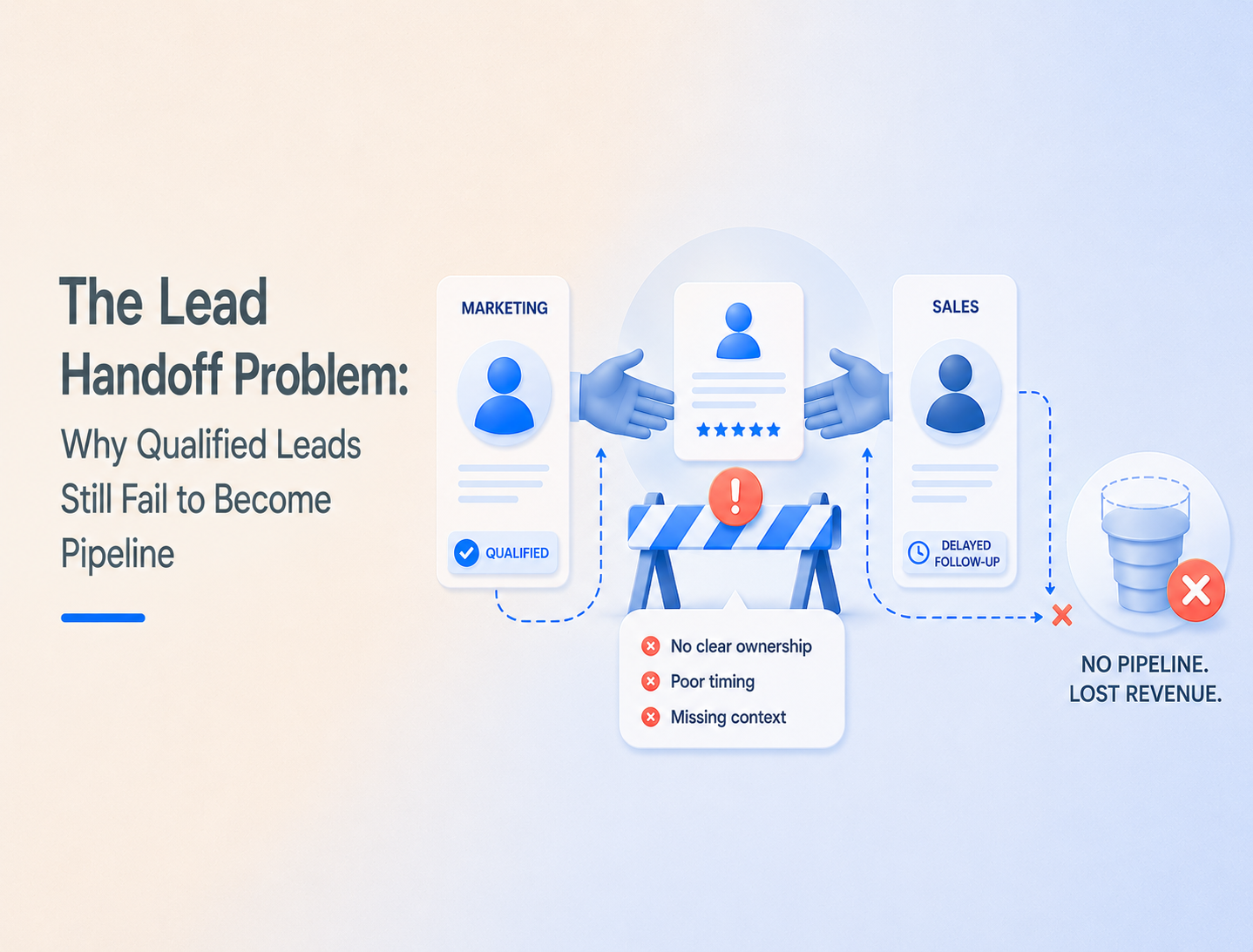
One rep’s “qualified” is another rep’s “not even close.” Without tight definitions, the handoff becomes political.
The meetings don’t stick
Even when a meeting gets booked, it doesn’t always happen. No-shows and reschedules quietly destroy ROI—then the program gets blamed.
Director+ access is harder than ever
Plenty of teams can reach managers. Far fewer can consistently secure director-level and above conversations—especially in competitive categories where buyers are overloaded.



.png)

%201.png)


.png)


Solutions That Work
SDR outsourcing works when you stop treating it like “more outreach” and start treating it like a meeting conversion system—one designed to reduce Sales friction, protect brand, and turn target accounts into sales-ready meetings.
Here are the solutions that consistently work in 2026.
1) Outsource the handoff layer, not the whole funnel
Most teams either keep everything in-house or outsource everything. The winning middle ground is outsourcing the layer that breaks most often: turning interest into a booked conversation.
That means your outsourced SDR motion should focus on:
Site Ascend approach: We focus on converting target accounts into director+ meetings—with qualification rules designed to match Sales expectations, so the handoff doesn’t create internal pushback.
2) Use “Sales-ready” qualification that Sales actually recognizes
The fastest way to kill SDR outsourcing is fuzzy qualification. If Sales can’t tell why a meeting was booked in 10 seconds, acceptance drops.
A practical 2026 qualification framework includes:
Site Ascend approach: Qualification is structured to protect Sales time first—because meeting quantity without meeting confidence creates friction.
3) Measure held meetings, not “activity” or “leads delivered”
Outsourced SDR programs often look successful on paper because they report:
But pipeline correlation comes from one thing: meetings that actually occur.
The cleanest performance model is:
Site Ascend approach: Our operating model is built around outcomes, not effort—so teams can scale without debating whether the output is real.
4) Build a reschedule-and-confirmation system (the hidden ROI lever)
Most SDR outsourcing fails quietly after the meeting is set. No-shows spike, reps complain, and demand gen loses credibility.
The fix is simple: treat confirmation like part of conversion.
A strong program includes:
Site Ascend approach: We treat meeting integrity (show rate) as part of delivery—not an afterthought—because booked meetings that don’t happen don’t create pipeline.
5) Keep brand control with white-labeled outreach (when needed)
For many demand gen teams, the biggest SDR outsourcing risk isn’t performance—it’s brand.
If your category is sensitive, your messaging must be consistent and your outreach must sound like you, not a vendor.
Site Ascend approach: Outreach can be delivered white-labeled to maintain brand continuity—without adding headcount or sacrificing quality controls.
Actionable Steps for Marketers
If you’re considering SDR outsourcing this year, use this short field-tested checklist to avoid the usual pitfalls.
A meeting-first SDR outsourcing checklist
Define “sales-ready” in one sentence.
Not a spreadsheet. Not a committee doc. One sentence that both Marketing and Sales can repeat.
Choose one motion to start.
Executive meetings, lead qualification, channel plays, or event registrants—don’t try to scale everything at once.
Gate by seniority and fit upfront.
If director+ matters, enforce it. If account fit matters, enforce it. Don’t “fix it later” in Sales.
Measure held meetings—not booked meetings.
Booked meetings can look great and still produce nothing. Held meetings show real value.
Instrument the handoff.
Confirm who owns: scheduling, reschedules, reminders, and post-meeting notes. This is where most programs leak.
Pilot with a scoreboard everyone trusts.
If Sales can’t trust the definitions, the pilot won’t survive—even if the work is good.
Comparison of Market Solutions
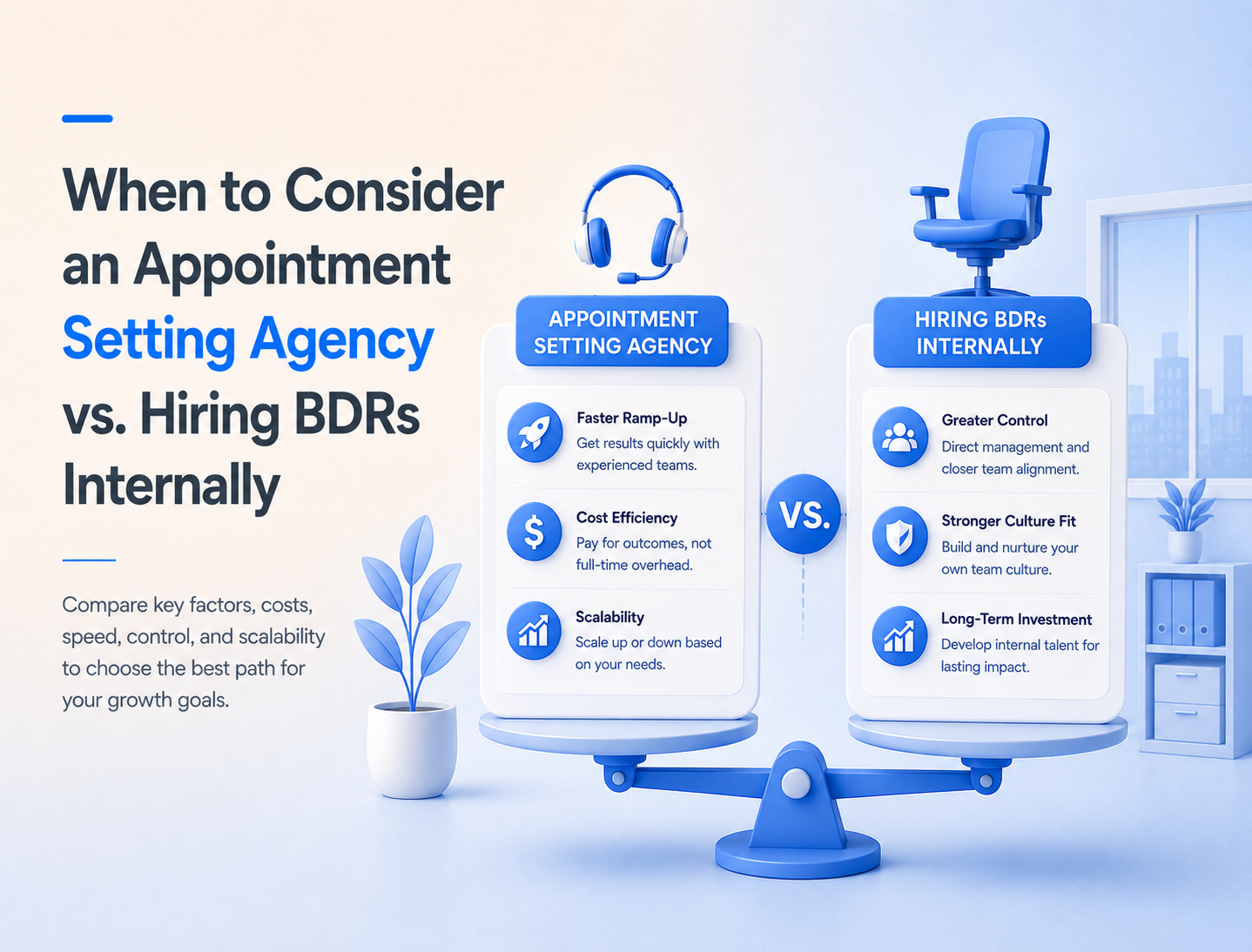
Most demand gen teams pick between three paths. Each works—until it doesn’t.
Example 1: The Procurement View
Outcome 1: Predictable meetings with the right buyers
Outcome 2: Lower financial risk for demand gen programs
Outcome 3: Operational clarity and defensible reporting
The point isn’t that one model is “bad.” It’s that most models break when accountability is measured too early in the funnel. Demand gen leaders win when they can show what Sales actually values: conversations with the right people.
Conclusion
SDR outsourcing is only a win if it reduces friction—not creates it.
If you want a program your Sales team will actually support, align around:
Site Ascend was built for that middle step between targeting and pipeline—whether you’re running executive meeting programs, qualifying opt-in leads, activating partner MDF motions, or driving event registrants via outbound calling and SMS support.
If you’re planning your next quarter and want a pilot that’s easy to evaluate—and hard to argue with—start with a meeting-first motion and measure outcomes the way Sales does.
What’s the difference between SDR outsourcing and appointment setting?

How do we prevent SDR outsourcing from creating Sales friction?
What should I ask any SDR outsourcing partner before signing?


Start your pilot campaign today and explore the full range of Site Ascend's demand generation capabilities. Experience firsthand how we can enhance your efficiency, streamline your processes, and drive growth.
RELATED