How Site Ascend Uses Gartner’s Magic Quadrant to Evaluate Technology Vendors That Convert
Demand Generation


Why the Right Marketing Channels Matter More Than Ever for Enterprise Pipeline Growth
-
Demand Generation

Introduction
Today's B2B technology buyers don't follow a predictable path to purchase. They consume content across multiple platforms, consult peers, attend events, interact with partners, download research, and engage with sales only after completing much of their own evaluation. As a result, demand generation marketers face a growing challenge: investing in the right marketing channels that influence buying decisions rather than simply generating activity.
Many organizations continue measuring channel success by impressions, clicks, or lead volume. While these metrics provide visibility into campaign performance, they rarely answer the question executives care about most: Which marketing channels actually contribute to qualified pipeline?
The highest-performing demand generation teams have shifted their focus from channel activity to channel impact. Instead of asking which channels generate the most engagement, they ask which channels consistently move target accounts toward meaningful sales conversations and revenue opportunities.
What Marketing Channels Mean for Demand Generation Marketers
Marketing channels are the pathways organizations use to engage prospective buyers throughout the customer journey. In enterprise demand generation, these channels extend far beyond digital advertising or email campaigns. They include partner ecosystems, executive outreach, events, webinars, outbound engagement, referrals, industry communities, and other touchpoints that influence buying committees.
The challenge isn't choosing the most popular channel—it's selecting the right combination of channels based on your audience, buying process, and revenue objectives.
For B2B technology companies, successful channel strategies prioritize quality over quantity. The goal is to create coordinated engagement across multiple touchpoints that guide high-value accounts toward qualified sales conversations.
Common Challenges Marketers Face
Many marketing organizations spread resources across too many channels without understanding how each contributes to pipeline creation. This often results in fragmented campaigns, inconsistent messaging, and limited visibility into which investments produce measurable business outcomes.
Another common issue is evaluating every channel using identical KPIs. A channel designed to create executive conversations should not be measured the same way as one focused on brand awareness or customer education. Applying the wrong metrics can lead marketers to underinvest in channels that generate the highest revenue impact.
Marketing and sales alignment also plays a significant role. When sales teams don't understand how channel engagement supports account progression, valuable buyer signals may be overlooked or acted on too late.
Finally, organizations frequently optimize channels independently rather than viewing them as part of an integrated demand generation strategy. Enterprise buyers interact with multiple channels before making purchasing decisions, making coordinated engagement increasingly important.



.png)

%201.png)


.png)


Solutions That Work
Evaluate Channels Based on Pipeline Contribution
Every marketing channel should be measured by its ability to influence qualified opportunities—not simply generate engagement. Establish clear attribution models that connect channel performance to meetings, opportunities, and revenue outcomes.
Build an Integrated Multi-Channel Strategy
Enterprise buyers rarely convert after a single interaction. Combining events, partner marketing, executive outreach, digital engagement, and targeted follow-up creates a more consistent buying experience while improving account progression.
Align Channel Investments With Buying Behavior
Different buying committees engage through different channels. Continuously analyze how your highest-performing accounts move through the buying journey and prioritize the channels that consistently influence purchasing decisions.
Optimize Continuously Instead of Chasing Trends
New marketing channels emerge constantly, but not every channel fits every organization. Regularly review channel performance, eliminate low-impact activities, and reinvest resources into programs that produce measurable pipeline growth.
Where Site Ascend Fits
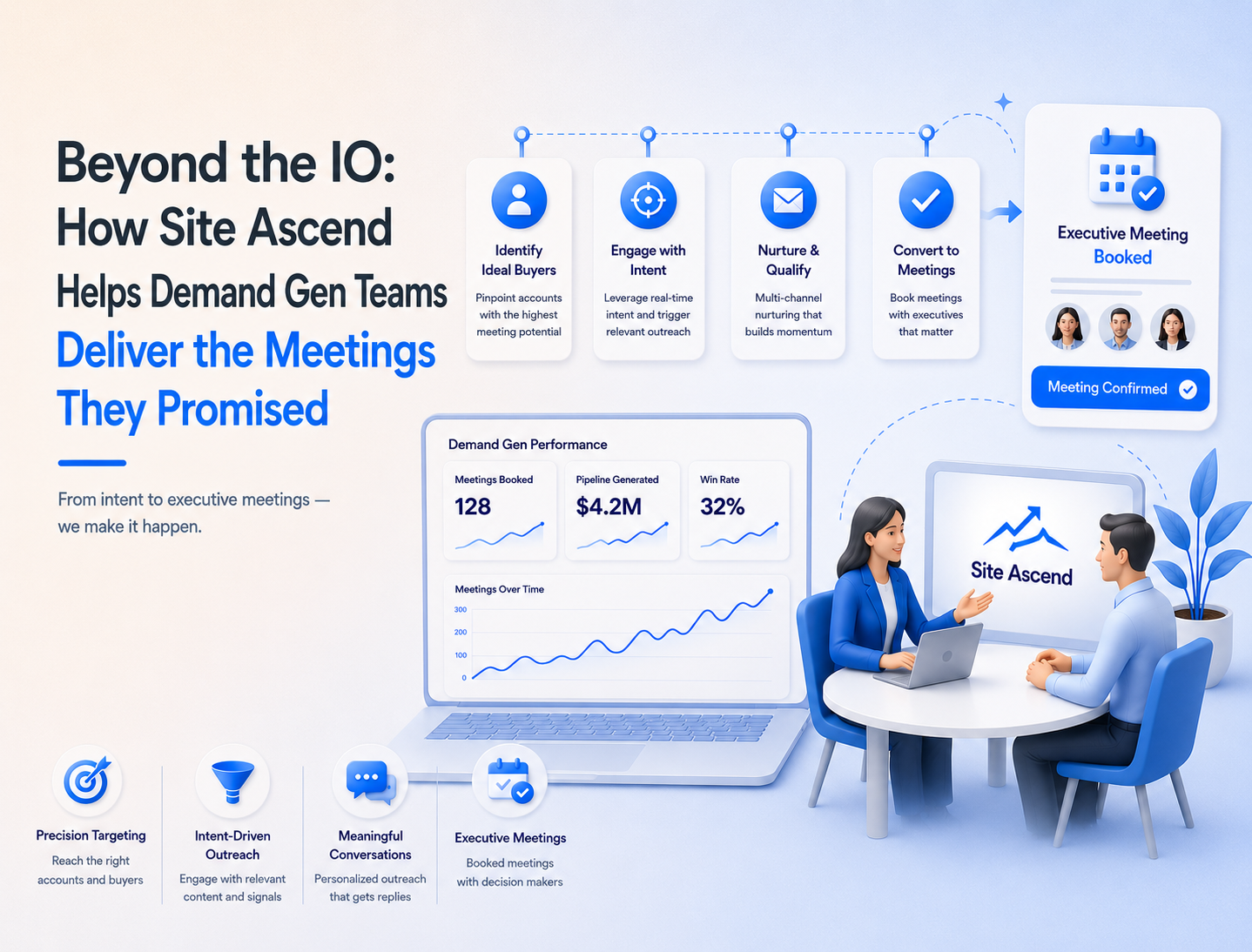
Choosing the right marketing channels is only part of the equation—successful execution determines whether strategy translates into pipeline. Site Ascend helps technology companies strengthen channel performance through Executive Meetings that connect sales teams with director-level decision-makers, Channel Marketing programs that support partner-led campaigns, Event Marketing that drives qualified registrants, and Lead Qualification services that validate buyer interest before opportunities move to sales. These programs help organizations maximize the effectiveness of their broader channel strategy while keeping the focus on qualified pipeline outcomes.
Actionable Steps for Marketers
Perform a Marketing Channel Effectiveness Audit
Rather than evaluating channels solely by campaign metrics, assess how each contributes to revenue generation.
1. Identify Revenue-Producing Channels
List every active marketing channel and determine which ones consistently influence qualified meetings, opportunities, and pipeline—not just leads.
2. Map Channels to the Buying Journey
Evaluate where each channel performs best. Some create awareness, others educate buyers, while others accelerate purchase decisions. Identify any gaps in the buyer journey.
3. Measure Buying Committee Engagement
Review whether your channels reach multiple stakeholders within target accounts rather than relying on a single contact or champion.
4. Compare Investment to Pipeline Contribution
Analyze budget allocation against actual pipeline influenced. Channels receiving significant investment but producing little revenue impact may require optimization or replacement.
5. Review Cross-Channel Alignment
Ensure messaging, follow-up, and handoffs remain consistent across every channel. Buyers should experience one coordinated journey—not disconnected campaigns.
Conducting this audit quarterly helps marketing leaders make more informed investment decisions while improving overall pipeline efficiency.
Comparison of Market Solutions
Organizations typically take different approaches when building their marketing channel strategy.
Some rely almost entirely on digital marketing programs to generate demand. While these channels can scale efficiently, they often struggle to create meaningful executive engagement without complementary outreach and sales coordination.
Others invest heavily in events and partner marketing, using personal interactions and channel relationships to reach strategic accounts. These approaches can produce high-quality opportunities but require disciplined planning, measurement, and follow-up to maximize return.
Many organizations adopt a balanced strategy by combining digital engagement, partner programs, executive outreach, events, and lead qualification into a coordinated demand generation framework. This integrated approach provides multiple opportunities to engage buying committees while improving pipeline visibility and revenue attribution.
The most successful organizations aren't defined by using the most marketing channels—they're defined by selecting the channels that consistently move target accounts toward qualified sales conversations.
Conclusion
Marketing channels should never be evaluated solely by the amount of activity they generate. The real measure of success is whether they help create meaningful engagement with high-value accounts and contribute to qualified pipeline.
Organizations that align channel investments with buyer behavior, measure pipeline contribution instead of vanity metrics, and coordinate engagement across multiple touchpoints are better positioned to build predictable revenue growth.
If your organization is looking to optimize its marketing channel strategy and convert more engagement into qualified pipeline, contact Site Ascend.
How many marketing channels should an enterprise demand generation strategy include?

How should marketers determine which channels deserve more investment?
Can one marketing channel generate consistent enterprise pipeline on its own?


Start your pilot campaign today and explore the full range of Site Ascend's demand generation capabilities. Experience firsthand how we can enhance your efficiency, streamline your processes, and drive growth.