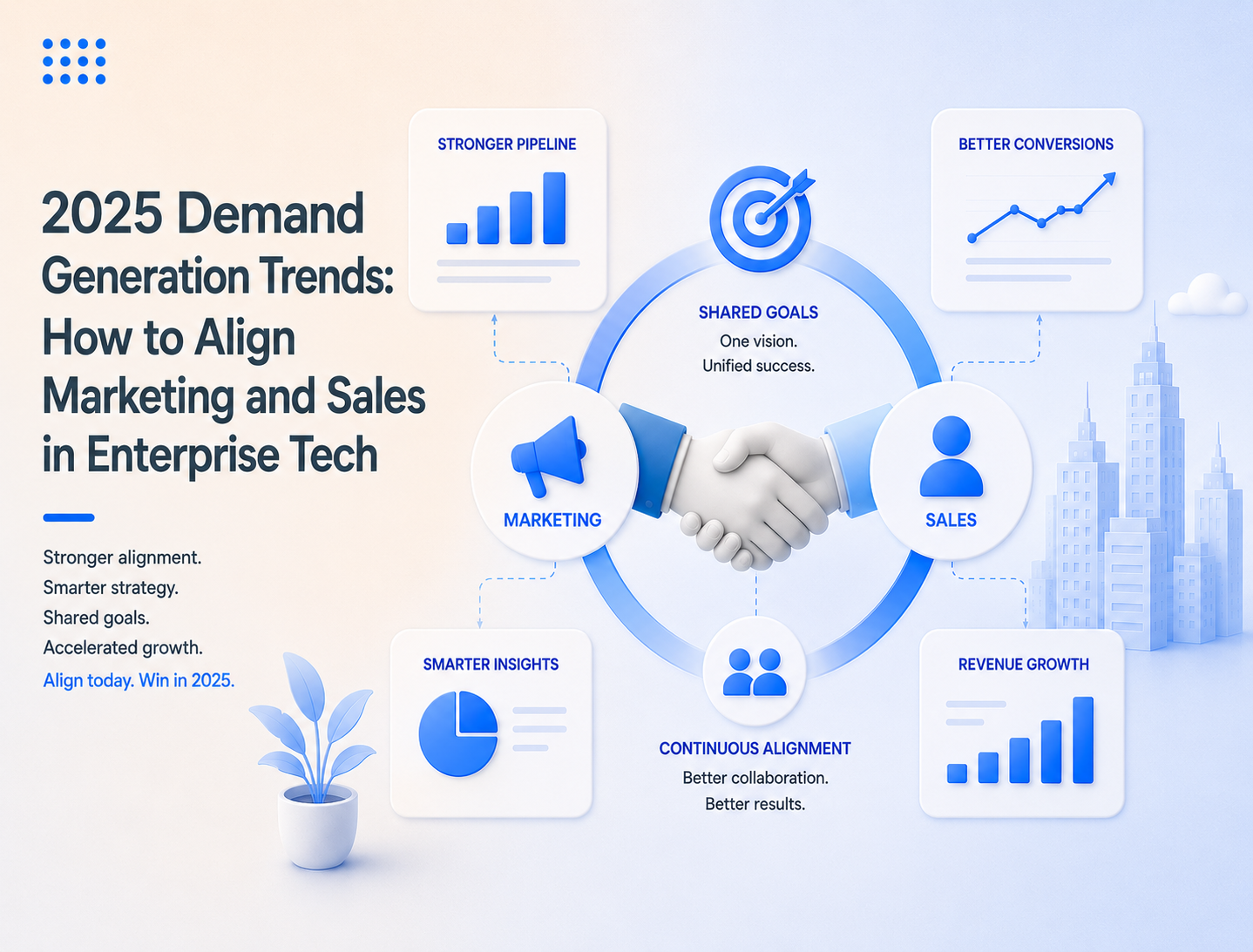
2025 Demand Generation Trends: How to Align Marketing and Sales in Enterprise Tech
Demand Generation Strategy


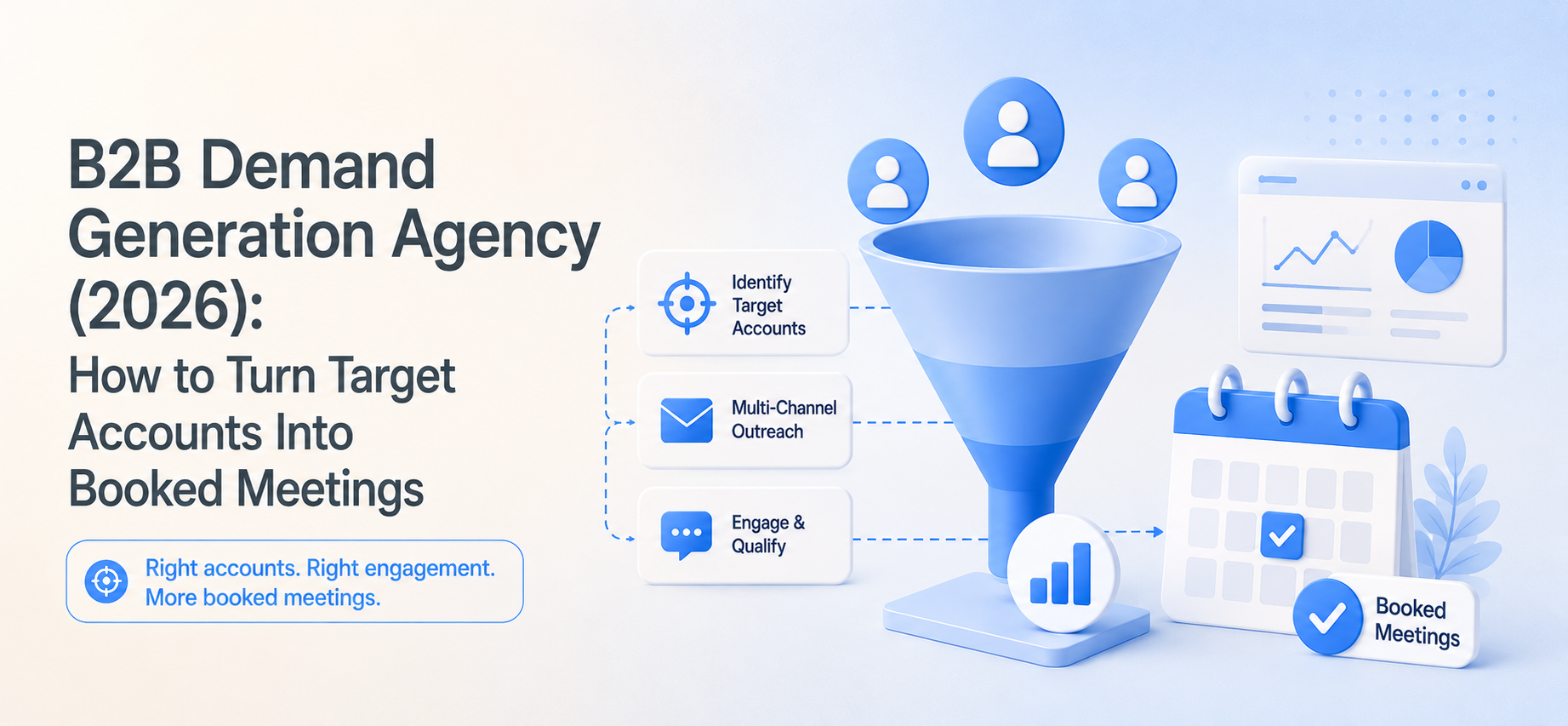
Turn target accounts into booked meetings with a practical, pay-for-performance approach—director-level outreach, real qualification, and clear reporting.
-
Demand Generation
Introduction
If you’re a demand gen leader in 2026, you’re not short on activity. You’ve got intent signals, paid performance, retargeting, webinars, SDR sequences, and dashboards full of “engagement.”
And yet the question you keep getting from sales is painfully simple:
“Where are the meetings?”
That’s the modern demand gen gap: plenty of leads, not enough sales-ready conversations—especially with director-level+ stakeholders inside your target accounts.
This guide breaks down what a “B2B demand generation agency” should actually do in 2026 (beyond delivering lists, form fills, or vague MQL volume), and how Site Ascend helps teams convert target accounts into booked meetings—with a model built to reduce risk and increase sales acceptance.
What “B2B Demand Generation Agency” Means in 2026
A B2B demand generation agency used to mean “run campaigns” or “generate leads.”
In 2026, demand gen marketers need something more specific:
A partner that operationalizes conversion—turning target-account interest into scheduled, qualified conversations.
That’s especially true when:
Site Ascend focuses on the part most teams struggle to scale consistently: getting the right people from the right accounts into real meetings—and proving it with transparent reporting.
Common Challenges Marketers Face
1) “Leads” don’t equal the right stakeholders
Plenty of inbound actions come from people who will never own the decision:
Sales doesn’t ignore leads because they’re stubborn—they ignore leads because they’ve learned the hard way that most don’t convert into conversations.
2) The follow-up chain breaks
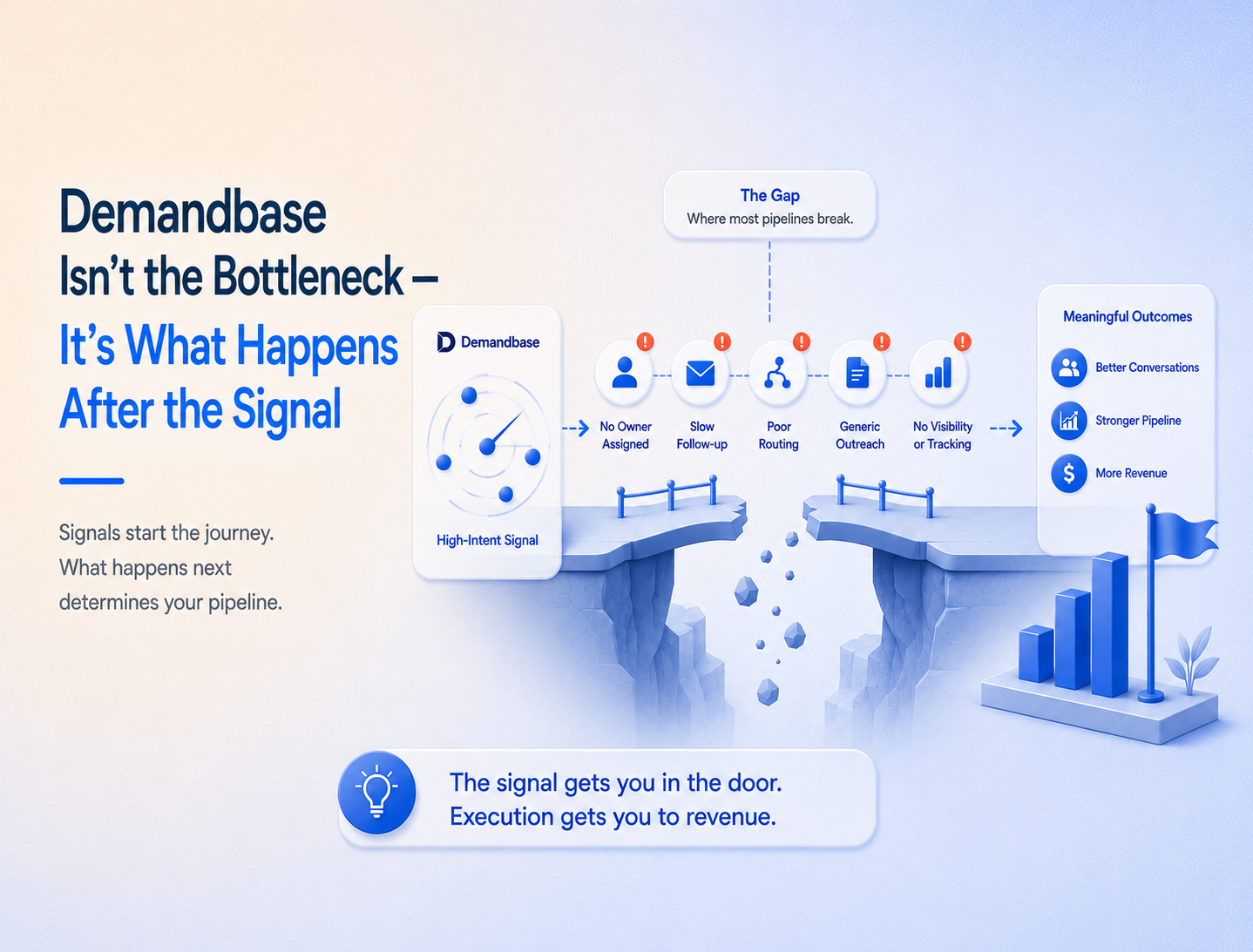
Even when a good lead comes in, the handoff gets messy:
That’s where pipeline quietly leaks.
3) SDR capacity becomes the bottleneck
Demand gen can scale clicks and forms faster than SDR teams can handle:
4) Outsourcing often creates sales friction
Some external teams create volume—but not alignment:



.png)

%201.png)


.png)


Solutions That Work
When the goal is booked meetings from target accounts, the best-performing model in 2026 looks like this:
1) Convert “targeting” into a real outreach plan
Target accounts aren’t a strategy—they’re a list.
Site Ascend helps teams turn targeting into action by focusing outreach on:
2) Use outbound calling to validate fit and intent in real time
A form fill can’t tell you whether someone will take a meeting.
Site Ascend drives meeting creation through outbound dialing (U.S.-based contact center) to:
3) Book only meetings that actually happen
This is where sales friction usually dies.
Site Ascend is built around a simple principle: outcomes over activity.
You’re not paying for “leads delivered.” You’re paying for meetings that occur, with the right titles.
4) Keep attendance high with lightweight support
For meetings (and events), confirmation is a process—not a checkbox.
Site Ascend uses an SMS-based support workflow leading up to the meeting date to reduce no-shows and keep conversations on track.
5) Make reporting transparent enough to trust
When marketers can’t see what’s happening, sales assumes the worst.
Site Ascend provides a real-time reporting dashboard so both marketing and sales can track:
Actionable Steps for Marketers
Use this checklist to make your demand gen motion more “meeting-driven” in 2026—whether you run it in-house or with a partner.
Meeting-Driven Demand Gen Checklist
If you want a simple pilot structure: start with a narrow slice of your ICP (one segment, one region, one product line) and measure meeting quality + conversion—not just volume.
Comparison of Market Solutions
Most teams end up choosing between three paths:
Example 1: The Procurement View (three outcomes framing)
Outcome 1: Reduce risk (quality + compliance)
Outcome 2: Improve operational efficiency (speed + throughput)
Outcome 3: Increase performance accountability (pay for outcomes)
Conclusion
In 2026, the best demand gen teams don’t just generate leads—they build systems that create sales-ready conversations with the right accounts.
If your funnel is full but pipeline is lagging, the fix usually isn’t “more campaigns.”
It’s tightening the conversion layer between interest and a real meeting.
Site Ascend is built for that layer:
If you want to pilot a meeting-driven demand gen motion, Site Ascend can help you prove value fast—without committing to a long ramp or adding headcount.
What’s the difference between a demand gen agency and an appointment-setting partner?

How do you prevent sales from rejecting outsourced meetings?
What should I measure to know if a meeting-driven program is working?


Start your pilot campaign today and explore the full range of Site Ascend's demand generation capabilities. Experience firsthand how we can enhance your efficiency, streamline your processes, and drive growth.
RELATED