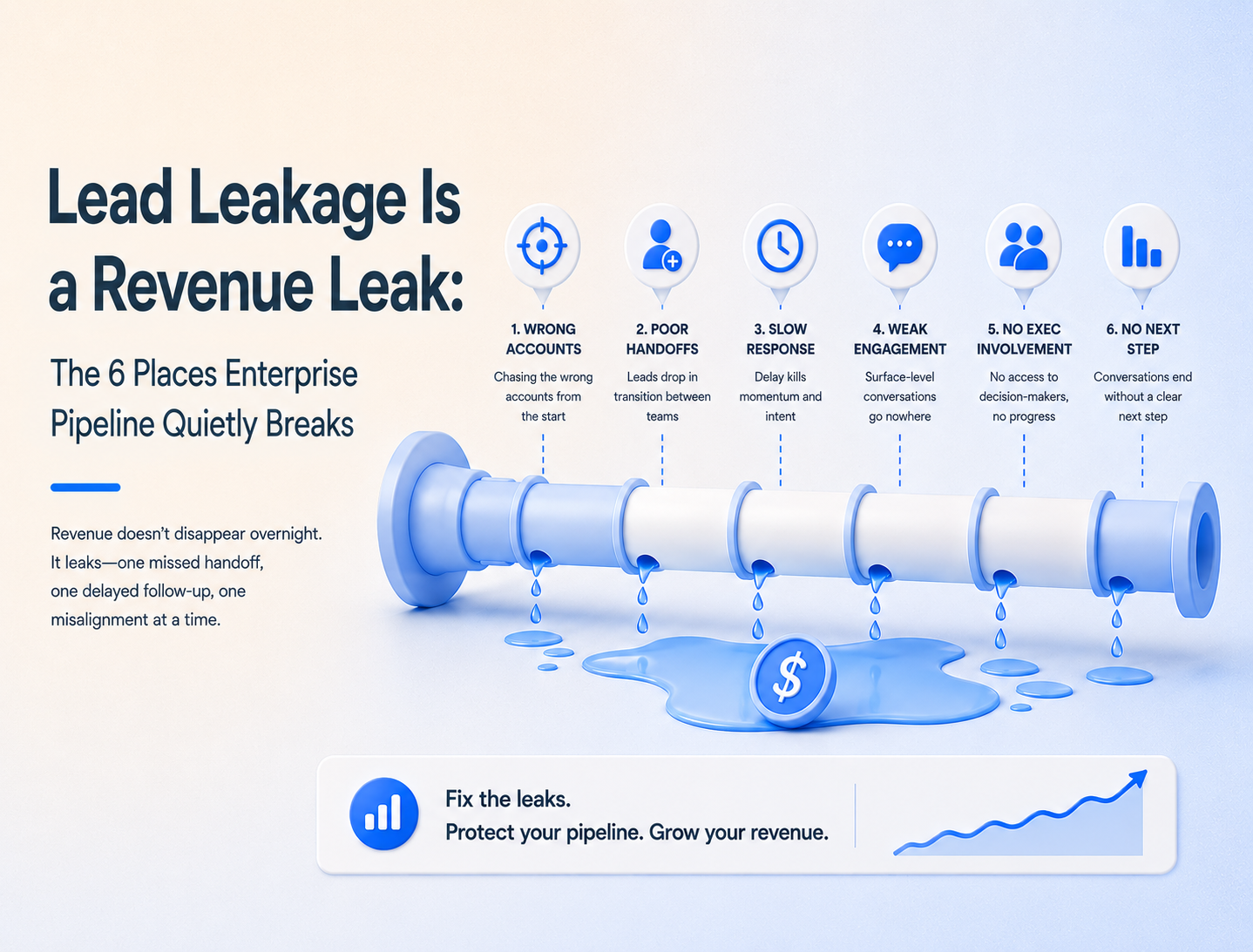
Lead Leakage Is a Revenue Leak: The 6 Places Enterprise Pipeline Quietly Breaks
Pipeline Conversion


Stop paying MDF for “leads delivered.” Learn how modern channel marketing services turn
-
Channel Marketing
Introduction
Marketing development funds (MDF) are supposed to accelerate pipeline. But too often, they get spent on activity—syndicated “leads,” webinars that don’t convert, and partner campaigns that look good in a QBR but don’t produce real sales conversations.
If you manage partner marketing, channel marketing, or revenue marketing at a tech company, you’ve probably felt this pain firsthand:
In 2026, the teams winning in the channel aren’t trying to generate more partner leads. They’re engineering a cleaner path from MDF → verified conversations → meetings that occur.
That’s the difference between channel lead gen and channel demand generation—and it’s exactly where Site Ascend’s Channel Marketing program fits.
What “Channel Marketing Services” Means for Demand Gen and Partner Marketers in 2026
Channel marketing services should do more than help you “run a campaign.” In practice, a modern channel marketing service should:
For demand gen leaders, this matters because partner marketing is often treated like a separate motion—when it’s really just another pipeline engine that needs the same rigor as your core outbound and ABM programs.
A channel marketing service should make partner-sourced pipeline measurable, repeatable, and scalable—without relying on “lead volume” as a proxy for success.
Common Channel Marketing Problems That Kill MDF ROI
1) MDF gets spent on leads that don’t convert
Leads are easy to count and hard to trust—especially when they’re sourced from content gates, event scans, or intent “signals” with no real follow-through.
When sales doesn’t believe the input, they won’t prioritize the output.
2) The right accounts don’t get real coverage
Partner plays often target big account lists—but the execution ends up shallow:
3) Partner brand risk is real
Many teams hesitate to outsource because they worry about:
4) Reporting proves activity—not outcomes
If you can’t answer:



.png)

%201.png)


.png)


Solutions That Work
This section focuses only on what’s relevant to channel marketing services and MDF performance.
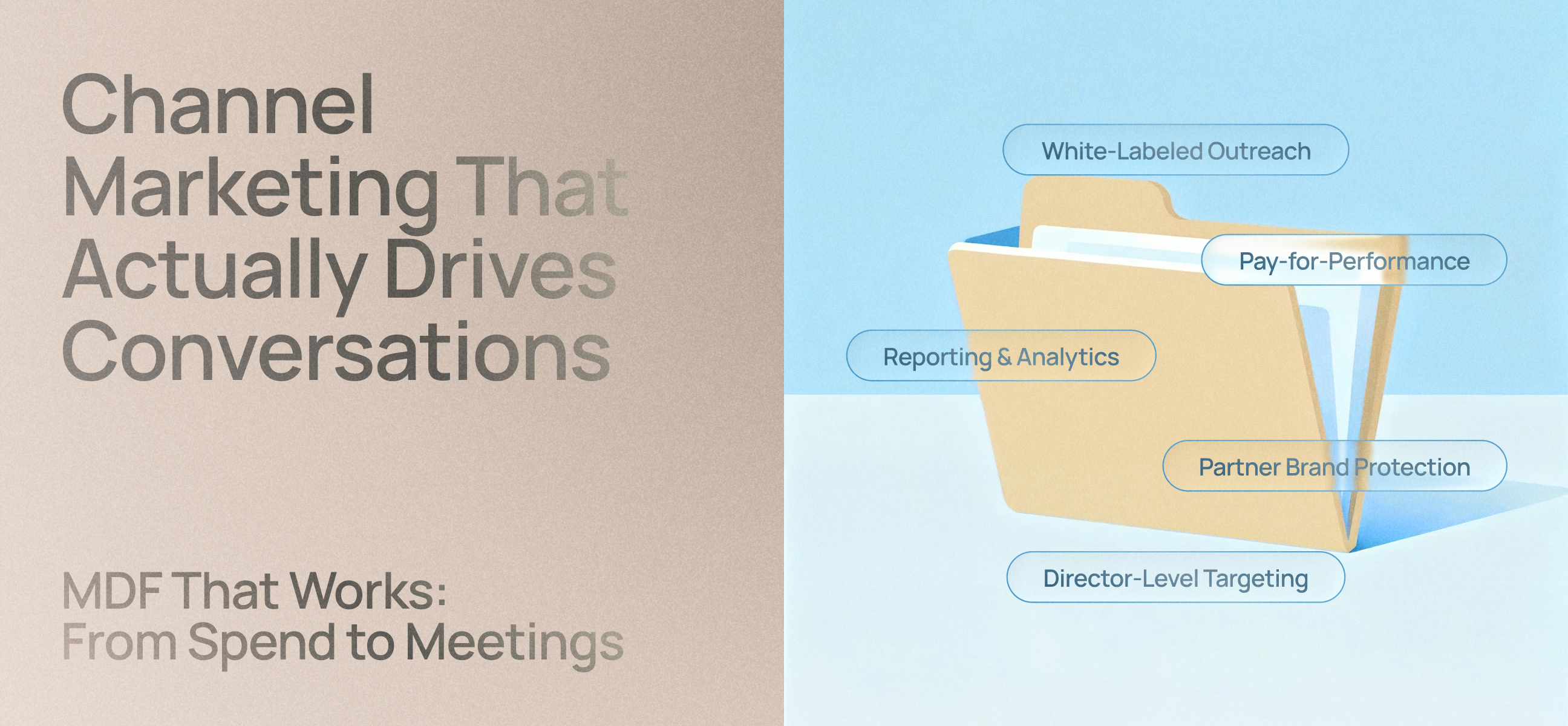
1) White-labeled appointment setting on behalf of partners (paid with MDF)
Site Ascend runs white-labeled outreach that looks and feels like your partner—so you can scale coverage without sacrificing partner trust.
Why this works:
2) Director-level (and above) targeting by default
Channel plays often fail because outreach starts too low in the org—where interest is easier to get but meetings don’t translate into pipeline.
Site Ascend focuses outreach on director+ stakeholders so meetings are:
3) Pay-for-performance that aligns MDF spend with outcomes
When MDF is used to buy “leads,” you’re paying for the input and hoping the output appears.
Site Ascend flips the incentive: you only pay for meetings that occur.
That creates:
4) Real-time reporting your channel team can actually use
Channel teams need visibility fast—especially across multiple partners, regions, and plays.
Site Ascend provides a real-time reporting dashboard so you can quickly see:
Actionable Steps: A Simple MDF-to-Meeting Checklist
Use this as a quick diagnostic before your next partner campaign:
MDF-to-Meeting Readiness Checklist
If you can’t confidently check most of these boxes, you don’t have a channel demand gen engine—you have a channel activity engine.
Comparison of Market Solutions
Most teams choose one of these approaches:
Option A: In-house channel team runs everything
Pros: Full control, tight brand alignment
Cons: Limited capacity, inconsistent follow-up, slow scaling across partners
Option B: Partners execute (and you hope for the best)
Pros: Easy for you operationally
Cons: Partner bandwidth varies wildly; results are unpredictable; MDF gets wasted
Option C: Outsourced execution optimized for “lead delivery”
Pros: Fast volume
Cons: Low trust from sales; poor conversion; reporting doesn’t prove pipeline impact
Option D: Outcome-aligned channel marketing services (the smarter model)
This model focuses on:
This is the lane Site Ascend is built for—especially when MDF is under scrutiny and sales needs results, not lists.
Conclusion
Channel marketing is one of the fastest ways to create pipeline—when it’s executed like a revenue motion.
If your MDF spend is still tied to “leads delivered,” you’re paying for ambiguity. In 2026, the stronger play is simple:
Turn MDF into verified director-level conversations and meetings that actually occur—using a white-labeled channel outreach engine designed for conversion.
If you want a low-friction way to prove it, pilot a partner play with Site Ascend’s Channel Marketing program and measure success by meetings held—not lead volume. Contact Site Ascend.
What’s the difference between channel lead generation and channel demand generation?

How do you keep outreach “on-brand” when it’s run by a third party?
What should I measure to prove MDF ROI in 2026?


Start your pilot campaign today and explore the full range of Site Ascend's demand generation capabilities. Experience firsthand how we can enhance your efficiency, streamline your processes, and drive growth.
RELATED