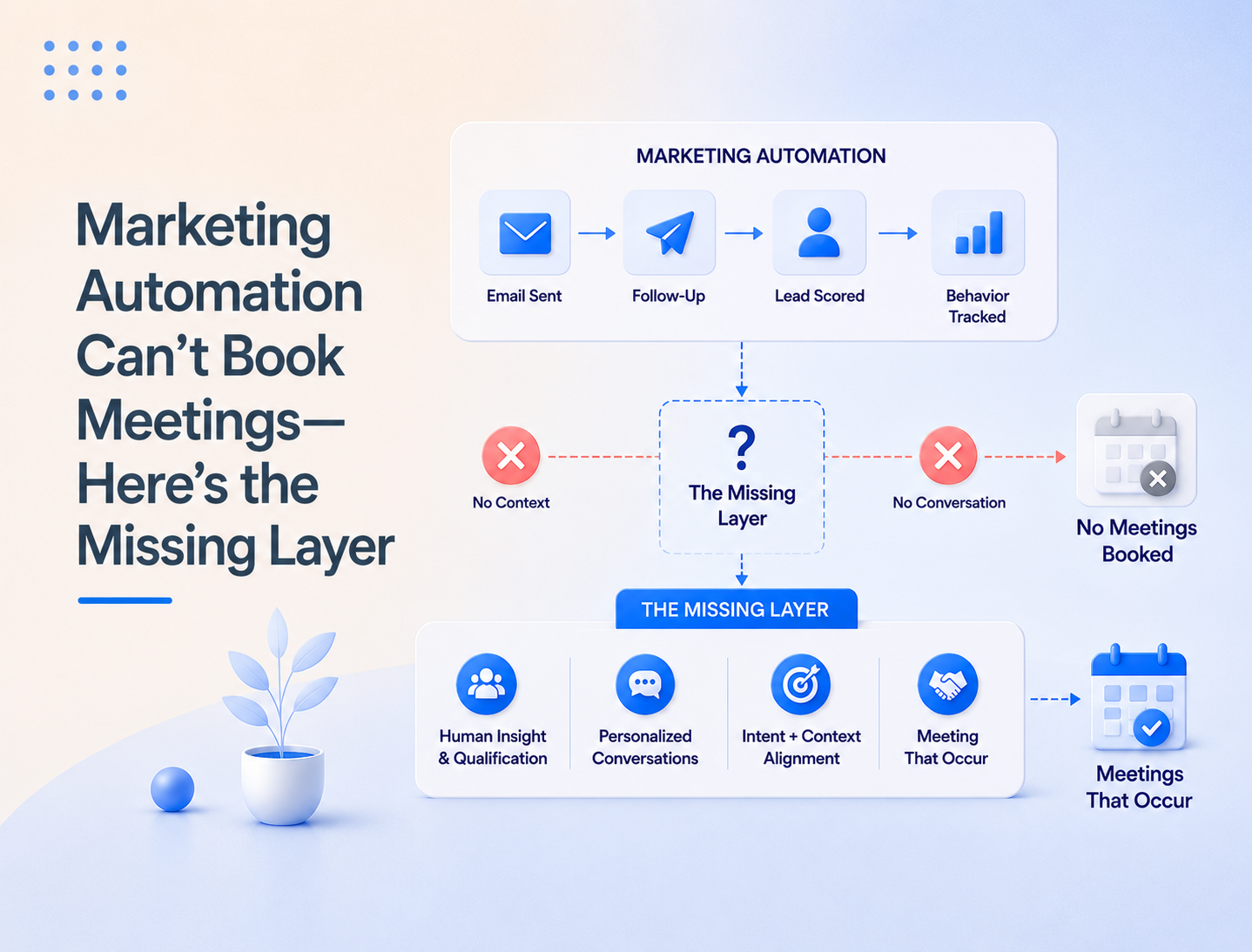
Marketing Automation Can’t Book Meetings—Here’s the Missing Layer
Demand Generation


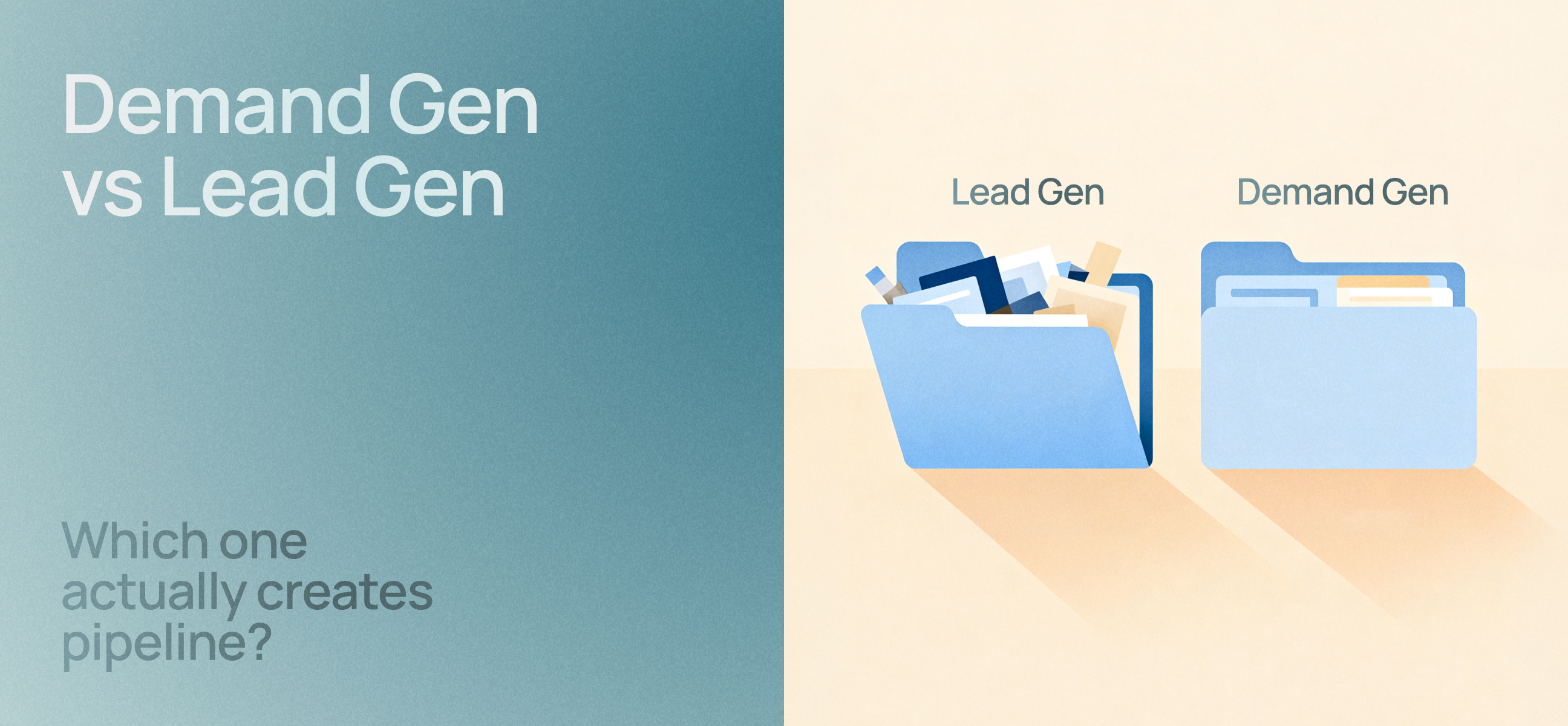
Partner lead gen creates names. Partner demand generation creates meetings. Here’s how to choose the right model, avoid funnel leakage, and turn MDF into director-level conversations your sales team will actually take.
-
Partner Marketing
Introduction
If your partner program is “successful” on paper—but your sellers keep saying “these leads go nowhere”—you’re not alone.
Most partner teams can generate activity (registrations, clicks, lead lists). The hard part is generating pipeline: real conversations with director-level buyers inside target accounts, aligned to a co-sell motion, at the right time.
That’s where the confusion starts:
In 2026, the difference matters more than ever, because finance teams are scrutinizing MDF, sales teams are exhausted by low-intent handoffs, and partner teams are being asked to “prove influence” with more precision than a spreadsheet of leads can provide.
This post breaks down what each approach actually means, where each works, and how to build a partner pipeline motion that doesn’t leak after the click—using the exact execution layer most teams are missing.
What “Partner Demand Generation” Means for Demand Gen and Partner Marketers
Partner demand generation is a co-owned pipeline motion between your company and a partner that does three things:
The key difference: partner demand gen is measured by progression, not just capture.
That’s why the strongest partner demand gen programs usually include a meeting or conversation outcome somewhere in the model—because pipeline is built when a buyer takes a next step that sales can act on.
For Site Ascend’s ICP, that “next step” is typically a 30-minute executive meeting with a director+ contact inside a target account—the moment pipeline becomes real.
What “Partner Lead Gen” Really Is (And Why It Often Disappoints)
Partner lead gen typically means a partner-funded campaign where the result is a list:
None of this is inherently bad. The problem is what happens next.
Partner lead gen breaks down when:
So even if the partner program hits its lead goal, it can still fail the actual business goal: pipeline.
Common Challenges Marketers Face (Where Pipeline Leaks)
1) “We generated leads, but no one wants them”
This is the classic sales acceptance problem. It’s not just a quality issue—it’s a definition issue. If the lead doesn’t clearly map to ICP, timing, role, and next step, sales treats it like noise.
2) “MDF gets spent… but we can’t connect it to revenue”
Partner teams get stuck reporting activity instead of outcomes. That creates a credibility gap when budgets tighten.
3) “Our SDR team can’t keep up with partner follow-up”
Partner programs spike leads in bursts (events, webinars, launches). SDR teams rarely have the bandwidth—or the context—to turn that spike into meetings.
4) “We can’t get director-level engagement”
Partner campaigns often land with practitioners. But enterprise pipeline needs director+ conversations—especially for multi-stakeholder deals.
5) “Everything stalls after the click”
The buyer did something… but the program has no reliable mechanism to move them to the next step.
That last one is the real enemy: funnel leakage after engagement.



.png)

%201.png)


.png)


Solutions That Work
Solution 1: Stop optimizing for leads—optimize for next steps
If partner lead gen ends at “lead delivered,” you’re buying a handoff problem.
Instead, structure the motion around a next step that creates pipeline, such as:
Site Ascend is built for this exact gap: converting engagement into meetings that occur—not just leads that arrive.
Solution 2: Add the missing execution layer—outbound follow-up that’s built for partner context
Partner programs fail when follow-up is generic or delayed. The fix is not “more nurture.” The fix is fast, human outreach that:
Site Ascend drives this via outbound dialing (not email blasting), then supports with an SMS workflow leading up to the scheduled conversation or event date.
Solution 3: Make “director+ in target accounts” the standard—not the exception
If your partner program is meant to influence pipeline, your audience definition should reflect that.
Site Ascend’s model is intentionally strict:
This avoids the most common partner program trap: lots of activity, no decision-makers.
Solution 4: De-risk MDF with outcome-based economics
One reason partner leaders get stuck defending spend is that most vendors get paid whether the program works or not.
Site Ascend’s differentiator is simple and finance-friendly:
That shifts partner demand gen from a cost center into a measurable pipeline motion.
Actionable Steps for Marketers
Use this checklist to decide whether you’re running partner demand gen—or just partner lead gen with extra steps.
A practical partner demand gen checklist:
If you can’t confidently check most of these, your “partner demand gen” is likely still a lead program.
Comparison of Market Solutions
Here’s the landscape most teams choose from—without naming names.
Option 1: In-house SDR follow-up
Best for: teams with excess SDR capacity and tight process discipline
Tradeoffs: variable execution, competing priorities, slower speed-to-lead during campaign spikes
Option 2: Traditional outsourced lead gen
Best for: top-of-funnel volume goals
Tradeoffs: often optimized for lead count, mixed quality, inconsistent director-level targeting, and limited accountability to outcomes
Option 3: Partner-sourced “lead lists” and intent exports
Best for: awareness and broad reach
Tradeoffs: high leakage after capture, unclear fit, and significant internal effort to convert into meetings
Option 4: Outcome-based partner demand gen execution
Best for: partner teams measured on pipeline impact
Why it wins: outcome economics, strict targeting, and execution designed to convert partner engagement into real meetings—not just names.
This is where Site Ascend fits: a conversion layer built to operationalize partner plays and create measurable pipeline with director-level buyers.
Conclusion
Partner lead gen can make your dashboards look busy. Partner demand generation makes your pipeline move.
If your partner program is producing activity but not revenue outcomes, the fix is rarely another campaign. It’s usually the missing execution layer between “interest” and “calendar.”
If you want a partner demand gen model that’s measurable, finance-friendly, and built around director-level conversations, Site Ascend can help you pilot a program where you only pay for meetings that occur—and you can track performance in real time.
If you’re ready to turn partner engagement into booked meetings inside your target accounts, contact Site Ascend to start a pilot.
What’s the difference between partner lead gen and partner demand generation?

How do you measure partner demand generation success?
What’s the fastest way to reduce pipeline leakage after a partner campaign?


Start your pilot campaign today and explore the full range of Site Ascend's demand generation capabilities. Experience firsthand how we can enhance your efficiency, streamline your processes, and drive growth.
RELATED