Outbound Marketing in 2026: What Still Works, What Doesn’t, and Why
Outbound Marketing


Most SMB programs don’t fail at lead volume—they fail at follow-up and fit. This post breaks down how Site Ascend verifies ICP alignment and director-level relevance before anything hits the calendar, so you get meetings that occur and sales actually accepts.
-
SMB Demand Generation & Appointment Setting
Introduction
SMB demand generation has a reputation problem—and it’s not because SMB buyers aren’t real. It’s because too many “SMB leads” are treated like pipeline when they’re really just activity.
Marketing teams can drive form fills, webinar registrations, and inbound interest all day long. But if Sales keeps rejecting meetings as “too small,” “not the right persona,” or “no clear use case,” the real constraint isn’t volume. It’s trust.
In 2026, the SMB motion that performs best is the one that does two things at the same time:
That’s the gap Site Ascend is built to close: converting demand signals into director-level and above meetings that actually happen—and that Sales is willing to accept.
What “SMB” Means for Demand Generation Marketers and Teams Accountable for Pipeline
In practice, “SMB” is not a company-size band. It’s an operating model.
For demand generation leaders, SMB typically means:
A higher-velocity pipeline motion
Shorter sales cycles (relative to enterprise), faster buying windows, and less tolerance for delayed follow-up.
A tighter margin for wasted touches
You can’t afford long qualification loops, endless nurture, or meeting volume that Sales won’t run.
More variance in readiness and fit
Within “SMB,” you’ll find everything from founder-led teams that need education to mature orgs that need competitive displacement—often inside the same campaign.
That’s exactly where most funnel breakdowns occur—between the moment a lead shows interest and the moment a meeting becomes a credible sales conversation.
Common Challenges Marketers Face
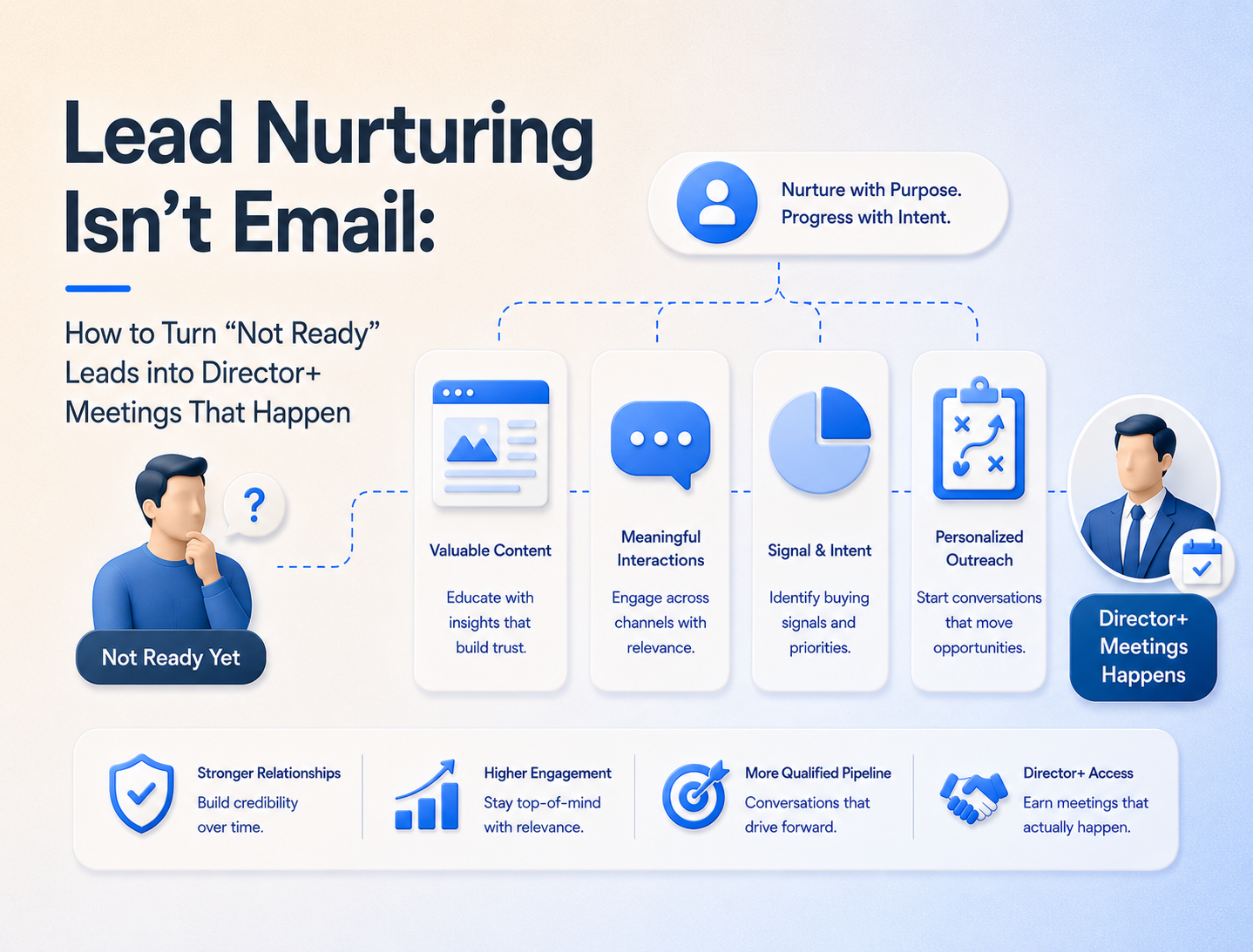
1) “Lead volume” doesn’t translate into “meetings that occur”
A lead can be real and still never convert to a held meeting. SMB audiences are busy, multi-threaded, and often researching multiple options. If follow-up is inconsistent or delayed, the buyer moves on.
2) Sales acceptance becomes the bottleneck
Even when you book meetings, Sales may reject them if:
3) SDR time gets burned on low-signal follow-up
When inbound and event leads flood the queue, SDRs triage. The result is predictable:
4) Inconsistent qualification creates friction between Marketing and Sales
If Sales believes qualification standards are loose, they stop trusting calendars. If Marketing believes Sales “doesn’t work the leads,” alignment collapses.
5) Partner/MDF motions add complexity
In partner and channel programs, the risk compounds: the outreach must be consistent with partner messaging, attribution needs to be clean, and meetings must reflect well on both parties.



.png)

%201.png)


.png)


Solutions That Work
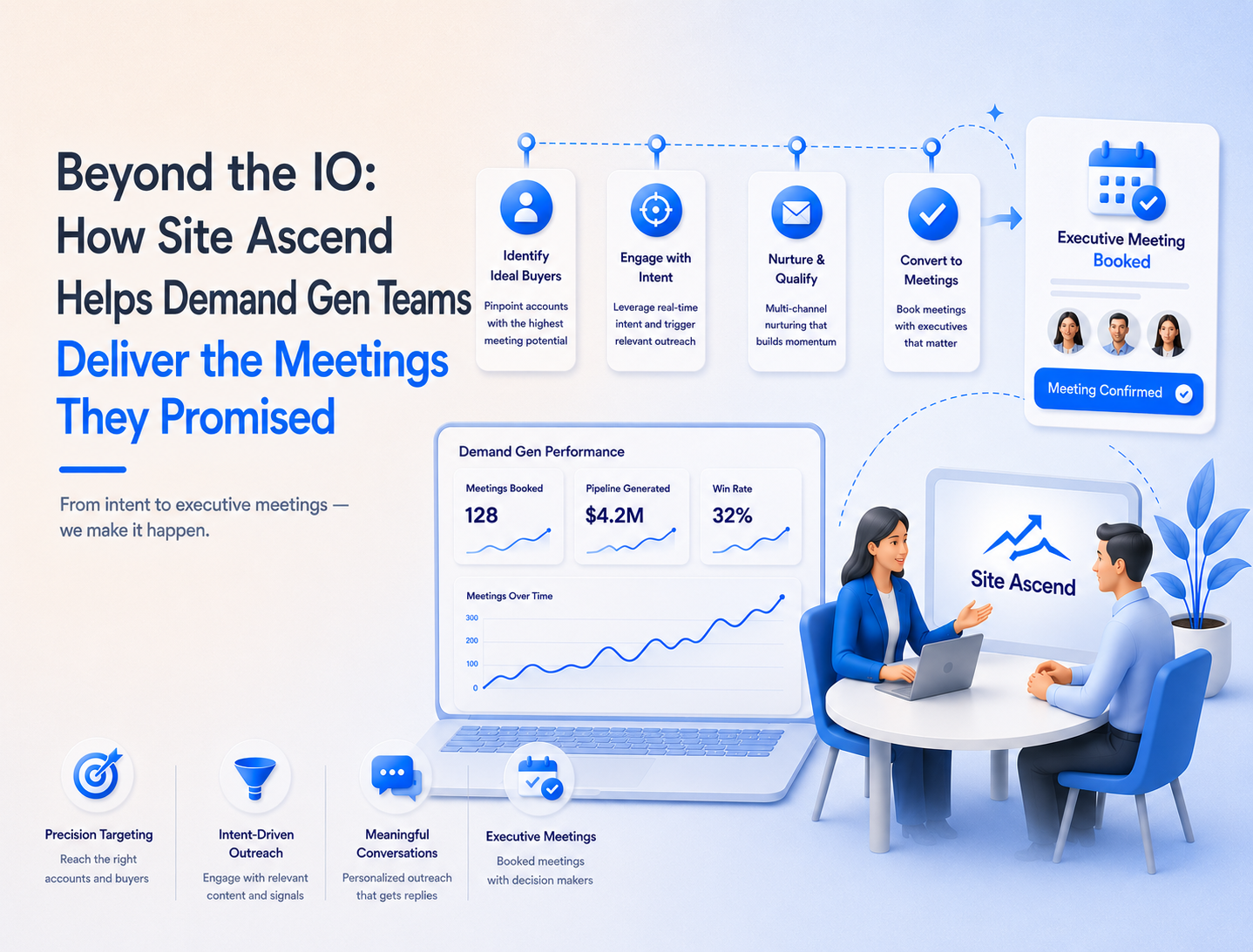
Site Ascend’s core premise is simple: a meeting is only valuable if it happens and Sales accepts it. Everything in the process is designed to protect that outcome.
Executive Meetings: director+ conversations in target accounts
When the goal is pipeline creation—not activity—director-level and above meetings create a clearer path to real deal evaluation.
What makes the difference isn’t just targeting. It’s verification before scheduling:
This is how appointment setting becomes a revenue system, not a calendar-filling exercise.
Lead Qualification: converting opt-ins into accepted meetings
Opt-ins (downloads, webinar registrations, event signups) are not qualified conversations. Site Ascend acts as the conversion layer between interest and Sales:
The goal isn’t to “work leads.” The goal is to de-risk the meeting before it’s booked.
Event Marketing: driving registrants and improving attendance outcomes
Site Ascend supports event programs by procuring registrants via outbound dialing and then running an SMS workflow through the event date to reduce drop-off.
Important boundary: Site Ascend is focused on driving registrants, not providing day-of event services. The value is in the pre-event conversion and confirmation motion that increases attendance probability and creates cleaner follow-up opportunities.
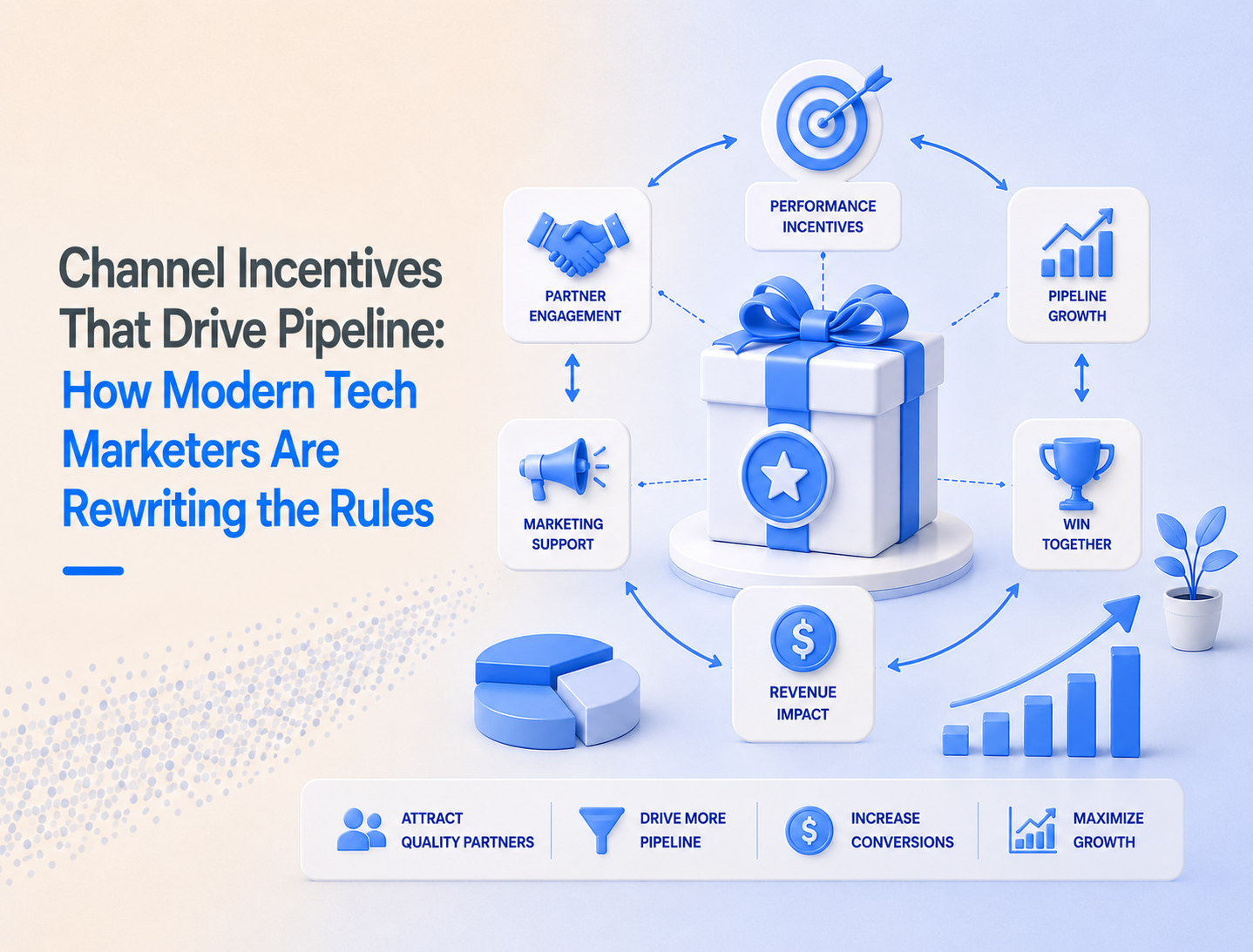
Channel Marketing: white-labeled outreach funded by MDF
Partner and channel demand gen often fails in the handoff—especially when execution is fragmented across vendors, internal SDRs, and partner teams.
Site Ascend supports a consistent, white-labeled appointment-setting motion that:
Why these programs work together
Most vendors “do one thing.” Site Ascend is built to support the full conversion chain:
Targeting → Outreach → Qualification → Booking → Confirmation → Reporting
When those steps are owned end-to-end (even across different motions like events, channel, or inbound), you reduce leakage and increase Sales acceptance.
How Site Ascend Verifies Fit Before Booking
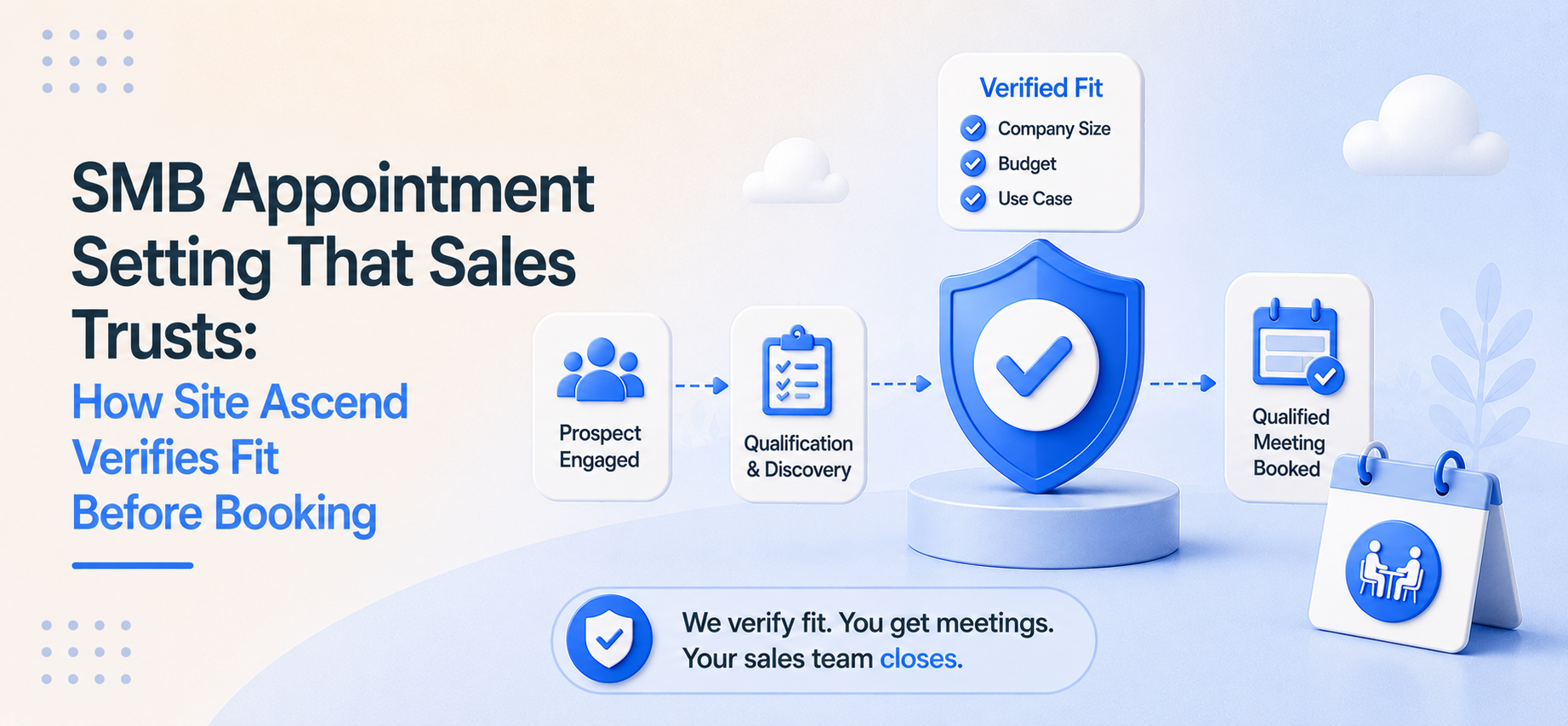
Sales trust is earned in the details. Fit verification is not a single question; it’s a structured discipline.
Here’s how a “trusted meeting” is created:
1) Profile alignment comes first
Before scheduling, the contact and account are checked against the engagement criteria:
This prevents meetings that look good on paper but get rejected in practice.
2) Intent is translated into a reason to meet
SMB buyers often signal interest without articulating the “why.” Fit verification clarifies:
This turns vague engagement into a concrete meeting purpose.
3) Scheduling is paired with confirmation
Booking is not the finish line—held meetings are.
That’s why confirmation matters. A verified meeting includes:
4) Reporting is real-time, not end-of-month
When Marketing and Sales can see progress, disposition, and outcomes without delay, trust improves. It also allows rapid tuning of:
Actionable Steps for Marketers
Use this checklist to increase Sales acceptance and reduce SMB meeting fallout—without adding SDR headcount.
The “Sales-Trusted SMB Meeting” Checklist
Tighten your meeting definition
Set non-negotiable fit gates
Standardize the handoff package
Build a confirmation workflow
Make follow-up a system
Instrument outcomes that Sales cares about
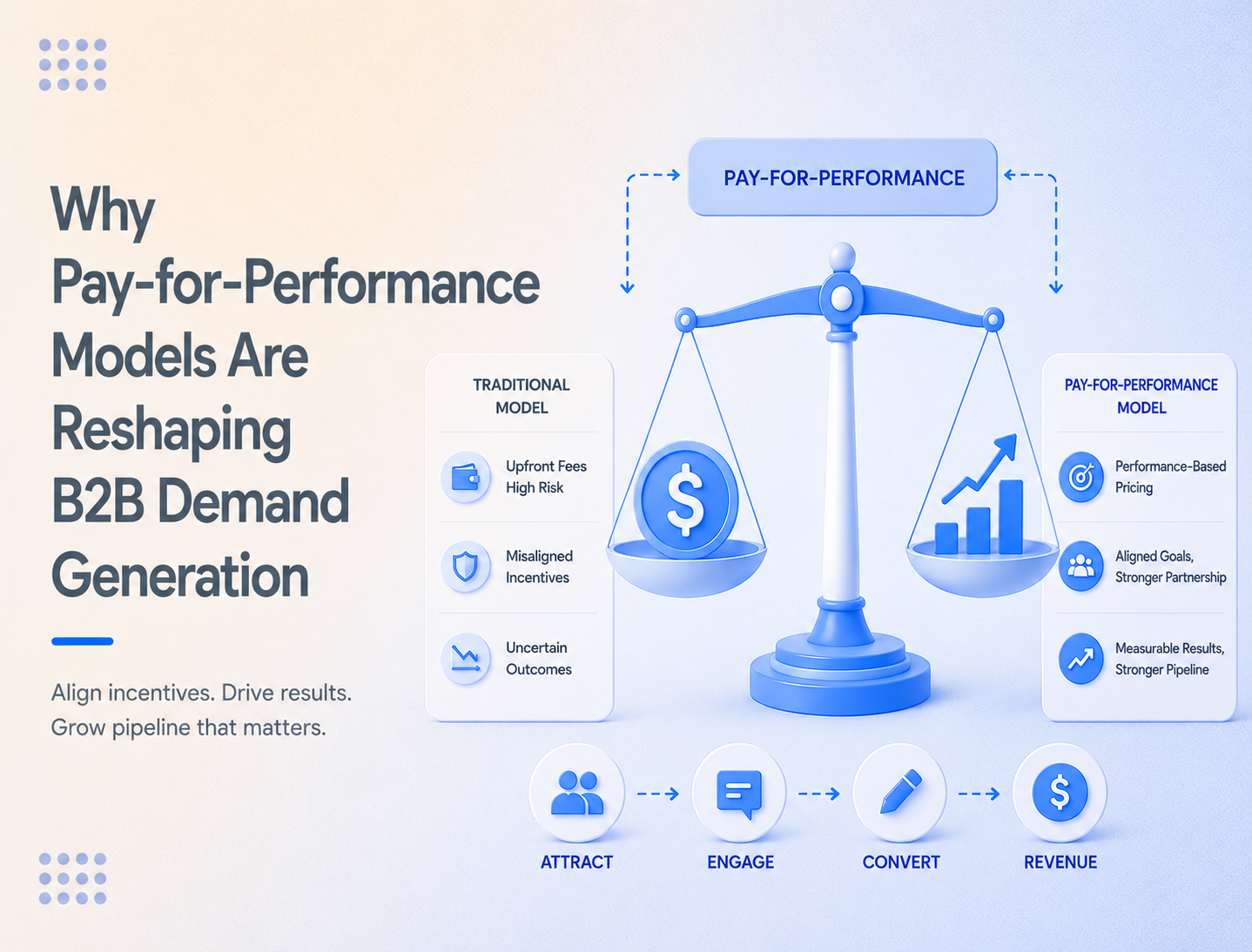
If your internal team can’t execute these steps consistently at scale, that’s not a failure of effort—it’s a capacity mismatch. That’s where a pay-for-outcome partner can be a strategic lever.
Comparison of Market Solutions
Below is a practical view of the market—without naming specific providers—using a lens that aligns to how procurement and revenue leaders evaluate risk.
Example 1: The Procurement View
Procurement Outcome #1: Reduce performance risk
Procurement Outcome #2: Reduce brand and compliance risk
Procurement Outcome #3: Reduce operational and opportunity cost
Conclusion
If SMB pipeline is underperforming, the issue is rarely top-of-funnel volume. It’s usually the conversion layer: qualification discipline, fit verification, confirmation, and the operational ability to follow up fast enough to matter.
Site Ascend is built to solve that layer with a simple promise: only pay for meetings that occur, with director-level and above targeting, U.S.-based outreach, white-labeled execution, and real-time reporting.
If your team is generating SMB interest but struggling to convert it into accepted meetings, a pilot is the fastest way to prove the model. Start with one motion—opt-in lead qualification, executive meetings, partner outreach, or event registrant procurement—and measure what Sales actually cares about: held meetings and acceptance. Start a pilot with Site Ascend.
What makes SMB appointment setting “sales-trusted” versus just “meetings booked”?

Why focus on director-level and above for SMB?
How do you reduce no-shows without over-automating reminders?


Start your pilot campaign today and explore the full range of Site Ascend's demand generation capabilities. Experience firsthand how we can enhance your efficiency, streamline your processes, and drive growth.
RELATED