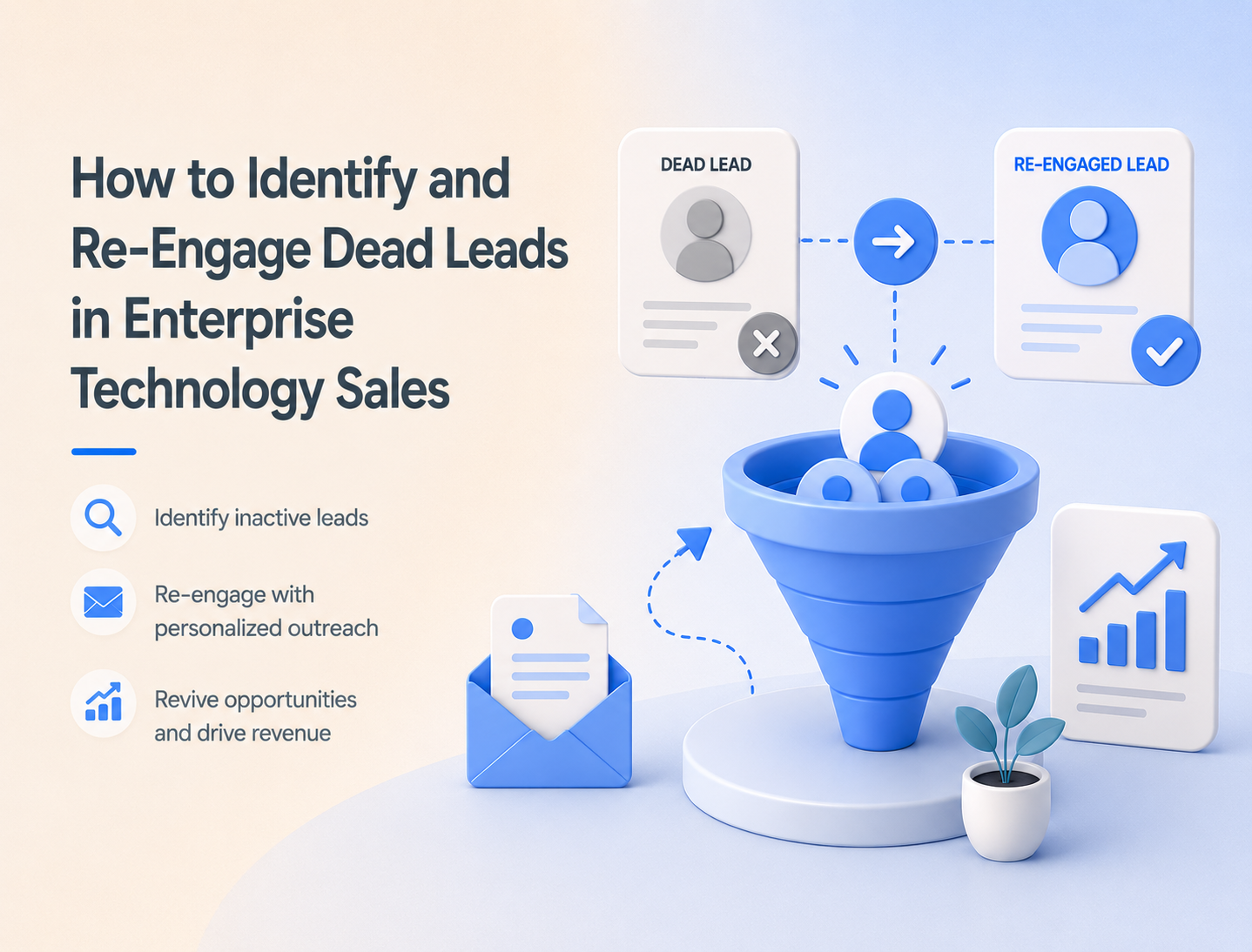
How to Identify and Re-Engage Dead Leads in Enterprise Technology Sales
Lead Management Strategies


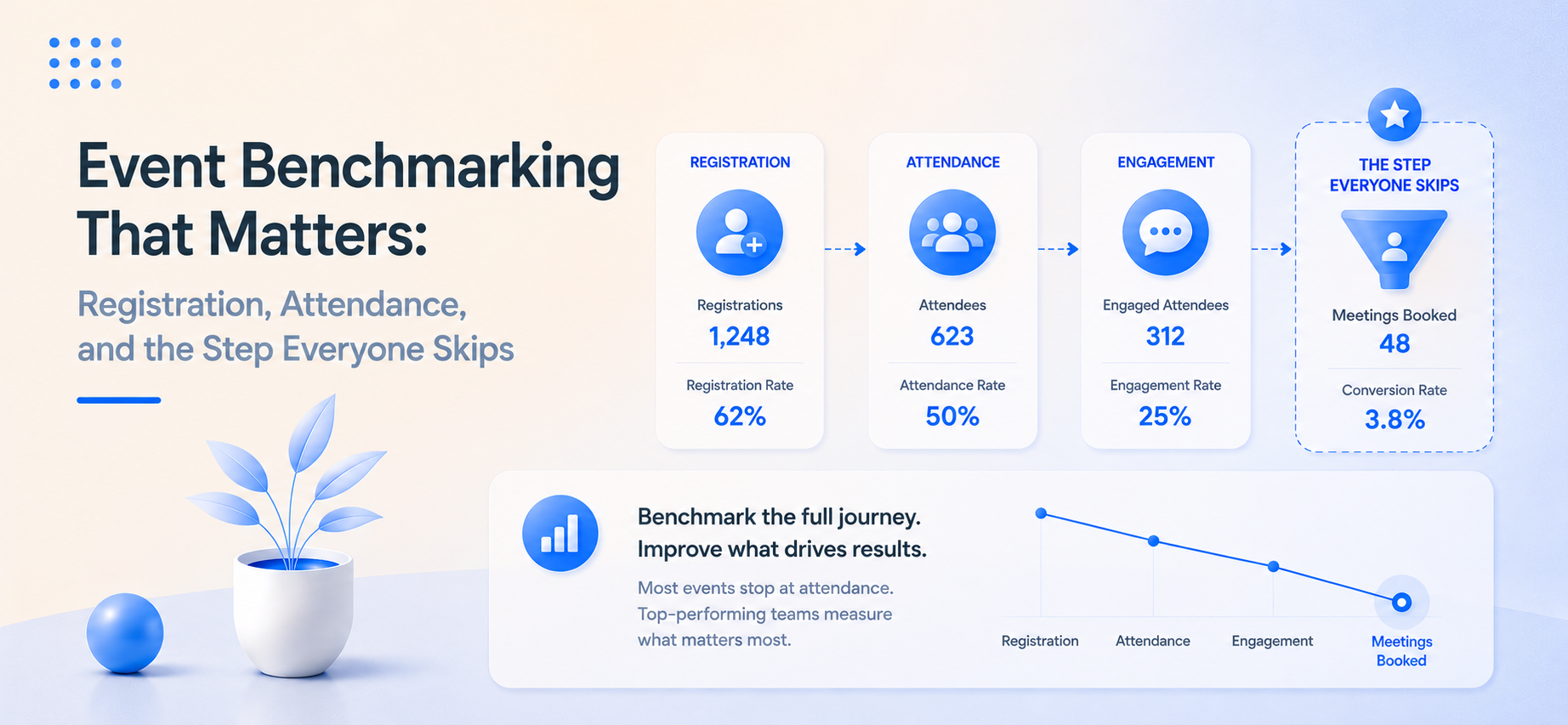
Most event benchmarks stop at registrations and “show rate”—but pipeline doesn’t. This guide breaks down the metrics that actually matter (from invite-to-confirm to attendance-to-next-step) and highlights the step most teams miss: turning attendees into sales-accepted meetings that occur.
-
Event Marketing
Introduction
Event marketers are drowning in dashboards—and still getting cornered by the same question after every sponsored dinner, field event, or virtual panel:
“What did we get for it?”
Most teams answer with registrations and attendance. Those numbers matter, but they’re not the outcome your CRO, VP Sales, or finance partner is actually benchmarking. In enterprise demand gen, the only benchmark that consistently survives budget season is simple: did the event create real sales conversations that progressed?
That’s where most event programs quietly break. Not because the event was bad, or the topic was wrong, or the venue didn’t work—but because the benchmark stops too early. The “step everyone skips” isn’t the post-event email. It’s conversion into a meeting that occurs with the right titles in the right accounts.
Site Ascend exists in that gap. We help demand gen teams turn event investment into director-level and above conversations through targeted outreach, attendee procurement, and pay-for-performance meetings—backed by real-time reporting and a U.S.-based contact center.
What Event Benchmarking Means for Demand Generation Marketers
Event benchmarking is the practice of measuring event performance against targets that predict pipeline—not just participation.
In enterprise tech, this means benchmarks have to do three things:
The issue is that most benchmarks were built for volume marketing: MQLs, badge scans, “engaged accounts.” Those aren’t useless—they’re just incomplete. If your role is tied to pipeline, you need benchmarks that map to sales-accepted next steps.
This is especially true in partner and field motion, where your team is often judged on outcomes you don’t fully control: partner follow-up, rep responsiveness, and timing.
Common Challenges Marketers Face
1) Registrations are easy to inflate—and hard to trust
A registration number can look healthy while still representing low intent, wrong personas, or duplicate interest from the same buying group. Even when the list is real, it doesn’t tell you whether the registrants are the people Sales will prioritize.
2) Attendance is a lagging indicator
Attendance (or show rate) is a useful operational benchmark, but it’s not a pipeline benchmark. It tells you whether people showed up—not whether they’re willing to take a meeting, bring in the right stakeholders, or engage in a next step.
3) “Lead follow-up” is not an owned step
Most event post-mortems implicitly assume Sales will follow up. In practice, follow-up competes with pipeline coverage, renewals, and inbound. So the step you’re benchmarking becomes “we sent leads” rather than “we created conversations.”
4) Partner events create reporting chaos
If you run partner-sponsored events, the benchmark problem compounds: multiple owners, multiple systems, and inconsistent definitions of “qualified.” The event can be a win operationally and still produce no measurable pipeline impact.
5) SDR time becomes the hidden tax
When events underperform, teams often throw SDR time at cleanup: manual outreach, list scrubbing, chasing no-shows, rescheduling. That effort is real cost—and it rarely shows up in your ROI story.



.png)

%201.png)


.png)


Solutions That Work
Event benchmarking gets dramatically easier when you redesign the program around outcomes—specifically, meetings that occur with the right accounts and titles.
That’s where Site Ascend’s services fit:
Executive Meetings: benchmark the outcome, not the activity
If your benchmark is “director+ conversations,” you need a motion built to produce them. Site Ascend focuses exclusively on director-level and above targets and delivers 30-minute virtual executive meetings—with a pay-for-performance model where you only pay for meetings that occur.
This changes the benchmark conversation internally. Instead of defending “event engagement,” you’re reporting a concrete output Sales recognizes.
Event Marketing: attendee procurement built for the right audience
Site Ascend supports event marketing by driving registrants via outbound dialing and then using an SMS workflow to support confirmation and attendance through event day. We do not provide day-of-event onsite services; we focus on getting the right people registered and supported through attendance.
The practical benefit: you can benchmark invite-to-confirm and confirm-to-attend with much tighter control over list quality and follow-through.
Lead Qualification: convert opt-ins into meetings Sales will take
If your event includes content downloads, partner lists, or opt-in leads, Site Ascend can qualify them into sales meetings rather than passing “warm leads” that stall in queue.
This is especially valuable when the event generates interest that is real—but not self-scheduling.
Channel Marketing: stabilize partner-sourced outcomes
For partner-funded programs, Site Ascend offers white-labeled appointment setting paid for by MDF. This is ideal when you need consistent benchmarks and clean ownership without channel conflict. You keep the partner motion intact while installing a reliable conversion layer.
Real-time reporting dashboard: benchmark the full funnel, live
Benchmarking only works when the data is credible. A real-time reporting dashboard helps you monitor conversion rates while the program is running—not weeks later in a retro.
Actionable Steps for Marketers
Use this checklist to upgrade your event benchmarking from “participation metrics” to “pipeline metrics.”
The Event Benchmarking Checklist (that Sales will respect)
1) Set benchmarks by funnel stage—not one blended “ROI” number
2) Define “next step” in operational terms
A “next step” should be one of:
If it’s “interested, send info,” do not count it as a next step in your benchmark.
3) Benchmark by persona and account fit, not just totals
Break out performance by:
4) Build a standard for “meeting quality” that doesn’t require a story
Avoid subjective scoring. Use objective checks:
5) Install a conversion layer when Sales follow-up is inconsistent
If your benchmark depends on Sales behavior you don’t control, fix the system—not the slides. A dedicated conversion motion (executive meeting setting, lead qualification, or white-labeled partner outreach) turns benchmarking from debate into reporting.
Comparison of Market Solutions
Example 1: The Procurement View (three outcomes that matter)
Procurement Outcome #1: Reduce performance risk
Procurement Outcome #2: Increase supplier accountability
Procurement Outcome #3: Improve forecastable delivery
Conclusion
Event benchmarking that matters doesn’t stop at registrations or even attendance. The metric that changes budgets—and earns Sales buy-in—is whether the program consistently produces next steps that convert into meetings that occur with the right accounts and the right titles.
If your event program is generating interest but your benchmarks still fail the pipeline test, Site Ascend can help you install the missing conversion layer through event attendee procurement, lead qualification, and executive meeting setting—so you can report outcomes, not activity.
If you want to see what a pay-for-meeting model looks like for your next event, reach out to Site Ascend to start a pilot.
What are the most important event benchmarks for pipeline-focused teams?

How do you benchmark partner events without creating channel conflict?
Why do “event leads” get ignored after the event?


Start your pilot campaign today and explore the full range of Site Ascend's demand generation capabilities. Experience firsthand how we can enhance your efficiency, streamline your processes, and drive growth.
RELATED