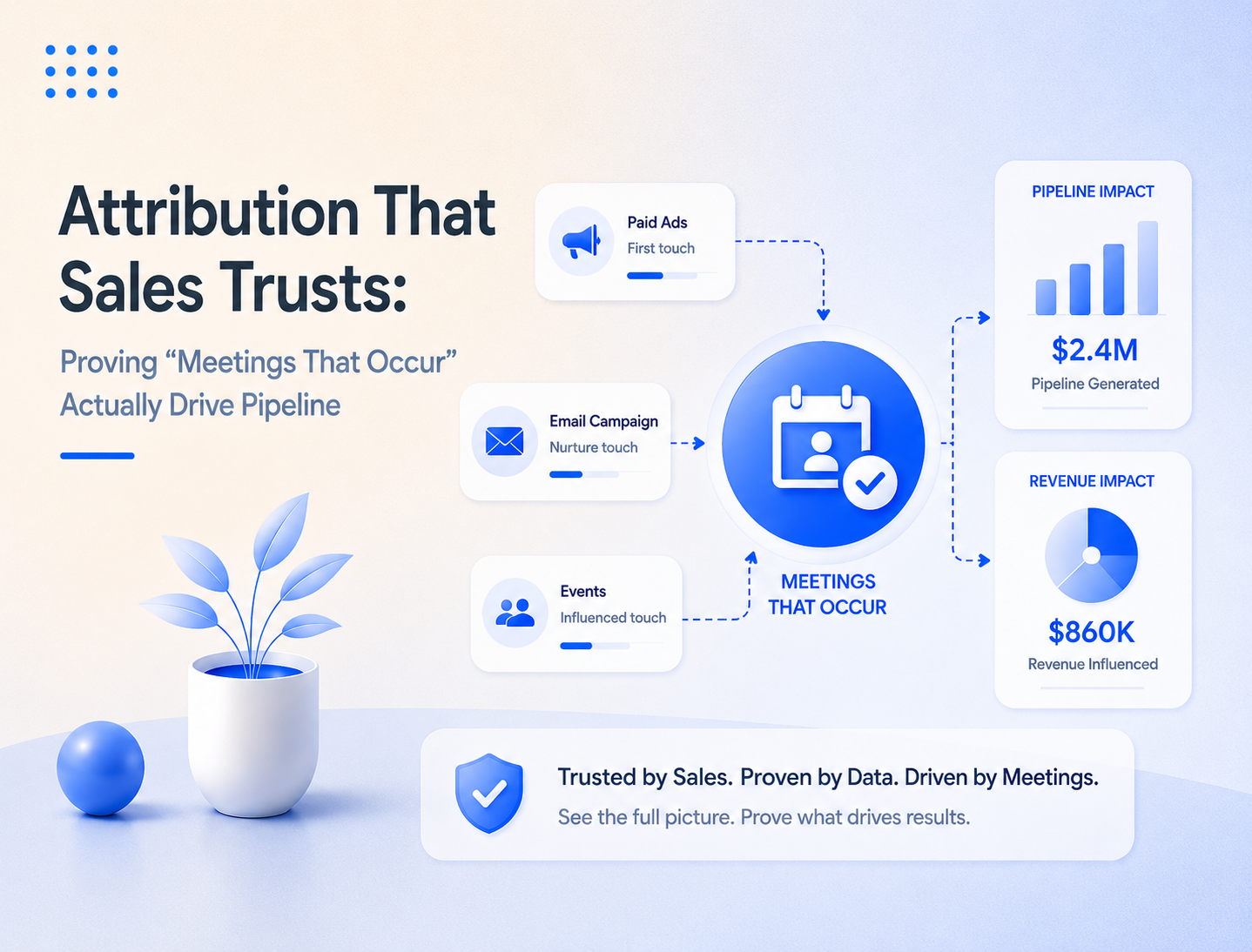
Attribution That Sales Trusts: Proving “Meetings That Occur” Actually Drive Pipeline
Revenue Operations & Pipeline Performance


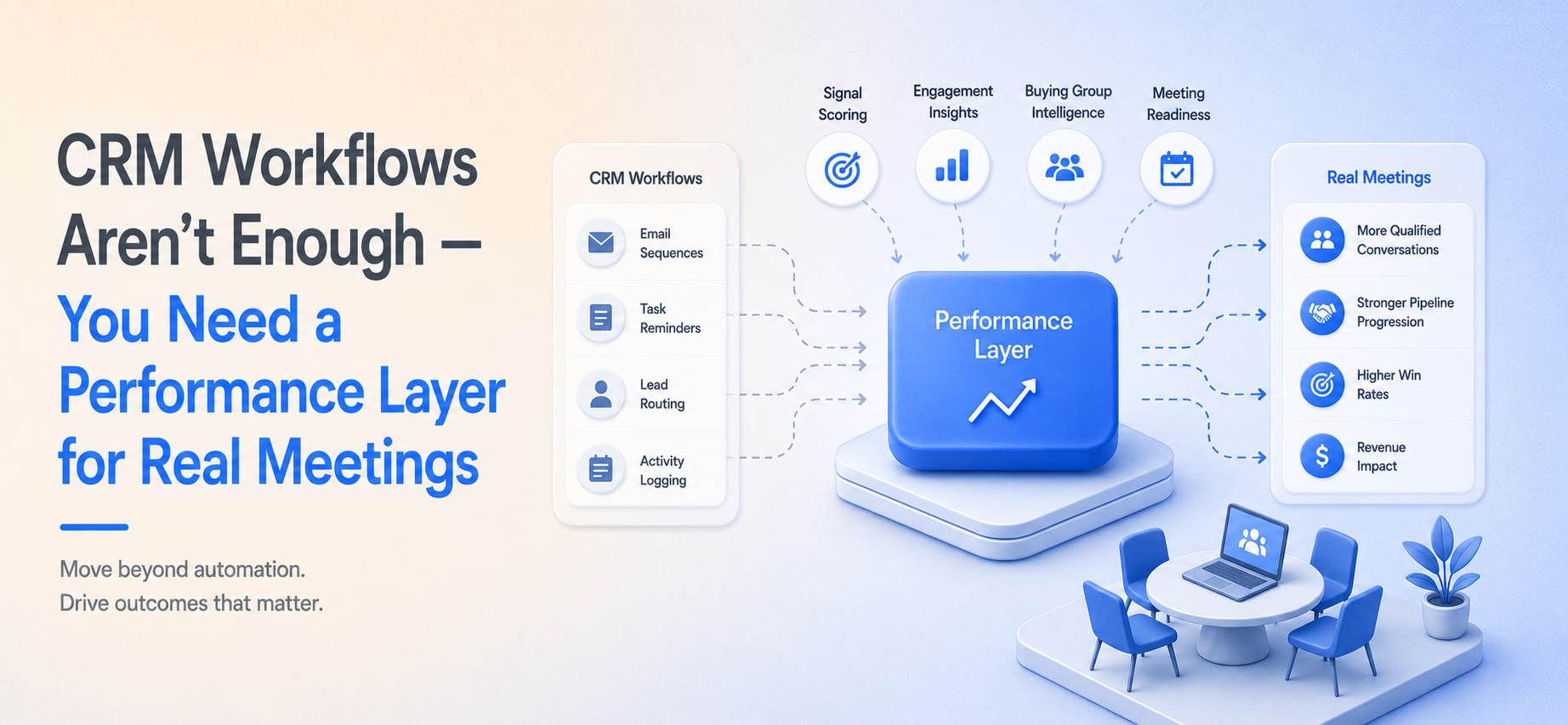
CRM workflows can track engagement and automate handoffs, but they don’t create pipeline on their own. In 2025, demand gen teams need a performance layer — fast, human follow-through that turns CRM signals into qualified director-level meetings.
-
Demand Generation Strategy
Introduction
CRMs were supposed to be the engine of predictable growth. Instead, most demand gen teams are staring at dashboards full of “engaged” accounts and wondering why pipeline still feels shaky.
It’s not that your CRM is useless. It’s that CRMs were built to record momentum, not create it. Workflows can route leads, tag intent, and trigger automation all day long — but none of that guarantees a director-level buyer will take a meeting. In 2025, the teams winning aren’t the ones with the most automation. They’re the ones who add a performance layer on top of their CRM to turn signals into real human conversations.
That’s where Site Ascend fits: we don’t replace your CRM motion — we activate it.
What CRM (Customer Relationship Management) Means for Demand Generation Marketers and other titles that meet Site Ascend’s ICP
For demand gen leaders, CRM isn’t just a sales tool anymore. It’s the shared system that governs:
In theory, CRM workflows help you scale: lead scoring, nurture handoffs, routing rules, SDR alerts. In practice, they create a false sense of progress. An MQL is “accepted.” An account is “hot.” A buyer is “in sequence.” Meanwhile… the deal doesn’t move.
Why? Because CRM workflows can only automate process, not commitment. They’re great at moving data between stages. They’re not great at moving buyers between decisions.
Common Challenges Marketers Face
Even the best CRM strategy runs into the same friction points in 2025:
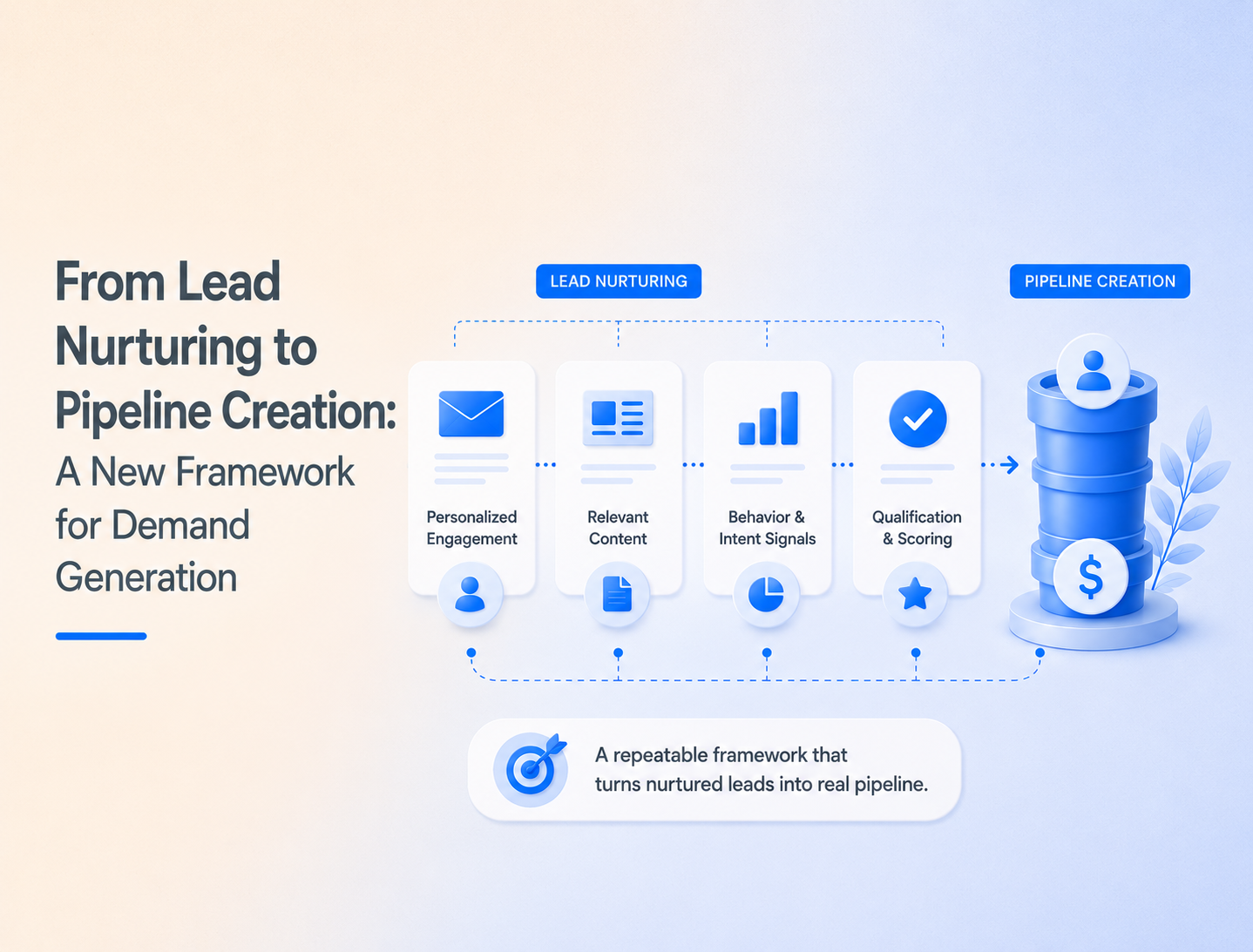
1. Signals pile up faster than teams can act.
Intent surges, demo requests, event attendees, retargeting clicks — your CRM can capture all of it. But if response is slow or inconsistent, the moment is gone. Buyers don’t wait for your SLA.
2. Lead status becomes a substitute for real qualification.
A lead marked “sales-accepted” doesn’t mean they’re real. It means someone clicked a button. Without a human validation step, your funnel quietly fills with people who will never meet or buy.
3. Director-level buyers don’t behave like workflow logic.
A VP doesn’t care about your cadence. A director doesn’t “progress” because they opened three emails. Senior buyers move when something feels relevant and timely — which isn’t something you can automate into existence.
4. Marketing owns the front, sales owns the close, and the middle leaks.
Workflows create handoffs. Handoffs create gaps. And gaps create lost pipeline — especially in partner and event-driven motions where timing is everything.
5. CRM dashboards don’t show the real blocker.
Most dashboards tell you what happened (clicks, stages, velocity). They don’t tell you why pipeline stalled — no meeting, no buyer, no urgency.



.png)

%201.png)


.png)


Solutions That Work
The fix isn’t ripping out your CRM or layering on more automation. The fix is adding a performance layer that converts CRM insight into verified conversations.
Here’s what that looks like through Site Ascend’s core programs:
Executive Meetings
Your CRM can identify priority accounts. Site Ascend turns those accounts into 30-minute virtual meetings with director+ decision makers. Instead of hoping engagement becomes a sales opportunity, you manufacture the next step.
Lead Qualification
When someone opts in — a whitepaper, webinar, demo interest — the CRM records it. Site Ascend qualifies it. We validate intent, confirm fit, and convert the right prospects into scheduled meetings. You stop feeding sales wishful thinking.
Channel Marketing
CRMs struggle with partner follow-through. MDF gets spent, leads get logged, impact gets fuzzy. Site Ascend runs white-labeled outreach on behalf of your partners, paid through MDF, so partner activity produces real pipeline instead of reports.
Event Marketing
Your CRM tracks registrants and attendance. We drive the registrants in the first place — through outbound dialing and SMS support — ensuring your event doesn’t just look good in Salesforce, but creates a room full of buyers worth meeting.
What makes this a performance layer?
Because it’s tied to outcomes, not activity. You don’t pay for sequences launched or calls attempted. You pay for meetings that actually happen.
Actionable Steps for Marketers
If you want your CRM to become a pipeline engine instead of a data archive, use this quick reset:
Start with the point of truth: meetings.
Track which workflows reliably lead to booked conversations — not just pipeline stages.
Build “speed-to-human” as a KPI.
Any lead or account showing intent should have a human touch within days, not weeks. Senior buyers decay fast.
Treat partner and event leads as high-friction by default.
If you’re not proactively converting them to meetings, assume leakage.
Use your CRM to prioritize — not to pretend.
Let the CRM tell you who to chase. Use a performance layer to make sure chasing results in real buyer engagement.
Audit your “accepted” leads.
If sales accepts 100 leads but only 10 meet, your CRM isn’t the issue — your follow-through model is.
Comparison of Market Solutions
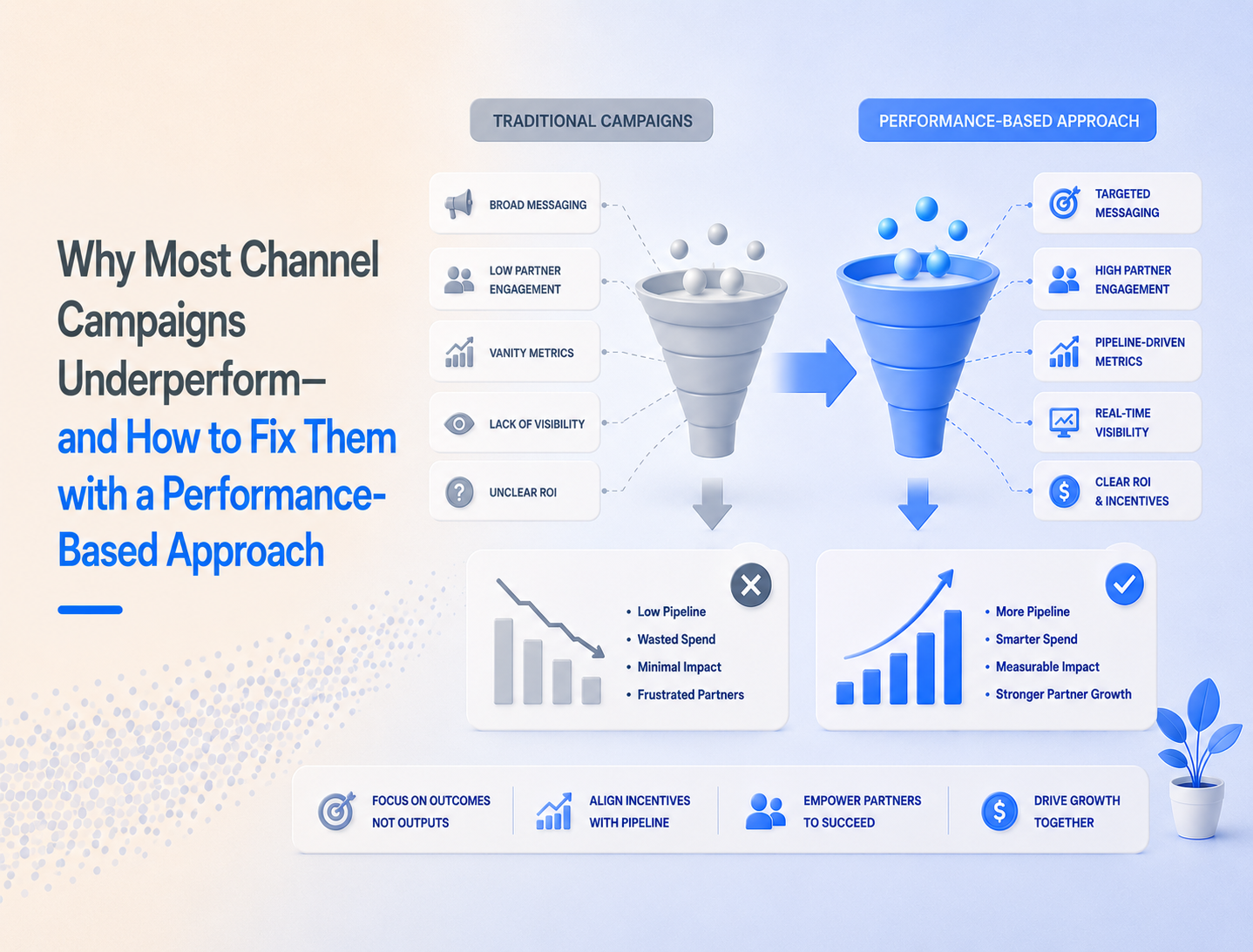
Most teams choose between two flawed models:
Model A: Fully in-house execution.
Pros: control, internal context.
Cons: expensive, inconsistent capacity, hard to scale quickly, and often skewed toward activity metrics.
Model B: Traditional outsourced appointment setting.
Pros: adds volume.
Cons: quality varies, off-shore teams hurt brand trust, and incentives reward attempts — not outcomes.
Site Ascend is built differently.
We’re outcome-aligned (only pay for meetings that occur), fully white-labeled, U.S.-based, and focused exclusively on director+ buyers. That means your CRM doesn’t just generate leads — it generates the next sales conversation.
Conclusion
CRMs are essential. CRM workflows are useful. But neither one guarantees pipeline.
In 2025, buyers don’t move because they hit a score threshold. They move because a real person engages them at the right moment, with the right message, and a clear next step.
That’s the performance layer your CRM can’t provide on its own — and exactly what Site Ascend delivers through executive meetings, lead qualification, channel marketing, and event attendee procurement.
If you’re ready to turn CRM activity into real director-level meetings, talk to Site Ascend about a pilot.
Contact us here to get started.
How is a performance layer different from CRM automation?

What types of CRM triggers benefit most from human engagement?
Will this mess with our existing CRM stages and attribution?


Start your pilot campaign today and explore the full range of Site Ascend's demand generation capabilities. Experience firsthand how we can enhance your efficiency, streamline your processes, and drive growth.
RELATED