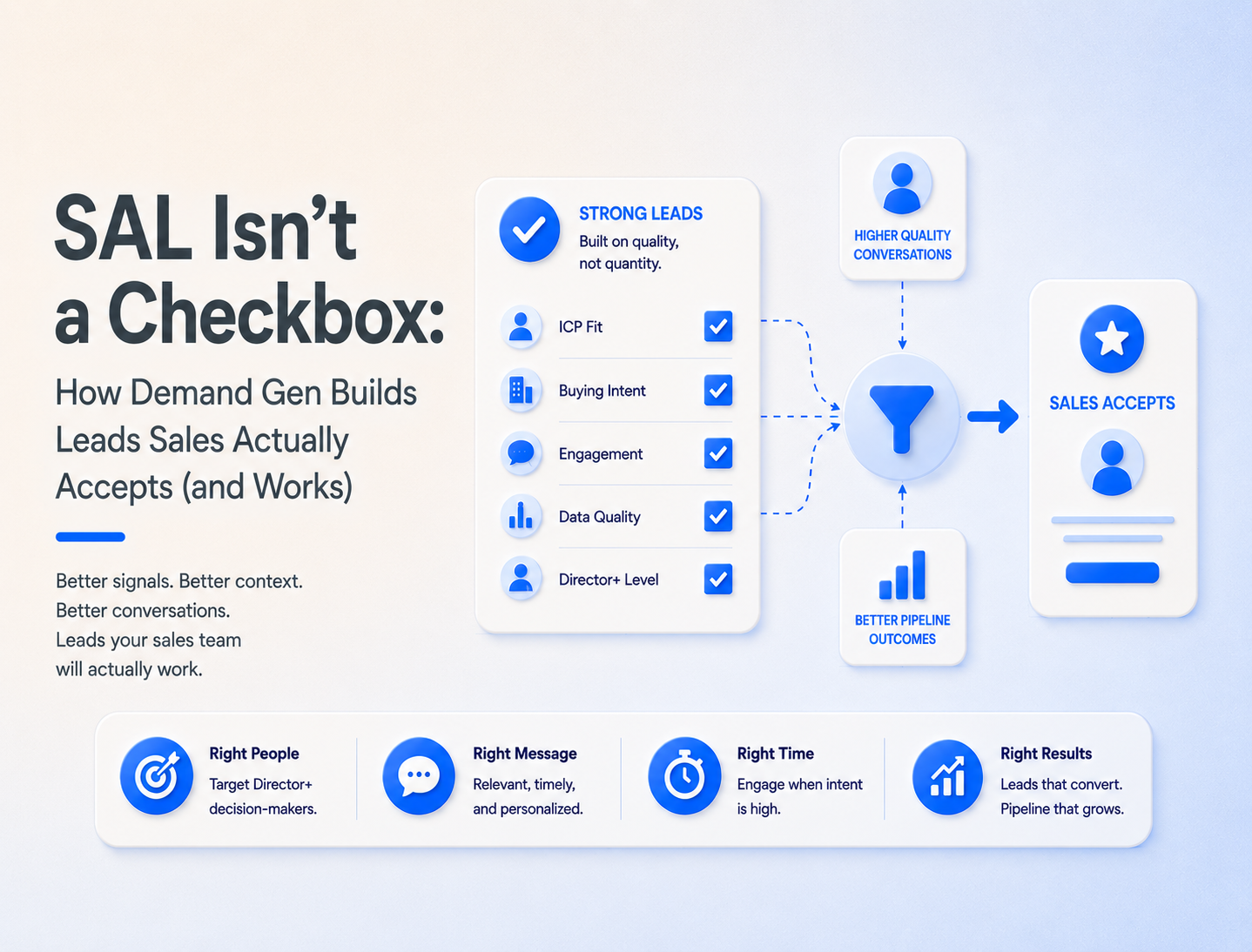
Sales Handoff Best Practices: A Simple Framework to Improve Sales Acceptance Rates
Demand Generation Operations


Effective lead nurturing goes beyond keeping prospects engaged. Discover how technology marketers are using qualification, executive outreach, and pipeline-focused strategies to convert nurtured leads into qualified sales meetings and revenue-generating opportunities.
-
Demand Generation
Introduction
For years, lead nurturing has been a cornerstone of demand generation.
Marketing teams invest significant time and budget generating engagement, educating prospects, and keeping potential buyers connected to their brands. Yet despite these efforts, many organizations continue to struggle with a common problem: nurturing activity doesn't always translate into pipeline.
In today's B2B technology landscape, marketing leaders are facing greater pressure than ever to demonstrate revenue impact. Executive teams are no longer satisfied with engagement metrics alone. They want to see qualified opportunities, sales meetings, pipeline contribution, and measurable business outcomes.
This shift is forcing demand generation teams to rethink traditional lead nurturing strategies.
The question is no longer, "How do we generate more engagement?"
The question is, "How do we convert engagement into qualified sales conversations?"
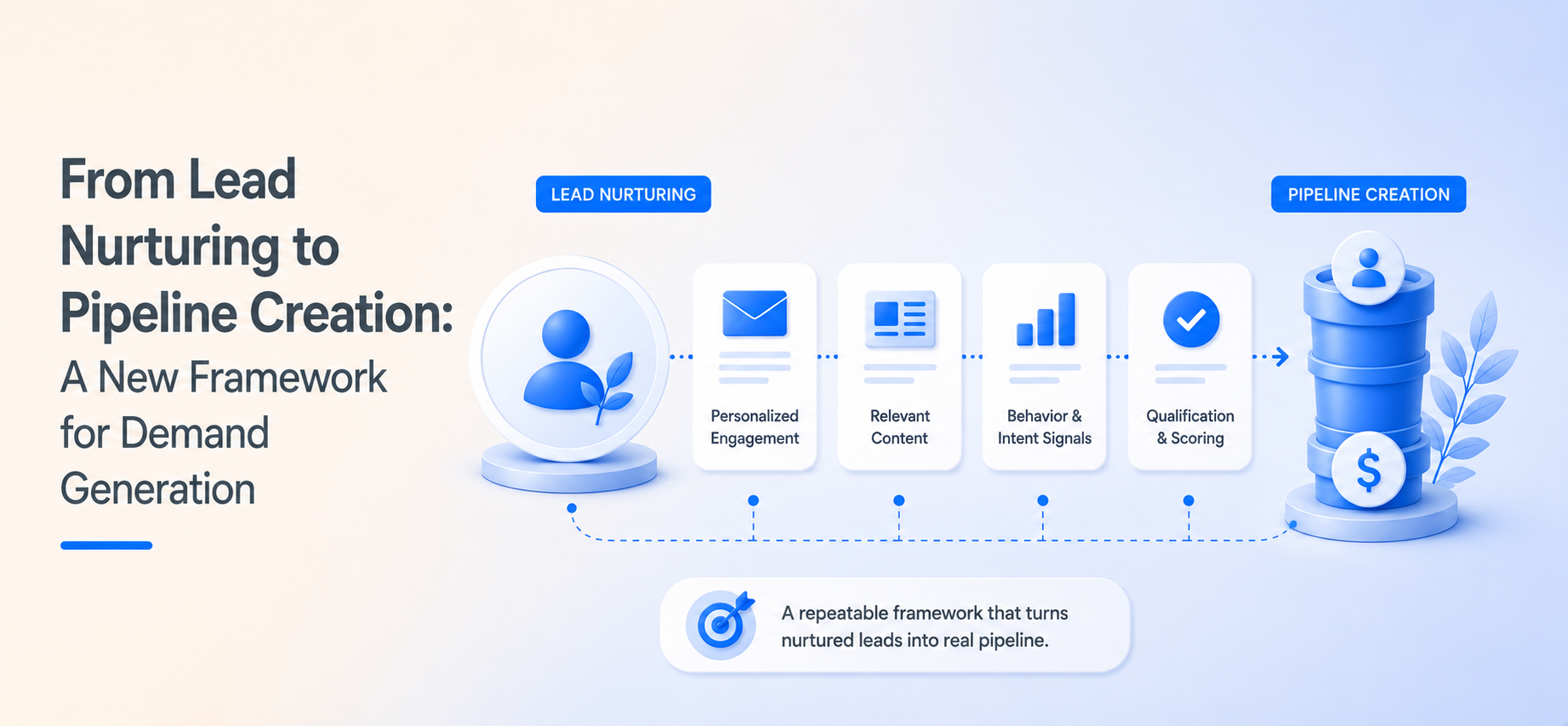
The answer lies in adopting a pipeline-focused lead nurturing framework—one that combines engagement with qualification, executive access, and direct sales alignment.
What Lead Nurturing Means for Demand Generation Marketers
Lead nurturing is the process of developing relationships with prospective buyers who have expressed interest but are not yet ready for a sales conversation.
Traditionally, lead nurturing has focused on maintaining engagement over time while helping prospects progress through the buying journey.
For technology marketers, lead nurturing plays an important role because:
However, engagement alone doesn't create pipeline.
A prospect can engage repeatedly without ever becoming a qualified opportunity.
That's why modern demand generation leaders are expanding their definition of lead nurturing beyond engagement metrics and focusing on activities that create measurable business outcomes.
Why Traditional Lead Nurturing Falls Short
Many lead nurturing programs are successful at maintaining awareness but struggle to create opportunities.
Engagement Doesn't Equal Buying Intent
A prospect may attend an event, download content, or interact with marketing programs without having an active project or purchasing timeline.
While these actions demonstrate interest, they do not necessarily indicate sales readiness.
Decision-Makers Often Remain Unengaged
Many nurturing programs engage practitioners, researchers, or influencers rather than executives and budget holders.
Without access to decision-makers, opportunities often fail to progress.
Marketing and Sales Operate Independently
In many organizations, nurturing remains a marketing activity while qualification remains a sales responsibility.
This separation often creates gaps that reduce conversion rates.
Event Registrations Don't Guarantee Pipeline
Event marketing continues to be a valuable demand generation channel.
However, registrations alone rarely indicate opportunity potential.
Without additional qualification, event-generated leads may never progress beyond engagement.
Partner-Sourced Leads Vary in Quality
Channel marketing programs often generate demand, but qualification standards may differ significantly across partner ecosystems.
This inconsistency can impact pipeline outcomes.
Common Challenges Marketers Face
As organizations attempt to improve lead nurturing performance, several recurring challenges emerge.
High Lead Volume, Low Opportunity Creation
Marketing teams generate engagement but struggle to create qualified pipeline.
Low Sales Acceptance Rates
Sales teams frequently reject leads because qualification has not been validated.
Long Sales Cycles
Poor qualification early in the process often results in longer sales cycles and lower conversion rates.
Difficulty Reaching Executive Buyers
Many programs struggle to engage director-level and above stakeholders who ultimately influence purchasing decisions.
Lack of Visibility Into Lead Progression
Without clear qualification milestones, it becomes difficult to understand which nurturing activities are actually contributing to pipeline.



.png)

%201.png)


.png)


Solutions That Work
Organizations that consistently generate pipeline focus on combining lead nurturing with qualification and executive engagement.
Executive Meetings That Accelerate Opportunity Creation
One of the most effective ways to move nurtured prospects toward pipeline is through direct conversations with decision-makers.
Site Ascend's Executive Meetings program delivers 30-minute virtual meetings with director-level and above contacts within target accounts.
These conversations help validate:
Rather than relying solely on engagement signals, marketing teams can create meaningful sales conversations with qualified decision-makers.
Learn more about Executive Meetings:
Lead Qualification That Bridges the Gap Between Interest and Pipeline
Not every engaged lead is sales-ready.
Site Ascend's Lead Qualification services help marketers validate intent, fit, and opportunity potential through live conversations.
This process transforms engagement into qualified sales meetings and provides sales teams with greater confidence in lead quality.
Channel Marketing That Supports Partner-Driven Demand
Partner programs often require consistent qualification standards to create predictable pipeline outcomes.
Site Ascend's Channel Marketing programs provide white-labeled outreach on behalf of partners while maintaining alignment with qualification criteria.
This helps improve partner-sourced lead quality while protecting the partner relationship.
Learn more:
Event Marketing Focused on Qualified Attendees
Successful event marketing begins before the event takes place.
Site Ascend's Event Marketing programs help technology companies procure attendees through outbound dialing campaigns focused on ideal customer profiles and target accounts.
Registrants are supported through event day using SMS workflows that maximize attendance and engagement.
This creates stronger opportunities for meaningful follow-up and qualification after the event.
Learn more:
Actionable Steps for Marketers
To improve the effectiveness of lead nurturing programs, focus on qualification and opportunity creation—not just engagement.
Lead Nurturing Pipeline Checklist
Before advancing a lead, confirm:
- The prospect fits your ideal customer profile
- The contact aligns with target buyer personas
- Meaningful engagement has occurred
- Business challenges have been identified
- Decision-maker involvement has been established
- Qualification has been validated through conversation
- Sales and marketing agree on progression criteria
- The lead demonstrates opportunity potential
Organizations that implement these practices often improve:
Comparing Market Solutions for Lead Nurturing and Qualification
Organizations typically use several approaches to improve lead nurturing performance.
Internal Demand Generation Teams
Internal teams offer strategic control and alignment.
However, scaling qualification and meeting generation efforts often requires significant investments in staffing, training, and technology.
Traditional Lead Nurturing Providers
Many providers focus heavily on engagement metrics and activity tracking.
While these programs may improve awareness, they do not always improve pipeline outcomes.
Offshore Qualification Models
Offshore teams can provide scale but may create challenges related to executive engagement, buyer experience, and qualification consistency.
Performance-Based Meeting Generation Partners
Performance-based partners align outcomes with business goals by focusing on completed meetings and qualified conversations.
Site Ascend differentiates itself through:
These capabilities help organizations create measurable pipeline outcomes rather than simply generating engagement activity.
Conclusion
Lead nurturing remains an essential component of demand generation.
But engagement alone is no longer enough.
Today's marketing leaders are expected to influence revenue, generate qualified opportunities, and demonstrate measurable business impact.
The organizations that succeed are those that combine nurturing with qualification, executive engagement, and sales alignment.
By focusing on pipeline creation rather than activity metrics alone, marketers can create stronger opportunities and better business outcomes.
Whether you're looking to improve lead qualification, generate more executive meetings, strengthen partner-sourced pipeline, or increase qualified event attendance, Site Ascend can help.
Ready to transform lead nurturing into pipeline creation?
What is lead nurturing in demand generation?

Why doesn't lead nurturing always create pipeline?
How can marketers improve lead nurturing outcomes?


Start your pilot campaign today and explore the full range of Site Ascend's demand generation capabilities. Experience firsthand how we can enhance your efficiency, streamline your processes, and drive growth.
RELATED