How Virtual Event Promotion Drives Demand Generation Success for Tech Companies
Event Marketing


Strong partner relationships are the foundation of successful channel marketing. Discover how an effective Partner Relationship Management (PRM) strategy improves partner engagement, aligns marketing and sales efforts, and turns channel programs into a more consistent source of qualified pipeline.
-
Channel Marketing
Introduction
For many B2B technology companies, partner ecosystems represent one of the largest opportunities for sustainable revenue growth. Yet despite significant investments in channel programs, partner enablement, and Market Development Funds (MDF), many organizations continue to struggle with inconsistent pipeline performance.
The problem often isn't the quality of the partners—it's the quality of the relationships.
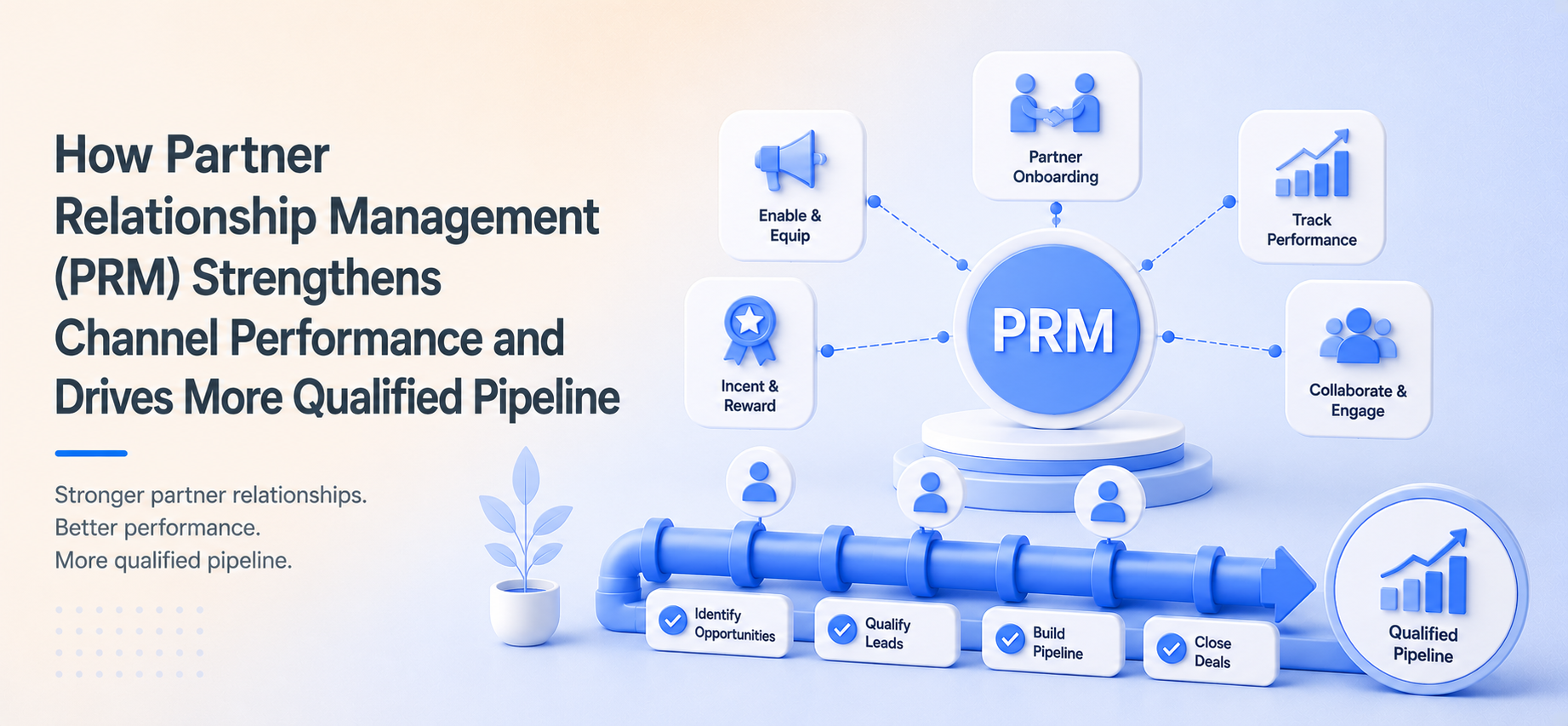
Partner Relationship Management (PRM) has evolved far beyond simply giving partners access to a portal. Today, it serves as the operational foundation for aligning vendors, partners, and sales teams around shared revenue goals. When implemented strategically, PRM helps improve partner engagement, campaign execution, lead accountability, and ultimately, qualified pipeline creation.
For demand generation leaders, PRM is no longer just a channel management tool—it's a competitive advantage.
What Partner Relationship Management (PRM) Means for Demand Generation Marketers
Partner Relationship Management (PRM) refers to the processes, technologies, and operational strategies organizations use to recruit, enable, support, measure, and collaborate with channel partners.
Unlike Customer Relationship Management (CRM), which focuses on direct customer relationships, PRM focuses on creating stronger business relationships with partners that generate revenue on behalf of the organization.
For demand generation teams, effective PRM helps answer critical questions:
Instead of measuring partner success by participation alone, modern PRM shifts attention toward pipeline contribution, opportunity quality, and long-term revenue impact.
Common Challenges Marketers Face
Even mature partner programs frequently struggle to convert channel activity into measurable business outcomes.
Many organizations invest heavily in partner onboarding but provide limited ongoing engagement. Partners receive campaign assets, funding, and sales materials but lack the strategic guidance needed to execute consistently.
Visibility is another common challenge. Marketing teams often know how much they've invested in partners but struggle to understand which activities actually influenced qualified pipeline.
Lead ownership can also become fragmented. Delayed follow-up, unclear routing processes, and inconsistent qualification standards often create friction between vendors and partners, resulting in lost opportunities before sales conversations even begin.
Perhaps the biggest challenge is measuring success. Too many organizations still evaluate channel performance using metrics such as campaign participation, partner certifications, webinar attendance, or MDF utilization instead of revenue outcomes.



.png)

%201.png)


.png)


Solutions That Work
Build PRM Around Shared Revenue Goals
Successful PRM programs begin by aligning vendors and partners around the same definition of success. Instead of rewarding activity alone, establish shared KPIs tied to qualified meetings, pipeline creation, opportunity progression, and revenue contribution. When both organizations are measured against common outcomes, collaboration becomes more strategic and accountability improves.
Make Partner Enablement Continuous
Partner enablement should not end after onboarding. High-performing channel organizations continuously provide updated messaging, campaign guidance, market insights, competitive positioning, and sales support throughout the year. Ongoing education helps partners stay aligned with changing buyer needs and execute campaigns more effectively.
Improve Visibility Across the Partner Journey
Pipeline stalls often occur because organizations lose visibility after leads are distributed. Implement consistent reporting that tracks partner engagement, campaign performance, lead follow-up, meeting outcomes, and opportunity progression. Better visibility allows marketing teams to optimize investments based on measurable business results rather than assumptions.
Prioritize Quality Over Partner Volume
Adding more partners doesn't automatically increase pipeline. Many successful channel programs focus on strengthening relationships with their highest-performing partners instead of continually expanding their partner network. Investing more deeply in engaged partners typically produces better long-term revenue outcomes than spreading resources too thin.
Where Site Ascend Fits
Building a high-performing PRM strategy requires more than technology—it requires consistent execution. Site Ascend helps technology companies and channel teams turn partner engagement into measurable business outcomes through white-labeled Channel Marketing programs, Executive Meetings with director-level decision-makers, Event Marketing support that drives qualified registrants, and Lead Qualification services that validate interest before opportunities reach sales. Rather than replacing existing PRM platforms, Site Ascend helps organizations maximize the value of those investments by improving partner execution, increasing qualified conversations, and creating more predictable pipeline.
Actionable Steps for Marketers
Conduct a Partner Relationship Effectiveness Review
Rather than launching another partner campaign, evaluate the overall health of your PRM strategy using these five questions:
Relationship Alignment
Enablement Quality
Pipeline Visibility
Operational Accountability
Growth Planning
Organizations that regularly evaluate these areas often identify operational improvements that significantly strengthen long-term channel performance.
Comparison of Market Solutions
Organizations take different approaches to managing partner relationships, and each offers distinct advantages depending on business goals.
Some rely primarily on internal channel teams, providing greater control over partner engagement but often requiring significant staffing and operational resources as partner networks grow.
Others use PRM technology platforms to centralize partner onboarding, training, communication, and performance tracking. While these platforms improve organization and visibility, they still depend on consistent execution and partner participation to produce meaningful results.
Many companies also supplement internal efforts with specialized channel execution partners. These providers help extend campaign execution, improve partner engagement, increase qualified conversations, and support ongoing program performance without requiring organizations to expand internal headcount.
The most successful organizations rarely depend on a single approach. Instead, they combine strong internal strategy, effective PRM technology, and specialized execution resources to create a scalable channel program focused on measurable pipeline growth rather than partner activity alone.
Conclusion
Partner Relationship Management is no longer simply about organizing partner information or distributing marketing assets. It has become a strategic discipline that directly influences pipeline quality, partner engagement, and long-term revenue growth.
Organizations that treat PRM as a continuous business strategy—rather than an administrative function—are better positioned to build stronger partner ecosystems, improve campaign execution, and create more predictable demand generation outcomes.
For companies looking to strengthen their channel programs, the goal shouldn't be managing more partners. It should be helping the right partners generate more qualified pipeline.
If you're ready to improve partner engagement, strengthen channel performance, and create more qualified sales conversations, contact Site Ascend.
Why is PRM important for demand generation?

How is PRM different from a CRM?
How should marketers measure PRM success?


Start your pilot campaign today and explore the full range of Site Ascend's demand generation capabilities. Experience firsthand how we can enhance your efficiency, streamline your processes, and drive growth.
RELATED