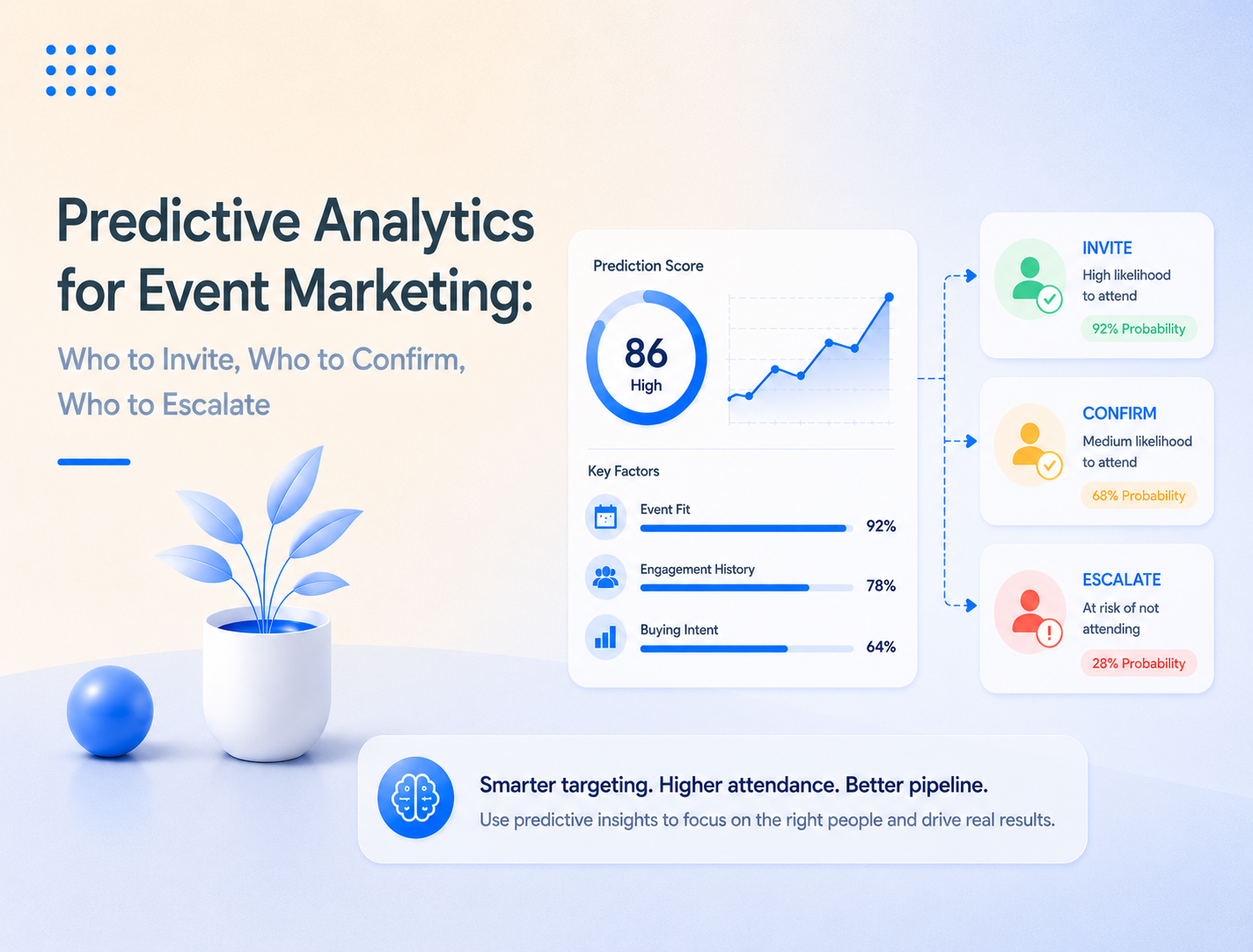
Predictive Analytics for Event Marketing: Who to Invite, Who to Confirm, Who to Escalate
Event Marketing


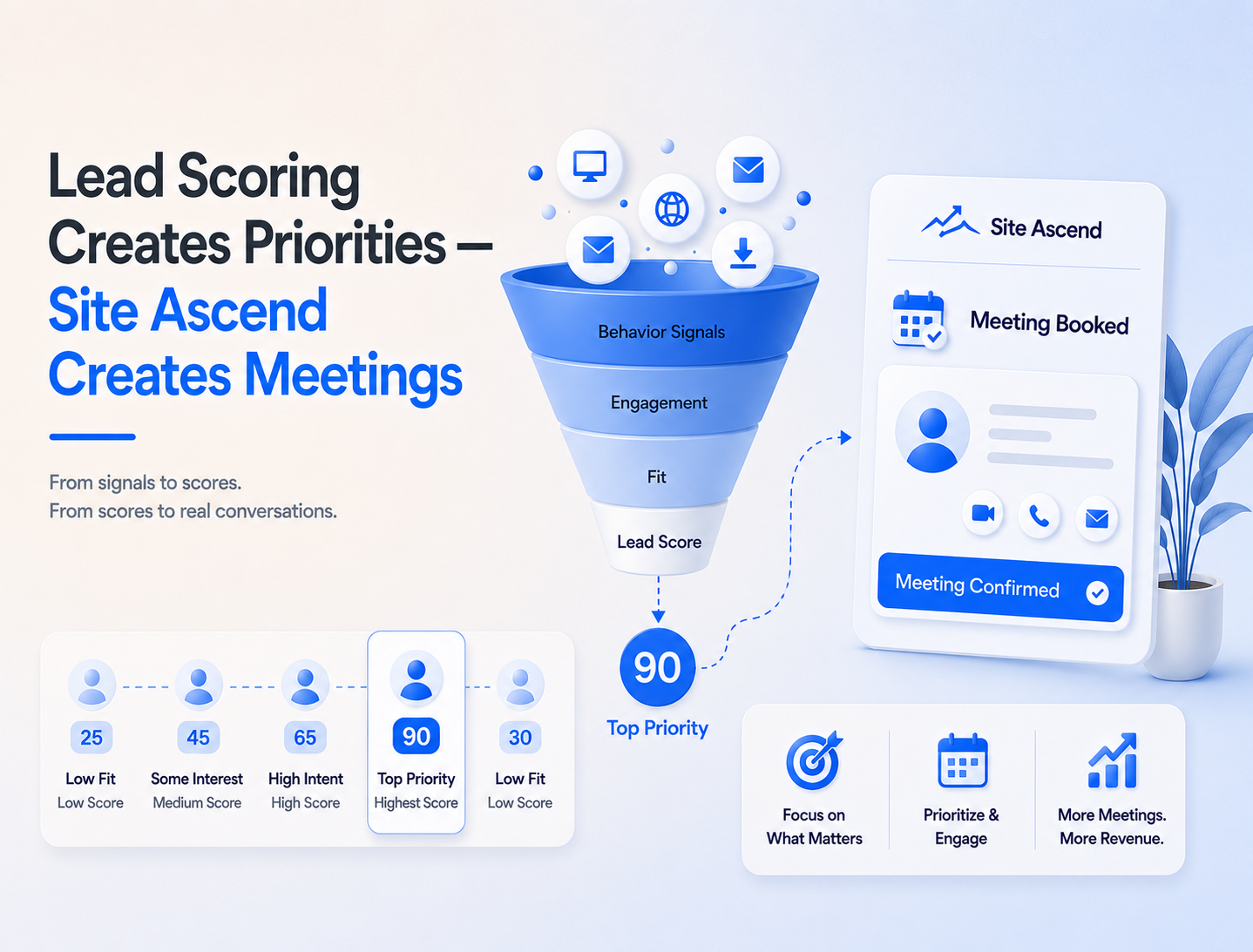
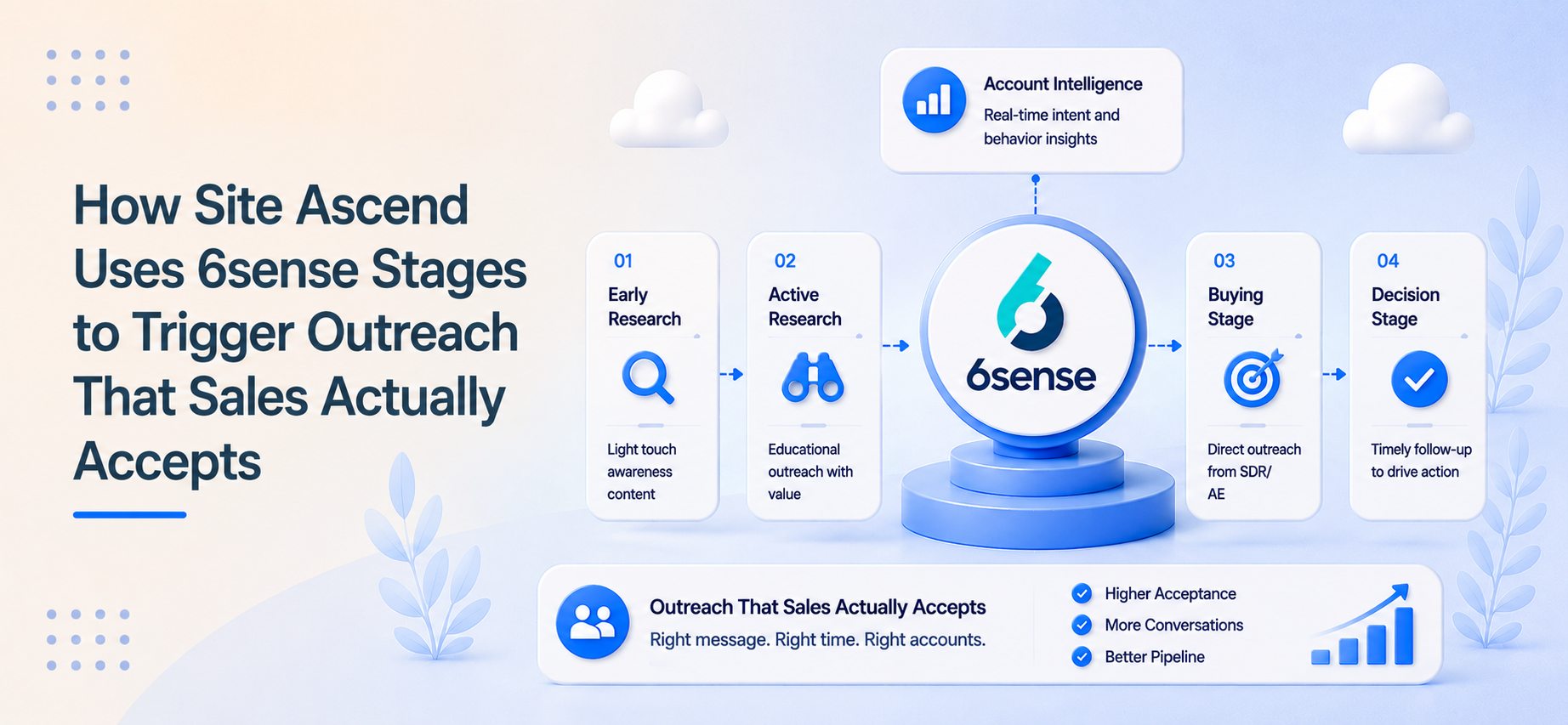
6sense can tell you which accounts are “in-market,” but it can’t turn stage signals into scheduled conversations on its own. This blog breaks down how Site Ascend operationalizes 6sense buying stages into an onshore, pay-for-outcome outreach motion—so the right accounts get the right next step, and Sales only sees meetings that actually occur.
-
Account-Based Demand Generation
Introduction
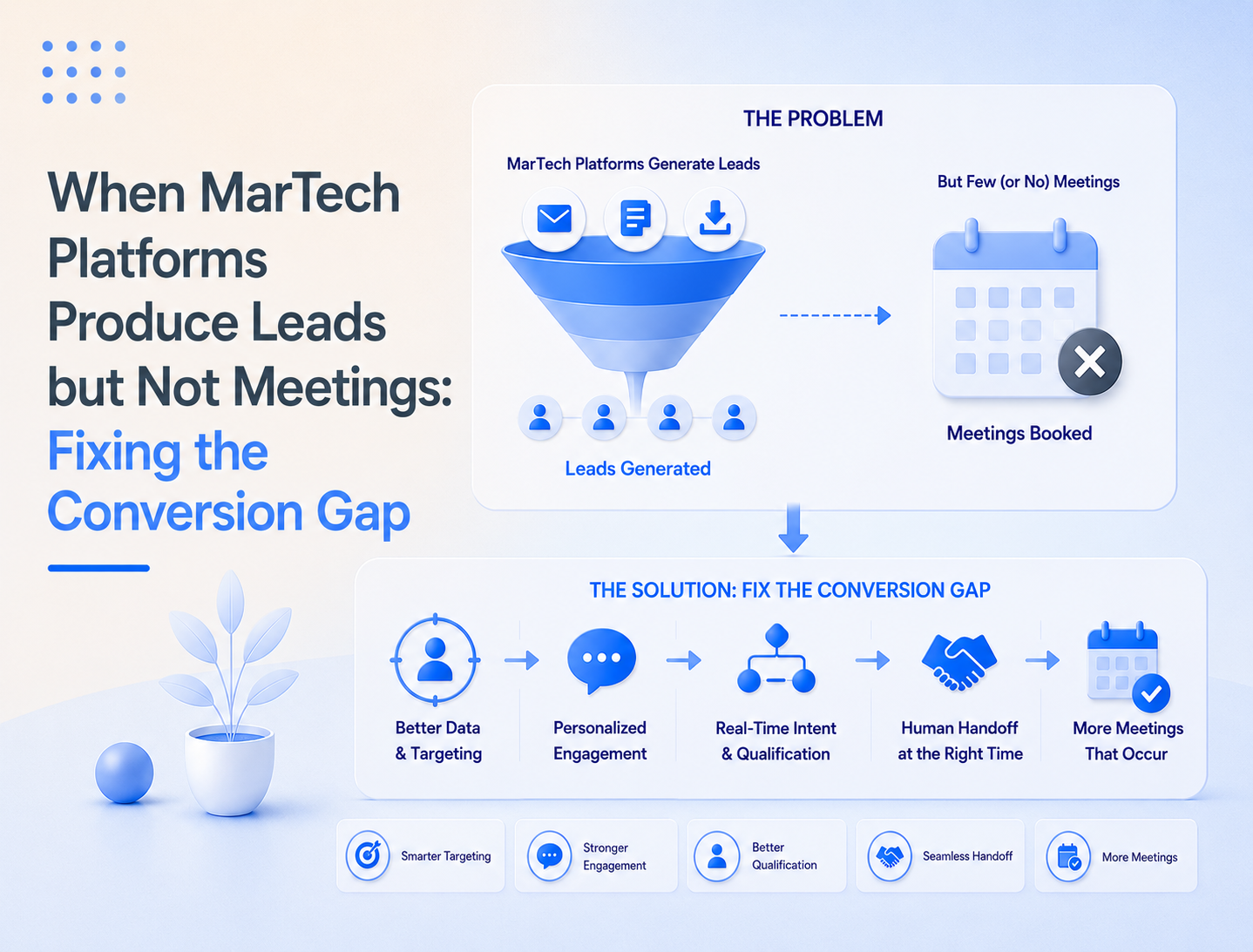
6sense is excellent at answering, “Who’s showing buying signals?” Most demand gen teams, though, are measured on a different question: “Who took a next step Sales accepts?”
That gap—between stage visibility and stage conversion—is where pipeline quietly stalls. Accounts can sit in “Decision” for weeks. Leads can look “hot” in dashboards and still never become a real conversation. And SDR teams, already stretched, end up spending precious time chasing signals that don’t translate into scheduled meetings.
This is where Site Ascend fits. We help demand generation teams operationalize 6sense stage signals into booked, director-level conversations—with an onshore contact center, white-labeled outreach, and a pay-for-performance model built around meetings that occur (not leads delivered).
What 6sense Stages Mean for Demand Generation Marketers and Site Ascend’s ICP
6sense stages are supposed to do one thing well: prioritize accounts based on where they are in the buying journey. For demand gen leaders, stages become the routing logic for decisions like:
But stages alone don’t create pipeline. They create eligibility—a shortlist of accounts that might be ready for outreach. Conversion still depends on execution:
Site Ascend helps teams turn “stage awareness” into stage-based conversion by attaching the missing layer: human outreach that’s accountable to real outcomes.
Common Challenges Marketers Face
Even teams that invest heavily in 6sense run into predictable breakdowns when stages meet reality.
1) Stages don’t equal readiness to meet
An account can be surging, researching, and still unwilling to take a call. If your motion assumes “Decision = meeting,” Sales sees low acceptance and stops trusting marketing-sourced routing.
2) SDR time gets wasted on misrouted signals
If every “in-market” account is treated like a high-priority outbound target, reps burn cycles on accounts that need nurturing, not booking. Your LVR looks fine; your meeting rate does not.
3) Conversion offers are generic (and easy to ignore)
Most outreach tied to intent stages is still framed as “Wanted to connect” or “Saw you researching.” That’s not a next step. It’s a vibe. Executives don’t accept vibes.
4) Follow-up is inconsistent after the first touch
Even when an account is legitimately in-market, pipeline dies in follow-up. Sequences stop. SDRs move on. Marketing assumes Sales is working it. Sales assumes marketing is “just passing leads.”
5) Reporting disconnects from actual outcomes
Teams can report stage movement and engagement while Sales asks the only question that matters: “How many meetings happened?”



.png)

%201.png)


.png)


Solutions That Work
Here’s the practical way Site Ascend helps demand gen teams convert 6sense stages into Sales-accepted next steps—without turning your SDR org into a triage unit.
1) Stage-based routing that prioritizes “next step,” not “more touches”
Instead of treating stages as a reason to add more marketing activity, Site Ascend uses stages to trigger specific conversion motions, such as:
2) Director-level targeting as a default, not a hope
A major reason intent-based outreach fails is misaligned persona targeting. Site Ascend focuses on director-level and above so your conversion motion matches enterprise buying reality.
3) Pay-for-outcome conversion, not pay-for-activity volume
Many vendors optimize for output you can count early—contacts touched, leads delivered, “appointments set” on paper. Site Ascend differentiates with:
4) Onshore execution that improves conversation quality and trust
A common hidden problem in outsourced motions is quality variance. Site Ascend uses an all U.S.-based contact center and white-labeled execution so your brand experience remains consistent.
5) Real-time reporting that aligns with how Sales evaluates success
The point of routing and stage triggers is outcomes. Site Ascend provides a real-time reporting dashboard so marketing can manage performance like a revenue channel, not a black box.
Actionable Steps for Marketers
If you want 6sense stages to produce Sales-accepted next steps, implement this checklist.
A stage-to-next-step conversion checklist
Comparison of Market Solutions
Most demand gen teams end up choosing between three approaches. Each has tradeoffs.
Example 1: The Procurement View
The practical takeaway: if your procurement and revenue stakeholders care about risk, transparency, and conversion outcomes, you want a model built around occurred meetings—not delivered leads.
Conclusion
6sense stages can help you prioritize who to engage—but prioritization is not pipeline. Pipeline comes from executed next steps: the right persona, the right ask, disciplined follow-up, and meetings that actually happen.
Site Ascend helps demand generation teams turn 6sense stage signals into Sales-accepted conversations through executive meetings, lead qualification, event attendee procurement, and white-labeled partner appointment setting—backed by onshore execution and real-time reporting.
If you want to operationalize your 6sense stages into a conversion motion that Sales trusts, the fastest path is a pilot designed around outcomes. Contact Site Ascend to launch a stage-triggered meeting program that proves impact in weeks—not quarters.
If we already have 6sense, why do we need an additional conversion motion?

How do you prevent stage-based outreach from creating friction with Sales?
What’s the best use of Site Ascend if we have limited SDR capacity?


Start your pilot campaign today and explore the full range of Site Ascend's demand generation capabilities. Experience firsthand how we can enhance your efficiency, streamline your processes, and drive growth.
RELATED