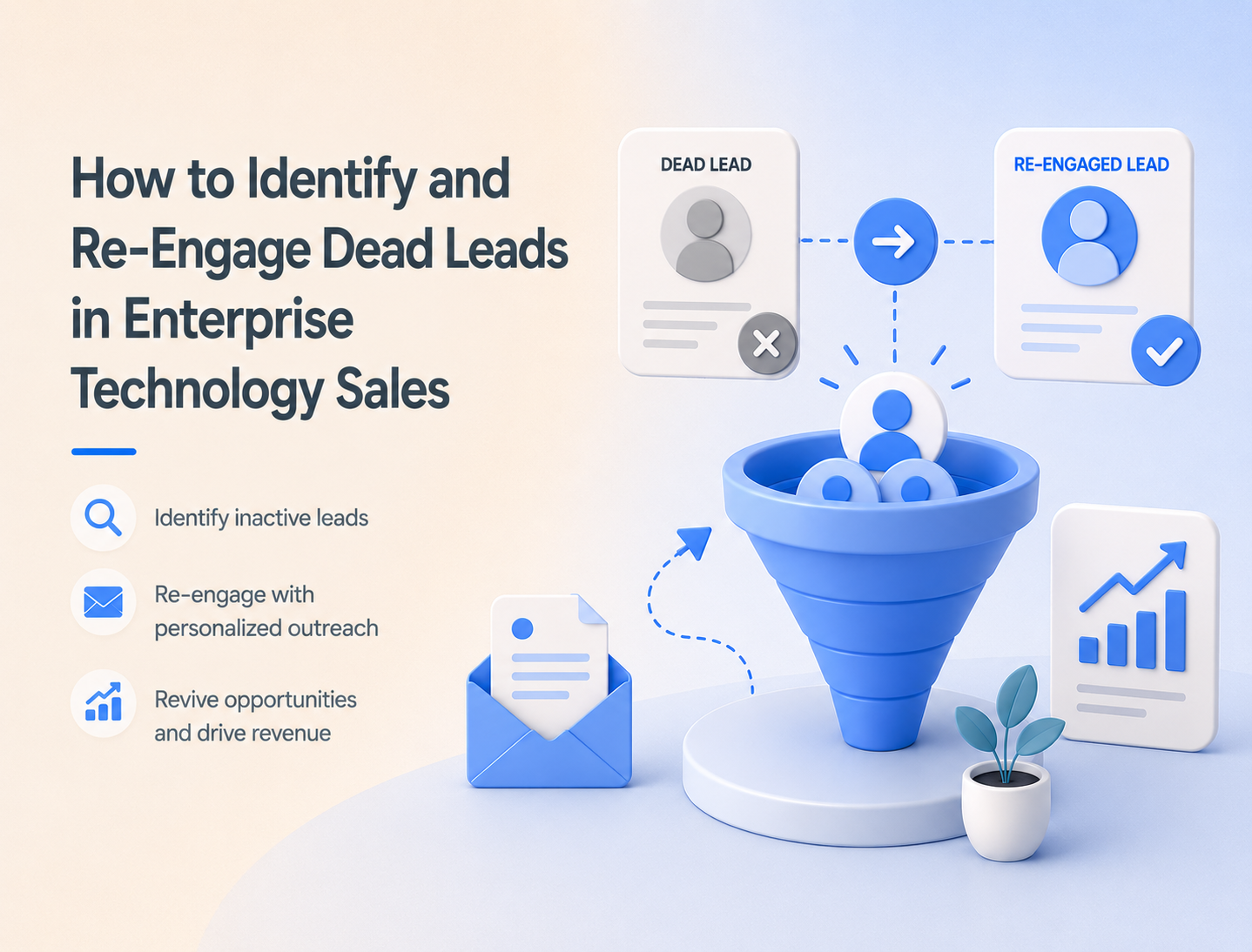
How to Identify and Re-Engage Dead Leads in Enterprise Technology Sales
Lead Management Strategies


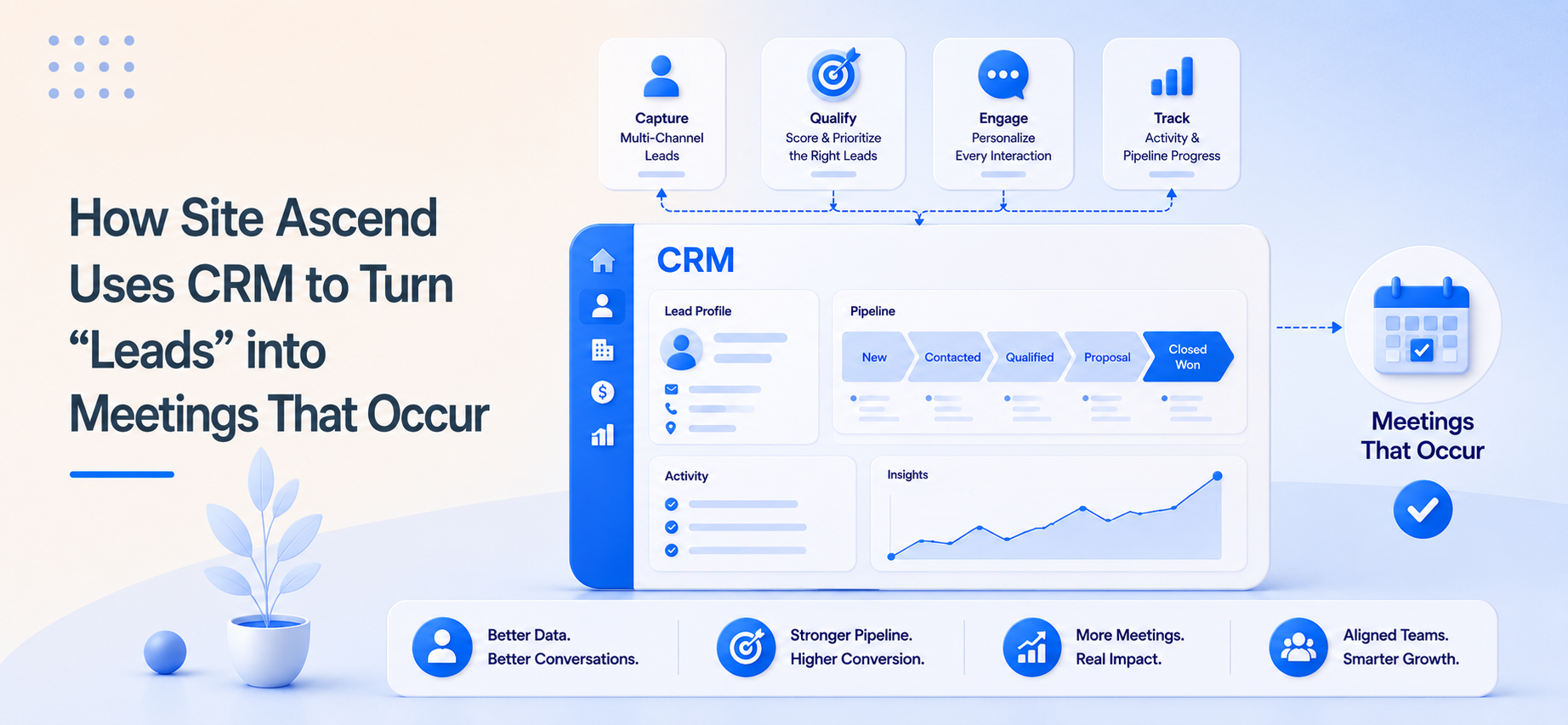
Your CRM already knows who engaged—but it can’t do the follow-up, qualify the contact, or secure time on a calendar. This post breaks down how Site Ascend operationalizes CRM data into outbound calling and SMS support that converts interest into director-level meetings that actually happen—so marketing pays for outcomes, not activity.
-
Demand Generation Operations
Introduction
CRMs are excellent at storing information and terrible at creating momentum.
Most demand gen teams can point to a growing list of “leads” in Salesforce or HubSpot—form fills, event scans, webinar registrations, partner referrals, intent spikes routed into campaigns. The pipeline problem isn’t that the CRM doesn’t have enough names. It’s that the CRM doesn’t produce the one outcome sales will consistently accept: a scheduled conversation with the right person, at the right account, that actually happens.
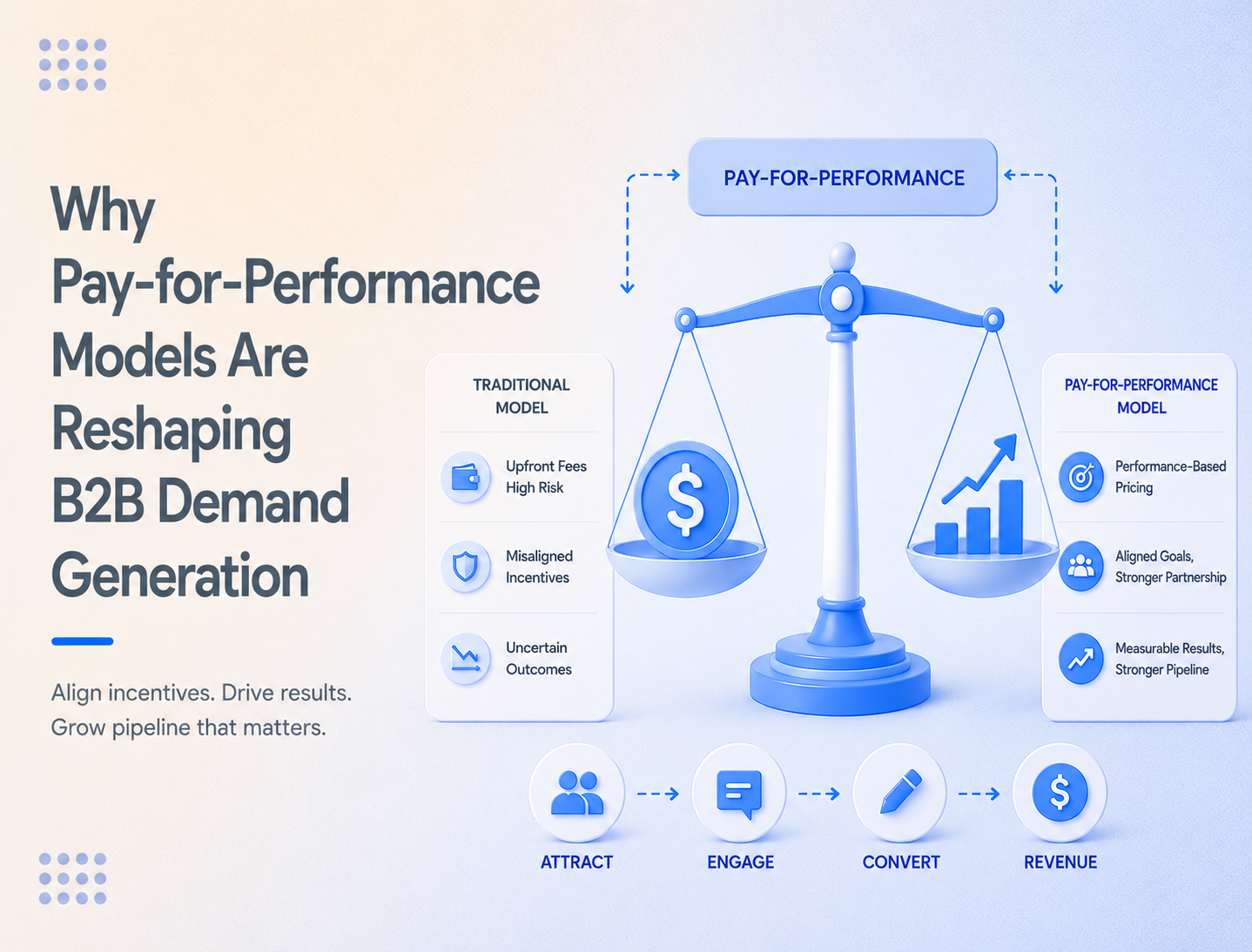
That’s where Site Ascend fits. We don’t sell activity. We build the operational layer that turns CRM signals into confirmed meetings with director-level and above buyers—using U.S.-based outbound calling, white-labeled execution, and a pay-for-performance model where you only pay for meetings that occur.
What CRM Means for Demand Generation Marketers and Other Titles in Site Ascend’s ICP
CRM (Customer Relationship Management) is your system of record for accounts, contacts, engagement, and revenue stages. For demand generation, the CRM is also the place where marketing and sales agree—explicitly or implicitly—on what “qualified” means.
In practice, most CRMs end up doing three things:
But a CRM cannot do the work between “captured” and “converted.” It cannot:
For demand gen leaders, the modern CRM should be treated as a decision engine: it tells you who to prioritize and why. Site Ascend acts as the execution engine that turns those priorities into booked, confirmed meetings.
Common Challenges Marketers Face
The CRM is full, but sales says “these aren’t real”
You can have pristine routing rules and airtight lifecycle stages, but if sales experiences too many low-intent conversations, you lose trust—and your “MQL” label becomes a warning sign.
Follow-up speed is inconsistent—and that delay kills acceptance
Most leads decay rapidly after the moment of interest. If response time depends on SDR availability, time zones, meeting load, or “we’ll get to it tomorrow,” the CRM becomes a graveyard of good intent.
Lead status becomes a proxy for effort, not progress
Teams confuse “attempted,” “working,” or “in sequence” with actual advancement. The CRM shows motion, but pipeline stalls because the buyer never actually engages in a sales conversation.
Director-level contacts require a different approach
Senior titles don’t respond like end users. They are harder to reach, less tolerant of generic messaging, and far more likely to ignore automated sequences. If your strategy relies mostly on email automation, your CRM will reflect “engaged” but not “converted.”
Reporting becomes political
Marketing needs attribution. Sales wants quality. SDR leadership wants productivity. The CRM becomes the battleground—because the core outcome (meetings that occur) is not consistently produced.



.png)

%201.png)


.png)


Solutions That Work
Here’s the operating model Site Ascend uses to turn CRM data into meetings that occur—without forcing your SDR team to carry the whole conversion burden.
1) Treat CRM entries as signals, not leads
A “lead” is a record. A signal is evidence of interest (or fit) that should trigger a specific next action.
Site Ascend helps teams build a simple signal hierarchy inside the CRM:
This prevents the biggest failure mode: treating every CRM record like it deserves the same motion.
2) Convert prioritized signals into live conversations via outbound calling
Marketing automation can notify. It cannot persuade, qualify, or schedule.
Site Ascend uses U.S.-based outbound dialing to contact the right stakeholder quickly—especially director-level and above—while the signal is fresh. The objective is not “more touches.” The objective is a scheduled meeting with clear next steps.
When you’re accountable for pipeline, this matters because:
3) Use lead qualification to reduce sales risk before the meeting
A meeting that happens is only valuable if it’s sales-acceptable. Site Ascend’s lead qualification is designed to protect sales time by validating:
This is how you stop shipping “leads delivered” and start producing outcomes sales will consistently take.
4) Support show rates with an SMS workflow
Most teams optimize for “booked.” Pipeline lives and dies on show rates.
Site Ascend supports registrants and confirmed attendees using SMS workflows leading up to the meeting or event date—reducing no-shows and last-minute drop-offs without asking your sales team to chase confirmations.
5) Deploy channel marketing that partners actually use
CRMs often break down in channel motions because partner follow-up is inconsistent and attribution is messy.
Site Ascend’s white-labeled channel marketing program creates appointments on behalf of your partners, funded through MDF, while preserving partner relationships and giving you outcome-based performance.
6) Make reporting real-time and outcome-based
A dashboard that shows attempts is not enough. Site Ascend emphasizes real-time reporting tied to outcomes:
This is how CRM reporting shifts from “how many leads” to “how much pipeline momentum.”
Actionable Steps for Marketers
Use this checklist to operationalize your CRM so it produces meetings—not just records.
CRM-to-Meeting Checklist (Built for Demand Gen)
1) Define your meeting standard in CRM terms
2) Create a signal tiering model
3) Set an SLA based on signal type (not generic lead response)
4) Decide who owns conversion
If SDR capacity is constrained, don’t pretend the CRM will fix it. Assign conversion to a model that can consistently execute.
5) Add a “meeting outcome” layer to your reporting
Track:
6) Close the loop
Every disqualification should tell you something: wrong persona, wrong account segment, wrong trigger, wrong timing. Use that data to refine routing rules and targeting.
Comparison of Market Solutions
Example 1: The Procurement View
Procurement doesn’t buy “demand gen.” Procurement buys risk reduction, measurable outputs, and operational control. Here’s how the typical options compare when you evaluate them through three procurement outcomes.
Outcome 1: Reduce performance risk
Outcome 2: Improve cost predictability
Outcome 3: Increase operational transparency
Conclusion
Your CRM is not broken. It’s simply being asked to do a job it was never designed to do: convert interest into sales-accepted conversations.
Site Ascend is the missing layer that connects CRM signals to real meetings through director-level targeting, U.S.-based outbound calling, SMS support to protect show rates, and a model where you only pay when meetings occur.
If you want to turn “leads” into pipeline momentum without burning SDR time, it’s worth piloting an outcome-based motion.
Ready to test a CRM-to-meeting pilot? Start with one signal stream (demo requests, event follow-up, partner referrals, or high-fit content downloads) and measure what matters: meetings that occur, sales acceptance, and second-call conversion.
If we already have SDRs, why do we need Site Ascend?

What does “only pay for meetings that occur” actually mean?
How do you avoid booking low-quality meetings just to hit volume?


Start your pilot campaign today and explore the full range of Site Ascend's demand generation capabilities. Experience firsthand how we can enhance your efficiency, streamline your processes, and drive growth.
RELATED