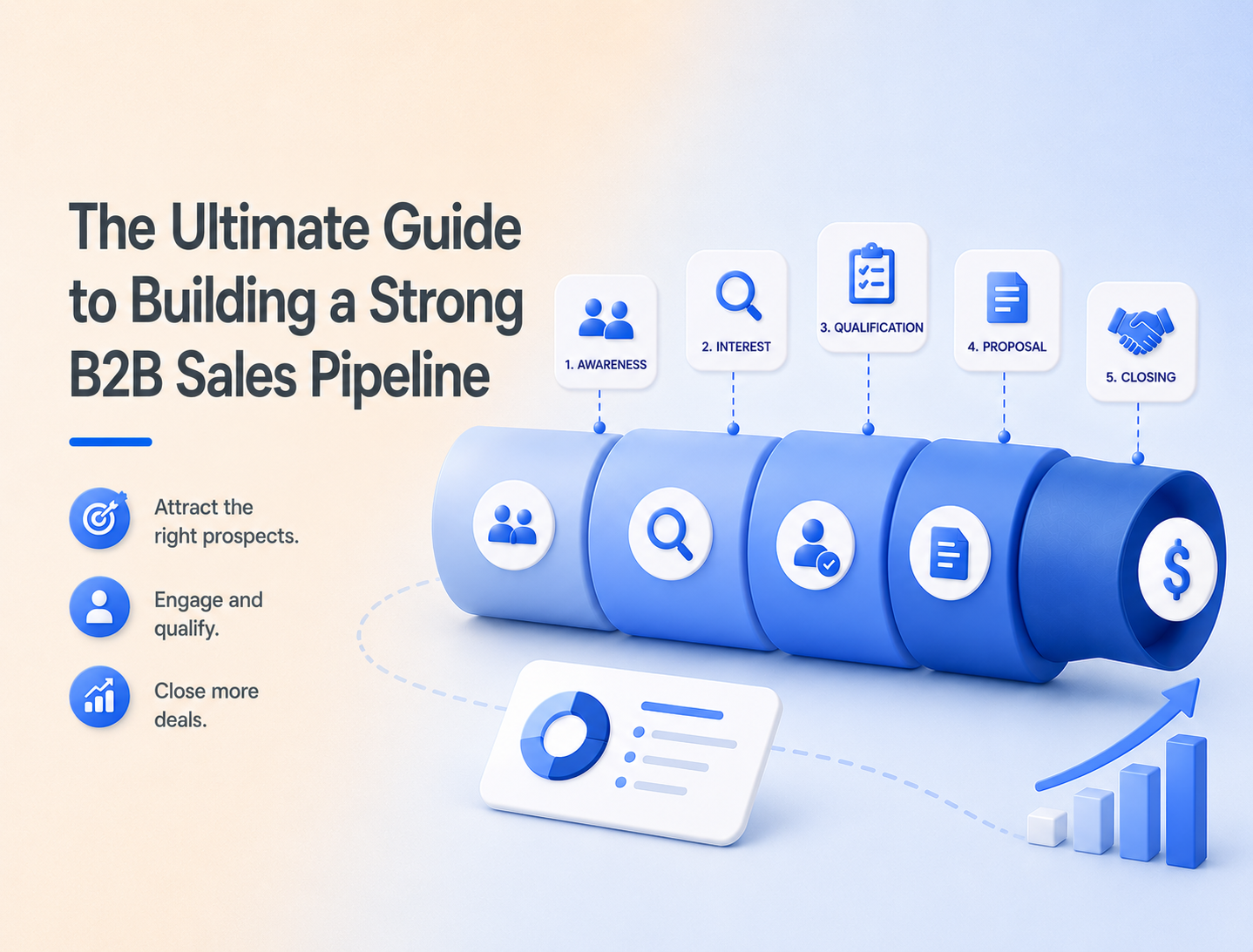
The Ultimate Guide to Building a Strong B2B Sales Pipeline
b2b sales pipeline


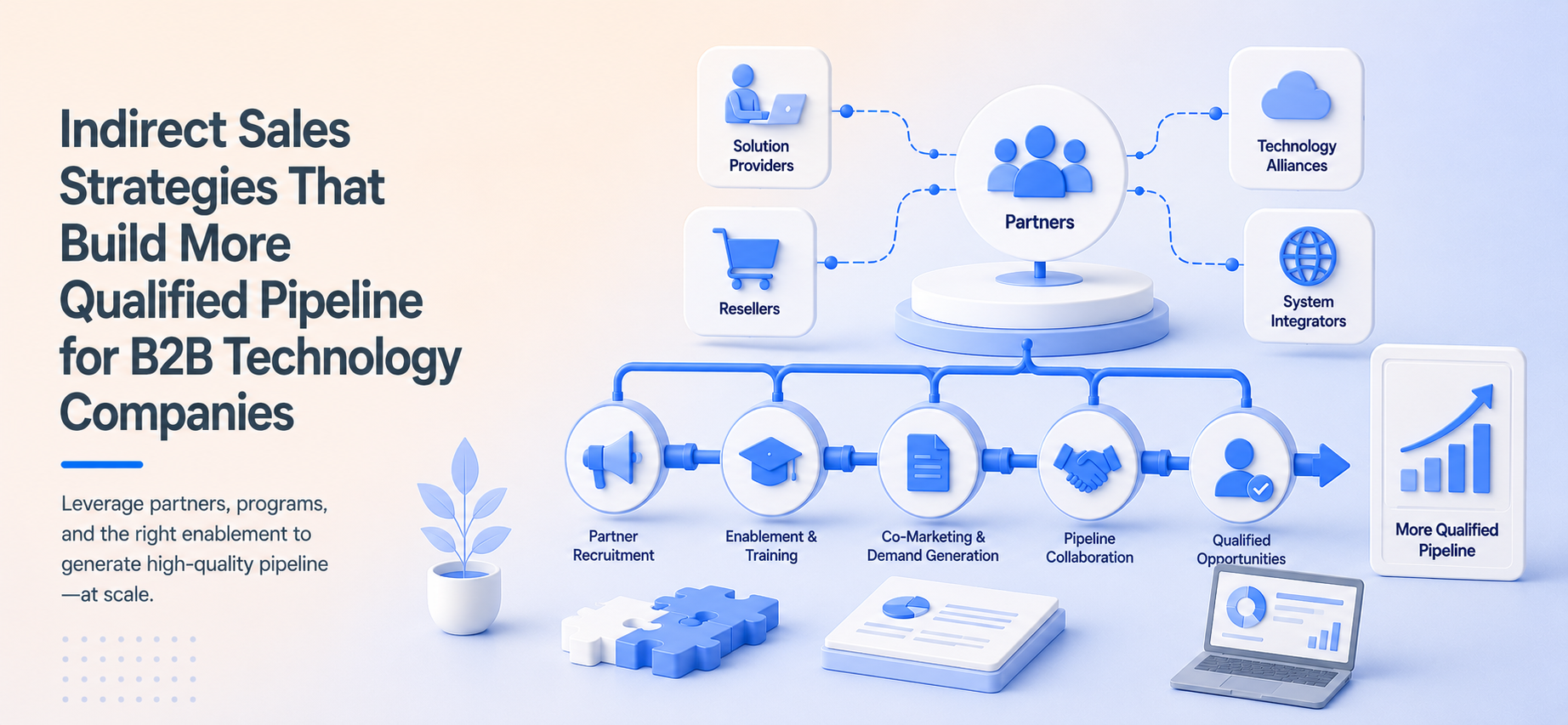
Indirect sales success depends on more than expanding your partner network. Learn the strategies that help B2B technology companies enable partners, improve collaboration, and turn channel relationships into a consistent source of qualified pipeline.
-
Channel Marketing
Introduction
For many B2B technology companies, indirect sales represent the fastest path to expanding market reach without significantly increasing internal sales headcount. Through distributors, resellers, system integrators, managed service providers (MSPs), and strategic alliances, organizations can access new customers, industries, and regions that would otherwise be difficult to penetrate.
However, simply having a channel ecosystem doesn't guarantee predictable pipeline. Many indirect sales programs generate plenty of partner activity but fail to deliver qualified sales opportunities because marketing, partner enablement, and pipeline management aren't aligned.
For demand generation leaders, the objective isn't to recruit more partners—it's to help existing partners consistently create qualified pipeline. Organizations that approach indirect sales as a coordinated revenue strategy rather than a distribution model typically see stronger conversion rates, higher partner engagement, and better long-term growth.
What Indirect Sales Means for Demand Generation Marketers
Indirect sales refers to selling products or services through third-party partners instead of relying solely on an internal sales organization.
These partners may include:
For marketing organizations, indirect sales expands the number of people actively promoting the company's solutions. But unlike direct sales, marketers don't control every customer interaction. Success depends on how effectively partners are enabled, supported, and aligned around shared revenue objectives.
Strong indirect sales programs help marketers:
Common Challenges Marketers Face
Many indirect sales programs underperform because organizations focus heavily on partner recruitment while investing less in partner success after onboarding.
Partners often receive product information but lack practical campaign guidance, demand generation support, or sales enablement resources. As a result, engagement declines after the initial launch.
Visibility also becomes a challenge. Marketing teams may struggle to determine which partners are actively generating opportunities, which campaigns influence pipeline, or where marketing investments produce the strongest return.
Lead accountability presents another obstacle. Without clearly defined ownership, partner-generated inquiries can experience inconsistent follow-up, delayed outreach, or qualification issues that reduce conversion rates before sales conversations even begin.
Finally, many organizations evaluate indirect sales using activity metrics such as partner participation or campaign launches instead of measuring qualified meetings, pipeline progression, and revenue contribution.



.png)

%201.png)


.png)


Solutions That Work
Align Every Partner Around Shared Revenue Metrics
Successful indirect sales organizations establish common success metrics across marketing, sales, and partner teams. Measuring qualified meetings, pipeline influence, conversion rates, and opportunity progression creates greater accountability than simply tracking campaign activity or partner participation.
Invest in Continuous Partner Enablement
High-performing channel programs treat enablement as an ongoing process rather than a one-time onboarding event. Regular sales coaching, campaign playbooks, competitive insights, and messaging updates help partners remain effective as buyer expectations evolve.
Improve Pipeline Visibility Across the Partner Journey
Organizations should build reporting processes that follow opportunities from campaign execution through sales acceptance and revenue creation. Greater visibility allows marketing leaders to identify high-performing partners, optimize investments, and eliminate operational bottlenecks before they impact pipeline.
Prioritize High-Impact Partnerships
Not every partner contributes equally to revenue growth. Concentrating resources on partners that consistently engage target accounts, execute campaigns effectively, and generate qualified opportunities often produces better results than spreading investments evenly across an entire ecosystem.
Where Site Ascend Fits
Executing a successful indirect sales strategy requires more than strong partnerships—it requires consistent pipeline generation. Site Ascend helps technology companies strengthen indirect sales performance through Channel Marketing programs that support partner-led outreach, Executive Meetings that connect partners with qualified decision-makers, Event Marketing services that drive targeted registrations, and Lead Qualification programs that validate buyer intent before opportunities reach sales. These services help organizations operationalize best practices while allowing internal teams and partners to stay focused on closing business.
Actionable Steps for Marketers
The Indirect Sales Performance Assessment
Evaluate your indirect sales strategy using these five questions:
Partner Engagement
Are your partners actively participating in campaigns, or have engagement levels declined since onboarding?
Marketing Support
Do partners receive updated messaging, campaign assets, and sales enablement on a regular basis?
Pipeline Visibility
Can your marketing team track partner-generated opportunities from first engagement through revenue?
Revenue Contribution
Which partners consistently generate qualified pipeline, and which primarily generate activity without measurable outcomes?
Growth Planning
Have you identified your top-performing partners and created plans to deepen those relationships through additional support and investment?
Conducting this assessment quarterly helps identify operational gaps before they become revenue problems.
Comparison of Market Solutions
Organizations take several approaches to building indirect sales programs, each with different advantages.
Some companies rely primarily on internal channel teams, which provides greater control but can become difficult to scale as partner networks expand. Others invest heavily in partner management platforms that improve communication, onboarding, and reporting but still require strong execution from both vendors and partners.
Many organizations complement these investments with specialized execution partners that help drive partner engagement, support campaign execution, generate qualified meetings, and improve lead qualification. This approach enables internal teams to focus on strategic partner development while extending operational capacity without significantly increasing headcount.
The strongest indirect sales programs rarely depend on one approach alone. Instead, they combine effective partner management, continuous enablement, measurable performance tracking, and experienced execution resources to build a scalable pipeline generation engine.
Conclusion
Indirect sales is no longer simply a distribution strategy—it has become a core driver of revenue growth for B2B technology companies. Organizations that invest in partner enablement, shared accountability, operational visibility, and measurable pipeline outcomes consistently outperform those focused only on partner recruitment or campaign activity.
By treating partners as strategic revenue collaborators rather than additional sales channels, marketing leaders can create stronger alignment, improve conversion rates, and generate more predictable qualified pipeline.
If you're looking to strengthen your indirect sales strategy and help partners generate more qualified opportunities, contact Site Ascend.
Why are indirect sales important for B2B technology companies?

What makes an indirect sales program successful?
How should marketers measure indirect sales performance?


Start your pilot campaign today and explore the full range of Site Ascend's demand generation capabilities. Experience firsthand how we can enhance your efficiency, streamline your processes, and drive growth.
RELATED