
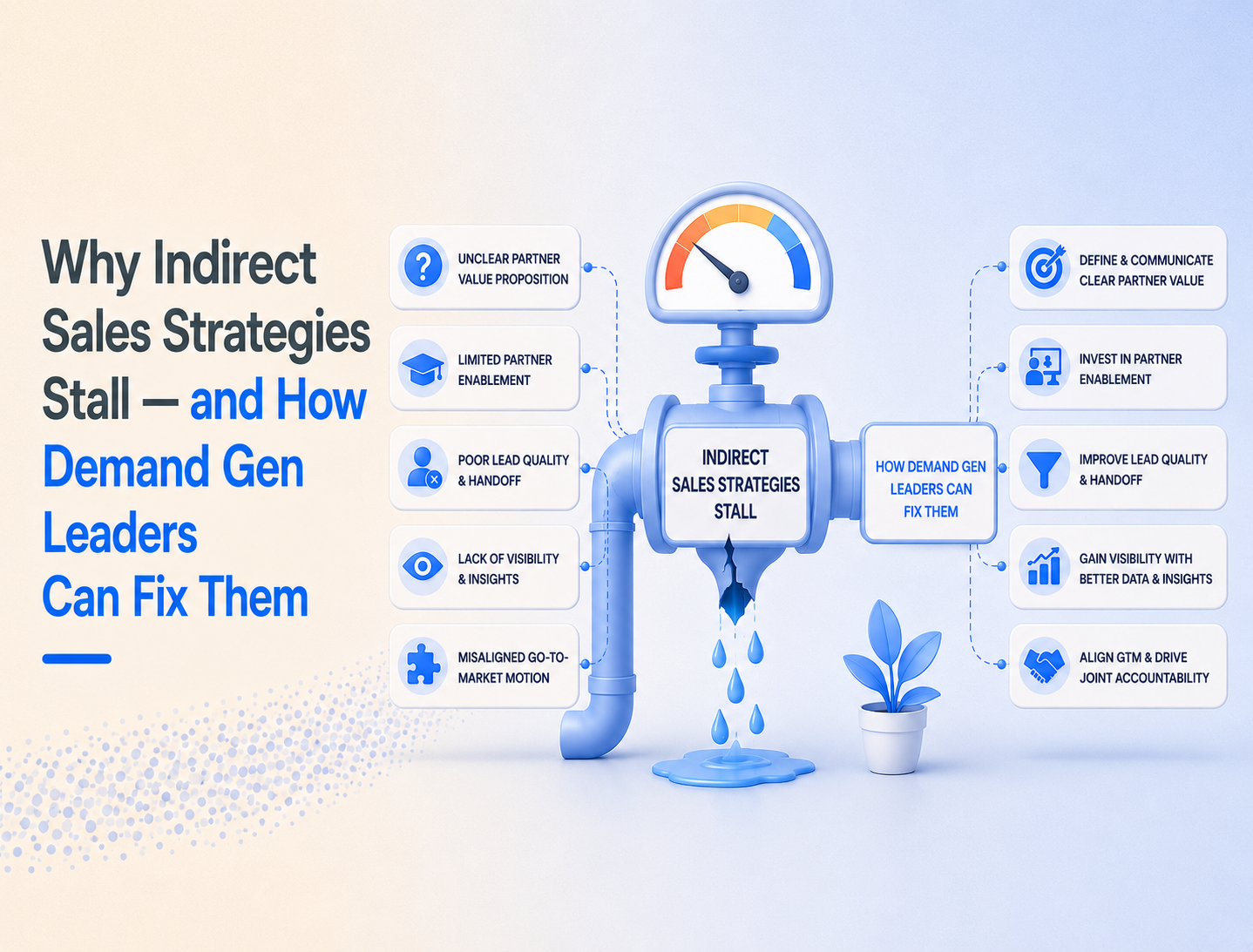
Why Indirect Sales Strategies Stall — and How Demand Gen Leaders Can Fix Them
Demand Generation


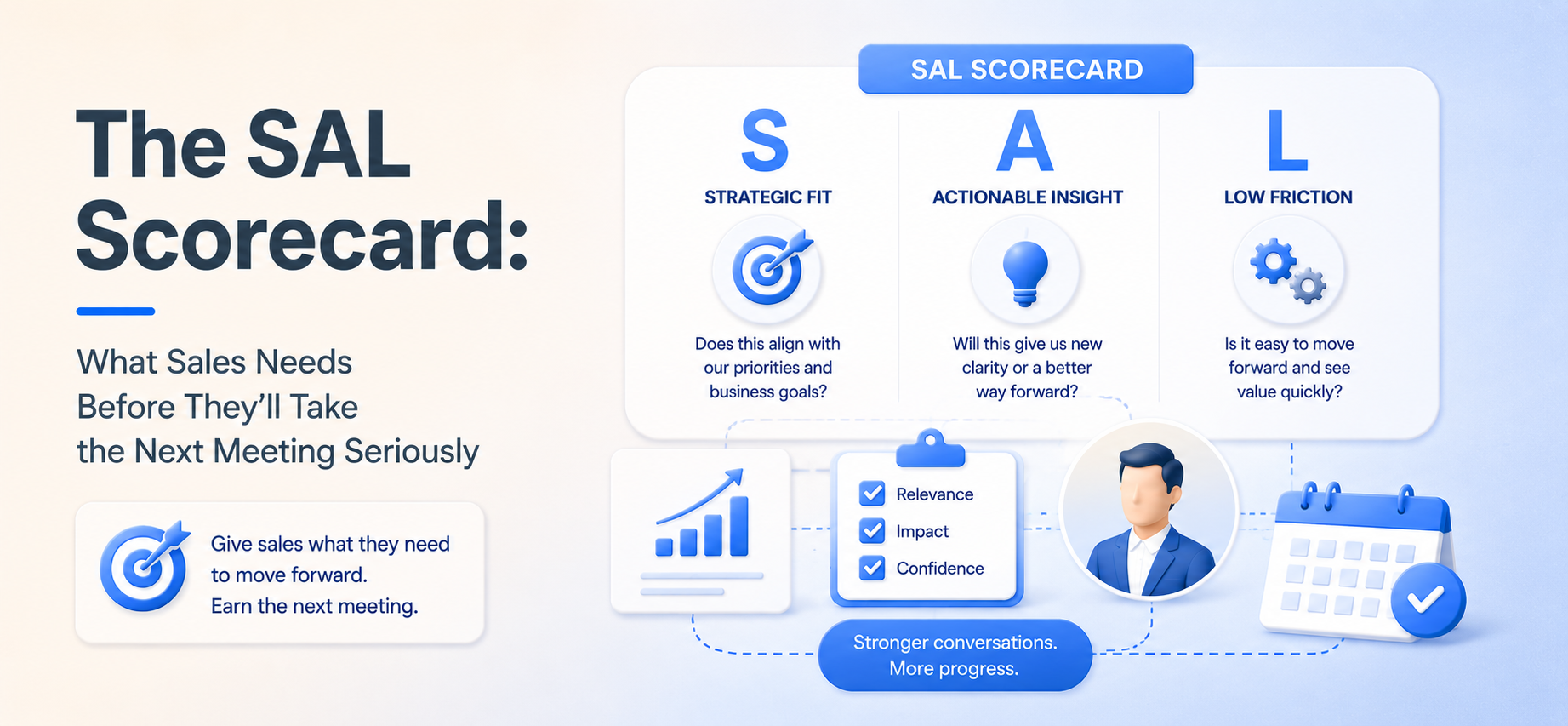
SAL isn’t a checkbox—it’s a sales decision. This blog introduces a practical SAL scorecard (decision relevance, problem clarity, impact, timing trigger, and next-step readiness) and shows how Site Ascend improves sales acceptance and follow-through with Director+ meetings that occur and convert into second calls.
-
Demand Generation
Introduction
A lot of demand gen programs “work” on paper.
You deliver leads. Some get accepted. A meeting gets booked. Everyone moves on.
Then the pipeline review happens, and the hard question shows up:
“Why didn’t that meeting turn into anything?”
That gap is where most funnels quietly leak revenue. Not at the top. Not even at the MQL stage.
It leaks at SAL—the moment sales decides whether a lead is worth real effort, real follow-up, and a real next step.
A SAL (Sales Accepted Lead) isn’t a status you assign. It’s a decision sales makes. And sales tends to make that decision based on whether the lead reduces risk.
This blog introduces a practical SAL scorecard—the context fields that make sales take the next meeting seriously—and shows how Site Ascend operationalizes those fields through Lead Qualification and Executive Meetings to improve acceptance, show rates, and next-step conversion.
What SAL means for demand generation marketers
A Sales Accepted Lead is best defined as:
A lead sales agrees is worth time because there’s enough evidence it can progress.
In enterprise tech, “accepted” usually means the rep believes:
When those aren’t true, you get the most damaging outcome for marketing credibility:
“Accepted” leads that never get worked.
That’s why SAL is such a powerful stage for demand gen leaders. It’s where you can stop debating lead volume and start managing sales confidence.
Common challenges marketers face
SAL becomes a courtesy, not a commitment
Some teams define “acceptance” as a CRM click. But if sales isn’t actually engaging, acceptance is just optics.
What it looks like:
Sales doesn’t trust what’s behind the lead
If the only context is a lead score or a campaign touch, sales is forced to guess:
Guessing is expensive, so reps avoid it.
Seniority is inconsistent
Enterprise pipeline moves when Director+ stakeholders are involved. If SALs drift toward lower titles, the follow-up effort gets deprioritized because the probability of progress is low.
The next step is undefined
A meeting without an obvious follow-up motion is a dead end. In many funnels, “booked meeting” is treated like a finish line—when it should be a checkpoint.
You can’t improve what you can’t see
If you don’t track which SALs lead to held meetings, Director+ attendance, and second calls, you’re stuck arguing about quality instead of optimizing it.



.png)

%201.png)


.png)


The fix is to make SAL acceptance easier—and more consistent—by standardizing the information sales needs.
That’s what a SAL scorecard does: it turns “lead quality” from a vibe into a measurable standard.
Think of this as a short set of fields that should be present in every handoff.
Decision relevance
Problem clarity
Impact
Timing trigger
Next-step readiness
When these five are present, sales engagement becomes a rational choice—not a leap of faith.
How Site Ascend supports SAL scorecard performance
SAL scorecards aren’t useful if they stay theoretical. They matter when your programs consistently capture the inputs.
Two Site Ascend programs align most directly to SAL performance: Lead Qualification and Executive Meetings.
Lead Qualification: creating SALs that sales will actually work
Marketing engagement is an input. Site Ascend’s lead qualification motion is designed to turn opt-ins into leads sales can accept with confidence.
What gets clarified before the handoff:
This reduces the common SAL failure mode: sales “accepts” the lead but doesn’t engage because it feels too uncertain.
Executive Meetings: converting SAL into meetings that occur with Director+ stakeholders
For many teams, the most defensible SAL proof point is simple:
Did the meeting happen—and did the stakeholder level match what sales needs?
Site Ascend’s Executive Meetings program is designed for:
This approach is especially useful when your demand gen motion is under scrutiny, because it anchors SAL performance to outcomes that sales and finance can recognize.
Where channel and event motions fit
SAL doesn’t only come from inbound forms. It also comes from partner and event motions—when those motions are run with a scorecard standard.
Site Ascend supports event attendee procurement via outbound dialing and uses SMS workflows leading up to the event date (not day-of services), which helps improve attendance quality and follow-through.
Actionable steps for marketers
If you want better sales acceptance, don’t start by changing the name of the stage. Start by changing the inputs.
A practical SAL operating guide
Create one shared definition
A SAL is “sales-worthy” only when the scorecard fields are present.
Use a short handoff template
Keep it tight. Sales should be able to skim it in 20 seconds.
Report SAL quality weekly (not monthly)
Track these as program health signals:
Tighten one lever at a time
If second-call rate is low, the most common fixes are:
Comparison of market solutions
Here’s the market landscape through the procurement view—how organizations typically decide what to buy when they want better SAL performance.
Lowest cost per activity
What you’re buying: touches, dials, or raw lead volume.
Why it’s attractive: cost efficiency is easy to defend.
Where it breaks: activity doesn’t guarantee the scorecard fields (decision relevance, urgency, next step), so sales acceptance becomes inconsistent.
Predictable volume
What you’re buying: lead quantities, registrations, or booked meetings.
Why it’s attractive: forecasting feels cleaner.
Where it breaks: volume can be delivered without seniority, urgency, or held-meeting accountability—so “accepted” doesn’t turn into “worked.”
Defensible pipeline impact
What you’re buying: outcomes that map to revenue reality—meetings that occur, Director+ relevance, and measurable next-step conversion.
Why it’s attractive: it aligns with how sales actually prioritizes.
Why Site Ascend fits: lead qualification that builds the scorecard inputs, executive meetings built around Director+ stakeholders, accountability to meetings that occur, U.S.-based execution, and real-time reporting visibility.
Conclusion
If you want sales to take the next meeting seriously, stop treating SAL like a checkbox.
Treat it like a scorecard.
When every accepted lead comes with:
…sales engagement becomes consistent, follow-ups happen faster, and pipeline becomes easier to defend.
If your team wants to pilot a SAL-improvement motion that increases held meetings, Director+ relevance, and second-call conversion, contact Site Ascend to discuss a pilot using Lead Qualification and Executive Meetings.
What’s the difference between SAL and SQL?

Why do SALs get “accepted” but not worked?
How do you raise SAL quality without slowing volume?


Start your pilot campaign today and explore the full range of Site Ascend's demand generation capabilities. Experience firsthand how we can enhance your efficiency, streamline your processes, and drive growth.
RELATED
.png)