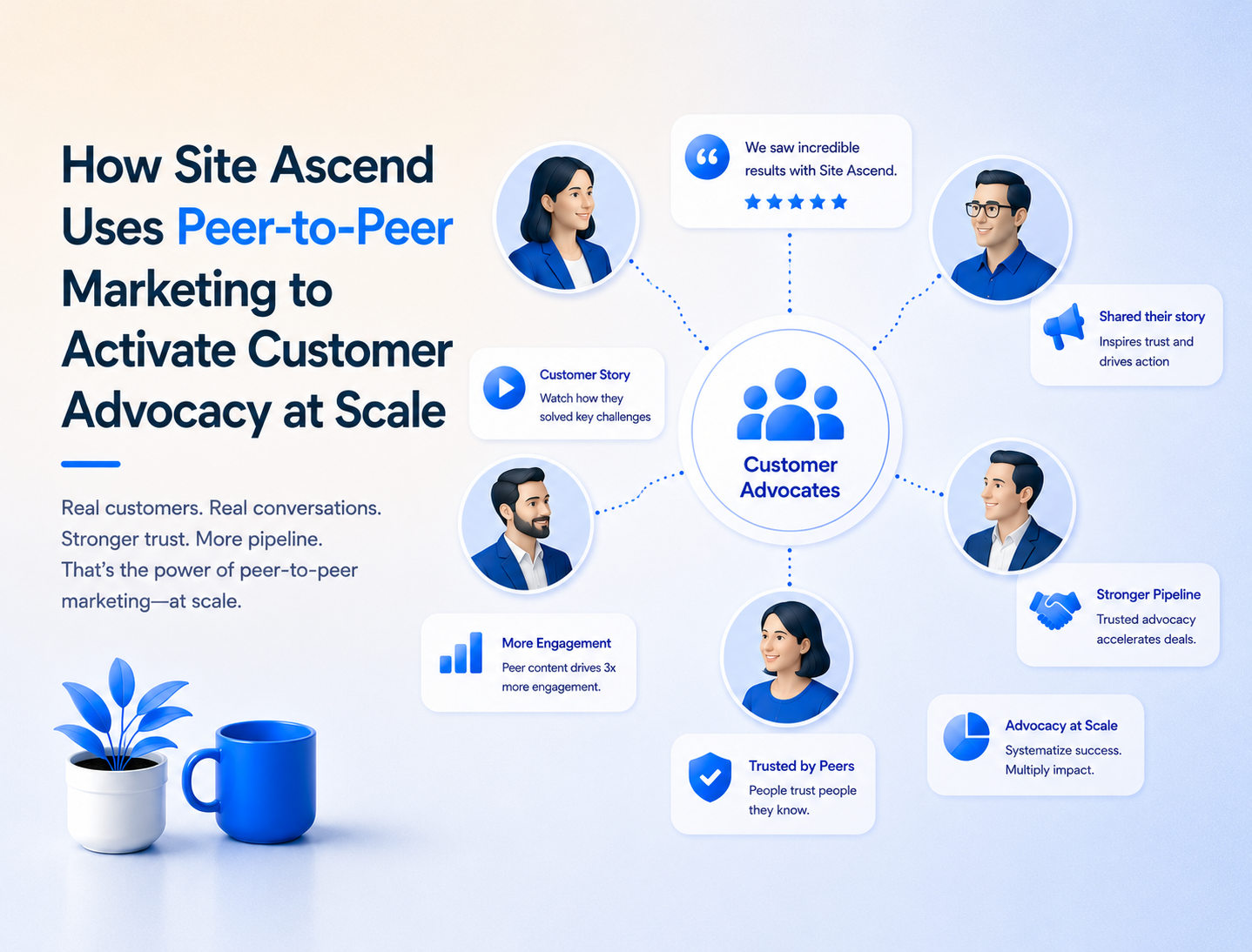
How Site Ascend Uses Peer‑to‑Peer Marketing to Activate Customer Advocacy at Scale
Demand Generation


MAL is the missing stage between MQL and sales acceptance—turning enterprise engagement into validated readiness instead of “marketing hope.” Learn the MAL signals that protect sales time (Director+ relevance, real need, urgency, and next-step design) and how Site Ascend operationalizes them through lead qualification and meetings that occur.
-
Sales Alignment
Introduction
Enterprise demand gen has a handoff problem that almost nobody names directly.
Marketing says, “We’re generating leads.”
Sales says, “These aren’t sales-ready.”
Both are right—and pipeline pays the price.
What’s usually missing isn’t effort or volume. It’s a stage.
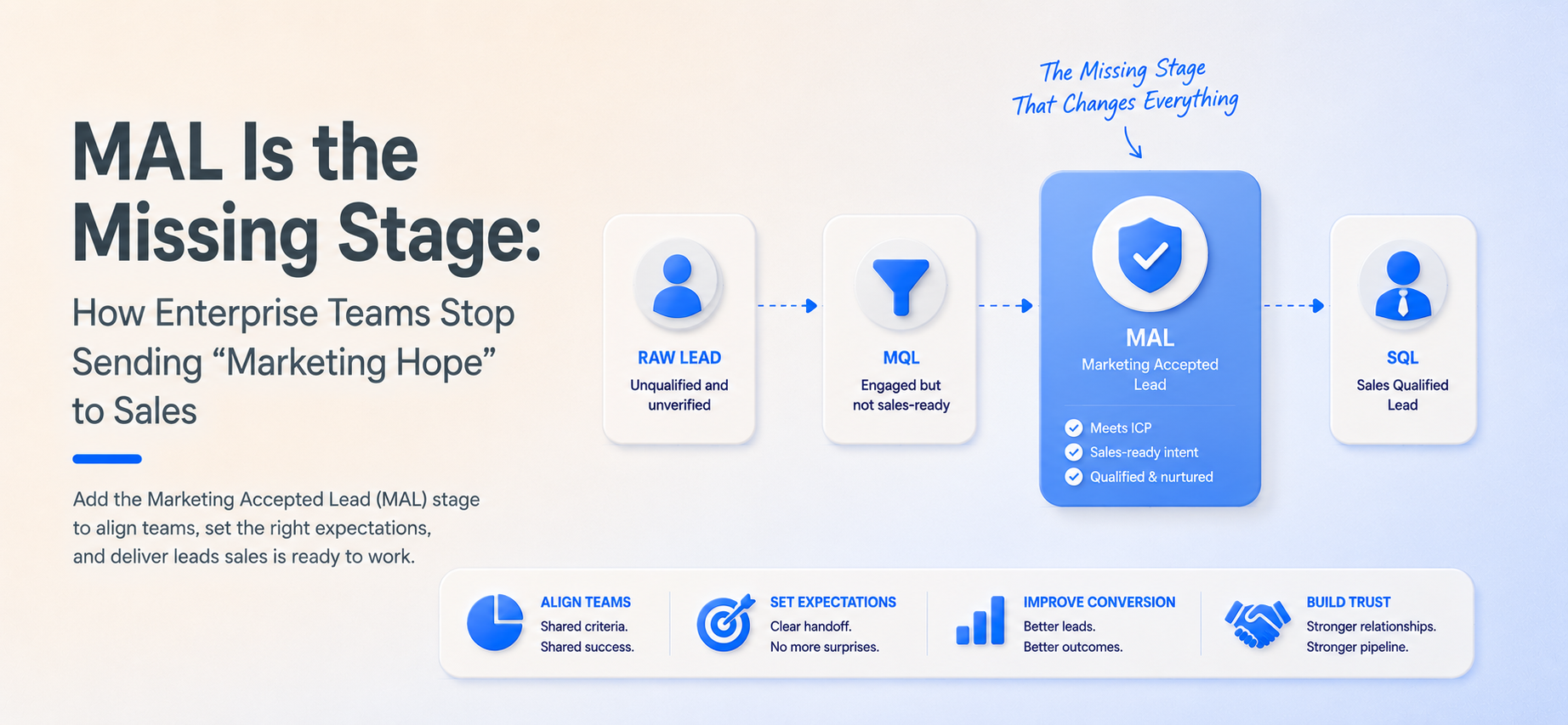
Most funnels jump from MQL (engaged) straight to SAL (sales accepted) and expect sales to do the hard work of turning activity into clarity. That’s where “marketing hope” gets created: leads that look promising in a dashboard but don’t hold up when a rep tries to move them forward.
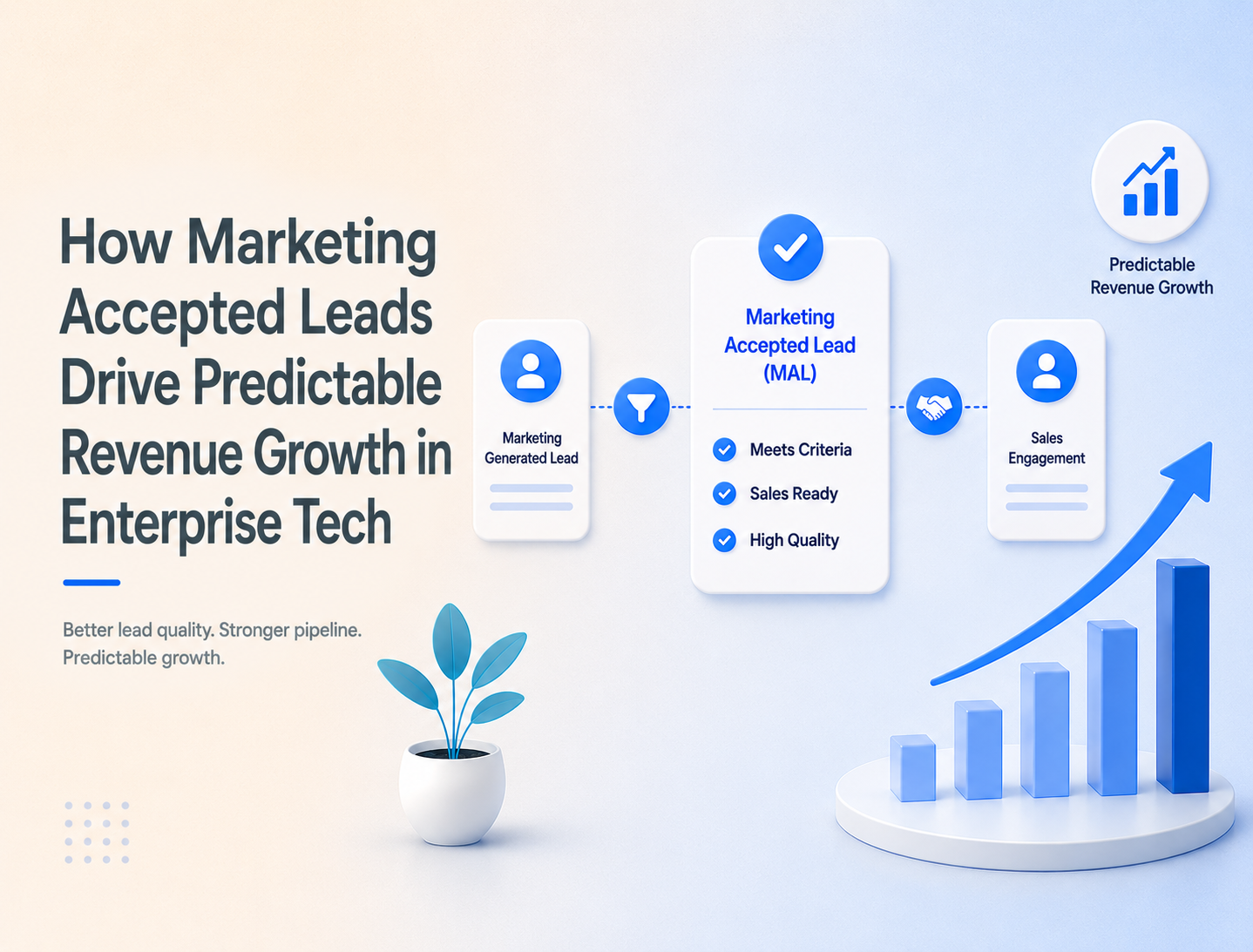
A MAL (Marketing Accepted Lead) fixes that gap.
MAL is the point where marketing stops counting clicks and starts confirming the context that makes sales engagement rational. Done well, it makes sales acceptance easier, meetings more productive, and next steps more predictable.
This blog explains what MAL is, why it matters in enterprise tech, and how Site Ascend supports MAL through Lead Qualification and Executive Meetings built around Director+ meetings that occur and advance.
What MAL (Marketing Accepted Lead) Means for Demand Generation Marketers and other titles that meet Site Ascend’s ICP
A Marketing Accepted Lead is best defined as:
A lead marketing is willing to put its name on because the minimum context for sales follow-through is present.
MAL is not “more scoring.” It’s a decision: this lead is worth a human conversation because we’ve validated the basics.
In enterprise tech, those basics usually include:
That’s why MAL is so useful for demand gen leaders. It’s the stage that turns “engaged” into “actionable,” without pretending every MQL deserves sales time.
Common Challenges Marketers Face
MQLs are easy to create, hard to convert
Enterprise buyers research early. Engagement spikes don’t always mean a project exists. Without additional validation, the MQL-to-pipeline story breaks down.
Sales acceptance becomes performative
Leads get “accepted” to be cooperative, then quietly ignored. The CRM stage changes, but the rep doesn’t invest real follow-up time because the lead feels uncertain.
Wrong-level conversations dominate
Meetings happen with people who can’t sponsor a next step. The call feels productive, but it doesn’t move. This is one of the fastest ways to lose sales trust.
No urgency = no priority
A lead can be a perfect fit and still not convert if there’s no trigger. Without “why now,” the deal lives in nurture forever.
Marketing and sales argue about definitions instead of fixing the handoff
Most teams try to solve this by renegotiating MQL thresholds. The real fix is to add the missing layer that validates readiness before sales invests.



.png)

%201.png)


.png)


Solutions That Work
MAL works when it functions as a quality filter and a context builder, not a new label slapped onto the same leads.
The MAL standard that actually stops “marketing hope”
A practical MAL standard answers one question:
“If a rep spends time on this, is there a credible path to a next step?”
To answer that, marketing needs a short set of verified fields—enough clarity to reduce guesswork.
Decision relevance
Problem clarity
Timing
Next step
How Site Ascend operationalizes MAL
MAL is easiest to implement when you have a repeatable motion to validate the fields above at scale. That’s where Site Ascend fits.
Lead Qualification (turning opt-ins into MALs)
Site Ascend’s Lead Qualification program is designed to convert opt-in engagement (downloads, webinar registrants, inbound interest) into meeting-ready leads by confirming:
This reduces sales friction because the lead arrives with context, not assumptions.
Executive Meetings (delivering Director+ MAL outcomes)
When decision relevance is the main bottleneck, the cleanest fix is structural: start with Director+ stakeholders.
Site Ascend’s Executive Meetings focus on:
When MAL is defined around Director+ relevance and held outcomes, marketing can defend performance without relying on lead volume arguments.
Channel and event programs (only when they’re part of your MAL mix)
If partner leads and event registrants feed your funnel, MAL prevents those sources from becoming “busywork volume.”
Actionable Steps for Marketers
You can implement MAL without reorganizing your entire funnel. You just need a standard and a way to enforce it.
The MAL checklist (use this as your internal gate)
A lead becomes MAL when you can document:
Decision relevance
Need
Timing
Next step
What to measure weekly
If MAL is working, you’ll see it in three metrics:
These metrics move the conversation from “lead volume” to “pipeline readiness.”
Comparison of Market Solutions
There are a lot of ways teams try to solve the “lead quality vs. sales trust” problem. Most of them work—just not for the same job.
1) Keep it fully in-house (SDRs + scoring + SLAs)
This is the most common path: tighten the MQL definition, refine scoring, update routing rules, and ask SDRs to “work the backlog harder.” When it’s staffed well, it can be effective—especially for brands with strong inbound demand and a narrow ICP.
But in enterprise demand gen, the in-house model usually hits two constraints fast: capacity and consistency. SDR teams churn, coverage fluctuates, and the moment volume spikes, the team defaults to speed over validation. That’s how “hopeful” leads get passed through as a way to keep up.
2) Outsource for volume (more touches, more meetings, more names)
Another common approach is outsourcing for scale: more dials, more outreach, more meetings booked. It can create activity quickly and it often looks like momentum in the early weeks.
The tradeoff shows up after the first call. If the system is optimized to book a meeting—rather than confirm the MAL signals—your reps end up in one-and-done conversations: wrong level, unclear need, no urgency, no next step. Volume goes up, but progression doesn’t.
3) Lean on nurture-only motions (automation until they “self-identify”)
Some teams try to avoid the handoff tension entirely by keeping leads in nurture until they request a demo or hit a score threshold. This can keep sales happier in the short term because fewer leads are handed over.
The downside is obvious in enterprise: buyers rarely announce readiness in a clean, trackable way. The right accounts can sit quietly for months—until they pick a competitor or the internal sponsor changes. Nurture alone often delays the exact conversations MAL is designed to create.
Where Site Ascend fits: turning engagement into validated readiness
Site Ascend sits in the gap these approaches struggle with: creating a consistent “middle layer” between interest and sales time. That’s the purpose of MAL.
Instead of asking sales to discover everything in the first meeting, Site Ascend helps validate the MAL essentials up front—decision relevance (Director+ or a path to it), real need, timing trigger, and a defined next step—then supports conversion through:
If your team is tired of debating whether leads are “good,” this approach changes the question to something more useful:
Do our leads produce meetings that hold, involve the right level, and move to a next step?
Conclusion
If your team is tired of sending “marketing hope” to sales, MAL is the missing stage.
It’s the shift from counting engagement to confirming readiness:
If you want to pilot a MAL motion that improves sales trust, increases held meetings, and raises next-step conversion, contact Site Ascend to discuss a pilot using Lead Qualification and Executive Meetings.
Is MAL just another name for MQL?

Where should MAL sit in the funnel?
Does MAL slow down response time?


Start your pilot campaign today and explore the full range of Site Ascend's demand generation capabilities. Experience firsthand how we can enhance your efficiency, streamline your processes, and drive growth.
RELATED