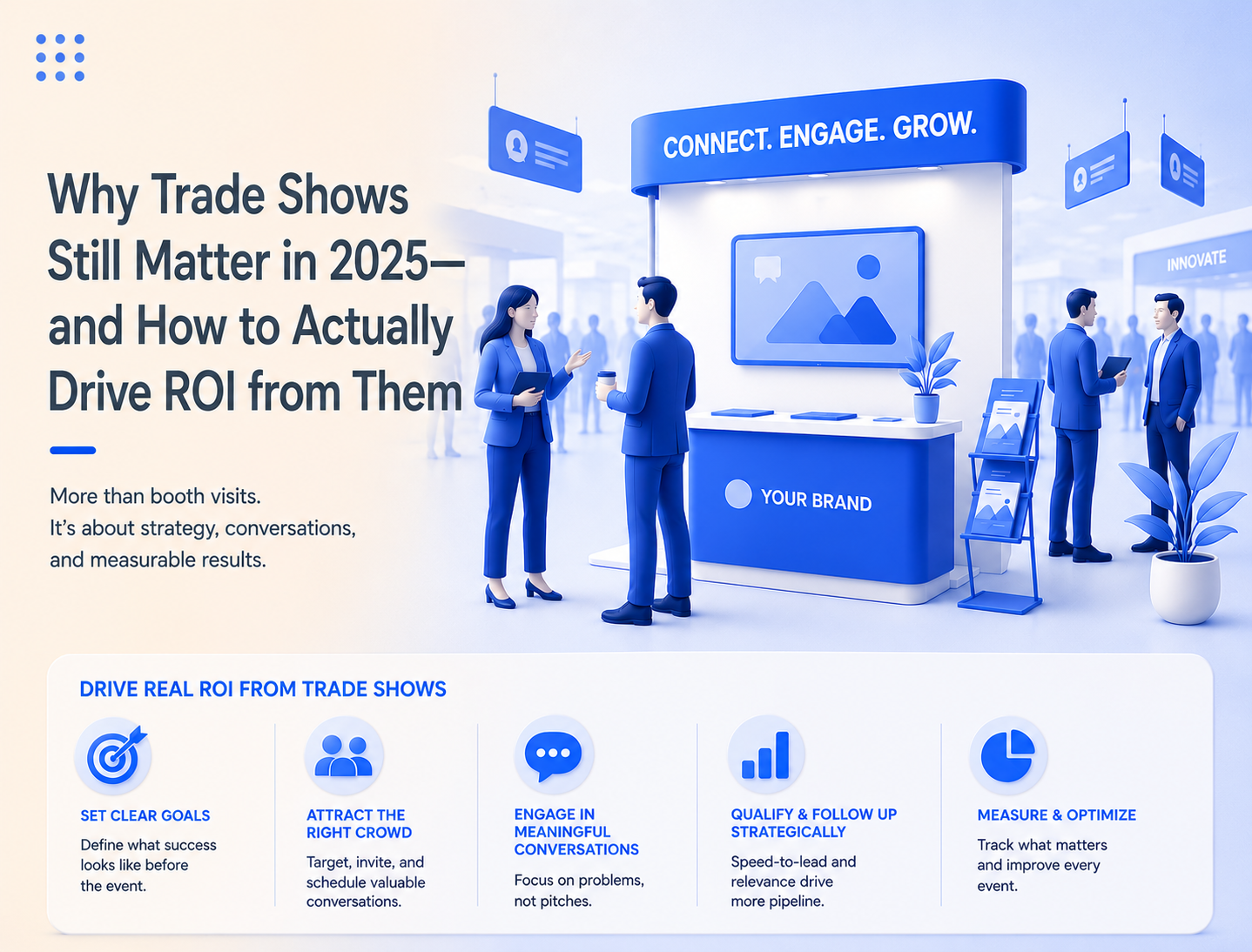
Why Trade Shows Still Matter in 2025—and How to Actually Drive ROI from Them
Event Marketing


A practical, no-fluff lead qualification process for B2B demand gen teams—so the leads you hand to sales get accepted, scheduled, and turned into real meetings.
-
Lead Qualification
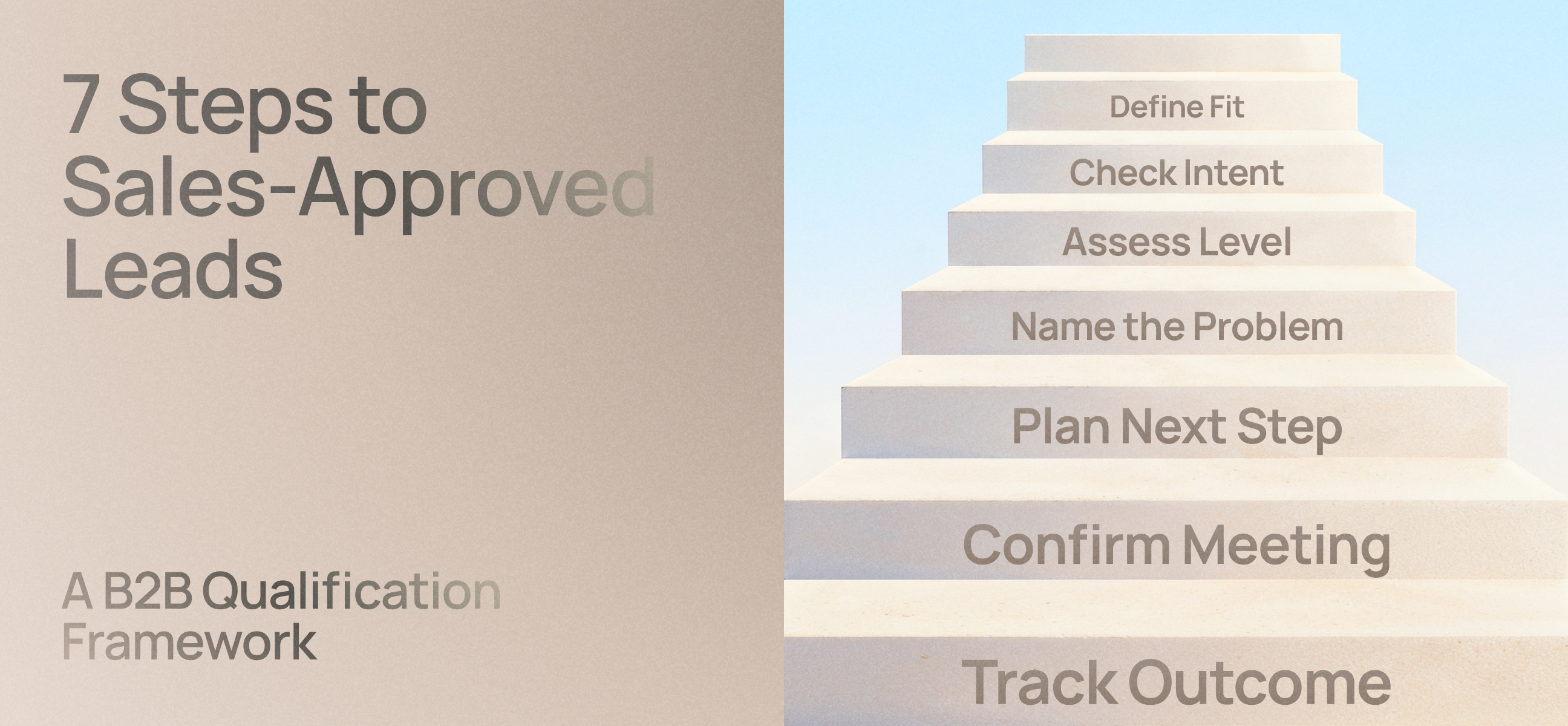
Introduction
Most B2B teams don’t have a lead volume problem—they have a sales acceptance problem.
Marketing generates opt-ins. SDRs chase them. Sales says, “Not a fit,” “No timing,” or the classic: “They downloaded a PDF.”
The fix isn’t more nurture emails or another scoring model. It’s a lead qualification process that creates one outcome sales can’t ignore:
A sales-ready meeting with the right person, for the right reason, at the right time.
This post breaks down a simple, repeatable 7-step B2B lead qualification framework that demand gen teams can implement immediately—plus how Site Ascend operationalizes the highest-friction step: turning opt-ins into meetings that actually happen.
What “Lead Qualification Process” Means for Demand Generation Marketers
A B2B lead qualification process is the set of rules, questions, and workflows you use to determine whether an inbound or opt-in lead should move forward to sales—and in what form.
In 2026, the best lead qualification isn’t just “Is this person a fit?”
It’s also:
For demand gen leaders, qualification is where pipeline is either created or quietly destroyed:
Common Challenges Marketers Face
1) Lead “fit” is unclear—or defined differently by every team
Marketing defines fit by ICP fields. SDRs define fit by reply rate. Sales defines fit by whether the prospect shows up and has a problem worth solving.
2) Intent gets overestimated
A whitepaper download, webinar signup, or comparison-page visit can mean interest—or just research. Without a process, teams treat every signal like a buying signal.
3) Speed-to-lead is inconsistent
If the first touch happens days later, you’re qualifying a colder lead and blaming the lead for not responding.
4) Qualification notes are thin
Sales gets “Interested, wants to learn more” with no context. That’s not a handoff—it’s a punt.
5) Meetings get booked… then vanish
Even “qualified” meetings fall apart without confirmation workflows, expectations-setting, and attendance accountability.



.png)

%201.png)


.png)


Solutions That Work
Because this blog is about lead qualification, the solution layer should focus on one thing: turning opt-in leads into sales-accepted meetings.
Here’s what works consistently.
Solution 1: Treat qualification as a conversion event—not a label
Stop optimizing for “MQL created.” Start optimizing for:
If the process doesn’t increase those, it’s not a qualification process—it’s a routing process.
Solution 2: Standardize the questions that earn sales trust
The fastest path to sales acceptance is answering the questions sales asks in their head:
Your process should produce those answers every time, in the same structure.
Solution 3: Operationalize qualification with a dedicated conversion motion
This is where Site Ascend fits—specifically in Lead Qualification, not every service.
Site Ascend converts opt-in leads (content downloads, event signups, demo requests that didn’t convert) into qualified sales meetings by:
If you’re generating leads but struggling to turn them into meetings sales trusts, this is the gap Site Ascend is built to fill.
Actionable Steps for Marketers
Use this checklist to tighten your lead qualification process this week:
Lead Qualification Checklist
If your bottleneck is “opt-ins that don’t become meetings,” a targeted pilot with Site Ascend’s Lead Qualification program is the fastest way to prove lift without adding internal headcount.
Comparison of Market Solutions
Here’s how most teams approach lead qualification—and where it breaks.
Option 1: In-house SDRs qualify everything
Pros: Tight control, strong product knowledge
Cons: Expensive, inconsistent coverage, SDR time gets consumed by low-intent follow-up
Best for: Mature teams with strong inbound intent and high staffing tolerance
Option 2: Automated scoring + nurture-only qualification
Pros: Scales easily, low marginal cost
Cons: Creates “activity,” not clarity—sales still doesn’t trust the handoff
Best for: Early-stage volume building, not near-term pipeline conversion
Option 3: Outsourced qualification that focuses on meetings held
Pros: Faster coverage, consistent process, clear outcomes
Cons: Requires tight alignment on ICP and qualification definition
Best for: Teams with lead volume that isn’t converting into accepted/held meetings
Where Site Ascend is different: the model is built around meetings that occur, not leads delivered, and the motion is designed to qualify and schedule conversations sales will accept—without outsourcing offshore or optimizing for vanity metrics.
Conclusion
A strong B2B lead qualification process isn’t complicated—it’s consistent.
If sales doesn’t trust your leads, you don’t need more leads. You need a framework that produces:
If you want to turn opt-in leads into sales-ready meetings without adding headcount, Site Ascend can run a focused pilot using our Lead Qualification program—built for director-level conversations, onshore execution, and outcomes you can measure in weeks.
Ready to test it? Contact Site Ascend to launch a pilot and start converting opt-ins into meetings sales actually accepts.
What’s the difference between lead scoring and lead qualification?

What makes a lead “sales-ready” in B2B?
How do I improve sales acceptance rate without generating more leads?


Start your pilot campaign today and explore the full range of Site Ascend's demand generation capabilities. Experience firsthand how we can enhance your efficiency, streamline your processes, and drive growth.