Lead Generation Services: The Secret Weapon for Accelerating B2B Growth
lead generation services


A strong Sales Accepted Lead (SAL) process helps marketing teams improve lead quality, increase sales confidence, and generate more qualified pipeline. Discover how leading technology marketers are using SALs to bridge the gap between lead generation and opportunity creation.
-
Demand Generation
Introduction
Generating leads has never been easier.
Generating leads that sales teams actually want to pursue is a different story.
For many B2B technology organizations, demand generation programs successfully produce Marketing Qualified Leads (MQLs) through campaigns, events, content engagement, and partner activities. Yet despite strong MQL numbers, sales teams often reject a significant percentage of those leads.
This disconnect creates one of the most expensive inefficiencies in modern demand generation.
Marketing believes it is creating value. Sales believes it is receiving unqualified prospects. Pipeline growth slows, conversion rates suffer, and revenue goals become harder to achieve.
That's why more organizations are focusing on an often-overlooked stage in the lead lifecycle: the Sales Accepted Lead (SAL).
A SAL represents more than a lead score or engagement threshold. It signifies that sales has reviewed a lead and agreed it is worth pursuing. For demand generation leaders, improving SAL conversion rates is often one of the fastest ways to improve pipeline quality and strengthen sales and marketing alignment.
In this article, we'll explore why SALs matter, how they fit into the modern demand generation process, and how marketing teams can create more leads that sales actually wants.
What Sales Accepted Leads Mean for Demand Generation Marketers
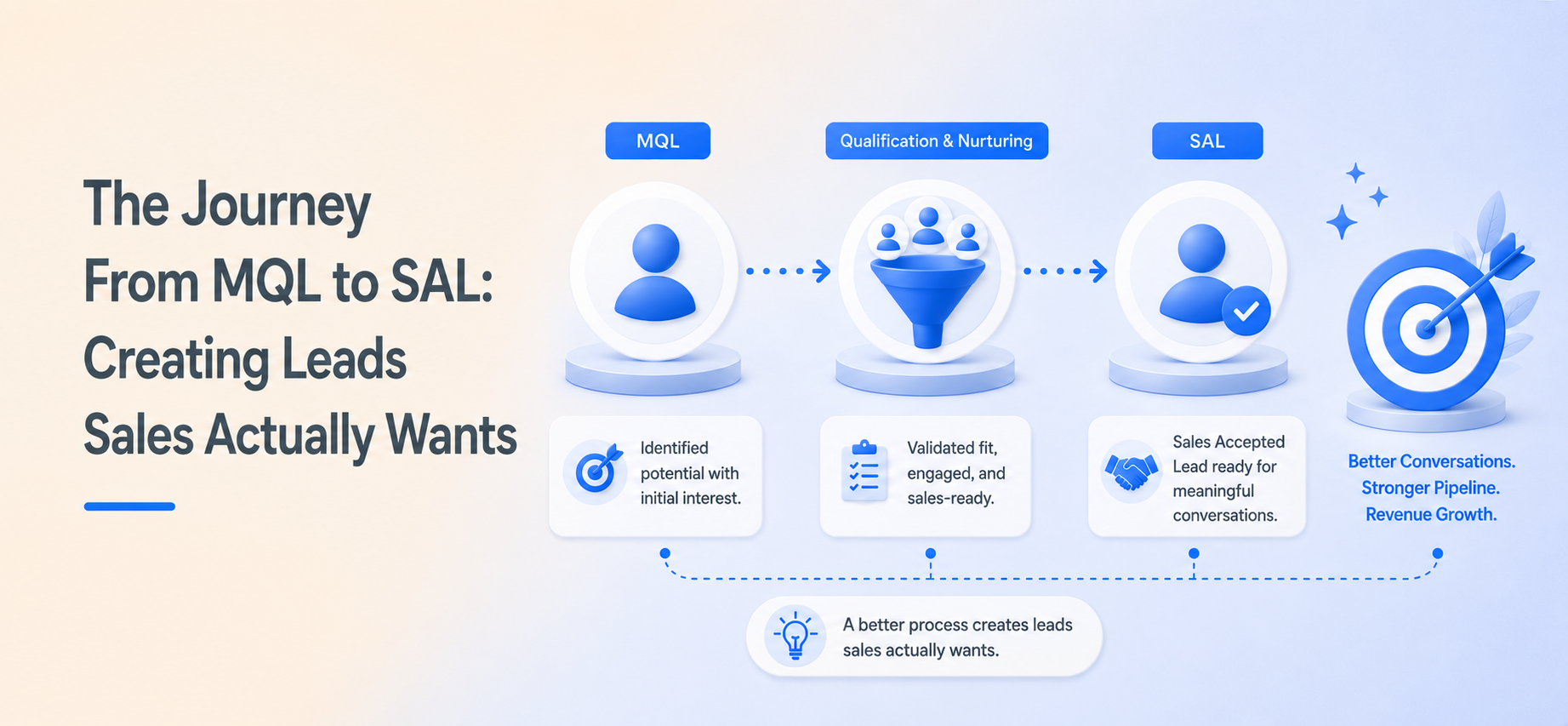
A Sales Accepted Lead (SAL) is a lead that has been formally accepted by the sales organization for active follow-up and qualification.
Unlike an MQL, which is typically based on engagement signals and marketing criteria, a SAL has passed an additional checkpoint: sales believes the lead has enough potential to justify further investment.
In many organizations, the lead lifecycle looks something like this:
Inquiry → MQL → SAL → SQL → Opportunity
The SAL stage creates an important validation point between marketing and sales.
It answers a simple but critical question:
Does sales agree this lead is worth pursuing?
For demand generation teams, SALs provide a valuable measure of lead quality because they reflect actual sales confidence rather than marketing assumptions.
Why SALs Matter More Than Ever
As buying journeys become more complex, the importance of sales acceptance continues to grow.
Marketing Is Being Measured on Pipeline Contribution
Executive leadership increasingly expects marketing organizations to contribute directly to pipeline and revenue.
Lead volume alone is no longer enough.
Marketing leaders are being evaluated based on:
SALs provide a direct connection between marketing efforts and sales confidence.
Sales Resources Are Limited
Sales teams cannot pursue every lead.
As a result, organizations need qualification processes that help prioritize the most promising opportunities.
Improving SAL conversion ensures sales resources are focused where they can create the greatest impact.
Buying Committees Have Expanded
Enterprise technology purchases frequently involve multiple stakeholders.
A lead may demonstrate strong engagement without having purchasing authority or influence.
The SAL process helps identify which leads deserve additional sales attention.
Alignment Is More Important Than Ever
One of the most common sources of friction between marketing and sales is disagreement over lead quality.
SALs help establish a shared definition of success and create accountability across both teams.
Common Challenges Marketers Face
Despite the value of SALs, many organizations struggle to improve acceptance rates.
High MQL Volume, Low SAL Conversion
Marketing programs may generate substantial engagement, but only a small percentage of leads are accepted by sales.
This often indicates gaps in qualification standards.
Sales Rejection of Marketing Leads
Sales teams frequently reject leads because they lack:
Without clear qualification criteria, acceptance rates decline.
Event Registrations Without Sales Interest
Sponsored events often generate significant registration activity.
However, attendance alone does not indicate sales readiness.
Many event-generated leads require additional qualification before they become SALs.
Inconsistent Partner Lead Quality
Partner programs can be valuable sources of demand, but qualification standards frequently vary between partners.
This inconsistency often impacts sales confidence.
Limited Executive Engagement
Many leads originate from practitioners and researchers rather than decision-makers.
Without executive access, opportunities often struggle to advance.



.png)

%201.png)


.png)


Solutions That Work
The organizations that consistently create high-quality SALs focus on validating opportunities before they reach sales.
Executive Meetings That Improve Sales Confidence
One of the most effective ways to increase SAL conversion is to engage decision-makers directly.
Site Ascend's Executive Meetings program delivers 30-minute virtual meetings with director-level and above contacts inside target accounts.
These conversations help validate:
When sales receives meetings with qualified executive contacts, acceptance rates often improve significantly.
Learn more:
Lead Qualification That Bridges Marketing and Sales
Many MQLs require additional validation before sales engagement.
Site Ascend's Lead Qualification services convert opt-in inquiries into qualified sales meetings through live qualification conversations.
Rather than relying solely on engagement signals, marketing teams can provide sales with validated opportunities that deserve attention.
Channel Marketing That Creates Consistent Quality
Partner programs are most effective when qualification standards remain consistent.
Site Ascend's Channel Marketing programs provide white-labeled outreach on behalf of partners while maintaining qualification rigor.
This helps create greater confidence in partner-sourced opportunities and improves sales acceptance.
Learn more:
Event Marketing Focused on Qualified Attendance
Event success should not be measured solely by registration volume.
Site Ascend's Event Marketing programs help technology companies procure attendees through outbound dialing campaigns focused on ideal customer profiles and target accounts.
Registrants are supported through event day using SMS workflows that maximize attendance and engagement.
The result is stronger event-generated pipeline potential.
Learn more:
Actionable Steps for Marketers
Improving SAL conversion starts with better qualification.
The SAL Optimization Checklist
Before routing a lead to sales, confirm:
- The lead fits your ideal customer profile
- The organization matches target account criteria
- A business challenge has been identified
- Relevant stakeholders are involved
- Qualification has been validated through direct interaction
- Sales and marketing agree on acceptance criteria
- The lead demonstrates potential for opportunity creation
Organizations that implement these standards often improve:
Comparing Market Solutions for Improving SAL Conversion
Organizations typically pursue several approaches to improve lead quality and sales acceptance.
Internal Qualification Teams
Internal teams provide direct oversight and control but often require significant investments in hiring, training, and management.
Traditional Lead Generation Providers
Many providers focus primarily on generating lead volume.
While volume may increase, sales acceptance rates often remain inconsistent.
Offshore Qualification Models
Offshore teams can offer scale but may introduce challenges related to executive engagement, qualification quality, and buyer experience.
Performance-Based Meeting Generation Partners
Performance-based providers align success with outcomes by focusing on completed meetings and qualified conversations rather than activity metrics.
Site Ascend differentiates itself through:
These capabilities help marketing teams generate opportunities that sales teams are more likely to accept and pursue.
Create More Leads Sales Actually Wants
The journey from MQL to SAL represents one of the most important transitions in the demand generation process.
Organizations that improve sales acceptance rates create stronger alignment between marketing and sales, generate higher-quality pipeline, and improve overall revenue performance.
Lead volume matters.
But sales acceptance matters more.
Whether you're looking to improve executive engagement, strengthen lead qualification, generate more qualified event attendees, or create greater consistency across partner programs, Site Ascend can help.
Ready to create more leads that sales actually wants?
What is a Sales Accepted Lead (SAL)?

How is a SAL different from an MQL?
Why are SALs important for demand generation teams?


Start your pilot campaign today and explore the full range of Site Ascend's demand generation capabilities. Experience firsthand how we can enhance your efficiency, streamline your processes, and drive growth.
RELATED