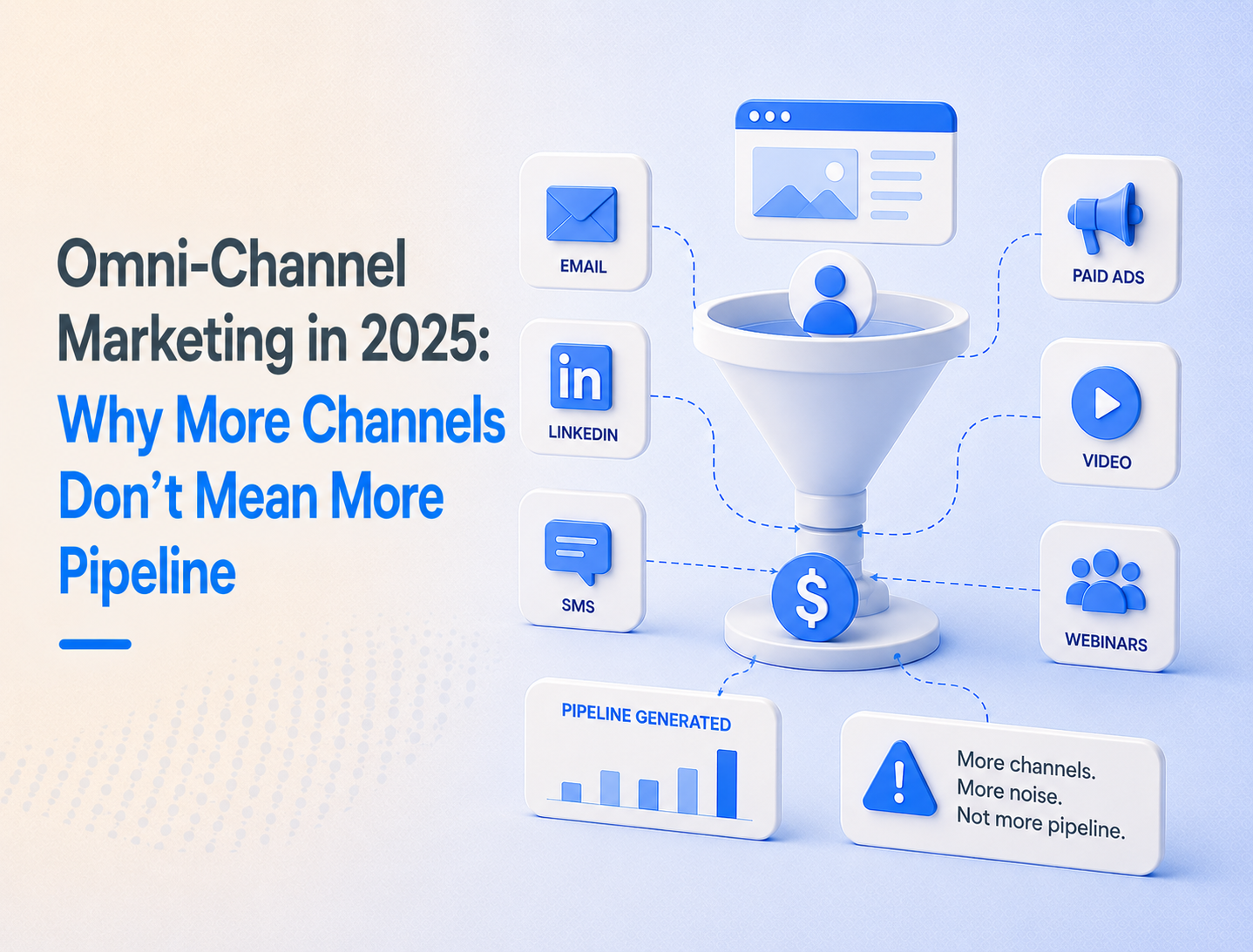
Omni-Channel Marketing in 2025: Why More Channels Don’t Mean More Pipeline
Demand Generation


Inbound marketing still sparks interest—but that interest rarely converts without human engagement. Learn why tech buyers stall after initial interactions and how performance-led outbound follow-up turns inbound signals into meetings, attendance, and real pipeline.
-
Demand Generation
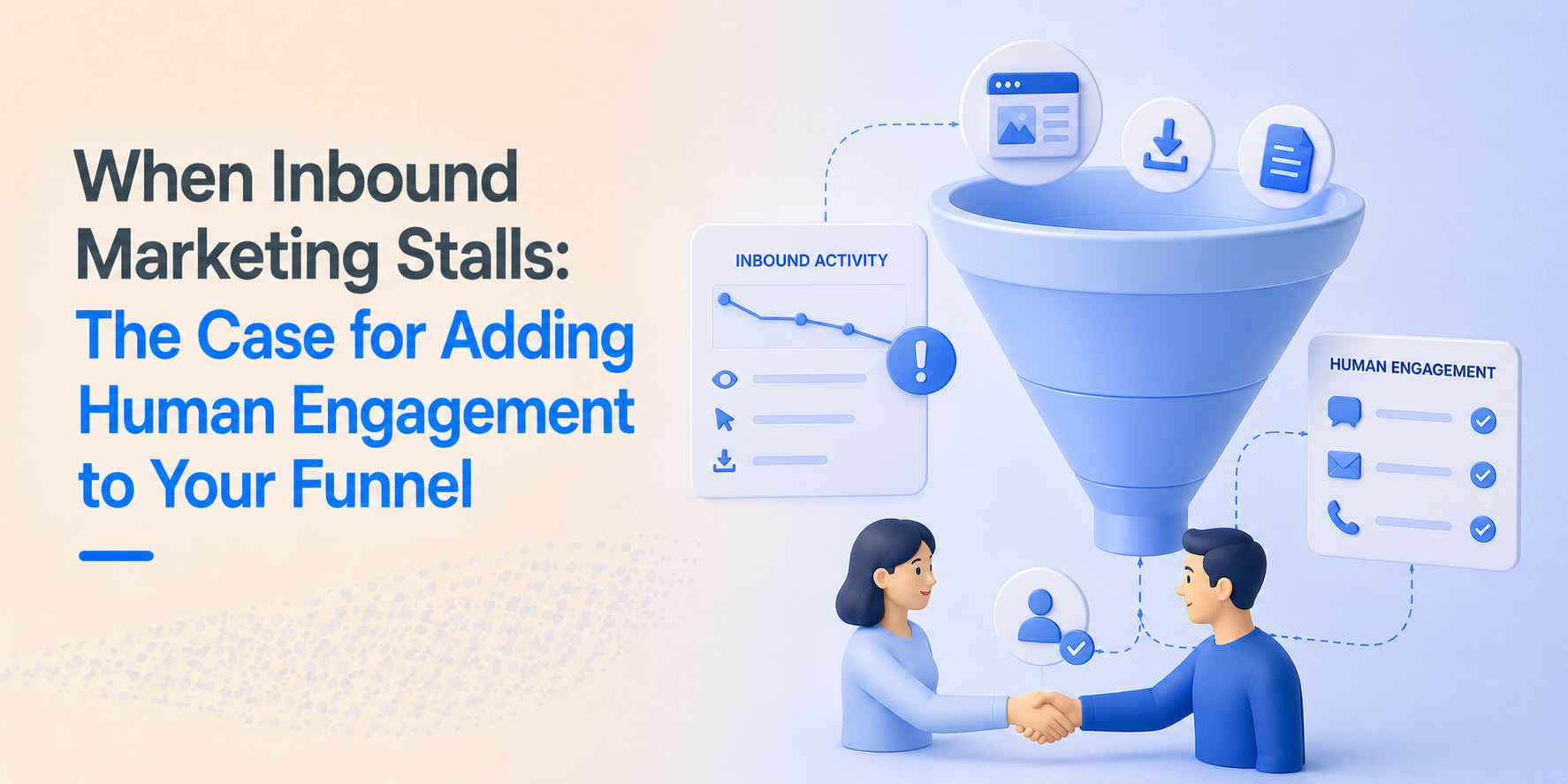
Introduction
Inbound marketing changed the way B2B tech companies attract interest. For years, a strong content engine, an optimized website, and well-structured nurture flows were enough to keep pipelines healthy. But as buying behavior shifts, inbound alone is no longer producing the volume — or quality — of conversations demand generation teams need.
Marketing organizations are now encountering a frustrating pattern: inbound channels continue to generate traffic, form fills, content downloads, and webinar registrations… yet real conversations with director-level decision-makers remain elusive. Engagement signals appear promising, but they seldom translate into meetings, events attended, or qualified opportunities.
Inbound isn’t broken. It’s simply incomplete.
And the teams outperforming the market aren’t abandoning inbound — they’re adding something it has always lacked: human engagement capable of activating interest before it evaporates.
What Inbound Marketing Means for Demand Generation Marketers
Inbound marketing was designed to attract buyers early in their journey. For demand gen teams, it remains essential for thought leadership, pipeline awareness, and brand credibility. But the expectation that inbound alone can nurture a prospect into sales readiness is becoming unrealistic.
Inbound does one job exceptionally well: it captures intent. It shows you who’s reading, registering, browsing, downloading, and researching. But those signals don’t automatically translate to urgency, qualification, or conversation.
This is especially true when your ICP is made up of director-level and above stakeholders. They’re time-poor, channel-fatigued, and inundated with digital content. They may browse or register, but they rarely initiate next steps — and won’t respond to automated nurtures.
For inbound to drive pipeline, it needs a mechanism that converts passive signal into active engagement.
Common Challenges Marketers Face
The most successful inbound engines face the same challenges as those struggling to scale. It’s not about the volume of traffic or content — it’s about what happens after someone engages.
Leads often sit idle because internal SDR teams are balancing competing priorities, slowing down follow-up on inbound actions. In other cases, nurture workflows lack the real-time responsiveness needed to catch buyers during the short window in which they’re open to a meeting.
Inbound registration for events may spike, but attendance lags because confirmation, reminders, and follow-up require human outreach. And of course, inbound leads vary widely in seniority, leaving sales teams to sift through large volumes of unqualified contacts while missing engagement from the right personas.
All of these challenges point to the same core issue: inbound delivers interest, but not intention. It signals curiosity, not commitment. And marketing teams cannot rely solely on automation to bridge that gap.



.png)

%201.png)


.png)


Solutions That Work
The solution emerging across high-performing B2B tech organizations is simple: pair inbound marketing with a human engagement layer that activates and qualifies interest in real time.
This is where Site Ascend naturally fits into the demand generation ecosystem.
Inbound efforts — content downloads, webinar registrations, form fills, and event sign-ups — act as the starting point. Site Ascend then engages those prospects through white-labeled, U.S.-based outbound calling to determine need, timing, and relevance.
Buyer interest is no longer left to chance.
Event registrations become confirmed attendees through outbound and SMS support leading up to the date.
Lead downloads become actual sales conversations through human qualification that automation cannot replicate.
And director-level prospects receive personalized outreach that cuts through the noise of digital channels.
Inbound works best when it doesn’t have to do the heavy lifting alone. Human engagement transforms it from a passive channel into a revenue driver.
Actionable Steps for Marketers
Strengthening your inbound engine doesn’t require an overhaul — it requires integrating human follow-up at key inflection points.
Treat inbound signals as triggers, not conclusions. Build workflows where high-intent actions automatically activate a human outreach motion. Use partners who can respond at speed, with the director-level precision and brand alignment your campaigns demand.
By blending inbound strategy with human execution, marketing teams accelerate qualification, reduce lead waste, and ensure that interest converts into pipeline — not into weeks of idle nurturing.
Comparison of Market Solutions
Many companies rely solely on internal SDR teams to follow up on inbound activity, but bandwidth limitations lead to slow outreach and missed opportunities. Traditional outsourced support may offer volume, but lacks the senior-level targeting and performance accountability modern demand gen teams need.
The performance-based engagement model is emerging as the preferred solution because it offers real outcomes — completed meetings, qualified leads, and confirmed event attendance — rather than just activities. With U.S.-based teams, white-labeled outreach, and director-level precision, it complements inbound efforts instead of duplicating them.
This approach ensures inbound marketing isn’t just attracting interest — it’s generating pipeline.
Conclusion
Inbound marketing remains a powerful way to spark awareness and signal intent. But in a world where decision-makers are busier, more selective, and harder to reach, human engagement has become the essential missing element.
When inbound slows, it doesn’t mean interest isn’t there. It means it needs activation.
And the companies embracing this hybrid model are the ones seeing higher attendance, better-qualified leads, and more director-level conversations.
If you’re ready to turn inbound momentum into measurable pipeline, it’s time to strengthen your funnel with human engagement.
Contact Site Ascend to integrate performance-led outbound support into your inbound engine — and move from interest to impact.
Is inbound marketing still effective in 2025?

Why doesn’t automation convert inbound leads reliably?
How does human engagement enhance inbound ROI?


Start your pilot campaign today and explore the full range of Site Ascend's demand generation capabilities. Experience firsthand how we can enhance your efficiency, streamline your processes, and drive growth.
RELATED