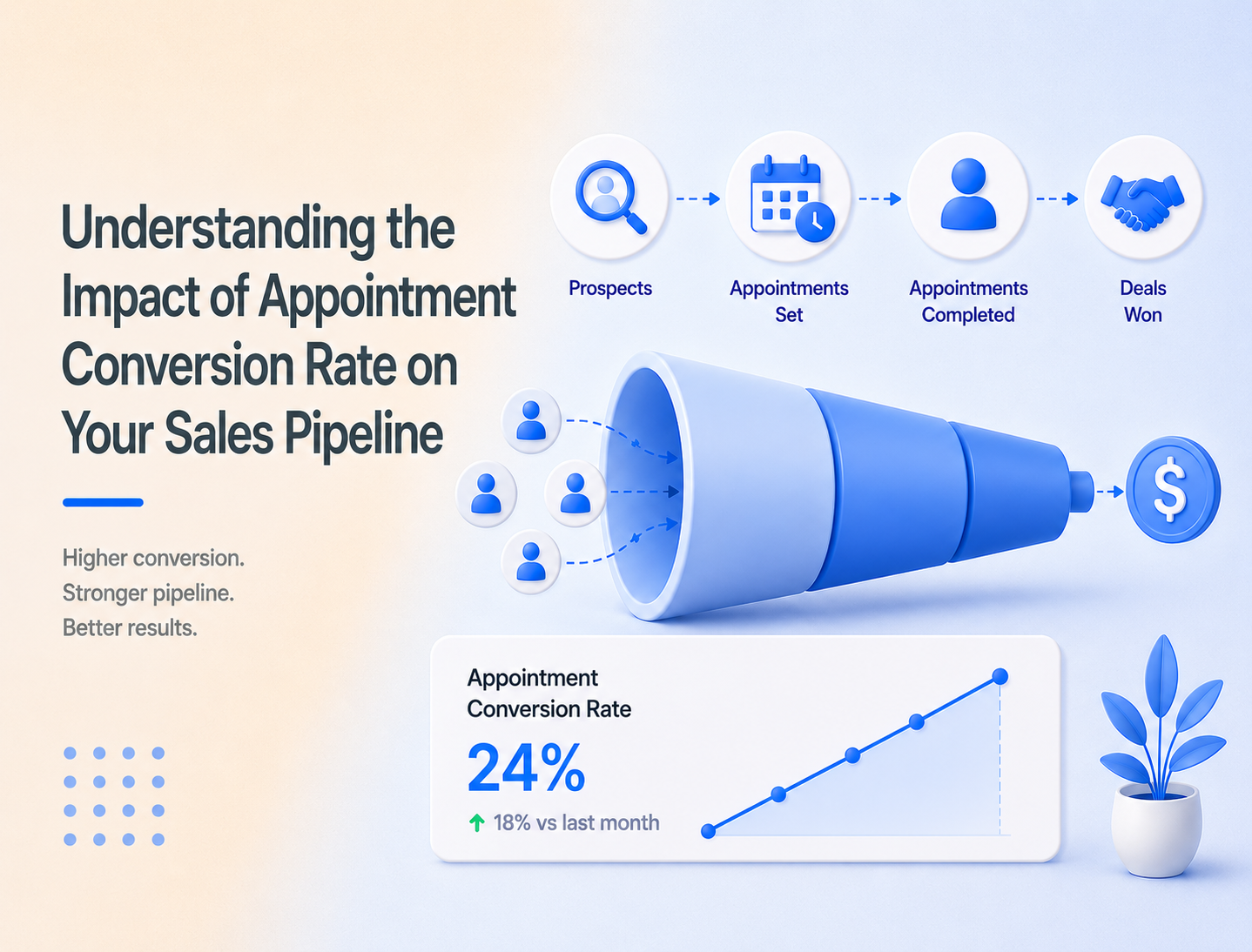
Understanding the Impact of Appointment Conversion Rate on Your Sales Pipeline
appointment conversion rate


If MQLs are spiking but pipeline is flat, the problem is usually a hidden breakpoint—criteria drift, wrong-level leads, missing urgency, weak handoffs, low show rates, or no next step. This blog shows what to audit and how Site Ascend helps convert MQL volume into Director+ meetings that occur and advance.
-
Pipeline Attribution
Introduction
An MQL spike is supposed to be good news.
It means the market is responding. Campaigns are landing. Your team is doing the work.
So why do so many demand gen leaders experience the same frustrating outcome?
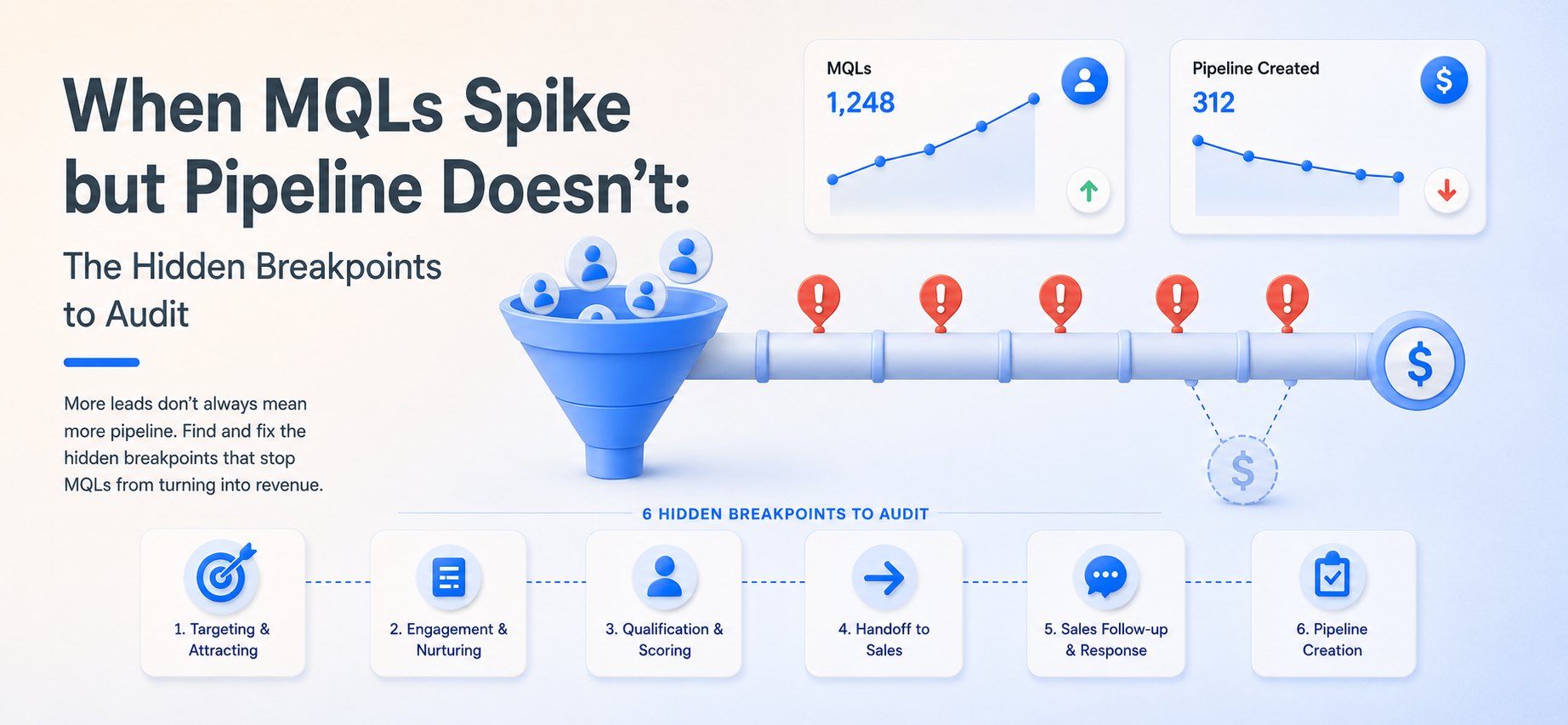
When MQLs rise but pipeline doesn’t, the issue is rarely “lead volume.” It’s almost always a breakpoint—a stage where momentum quietly dies before it becomes revenue.
This blog maps the most common breakpoints enterprise tech teams should audit, and shows how Site Ascend helps fix them through Lead Qualification and Executive Meetings focused on Director+ meetings that occur and convert into next steps.
What MQL means for demand generation marketers (in the real world)
An MQL (Marketing Qualified Lead) is a lead that meets a defined threshold of fit and engagement.
That definition is helpful for routing. It’s not proof of pipeline.
In enterprise buying, engagement can mean:
So an MQL spike can represent attention without intent—or intent without authority. Either way, pipeline won’t move until the right conditions exist.
MQL is a signal. Pipeline is an outcome. The audit is how you connect the two.
Common challenges marketers face (the breakpoints hiding in plain sight)
Breakpoint: MQL criteria drift
If your MQL volume spikes suddenly, the first question isn’t “what campaign worked?” It’s “did the definition change?”
Common causes:
Symptom: MQLs up, sales acceptance down.
Breakpoint: “Good accounts, wrong people”
Enterprise pipeline doesn’t move because someone is interested. It moves because a decision-relevant stakeholder engages.
If your MQL spike is concentrated in:
…then the funnel will clog. Meetings might even happen, but next steps won’t.
Symptom: high meeting volume, low second-call rate.
Breakpoint: No “why now”
A lead can be a perfect fit and still not convert without a timing trigger.
If MQL follow-up conversations don’t capture urgency, sales will treat the lead as nurture—because it is.
Symptom: long follow-up cycles, lots of “check back next quarter.”
Breakpoint: The handoff lacks usable context
Sales doesn’t just need a name and a score. They need a short narrative:
Without that, reps either guess (and waste time) or disengage.
Symptom: SALs/SQLs created but not actually worked.
Breakpoint: Meetings are booked but not held
A quiet pipeline killer is the gap between “scheduled” and “occurred.”
If show rates are low, pipeline attribution becomes fiction—even if your dashboards look busy.
Symptom: high booked-meeting counts, low held-meeting counts.
Breakpoint: Meetings happen but die after the call
This is the one that hurts the most because it looks like success right up until the moment it fails.
Typical causes:
Symptom: “Great call” feedback, then silence.



.png)

%201.png)


.png)


Solutions that work
The fix isn’t “generate fewer MQLs.” The fix is to turn MQL spikes into pipeline by hardening the stages where quality is lost.
That’s where Site Ascend fits: converting engagement into verified context and accountable meetings.
Lead Qualification: stress-test MQLs before sales time gets burned
When volume rises, human qualification becomes a force multiplier—because it separates:
Site Ascend’s Lead Qualification program is designed to validate the fields that decide whether an MQL can become pipeline:
Authority
Need
Urgency
Next step
This turns the MQL spike into a structured triage instead of a sales flood.
Executive Meetings: protect seniority and accountability
If the biggest breakpoint is “wrong person,” the cleanest solution is to enforce stakeholder level structurally.
Site Ascend’s Executive Meetings focus on:
Two differentiators align directly to pipeline reality:
When you can tie MQL-driven motions to meetings that occur at the right level, you can actually defend ROI.
Channel and event motions (only if they’re driving your MQL spike)
If your spike comes from partner leads or event registrants, treat those sources as their own audit category.
Site Ascend supports:
The point is not “more names.” It’s the right attendees who show and convert.
Actionable steps for marketers
Here’s a practical audit you can run when MQLs spike and pipeline doesn’t.
The MQL Breakpoint Audit (fast, high-impact)
Start with the MQL mix
Track conversion like a chain, not a snapshot
Follow the trail:
You don’t need perfect attribution. You need to see where the chain breaks.
Add a “meeting readiness” requirement
Before a meeting counts as a qualified outcome, confirm:
Fix one breakpoint at a time
Common fixes that move fast:
Make weekly reporting match revenue reality
Three metrics often explain most pipeline issues:
Comparison of market solutions
Here’s the market landscape through the procurement view—how organizations typically choose a solution when MQL volume isn’t turning into pipeline.
Lowest cost per activity
What you’re buying: touches, dials, or raw lead volume.
Why teams choose it: cost efficiency and scale.
Where it breaks: activity doesn’t guarantee seniority, urgency, or held-meeting outcomes—so the spike becomes noise.
Predictable volume
What you’re buying: guaranteed MQL counts, registrations, or booked meetings.
Why teams choose it: forecasting and targets feel easier.
Where it breaks: booked ≠ held, and volume ≠ decision relevance—so pipeline stays flat.
Defensible pipeline impact
What you’re buying: outcomes aligned to revenue—meetings that occur, decision-relevant stakeholders (Director+), and measurable next-step conversion.
Why teams choose it: it holds up in pipeline reviews.
Why Site Ascend fits: lead qualification that identifies real readiness, executive meetings targeted to Director+ stakeholders, accountability to meetings that occur, U.S.-based execution, and real-time reporting visibility.
Conclusion
When MQLs spike but pipeline doesn’t, don’t blame the market. Audit the breakpoints.
Most enterprise tech funnels fail in one of a few predictable places:
If you want a pilot that turns MQL spikes into pipeline by hardening the conversion chain—especially by improving held meeting outcomes and Director+ engagement—contact Site Ascend to pilot a program combining Lead Qualification and Executive Meetings.
Does an MQL spike ever mean pipeline is coming later?

What breakpoint should we check first?
How do we increase MQL quality without slowing the engine?


Start your pilot campaign today and explore the full range of Site Ascend's demand generation capabilities. Experience firsthand how we can enhance your efficiency, streamline your processes, and drive growth.
RELATED