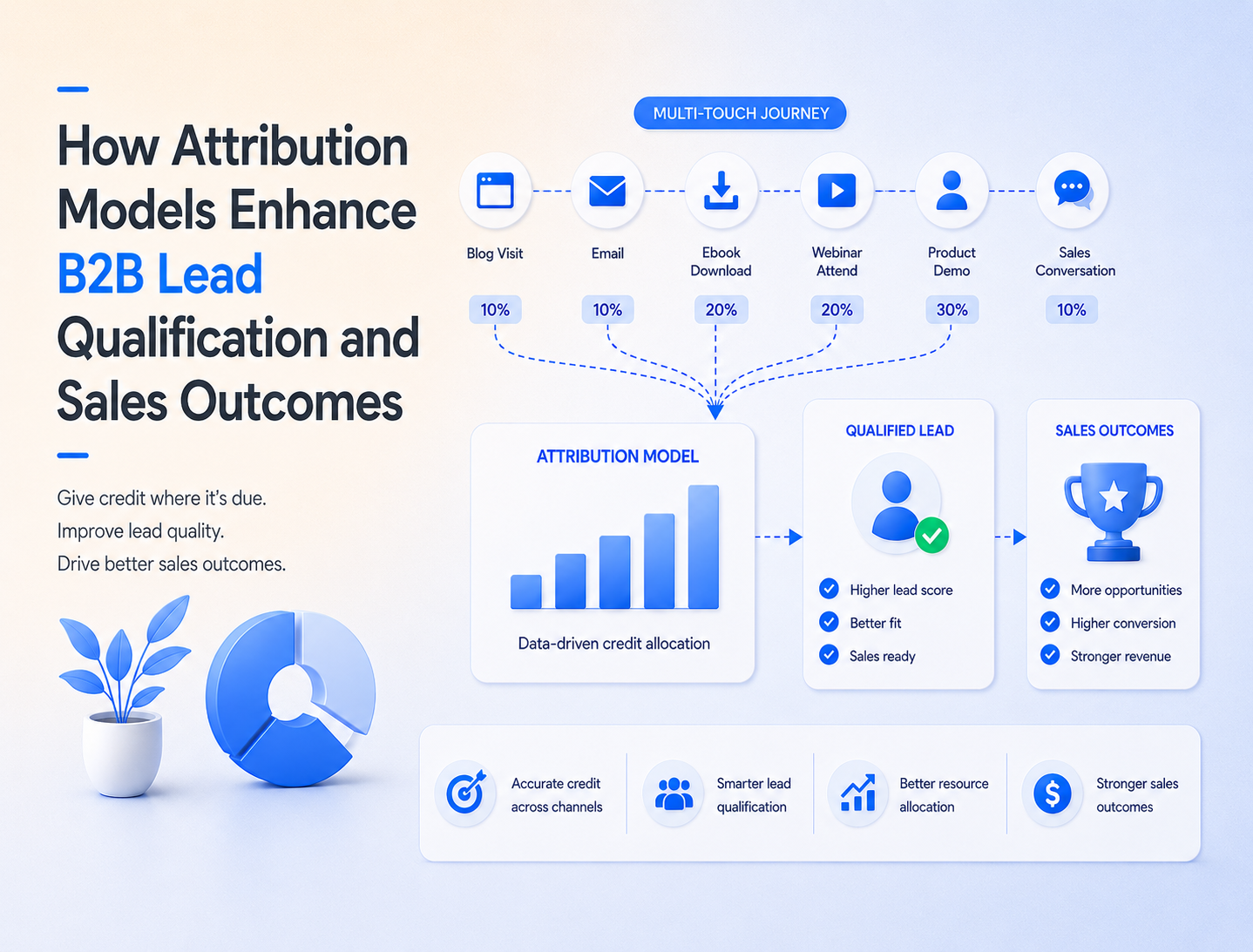
How Attribution Models Enhance B2B Lead Qualification and Sales Outcomes
B2B Demand Generation and Lead Qualification


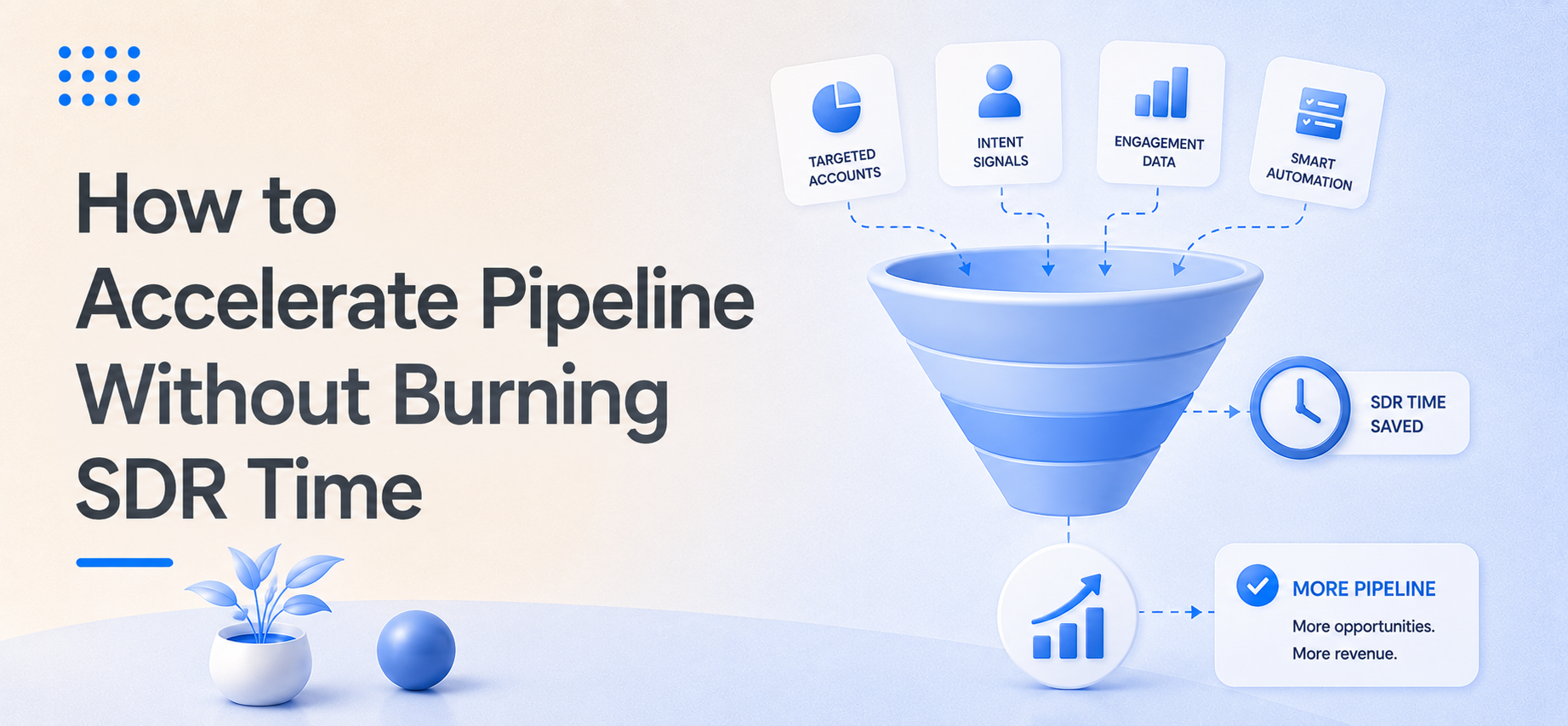
Pipeline acceleration isn’t about more touches—it’s about removing friction between interest and a real conversation. This guide breaks down how enterprise teams speed up qualification, routing, and meeting conversion without overloading SDRs—using outcome-based programs that turn demand into meetings that actually happen.
-
Demand Generation
Introduction
Pipeline acceleration has a reputation problem.
Most teams hear “accelerate” and think more activity: more sequences, more touches, more follow-ups, more “just checking in” emails, more everything—until the SDR team is stretched thin and sales still says pipeline feels soft.
Real pipeline acceleration is the opposite. It’s removing the friction that slows qualified buying groups down after they’ve shown interest—so revenue moves faster without asking SDRs to carry the entire load.
What follows is a practical framework demand gen teams can use to increase speed-to-meeting, improve sales acceptance, and create more next steps—without turning SDR time into your most expensive bottleneck.
What Pipeline Acceleration Means for Demand Generation Marketers
Pipeline acceleration is the discipline of increasing the velocity of opportunities—from first signal to first conversation to second call—without trading quality for speed.
In practice, it comes down to three levers:
If you’re accountable for pipeline, this matters because the slowest part of enterprise motion often isn’t demand creation—it’s the messy middle:
Pipeline acceleration is what turns demand gen from lead production into revenue progress.
Common Challenges Marketers Face
If your SDR team is overloaded, it’s rarely because they’re underperforming. It’s usually because demand gen is handing them problems disguised as leads.
Here are the most common pipeline drag points enterprise teams run into:
Leads arrive… but not in a sales-ready shape
A form fill can mean anything: curiosity, research, student, vendor, competitor, or “I needed the PDF.” When SDRs have to sort signal from noise, speed collapses.
The follow-up window gets missed
The “best” lead is often the one contacted first. But internal follow-up depends on capacity, territory rules, competing priorities, and handoff delays.
Meetings get set… but don’t go anywhere
A held meeting isn’t a win if it was booked with the wrong persona, wrong problem, wrong timing—or no real next step.
Buying committees don’t respond to one-thread outreach
Enterprise deals rarely move because one person liked a piece of content. SDR time gets consumed chasing the wrong thread instead of building multi-person momentum.
Channel and event leads get messy fast
Partner programs and sponsored events can generate interest, but if ownership and follow-up aren’t airtight, those leads become “everyone’s responsibility” and then… nobody’s.



.png)

%201.png)


.png)


Solutions That Work
If you want pipeline acceleration without SDR burnout, the fix isn’t “work harder.” It’s redesigning the system so your team spends time only where it creates revenue.
Here’s what actually works—especially in enterprise motions.
Set a “meeting standard,” not a meeting goal
Pipeline speed improves when everyone agrees what “qualified” means before a meeting hits the calendar.
A strong meeting standard typically includes:
This is where Lead Qualification becomes an acceleration engine. Instead of SDRs spending cycles on discovery calls that don’t convert, qualification converts “interest” into sales-ready meetings with context.
Use an “outcomes-first” meeting engine for top accounts
For high-value accounts, you don’t accelerate pipeline by waiting for inbound behavior to line up perfectly. You accelerate by creating the conversation.
That’s what Executive Meetings are built to do: 30-minute virtual meetings with director-level and above titles inside target accounts—focused on real business conversations, not busywork.
And critically, it’s structured to reduce internal strain:
Stop treating events as “leads” and start treating them as “attendance + intent”
Sponsored events only accelerate pipeline when you can reliably turn registrations into actual attendance—and attendance into conversations.
Event Marketing acceleration comes from doing the hard part:
This creates a more predictable post-event follow-up motion—without SDRs spending days chasing people who never intended to attend.
Make partner pipeline measurable—without partner friction
Channel is where pipeline acceleration often goes to die: great co-marketing plans, unclear follow-up, and leads stuck between partner, vendor, and sales teams.
Channel Marketing accelerates partner-sourced pipeline by providing white-labeled appointment setting funded by MDF—so partners get outcomes (meetings) instead of activities (campaigns) and your internal teams don’t absorb the coordination overhead.
Acceleration happens when:
That’s why a real-time reporting dashboard is more than a nice-to-have. It’s how you keep velocity from disappearing into the channel fog.
Actionable Steps for Marketers
If you want a pipeline acceleration plan you can implement immediately, start here.
A practical pipeline acceleration checklist
Use this as a quick audit:
If you can only do one thing this quarter: reduce lead risk by tightening qualification and increasing meeting reliability. Speed follows.
Comparison of Market Solutions
Most teams try to accelerate pipeline using one of three approaches. Each works—until it doesn’t.
Option 1: Build everything in-house
In-house SDR and demand gen teams give you control. But the cost is often hidden:
This model works best when volume is predictable and your SDR org has enough coverage to respond quickly without sacrificing quality.
Option 2: Outsource for activity (not outcomes)
Many external providers optimize for dials, touches, and booked meetings—because those are easy to count. The risk is that activity doesn’t equal acceleration.
When meetings are booked without a consistent qualification standard, sales acceptance suffers. Then demand gen spends even more time defending pipeline quality.
Option 3: Use an outcomes-based meeting and qualification engine
This is where acceleration becomes reliable.
When you combine:
That’s why Site Ascend’s programs are designed around meetings that occur and conversations that progress, not activity volume.
Conclusion
Pipeline acceleration doesn’t require more SDR time. It requires fewer weak handoffs, cleaner qualification, faster scheduling, and a meeting engine that’s accountable to outcomes.
If you’re ready to increase meeting reliability and speed—without asking your SDR team to do the impossible—Site Ascend can help you operationalize pipeline acceleration across executive meetings, lead qualification, channel, and events.
What’s the difference between pipeline acceleration and “more leads”?

How do I accelerate pipeline if my SDR team is already at capacity?
What should I measure to know if acceleration is working?


Start your pilot campaign today and explore the full range of Site Ascend's demand generation capabilities. Experience firsthand how we can enhance your efficiency, streamline your processes, and drive growth.